Drone vs Drone: The U.S. Air Force’s New AI Hunter Could Change Modern Warfare Forever
The future of aerial warfare is no longer just about stealth fighters and billion-dollar missiles.
Now, the battle is increasingly becoming drone versus drone.
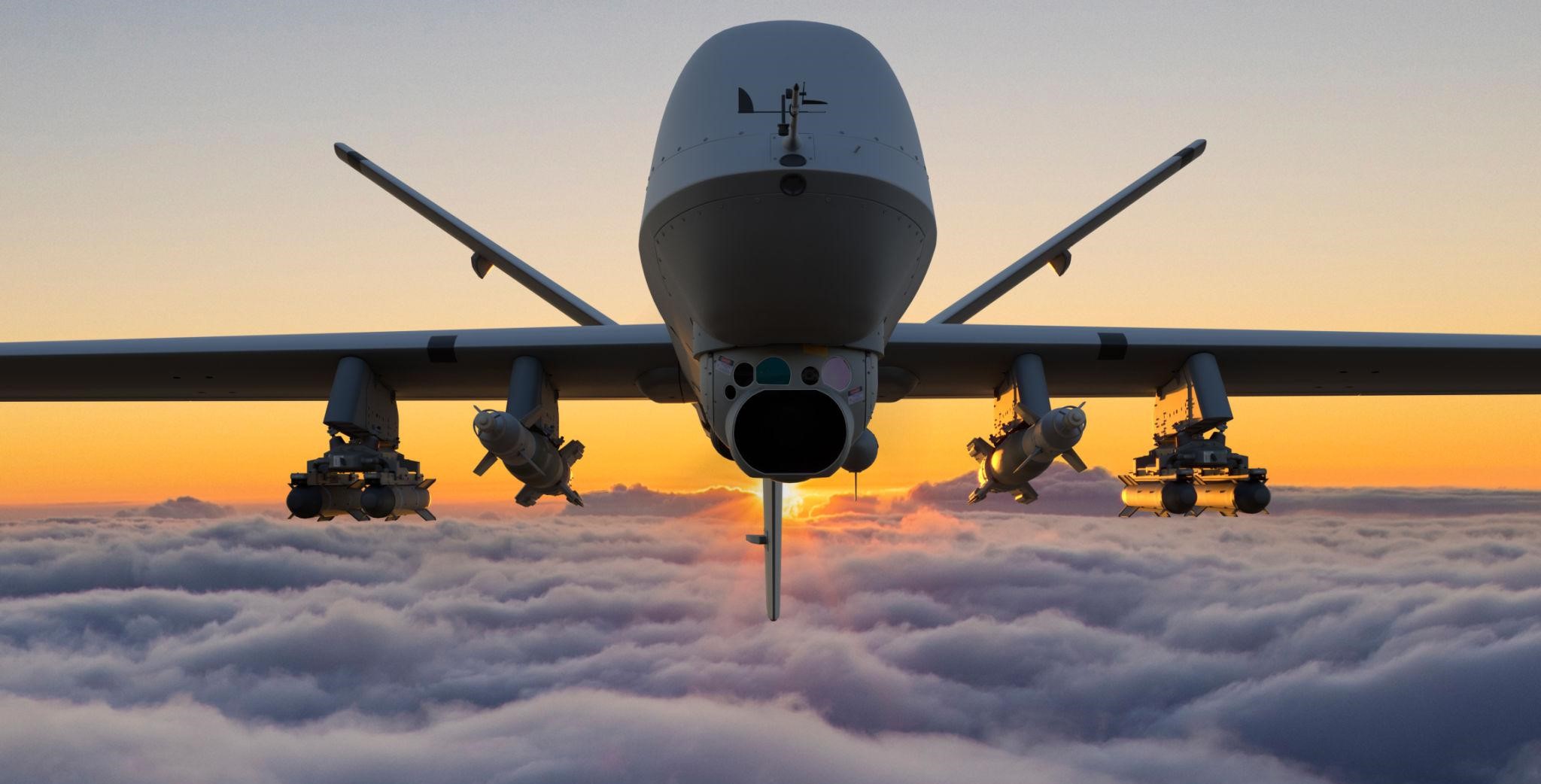
In a major breakthrough for modern air combat, the U.S. Air Force and General Atomics have successfully tested laser-guided APKWS rockets fired from the legendary MQ-9 Reaper drone — transforming the Reaper into a potentially devastating anti-drone hunter.
The tests, conducted at the Nevada Test and Training Range, included multiple successful launches against airborne targets, signaling a major evolution in America’s growing drone warfare strategy.
You May Also Like





The Rise of the Drone Hunter
For years, the MQ-9 Reaper has been one of America’s most feared unmanned aircraft.
Originally designed for surveillance and precision strikes against ground targets, the Reaper became famous during counterterrorism operations across the Middle East.
But modern warfare is changing rapidly.
Today’s biggest aerial threat is no longer only enemy aircraft — it is massive swarms of low-cost drones capable of overwhelming expensive air defense systems.
That challenge forced the Pentagon to rethink the future of air combat.
Now the Reaper is evolving again.
By integrating the Advanced Precision Kill Weapon System, or APKWS, the MQ-9 gains a cheaper, faster, and highly flexible way to destroy hostile drones in the sky.
Why APKWS Is Becoming One of America’s Most Important Weapons


The APKWS system was originally designed as a low-cost precision weapon.
Built by BAE Systems, it converts standard 70mm Hydra rockets into laser-guided smart weapons capable of striking targets with remarkable accuracy.
Unlike expensive air-to-air missiles such as the AIM-120 AMRAAM or AIM-9 Sidewinder, APKWS rockets reportedly cost less than $40,000 each.
That matters enormously in modern drone warfare.
Why launch million-dollar missiles against cheap drones when precision-guided rockets can do the job for a fraction of the cost?
This cost advantage has already made APKWS one of the U.S. military’s preferred anti-drone weapons in the Middle East, especially against Iranian and Houthi drone threats in the Red Sea region.
The Drone Swarm Problem


Military planners increasingly fear a future where hundreds of autonomous drones attack simultaneously.
Traditional fighter jets and missile defense systems can struggle against these mass attacks because high-end interceptors are expensive and limited in number.
Drone swarms are dangerous precisely because they are cheap, fast, and difficult to stop all at once.
That is why the Pentagon is racing to develop layered counter-drone systems capable of destroying threats efficiently without exhausting costly missile stockpiles.
The MQ-9 armed with APKWS may become one of the key answers.
Instead of acting only as a surveillance platform, the Reaper could now patrol battle zones as an airborne drone interceptor — hunting enemy drones before they reach ships, bases, or cities.
A New Era for the MQ-9 Reaper


General Atomics says adding APKWS significantly expands the MQ-9’s combat flexibility.
Because the rockets are lightweight and compact, the Reaper can carry larger numbers of them compared to traditional missiles.
That means more shots, longer patrols, and lower operational costs.
It also represents a broader transformation in military strategy.
Modern drones are no longer just passive surveillance tools.
They are rapidly becoming fully networked combat platforms capable of:
- Air-to-air interception
- Autonomous reconnaissance
- Electronic warfare support
- Precision strike operations
- Real-time battlefield coordination
The battlefield of the future may feature autonomous systems hunting other autonomous systems across the sky.
The Future of Air Warfare Is Changing Fast
The successful APKWS tests reveal something much bigger than a simple weapons upgrade.
They show how quickly warfare itself is evolving.
Cheap drones are reshaping global conflict. AI systems are becoming more advanced. And militaries are increasingly searching for affordable ways to counter mass aerial threats.
The age of drone-versus-drone warfare has already begun.
And the MQ-9 Reaper may now be entering one of the most important new roles of its history — not just as a hunter on the ground, but as a guardian of the skies.