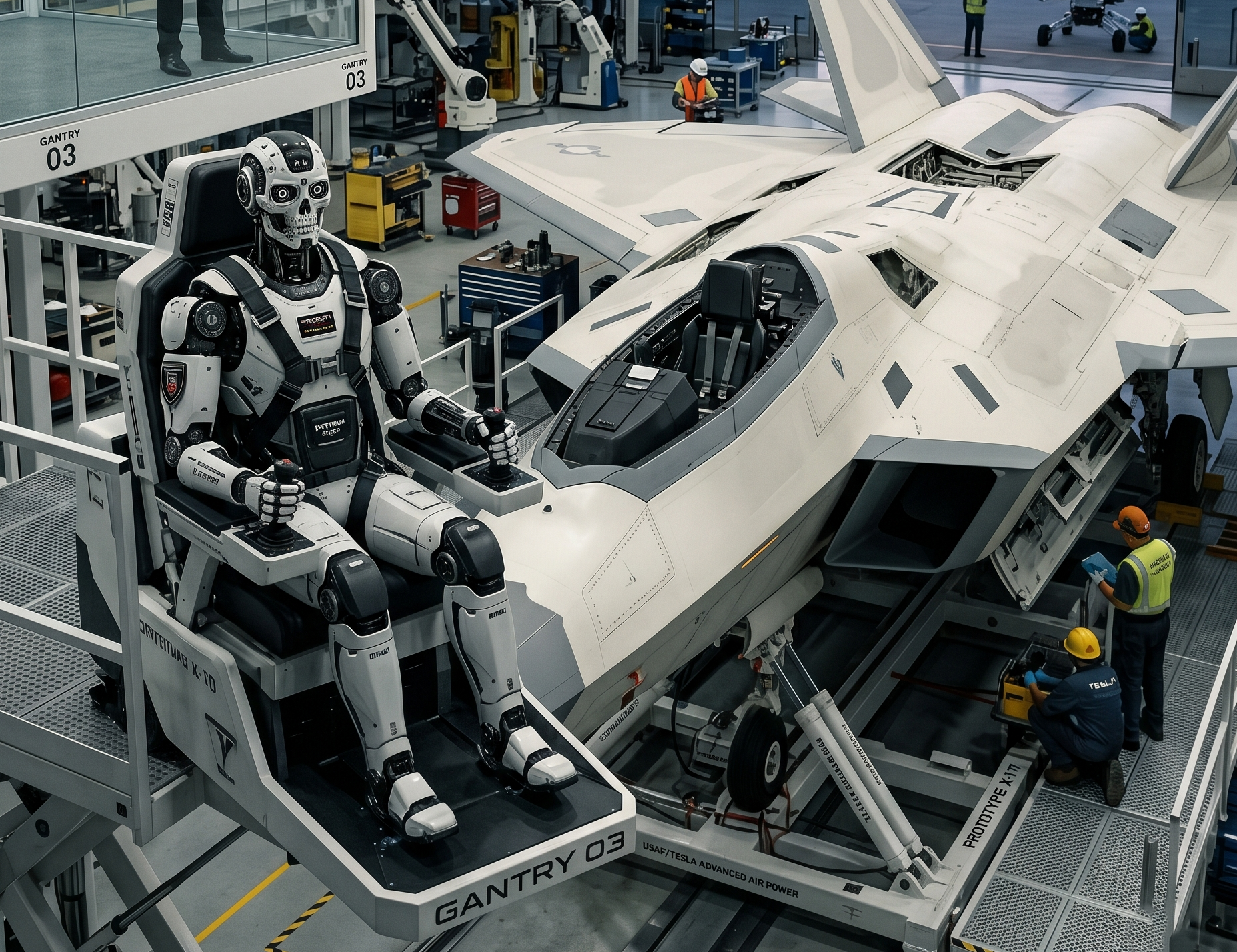
The future of warfare is entering a historic turning point.
For decades, advanced fighter jets symbolized military power. Nations spent billions building faster, stealthier, and deadlier aircraft designed to dominate the skies.
But now, a growing number of technology leaders believe the future may belong not to human pilots — but to artificial intelligence, autonomous drones, and unmanned combat systems.
At the center of this global debate stands Elon Musk.
You May Also Like
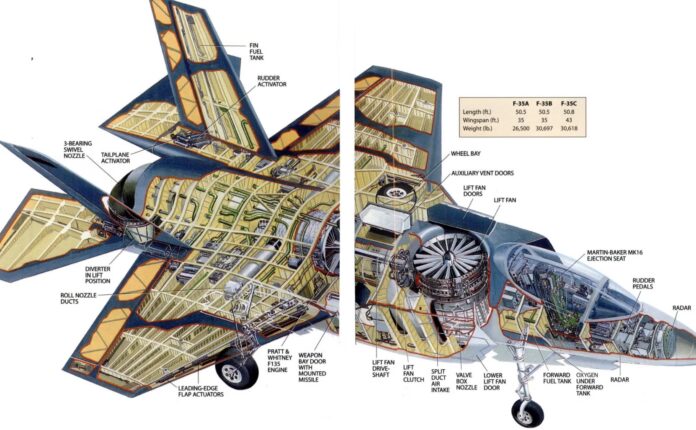

And his latest criticism of the F-35 Lightning II has reignited one of the most important military questions of the 21st century:
Are expensive fighter jets becoming obsolete?
Musk’s Attack on the F-35
Musk has repeatedly mocked the F-35 program on social media, criticizing both its enormous cost and the continued reliance on human pilots in modern warfare.
His argument is simple but disruptive:
Why spend massive amounts of money on crewed fighter jets when autonomous drones are becoming smarter, cheaper, and increasingly deadly?
The F-35 program is already considered the most expensive weapons program in military history, with lifetime costs projected to exceed trillions of dollars.
For Musk, that raises a serious concern.
Future wars may not reward a small number of ultra-expensive aircraft. Instead, they may favor large numbers of autonomous drones capable of overwhelming enemy defenses through speed, scale, and AI-driven coordination.
His comments come at a time when drones are transforming battlefields around the world.
The Drone Revolution Is Changing Warfare
The war in Ukraine demonstrated how relatively cheap drones can destroy tanks, track troop movements, strike targets deep behind enemy lines, and reshape military strategy almost overnight.
Suddenly, military planners across the world began asking difficult questions:
- Do countries still need massive fleets of traditional fighter jets?
- Could autonomous systems eventually replace pilots?
- Will future wars be fought primarily by machines?
Companies developing AI-powered drone technologies are moving rapidly to answer those questions.
Auterion, for example, is developing software that allows swarms of autonomous drones to communicate and coordinate attacks together.
Its leaders compare the transformation to the shift from giant mainframe computers to smartphones — smaller, cheaper, and more adaptable systems replacing older, more expensive technology.
Why Fighter Jets Still Matter
Despite the growing excitement around drones, military experts warn that replacing fighter jets entirely would be extremely dangerous — at least for now.
Modern fighter aircraft still provide capabilities drones struggle to match:
Range
Fighter jets can travel vast distances while carrying heavy payloads of weapons, sensors, and fuel.
Survivability
Stealth aircraft like the F-35 are specifically designed to survive in heavily defended airspace.
Human Judgment
Combat environments are chaotic and unpredictable. Human pilots can make rapid decisions in uncertain situations where AI may fail.
Electronic Warfare
Modern fighter jets act as flying information hubs capable of coordinating forces across air, sea, land, space, and cyber domains.
Experts argue that drones today remain vulnerable to:
- Electronic jamming
- GPS disruption
- Surface-to-air missiles
- Cyber attacks
- Limited endurance and payload capacity
And despite the drone revolution, nations continue investing heavily in advanced crewed combat aircraft.
Even Ukraine — where drones have become essential — continues requesting more manned fighter jets.
The F-35 Is More Than a Fighter Jet
One reason the F-35 remains central to modern military strategy is because it performs far more than a traditional fighter role.


Built by Lockheed Martin, the aircraft functions as:
- A stealth fighter
- A strike bomber
- An intelligence-gathering platform
- An electronic warfare aircraft
- A battlefield command center
- A communication and sensor fusion hub
Military analysts often describe it as a “quarterback” directing combat operations across multiple domains simultaneously.
Current autonomous systems simply cannot replicate all of those functions at the same level.
The Next Generation of Air Combat
Even as experts defend crewed fighters, militaries worldwide are already preparing for a future deeply integrated with AI and autonomous systems.
Programs such as:
- The U.S. Next Generation Air Dominance (NGAD) program
- Europe’s Future Combat Air System (FCAS)
- The Global Combat Air Programme (GCAP) between the UK, Italy, and Japan
are all being designed around a mix of manned and unmanned systems.


The future battlefield may feature:
- Piloted stealth fighters
- Autonomous drone wingmen
- AI-powered targeting systems
- Swarming reconnaissance drones
- Space-based communication networks
In many scenarios, human pilots may command fleets of intelligent drones while remaining at the center of critical decision-making.
The Real Debate Is About Balance
Most defense experts now agree on one thing:
The future is probably not human pilots versus drones.
It is human pilots working alongside drones.
Autonomous systems offer speed, mass production, and lower operational risk.
Crewed aircraft provide flexibility, judgment, survivability, and command capability.
The true military advantage may come from combining both together into one highly connected combat ecosystem.
As analyst Mark Gunzinger explained, the biggest leap in military capability will come from figuring out how manned and unmanned systems can operate together most effectively.
Conclusion: The Future of War Is Already Changing
Elon Musk’s criticism of the F-35 has intensified a debate already spreading across military circles worldwide.
The rise of drones and artificial intelligence is unquestionably changing warfare.
But the death of the fighter jet may still be far away.
For now, advanced aircraft like the F-35 remain essential because they combine stealth, intelligence, electronic warfare, and human judgment in ways autonomous systems still cannot fully match.
Yet Musk’s warning points toward a future where AI-driven systems may eventually transform air combat as dramatically as tanks once transformed cavalry.
The skies of tomorrow may not belong only to fighter pilots.
They may belong to networks of humans and machines fighting together.