How one stealth aircraft can cross continents, evade radar, and destroy the world’s most heavily fortified targets
When the United States needs to strike a target no other aircraft can reach, one machine rises above all others:
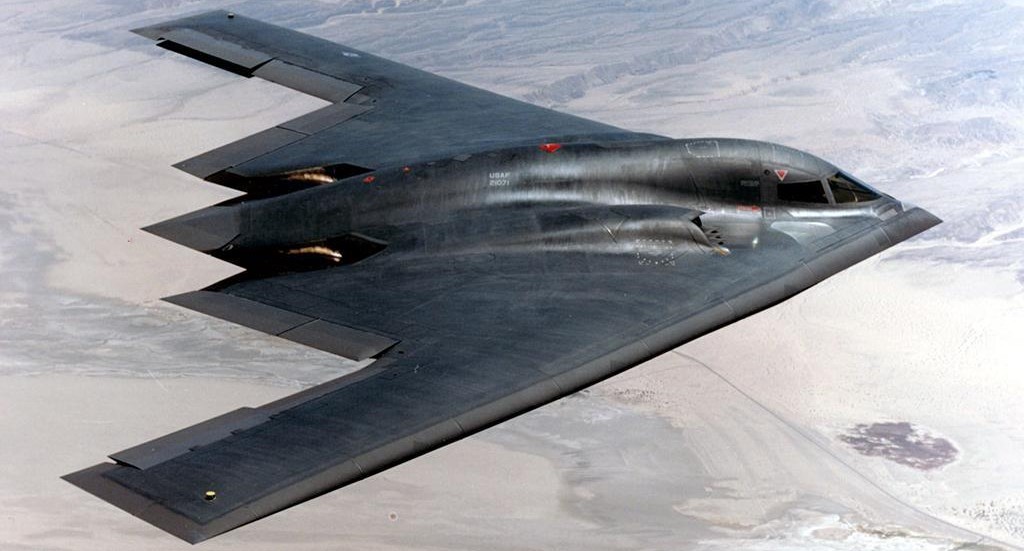
The Northrop Grumman B-2 Spirit.
It does not rely on speed like a fighter jet.
It does not announce its presence with overwhelming formations.
You May Also Like
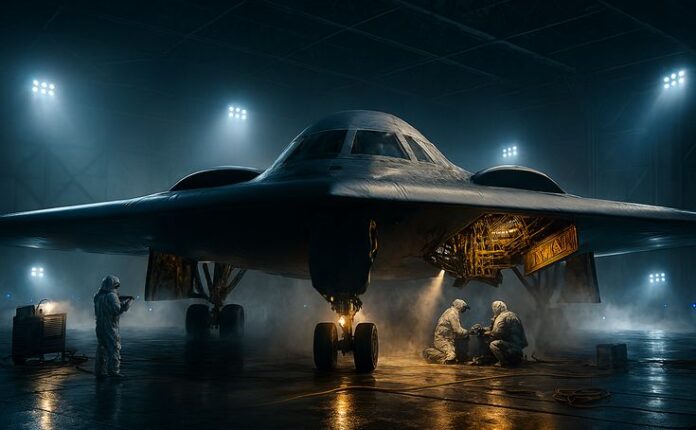

Instead, it operates in silence — slipping through defended airspace like a shadow.
And when it arrives, even underground bunkers are no longer safe.
The Bomber Built for Impossible Missions
The B-2 Spirit was designed during the Cold War for one terrifying purpose:
To penetrate the most advanced air defenses on Earth and strike targets no other aircraft could reach.


Its flying-wing design, radar-absorbing materials, and ultra-low infrared signature allow it to operate deep inside hostile territory with minimal detection.
Even decades after its first flight, the B-2 remains one of the most strategically important aircraft ever built.
How Many Bunker Buster Bombs Can the B-2 Carry?
One of the B-2’s most feared capabilities is its ability to deploy the gigantic:
GBU-57 Massive Ordnance Penetrator
Known as the “Massive Ordnance Penetrator” or MOP, this weapon was specifically developed to destroy deeply buried military facilities.


Each bomb weighs approximately:
- 30,000 pounds (15 tons)
- Can penetrate up to 200 feet of earth
- Or roughly 60 feet of reinforced concrete
The B-2 can carry:
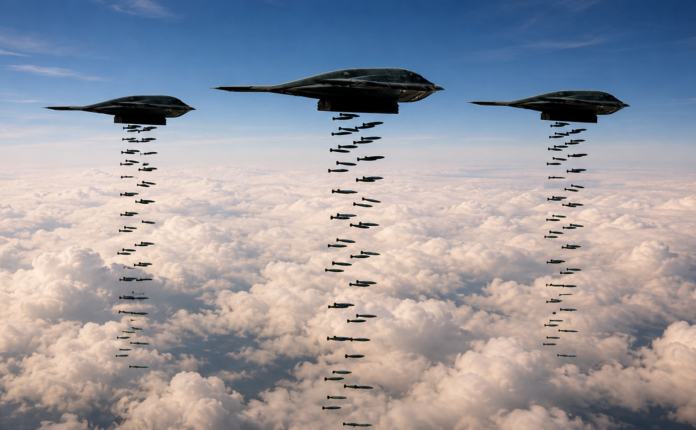
Two GBU-57 bunker busters in a single mission
That means a single stealth bomber can deliver enough penetrating power to threaten some of the most fortified underground facilities on Earth.
Can the B-2 Be Detected?
The simple answer is:
Extremely difficult — but not impossible.
The B-2 was engineered around stealth from the beginning.
Its radar cross-section is estimated to be incredibly small — often compared to the size of a bird on radar systems.


Its stealth advantages come from:
- Flying-wing aerodynamic shape
- Radar-absorbing coatings
- Reduced heat signature
- Minimal electromagnetic emissions
Together, these features make the aircraft exceptionally hard to track using conventional radar systems.
However, modern air defense networks using multiple sensor types, infrared tracking, and advanced long-wave radar can still potentially detect or track stealth aircraft under certain conditions.
Stealth does not mean invisible.
It means:
Hard enough to detect that the enemy may realize the threat only when it is already too late.
The B-2’s Incredible Payload Capacity
The B-2 is not just stealthy.
It is also a massive long-range strike platform.
Its internal weapons bays can carry up to:
40,000 pounds of weapons


Its arsenal can include:
- Precision-guided JDAM bombs
- Nuclear weapons
- Conventional strike munitions
- Massive bunker busters
Unlike older bombers, the B-2 carries all weapons internally to preserve stealth performance.
That combination of payload and invisibility gives the aircraft a unique role in modern warfare.
Why the B-2 Still Matters Today
Only 21 B-2 bombers were ever built.
Fewer remain operational today.
Yet despite the small fleet size, the aircraft continues to shape global military strategy.
Why?
Because very few nations possess the ability to:
- Launch from another continent
- Evade sophisticated air defenses
- Strike hardened underground targets
- Return home without landing
The B-2 was designed for exactly those missions.
More Than a Bomber — A Strategic Warning
The B-2 Spirit represents more than military technology.
It represents strategic reach.
Its existence sends a message that no target is completely unreachable — no matter how deeply buried or heavily defended.
And that is why, decades after entering service, it remains one of the most feared aircraft on Earth.
Final Insight
Modern warfare is no longer won by sheer numbers alone.
It is increasingly shaped by precision, stealth, and the ability to strike without warning.
The B-2 Spirit embodies all three.
It flies quietly.
It carries devastating power.
And in a world where underground bunkers and advanced air defenses continue to evolve, the shadow of the B-2 still changes how nations think about war itself.