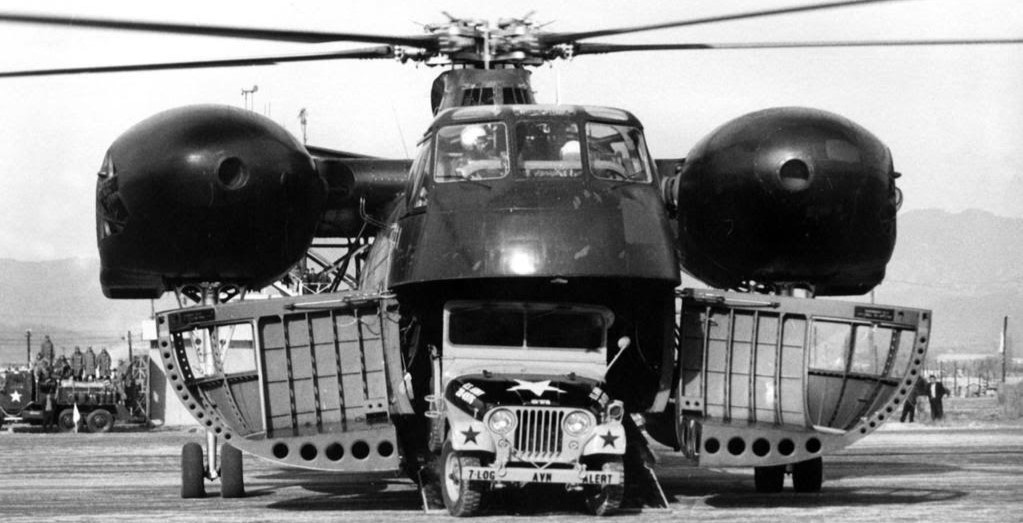
When engineering ambition met the limits of early aviation, the S-56 became the machine that proved the sky could carry anything
Before modern turbine helicopters dominated the battlefield, there was a machine so bold, so mechanically ambitious, that it redefined what a helicopter could physically do.
It was the Sikorsky S-56 — known in U.S. service as the CH-37 Mojave and Deuce.
At a time when helicopters were still proving their worth, this aircraft didn’t just fly.
It carried war itself.
You May Also Like
A Giant Born Before Its Time
The S-56 emerged in the early 1950s, when military aviation was still transitioning from piston engines to turbines.
Instead of following trends, Sikorsky pushed limits.


It became:
- The largest military helicopter in the Western world at the time
- The first Sikorsky helicopter with twin engines
- The largest piston-powered helicopter ever built
- A machine capable of lifting entire battlefield units
But its true revolution was not size — it was purpose.
Designed to Carry the Impossible
Unlike modern helicopters designed around compact turbine engines, the S-56 was built around raw mechanical power.
Two massive Pratt & Whitney R-2800 radial engines gave it extraordinary lifting capability for its time.
But what truly set it apart was its design philosophy:
No wasted space. No limits on cargo.


Inside its enormous cargo bay, it could carry:
- 3 military jeeps
- 24 stretchers for medevac missions
- 26 fully equipped soldiers
- Heavy battlefield equipment in remote terrain
It was one of the first helicopters that made true battlefield logistics from the air possible.
Engineering That Refused to Follow Convention
The S-56 broke every rule of helicopter design at the time.
Instead of placing engines above the cabin like most helicopters, Sikorsky mounted them in side nacelles — freeing the entire fuselage for cargo.
This decision created something revolutionary:
A helicopter with the soul of a flying transport truck.
Its folding rotor system allowed it to be stored efficiently — a critical feature for naval and expeditionary operations.
Even its cockpit was elevated above the cargo doors, giving pilots full visibility of loading operations below.
Every detail served one idea:
Lift more. Carry farther. Land anywhere.
A Machine Tested by War
Although designed in the early Cold War era, the S-56 proved its true value in Vietnam.


In one of its most critical roles, the S-56 was used to recover downed aircraft deep in hostile terrain — missions too dangerous or inaccessible for ground forces.
It lifted millions of dollars in equipment directly from enemy-controlled areas.
Later, Marine CH-37 units flew thousands of missions transporting troops, supplies, and equipment under extreme conditions.
Despite its age and mechanical limitations, it delivered:
- Thousands of flight hours in combat zones
- Millions of kilograms of cargo transported
- Zero fatal air accidents in major deployment records
In an era before modern lift helicopters, it was a lifeline in the sky.
Strengths and Struggles of a Piston Giant
The S-56 was powerful — but not perfect.
Its piston engines created:
- Heavy vibration
- High maintenance demands
- Loud acoustic signature
- Lower efficiency compared to turbine helicopters
These limitations eventually led to its replacement by turbine-powered aircraft like the Sikorsky CH-53 Sea Stallion.
But in its time, it had no equal.
Why the S-56 Still Matters Today
The S-56 was more than a helicopter.
It was a transition point in aviation history.
It proved three lasting truths:
1. Air mobility wins wars
Getting equipment and troops anywhere on demand changes battlefield strategy.
2. Engineering evolves through necessity
The S-56 pushed piston technology to its absolute limit before turbines took over.
3. Size is not just power — it is access
It gave commanders the ability to reach places that were previously unreachable.
Final Insight
The S-56 did not look futuristic.
It did not use advanced avionics or stealth.
But it carried something more important:
It carried possibility into impossible places.
And in doing so, it helped define the modern idea of vertical lift warfare — where the battlefield is no longer limited by roads, rivers, or terrain.
The giants of today’s aviation world stand on the shoulders of machines like this one.
The S-56 didn’t just fly.