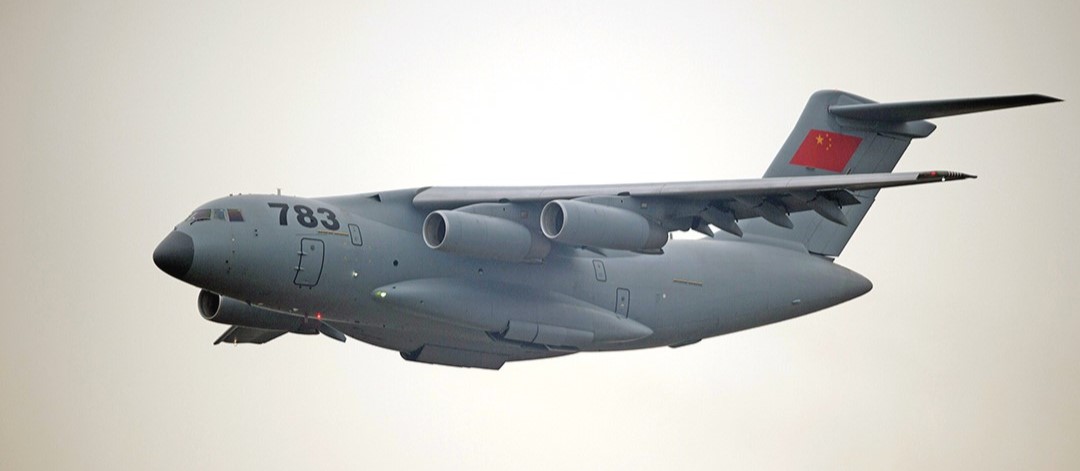
From Reverse Engineering to Cyber Espionage — The Controversial Rise of China’s Modern War Machine
Over the last two decades, China has transformed its military at breathtaking speed.
What was once viewed as a largely outdated force equipped with aging Soviet-era systems is now becoming one of the most technologically advanced militaries on Earth. Across China’s airfields, naval bases, and missile sites stand stealth fighters, advanced drones, hypersonic weapons, modern tanks, destroyers, submarines, and long-range missile systems capable of challenging the world’s most powerful armed forces.
To many observers, however, there is something strangely familiar about these weapons.
Some Chinese fighter jets resemble American stealth aircraft almost panel for panel. Certain drones appear remarkably similar to U.S. designs used in Iraq and Afghanistan. Several naval systems mirror Russian technology so closely that even military experts struggle to ignore the similarities.
You May Also Like

This phenomenon has become known as “techno-cloning” — the controversial strategy through which China is accused of accelerating military modernization by copying, reverse-engineering, and allegedly stealing foreign defense technology.
Supporters call it smart adaptation.
Critics call it industrial espionage on a global scale.
Either way, the strategy has helped reshape the balance of military power in the 21st century.
The Race to Catch Up


For much of the Cold War, China lagged far behind Western military powers technologically.
The United States dominated stealth aviation, aircraft carriers, satellite warfare, precision-guided weapons, and advanced electronics. Russia led in missile systems and air-defense technology.
China knew it could not compete directly overnight.
So Beijing adopted a different strategy:
Learn from others.
Study foreign systems.
Acquire technology by any means possible.
Then improve and mass-produce it domestically.
The result was one of the fastest military modernization programs in modern history.
China dramatically increased defense spending year after year, building a military-industrial complex capable of producing advanced weapons at extraordinary speed.
But according to Western intelligence agencies and defense analysts, much of that progress did not happen independently.
The Age of “Techno-Cloning”


American defense officials and military analysts have repeatedly accused China of using cyber espionage, reverse engineering, and technology theft to accelerate weapons development.
According to reports from the U.S. Naval Institute and U.S. defense agencies, Chinese hackers allegedly targeted highly classified military programs for years.
Among the systems reportedly compromised were technologies connected to the Lockheed Martin F-35 Lightning II, ballistic missile defense systems, drones, helicopters, and advanced radar networks.
The strategy was simple but effective:
Instead of spending decades developing every technology from scratch, China could shorten development time dramatically by studying existing systems from global military powers.
This allowed Chinese engineers to move faster, reduce research costs, and rapidly close technological gaps with the West.
The Fighter Jet That Sparked Global Attention


One of the most controversial examples is the Shenyang FC-31 Gyrfalcon, also known as the J-31.
When the aircraft first appeared publicly, aviation experts immediately noticed similarities to the American F-35 stealth fighter.
The aircraft’s shape, stealth profile, twin-tail design, and fuselage contours triggered intense debate within military circles.
Critics argued the resemblance was too close to ignore.
Western investigators later connected multiple cyber espionage cases to attempts to steal data linked to the F-35 and other American military aircraft.
Chinese officials strongly denied accusations that the aircraft was simply a copy.
And to be fair, military aircraft often share similar aerodynamic principles because stealth physics imposes certain design limitations.
Still, the timing and similarities fueled suspicions worldwide.
China’s Growing Drone Empire


China’s drone industry provides another striking example.
After observing the battlefield success of American drones like the General Atomics MQ-1 Predator and the General Atomics MQ-9 Reaper during the wars in Iraq and Afghanistan, China moved aggressively into drone development.
Soon afterward, Chinese drones such as the Wing Loong and CH-4 emerged.
To many analysts, the resemblance was unmistakable.
Yet China added an important advantage:
Lower prices.
Many countries unable to purchase advanced Western drones due to export restrictions began buying Chinese systems instead. Chinese drones spread rapidly across Africa, the Middle East, and Asia, expanding Beijing’s military influence globally.
In this sense, techno-cloning became more than imitation.
It became a tool of geopolitical expansion.
Reverse Engineering Russia


China’s relationship with Russia reveals another side of the story.
Following the collapse of the Soviet Union, Russia sold advanced military equipment to China, including the legendary Sukhoi Su-27 fighter.
China initially produced licensed versions using Russian components.
But after manufacturing around 100 aircraft, China reportedly canceled parts of the agreement and introduced the domestically produced Shenyang J-11B — an aircraft many considered nearly identical to the Su-27.
The move reportedly angered Moscow and intensified concerns that China was using foreign partnerships primarily to absorb and reproduce technology independently.
Over time, similar accusations emerged involving missiles, helicopters, armored vehicles, and naval systems.
The Most Important Question: Can They Fight?


Despite China’s remarkable military growth, one critical question remains unanswered:
How effective are these weapons in real war?
Many Chinese systems appear advanced on paper. Some may rival or even surpass certain Western technologies in specific areas.
But combat is the ultimate test.
Unlike American and some Russian systems that have seen extensive wartime use, many Chinese platforms remain largely untested under real battlefield conditions.
Military analysts caution that reliability, logistics, pilot training, electronic warfare resistance, and operational experience matter just as much as advanced design.
A weapon can look powerful at an air show and still fail under combat pressure.
History has repeatedly proven this.
Copying Alone Is Not Enough


China’s rise as a military power is no longer just about copying technology.
That phase may have been only the beginning.
Today, China is increasingly developing original systems in artificial intelligence, hypersonic weapons, naval shipbuilding, quantum technology, and drone warfare. Many experts now believe China is evolving from imitator to genuine innovator.
And that may be the most important development of all.
Because throughout history, rising powers often begin by learning from stronger rivals before eventually surpassing them in key areas.
The United States once studied European military technology.
Japan once copied Western industrial methods.
Now China is following a similar path — but at a scale the world has rarely seen.
Whether called techno-cloning, reverse engineering, or strategic adaptation, one reality is impossible to ignore:
China has used every available tool to accelerate its rise.
And in doing so, it has transformed itself into one of the most formidable military powers of the modern age.
The global balance of power is changing — not slowly, but rapidly.
And the weapons once accused of being copies may soon become the foundation of an entirely new era of warfare.