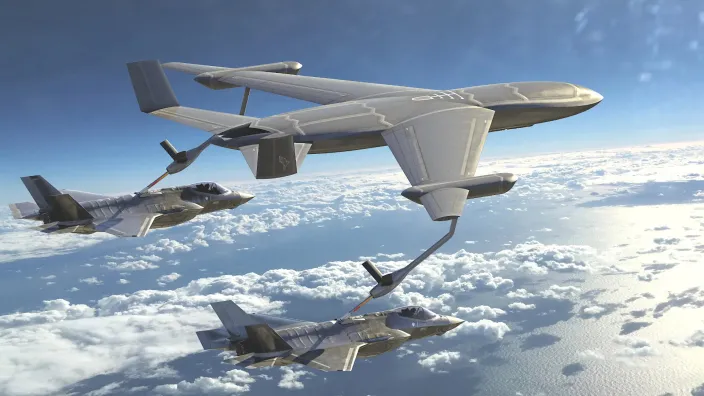
How copied technology, espionage, and reverse engineering helped transform China into a military superpower
For decades, the world viewed China as a nation struggling to catch up technologically with the United States and the Soviet Union. But history rarely stands still. Through relentless ambition, strategic technology transfers, reverse engineering, cyber espionage, and rapid industrial growth, Beijing transformed itself into one of the world’s most formidable military powers.
Today, China fields stealth fighters, advanced drones, hypersonic missiles, and cutting-edge electronic warfare systems capable of challenging the dominance of the West and Russia alike. Yet many of these breakthroughs did not emerge in isolation. Behind several of China’s most dangerous weapons lies a controversial story — one involving copied designs, stolen secrets, and foreign technologies repurposed into instruments of power.
Critics call it industrial espionage. Chinese officials often describe it as national modernization and innovation. Whatever the label, the results are undeniable: China now possesses one of the fastest-growing and most technologically advanced militaries on Earth.
Here are five Chinese military systems that sparked global controversy because of their striking resemblance to Russian and American technology.
You May Also Like

1. The J-7 — China’s First Great Copycat Fighter
The story begins during the height of the Cold War.
In the early 1960s, relations between the Soviet Union and China were deteriorating rapidly. Despite mounting tensions, Moscow transferred blueprints, technical data, and components related to the famous Mikoyan-Gurevich MiG-21 interceptor fighter.
The Soviets hoped the technology transfer would preserve communist unity.
It did not.
As the Sino-Soviet split deepened toward near-war in the late 1960s, China continued developing the aircraft independently. The result was the Chengdu J-7 — essentially a Chinese-built version of the MiG-21.


Although primitive by modern standards, the J-7 became enormously important for China’s aviation industry. Thousands were produced, exported globally, and used as the foundation for future fighter development.
Ironically, after relations between Washington and Beijing improved in the 1970s, some J-7 variants were even acquired by the United States for aggressor training — helping American pilots prepare for combat against Soviet aircraft.
The aircraft symbolized something much larger: China’s realization that copying foreign technology could dramatically accelerate military modernization.
2. The J-11 — The Russian “Flanker” Reborn in China
After the collapse of the Soviet Union, Russia desperately needed money. China desperately needed advanced weapons.
The result was one of the most significant arms deals of the post-Cold War era.
Russia agreed to sell and license production of the legendary Sukhoi Su-27 “Flanker” fighter to China. The aircraft was among the most capable air superiority fighters in the world — fast, agile, and heavily armed.
China’s version became the Shenyang J-11.
At first, the partnership appeared mutually beneficial. Russian aerospace firms survived financially, while China gained access to cutting-edge fighter technology.
But tensions soon emerged.
Russian officials accused China of violating licensing agreements by replacing Russian avionics with domestic systems and reverse engineering the aircraft for independent production. Beijing eventually developed improved variants without Russian approval.


The controversy permanently changed Russia’s willingness to share advanced military technology with China. Moscow increasingly feared that every sale could eventually create a future competitor.
Today, the J-11 family remains one of the backbone fighters of the People’s Liberation Army Air Force.
What began as licensed production evolved into an independent Chinese fighter ecosystem.
3. The J-31 — China’s “Stealth Twin” of the F-35
Perhaps no Chinese aircraft generated more international suspicion than the Shenyang FC-31, also known as the J-31.
When the aircraft first appeared publicly, military analysts immediately noticed similarities to America’s Lockheed Martin F-35 Lightning II stealth fighter.
The shape of the fuselage, stealth contours, internal weapons bays, and overall appearance led many experts to suspect that Chinese cyber espionage may have helped accelerate the aircraft’s development.
The controversy intensified after revelations of large-scale cyber intrusions targeting U.S. defense contractors connected to the F-35 program.


While the J-31 likely lacks many of the F-35’s most sophisticated sensor fusion and networking capabilities, the aircraft represents a massive leap for China’s aerospace industry.
More importantly, it signals Beijing’s determination to compete directly with Western stealth aviation.
Some analysts believe future carrier-based variants of the J-31 could become a central component of China’s expanding naval air power in the Pacific.
The larger strategic concern for Washington is not simply whether the J-31 copied American ideas — but how rapidly China can now turn those ideas into operational weapons.
4. Chinese Drones — From Lagging Behind to Global Competitor
In 2010, the United States dominated the world of military drones.
American UAVs such as the General Atomics MQ-9 Reaper became symbols of modern warfare, capable of long-endurance surveillance and precision strikes across multiple battlefields.
China, meanwhile, lagged far behind.
Then came a stunning transformation.
Within a remarkably short time, Chinese firms unveiled advanced unmanned systems strikingly similar to American drones in both appearance and capability.
According to U.S. intelligence and cybersecurity investigations, Chinese hackers targeted government agencies and defense contractors connected to UAV development, including companies like General Atomics.
Today, Chinese drones are exported across the Middle East, Africa, and Asia, often at lower prices than Western systems.


Aircraft such as the Wing Loong and CH-series drones have become serious competitors on the global arms market.
For many nations unable to buy American drones due to export restrictions, Chinese UAVs became the alternative.
This shift demonstrated that China was no longer merely copying technology — it was learning how to mass-produce and export it on a global scale.
5. Night Vision Technology — The Battle to “Own the Night”
After the Vietnam War, the United States invested heavily in one strategic advantage: the ability to dominate nighttime combat.
Advanced night vision systems revolutionized warfare by allowing soldiers, armored vehicles, helicopters, and aircraft to operate effectively in darkness.
This capability gave American forces a decisive edge in conflicts from the Gulf War to Afghanistan.
China understood the importance immediately.
Over the years, U.S. authorities accused Chinese operatives and businessmen of illegally acquiring export-controlled night vision technologies through covert purchases, smuggling operations, and cyber theft.


Today, Chinese-made thermal optics and night vision systems are dramatically more advanced than they were two decades ago.
While American systems still maintain important advantages in quality and battlefield integration, the technological gap has narrowed considerably.
The race to “own the night” is no longer uncontested.
The Bigger Picture — Copying, Innovation, and the Rise of China
The debate surrounding Chinese military technology is far more complex than simple accusations of theft.
Yes, espionage and reverse engineering played major roles in accelerating China’s rise. Nearly every major power in history has used espionage to gain strategic advantage. During the Cold War, both the United States and the Soviet Union aggressively stole secrets from one another.
But copying alone cannot create a modern military superpower.
What truly changed China’s position was its ability to absorb foreign technology, improve it, mass-produce it, and integrate it into a rapidly expanding industrial ecosystem.
That transformation required enormous investments in education, engineering, manufacturing, artificial intelligence, electronics, shipbuilding, and aerospace research.
Today, China no longer relies solely on imitation. In several fields — including drone production, missile manufacturing, shipbuilding capacity, and some AI-enabled military systems — Beijing is becoming an innovator in its own right.
And that reality may be the most important lesson of all.
The world is no longer witnessing a technologically backward China trying to catch up.
It is witnessing the emergence of a military-industrial power capable of reshaping the global balance of power for decades to come.