Ulyanovsk Was Meant to Challenge America’s Navy — Instead, It Became a Symbol of Soviet Collapse
During the final decades of the Cold War, the Soviet Union dreamed of building a warship powerful enough to challenge the dominance of the United States Navy across the world’s oceans.
It would not merely be another aircraft carrier.
It would be a floating fortress.
A nuclear-powered supercarrier designed to project Soviet power across the globe.
A ship built not only for war — but for prestige, fear, and political influence.
Its name was the Ulyanovsk.
You May Also Like
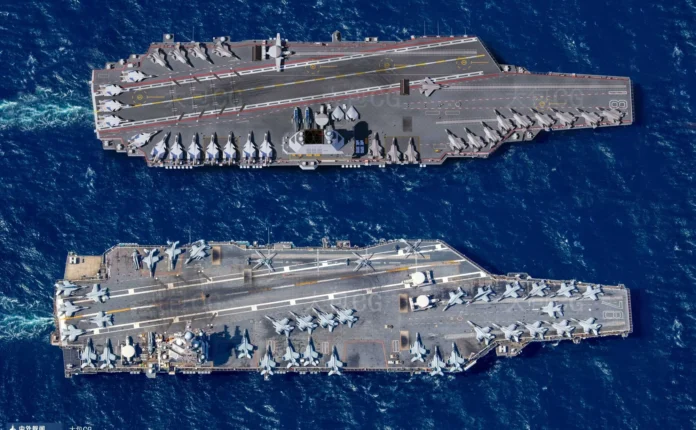
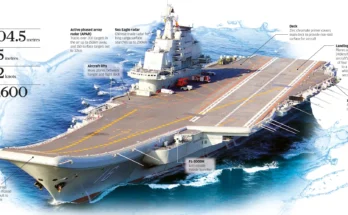
Had it been completed, the Ulyanovsk could have transformed the Soviet Navy into a true blue-water force capable of confronting American carrier strike groups far from Russian shores.
Instead, the massive carrier never sailed a single mission.
The unfinished giant was scrapped before completion, becoming one of the greatest “what if” stories in modern naval history — and a powerful symbol of the Soviet Union’s collapse.
The Soviet Union’s Ultimate Naval Dream


For decades, the Soviet Navy lagged behind the United States in carrier warfare.
America mastered the concept of global naval power through enormous aircraft carriers capable of launching air strikes anywhere on Earth. These floating airbases became symbols of American military dominance.
The Soviet Union focused instead on submarines, ballistic missiles, and land-based air power.
But by the 1970s, Soviet military planners realized something important:
Missiles alone could not guarantee global influence.
To compete with the United States at sea, the Soviet Union needed carriers capable of operating across the world’s oceans — not just near its own coastline.
That realization gave birth to the Ulyanovsk project.
And unlike earlier Soviet carriers, this one was designed to rival America’s best.
A Nuclear Giant Built for Global Power


The planned specifications of the Ulyanovsk were staggering.
The ship would have stretched nearly 1,000 feet long and displaced roughly 85,000 tons — placing it firmly in the category of true supercarriers.
At its heart would have been four nuclear reactors, giving the ship extraordinary endurance and allowing it to travel vast distances without constant refueling.
This was critical for what military strategists call “blue-water capability” — the ability to operate globally across deep oceans for extended periods.
The carrier was expected to travel at speeds of around 30 knots while carrying a large air wing of approximately 70 aircraft.
Among them would have been advanced Soviet fighters such as MiG and Sukhoi naval aircraft, airborne early-warning aircraft, and anti-submarine helicopters.
Unlike previous Soviet carriers that relied mainly on ski-jump launches, the Ulyanovsk was planned to include steam catapults similar to those used by American carriers.
That mattered enormously.
Steam catapults allow heavier aircraft to launch with more fuel, weapons, and operational flexibility — dramatically increasing combat effectiveness.
For the first time, the Soviet Union was preparing to build a carrier that could genuinely rival Western naval aviation technology.
More Than a Warship — A Political Weapon


The Ulyanovsk was never just about military strategy.
It was also about prestige.
Aircraft carriers are among the most powerful political symbols on Earth. They represent industrial strength, technological sophistication, and global ambition.
The United States understood this perfectly during the Cold War. Every American carrier strike group projected not only military power but psychological dominance.
The Soviet Union wanted the same image.
A nuclear-powered supercarrier sailing under the Soviet flag would have become a massive propaganda victory — proof that Moscow could compete directly with Washington not just on land or in space, but across the world’s oceans.
Imagine the message it would have sent:
A Soviet carrier battle group operating in the Atlantic, Pacific, or Mediterranean alongside nuclear submarines, missile cruisers, and advanced fighter aircraft.
The Ulyanovsk would have been the crown jewel of Soviet naval ambition.
Why the Ulyanovsk Failed


Construction of the Ulyanovsk began in the late 1980s.
But the timing could not have been worse.
The Soviet economy was already weakening under immense pressure from military spending, political instability, and declining productivity. Building a nuclear-powered supercarrier required enormous financial resources, industrial coordination, and long-term political stability.
The Soviet Union had none of those things left.
Costs spiraled upward. Delays mounted. The Cold War itself was ending.
Then came the event that destroyed the project entirely:
The collapse of the Soviet Union in 1991.
As the Soviet state disintegrated, funding vanished almost overnight. Massive defense projects across the former USSR were suddenly abandoned or canceled.
The unfinished hull of the Ulyanovsk was eventually dismantled for scrap in 1992 before the carrier could ever enter service.
The dream of a Soviet nuclear supercarrier died before it even touched open water.
Russia’s Aircraft Carrier Curse


The failure of the Ulyanovsk exposed a deeper problem that still affects Russia today:
Russia has consistently struggled to build and maintain large aircraft carriers.
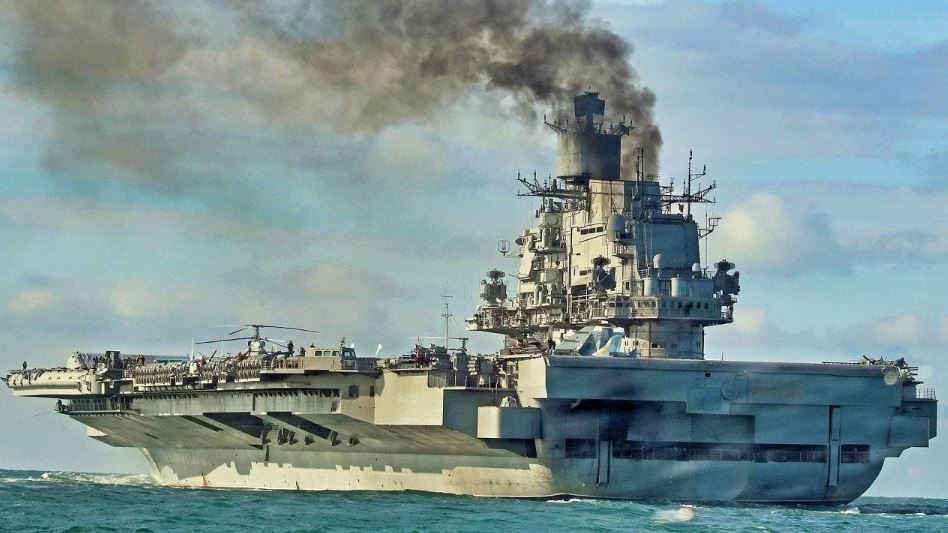
Its only operational carrier, the Admiral Kuznetsov, has become infamous for mechanical breakdowns, fires, accidents, delays, and repair disasters.
Over the years, the ship has suffered crane collapses, major fires, smoke problems, dry dock accidents, and repeated modernization setbacks.
The carrier often appears less like a symbol of naval dominance and more like a symbol of industrial struggle.
Why does this happen?
Part of the answer lies in Russia’s strategic priorities.
For decades, Soviet and Russian military investment focused heavily on missiles, submarines, air defense systems, and nuclear deterrence. These areas became world-class strengths.
Aircraft carriers, however, require a completely different industrial ecosystem: advanced shipbuilding infrastructure, long-term budgeting, naval aviation expertise, logistical support, and massive maintenance capability.
Building a carrier is difficult.
Keeping one operational for decades is even harder.
The United States spent generations mastering that system. Russia never fully did.
The Supercarrier Russia Never Had


Had the Ulyanovsk entered service, the balance of naval power during the late Cold War might have looked very different.
Soviet carrier strike groups could have operated farther from home waters. Russian naval aviation may have evolved into a far more capable force. Moscow might have gained stronger military influence in the Mediterranean, Atlantic, Arctic, and Pacific regions.
But history moved in another direction.
The Ulyanovsk never became the Soviet Union’s answer to America’s supercarriers.
Instead, it became a reminder that military ambition alone is not enough.
Even the mightiest warships require economic strength, industrial discipline, political stability, and decades of sustained investment.
Without those foundations, even the grandest supercarrier becomes nothing more than unfinished steel rusting in a shipyard.
And for Russia, the ghost of the Ulyanovsk still lingers — a vision of naval power that was imagined, partially built, but ultimately never achieved.