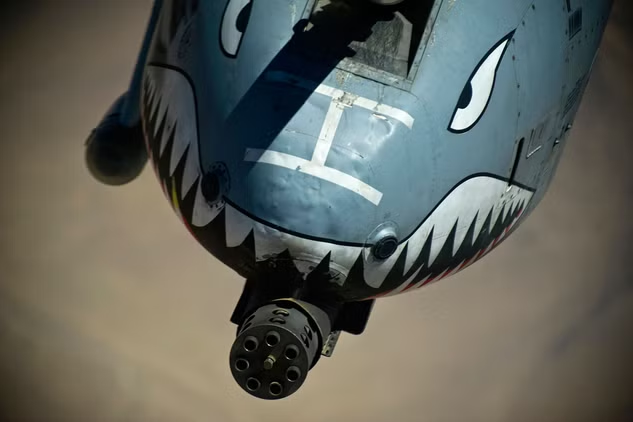
Few aircraft in the history of warfare have inspired the kind of respect, fear, and loyalty earned by the Fairchild Republic A-10 Thunderbolt II.
Pilots admire it.
Ground troops trust it.
Enemies fear it.
Military strategists argue endlessly about it.
To some people, the A-10 is outdated — a slow, aging Cold War relic struggling to survive in the age of stealth fighters and drones.
To others, it is one of the greatest combat aircraft ever built.
You May Also Like
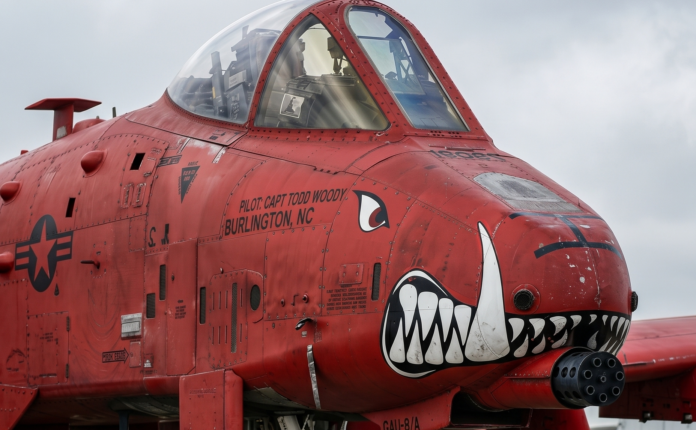
But no matter where someone stands in that debate, one fact is impossible to deny:
The A-10 Warthog became legendary because it was designed for one purpose above all else — protecting soldiers on the ground at almost any cost.
In an era where modern warfare increasingly depends on satellites, artificial intelligence, hypersonic missiles, and stealth technology, the Warthog represents something far more direct and brutally honest.
It is not elegant.
It is not glamorous.
It is not fast.
It is simply devastating.
And for nearly half a century, that has been enough.
Born From The Fear Of World War III
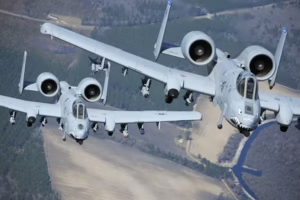
The A-10 emerged from one of the most dangerous periods in human history: the Cold War.
During the 1960s and 1970s, American military planners feared that the Soviet Union could unleash enormous armored formations across Europe. Thousands of Soviet tanks supported by mechanized infantry and artillery threatened NATO defenses.
The United States needed a specialized aircraft capable of stopping that invasion.
Not a glamorous air superiority fighter.
Not a high-altitude strategic bomber.
The Air Force needed something else entirely:
A battlefield predator.
An aircraft capable of flying low through smoke, explosions, anti-aircraft fire, and chaos while destroying tanks at close range.
That requirement gave birth to the A-10 Thunderbolt II.
The aircraft was named after the famous Republic P-47 Thunderbolt of World War II, another heavily armed and rugged attack aircraft beloved for supporting troops on the battlefield.
But the A-10 would become something even more extreme.
Built Around A Monster Cannon
Most fighter aircraft are designed first, and their weapons are added afterward.
The A-10 was the opposite.
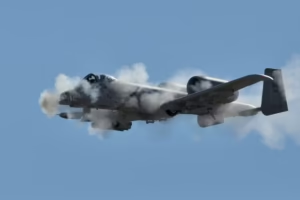
Engineers essentially built the entire aircraft around its main weapon: the GAU-8/A Avenger cannon.
This terrifying 30mm Gatling gun remains one of the most powerful aircraft cannons ever created. The weapon is capable of firing nearly 4,000 armor-piercing rounds per minute with enough force to shred tanks, armored vehicles, bunkers, and enemy positions.
The gun is so massive that it dominates the aircraft’s entire forward section.
When the cannon fires, the sound it produces became one of the most iconic noises in modern warfare:
“BRRRRRT.”
To enemy forces, that sound meant destruction.
To American troops under fire, it often meant salvation.
The cannon fires depleted uranium armor-piercing rounds and high explosive incendiary ammunition designed specifically to destroy hardened targets.
The aircraft’s mission was brutally simple:
Fly low.
Find enemy armor.
Destroy it completely.
And the A-10 became extraordinarily good at that mission.
The Flying Tank
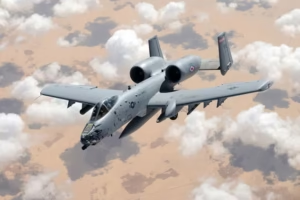
The A-10 does not merely attack battlefields.
It survives them.
Unlike sleek fighter jets optimized for speed and stealth, the Warthog was designed to absorb punishment that would destroy many other aircraft.
Its cockpit is protected by a titanium armored shell often referred to as a “bathtub.” This armor shields the pilot from ground fire and battlefield debris. Critical systems throughout the aircraft are duplicated or separated to maximize survivability.
The aircraft can survive direct hits from armor-piercing rounds up to 23mm.
Its fuel systems are self-sealing.
Its hydraulic systems have manual backups.
Its engines are mounted apart to reduce the chance of simultaneous destruction.
Even many of its parts are interchangeable left-to-right to simplify battlefield maintenance.
Stories of damaged A-10s returning safely became legendary across the Air Force.
Aircraft landed with:
Massive holes in wings.
Severely damaged tails.
Destroyed hydraulic systems.
Engine failures.
Shrapnel-riddled fuselages.
And still, the pilots came home.
This toughness earned the aircraft one of its most famous descriptions:
“The flying tank.”
Why Soldiers Love The Warthog
Many advanced military aircraft impress people from a distance.
The A-10 earns loyalty up close.
Ground troops developed an unusually emotional connection with the Warthog because of how it fights.
The aircraft flies low enough for soldiers to see it clearly overhead. It remains near the battlefield for long periods instead of quickly passing through. It can visually identify threats carefully before firing, reducing the danger to friendly forces.
Most importantly, A-10 pilots specialize in close air support — one of the most difficult missions in warfare.
This mission involves attacking enemies dangerously close to friendly troops.
In these situations, precision, patience, and battlefield awareness matter more than raw speed.
The A-10 excels in exactly those conditions.
Its large bubble canopy provides exceptional visibility. Its low-speed maneuverability allows precise attacks. Its long loiter time means it can stay overhead protecting troops while faster jets must return for fuel.
For soldiers trapped in combat, hearing the roar of an approaching Warthog became deeply reassuring.
Because unlike many aircraft, the A-10 was built specifically to fight for them.
A Weapon System With Endless Firepower
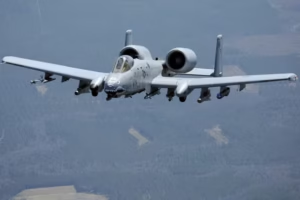
The Warthog’s cannon may be legendary, but its overall arsenal is equally devastating.
The A-10 can carry up to 16,000 pounds of ordnance across multiple hardpoints beneath its wings and fuselage.
Its weapons include:
- AGM-65 Maverick missiles for destroying tanks and armored targets
- Laser-guided bombs
- GPS-guided JDAM precision bombs
- Rockets
- Cluster munitions
- General-purpose bombs
- Illumination flares
- AIM-9 Sidewinder air-to-air missiles
This enormous payload allows the aircraft to engage a wide range of battlefield threats.
Unlike many fighters optimized for one mission, the A-10 became a highly adaptable battlefield platform capable of striking armor, vehicles, bunkers, infantry positions, and even low-level aerial threats.
And because the aircraft operates effectively from austere forward bases, it can remain close to combat zones where support is needed most.
The Evolution Of The A-10C
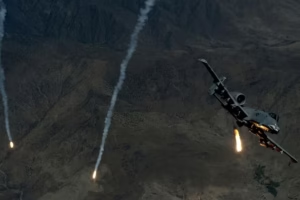
Although many people think of the A-10 as an aging relic, the aircraft evolved dramatically over the decades.
The modern A-10C variant incorporates sophisticated digital systems far beyond the original Cold War design.
Upgrades included:
- GPS navigation systems
- Advanced targeting pods
- Digital cockpit displays
- Precision-guided weapon capability
- Enhanced fire control systems
- Night vision compatibility
- Data-link communications systems
- Electronic countermeasures
- Modern situational awareness systems
These upgrades transformed the aircraft from a purely analog tank killer into a modern precision-strike platform.
The A-10C can now integrate with broader battlefield networks, share targeting data, and conduct precision attacks day or night.
This modernization helped extend the aircraft’s operational life far beyond original expectations.
The Warthog At War
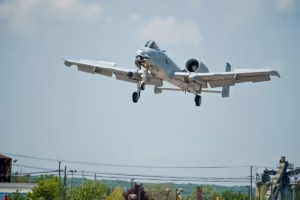
The A-10 proved itself repeatedly in combat.
During Gulf War operations, the aircraft devastated Iraqi armored formations and became one of the most effective tank-killing systems of the war.
It later participated in:
- Operation Desert Storm
- Operation Southern Watch
- Operation Allied Force
- Operation Enduring Freedom
- Operation Iraqi Freedom
In Afghanistan and Iraq, the aircraft’s close air support capabilities became especially valuable. Rugged terrain, urban combat, and prolonged ground operations often required aircraft capable of remaining near troops for extended periods.
The Warthog excelled.
Again and again, troops called for A-10 support during desperate situations.
And again and again, the aircraft delivered.
Why The Air Force Tried To Retire It
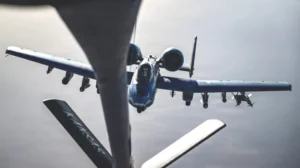
Despite its legendary status, the Air Force has spent years trying to phase out the Warthog.
The reason is not because the aircraft failed.
The reason is because warfare changed.
Modern air defense systems became dramatically more dangerous. Advanced missile systems, radar-guided weapons, electronic warfare, and integrated air defense networks now threaten low-flying aircraft far more than during the Cold War.
Against powerful adversaries like China or Russia, the A-10 could face enormous risks.
The war in Ukraine reinforced these concerns as attack aircraft and helicopters suffered severe losses against modern air defenses.
The Air Force increasingly shifted toward stealth aircraft like the Lockheed Martin F-35 Lightning II capable of surviving in heavily defended airspace.
But replacing the A-10 proved harder than expected.
Because while stealth fighters are technologically extraordinary, they do not fully replicate the Warthog’s combination of endurance, firepower, battlefield presence, and close-support specialization.
The aircraft simply fills a unique role.
The Warthog’s Last Great Lesson
The A-10’s survival into the modern era teaches an important lesson about warfare.
Technology evolves constantly.
Military doctrine changes constantly.
Weapons become faster, smarter, and more advanced every year.
Yet some battlefield realities remain timeless.
Soldiers still need protection.
Ground forces still need air support.
Wars are still fought by human beings facing terrifying situations at close range.
And for decades, few aircraft protected troops more faithfully than the Warthog.
That is why the A-10 became more than just an airplane.
It became a symbol.
A symbol of resilience.
A symbol of toughness.
A symbol of loyalty to the troops below.
The Warthog was never beautiful.
It was never designed to impress people at airshows or dominate headlines with futuristic technology.
It was built for war in its rawest form.
And perhaps that is why so many people still admire it today.
Because in an age increasingly dominated by machines, algorithms, and distance warfare, the A-10 Thunderbolt II still feels intensely human — loud, scarred, stubborn, and fiercely protective of those fighting beneath it.
And long after it finally leaves the skies, the legend of the Warthog will continue echoing across military history with the unforgettable sound that made it famous:
“BRRRRRT.”