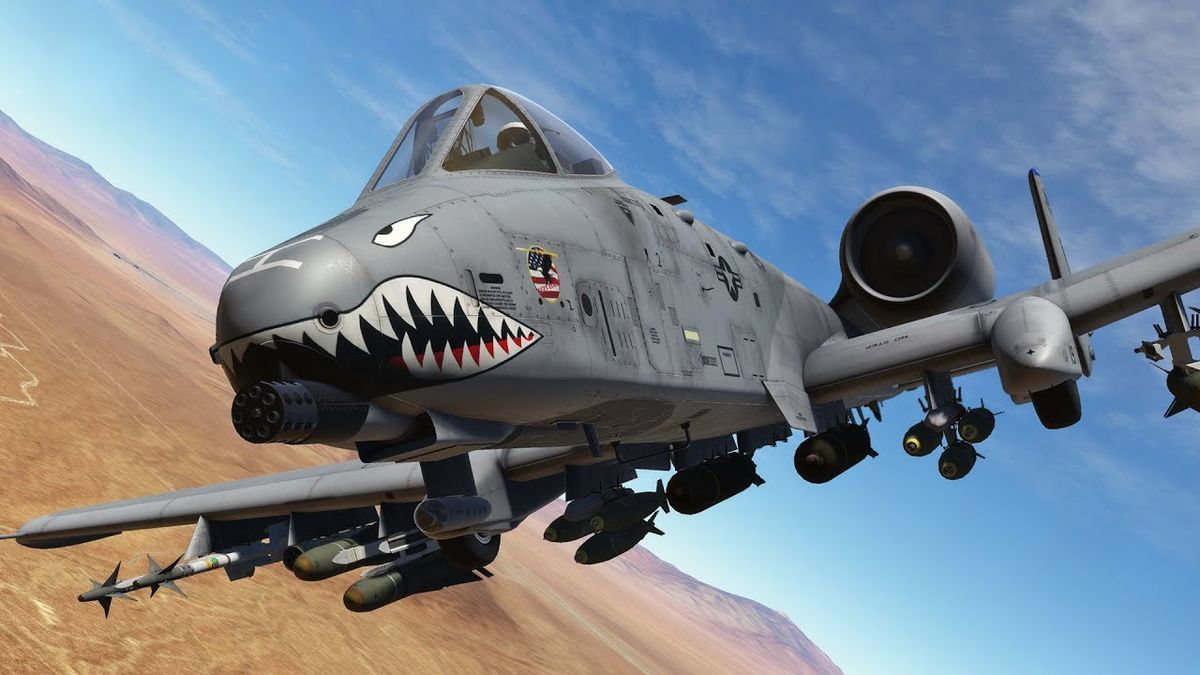
The A-10 Warthog Refuses To Die: Why America’s Legendary “Flying Tank” Still Matters In Modern War
For years, military analysts believed the end was inevitable.
The United States Air Force had already begun shutting down squadrons. Maintenance programs were ending. Pilot training classes were closing. Retirement plans were in motion. After decades of service, the iconic A-10 Thunderbolt II — better known around the world as the “Warthog” — appeared destined for the graveyard.
And yet, in one dramatic decision, the Air Force changed course again.
In 2026, Secretary of the Air Force Troy Meink announced that the A-10 would remain in service until at least 2030. For many soldiers, pilots, and military veterans, the news felt less like a bureaucratic decision and more like the survival of a legend.
You May Also Like


Because the truth is simple:
America still cannot replace the A-10.
Not completely.
Not emotionally.
And perhaps not even strategically.
The Aircraft That Became A Battlefield Legend
The Fairchild Republic A-10 Thunderbolt II was never designed to look beautiful.
It was designed to survive war.
Everything about the aircraft appears brutal and purposeful. Its engines sit high above the fuselage to reduce damage from ground fire. Its titanium “bathtub” armor protects the pilot from enemy bullets. Its massive straight wings allow it to fly low and slow over battlefields for extended periods. Even with severe damage, the aircraft has repeatedly proven capable of returning home.
The A-10 was built during the Cold War for one terrifying mission: destroy massive Soviet tank formations charging across Europe.
But history transformed the aircraft into something even greater.
Instead of fighting endless tank battles in Europe, the A-10 became the guardian angel of American troops in Iraq, Afghanistan, and countless counterterrorism operations across the Middle East.
Whenever troops were pinned down, under fire, or close to being overrun, the sound soldiers prayed to hear was not silence.
It was the terrifying metallic roar:
“BRRRRT.”
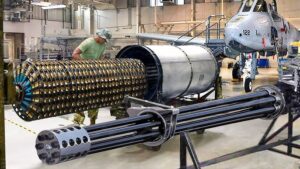
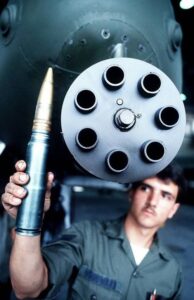
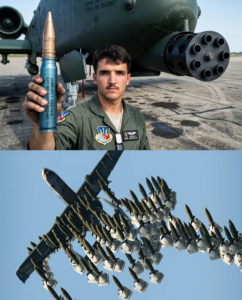
That sound came from the aircraft’s monstrous GAU-8/A Avenger cannon — a 30mm Gatling gun so enormous the entire aircraft was essentially built around it.
The cannon fires nearly 4,000 rounds per minute. Its armor-piercing shells can shred vehicles, fortified positions, and enemy formations with devastating precision. Few weapons in modern military history have earned such psychological power on the battlefield.
To American troops, the sound meant survival.
To enemies, it meant destruction.
Why The Air Force Wanted To Retire It
Despite its legendary reputation, the A-10 has spent years fighting for survival inside its own military.
The Air Force argued that modern warfare had changed. Future conflicts would likely involve advanced enemies such as China, equipped with sophisticated air defenses, stealth fighters, hypersonic missiles, and long-range radar systems.
Against such threats, the A-10 faces serious limitations.
It is relatively slow.
It lacks stealth technology.
It was designed for close-range combat in heavily contested environments.
And in a high-tech Pacific war, critics argued the aircraft could become dangerously vulnerable.
Former Air Force Secretary Frank Kendall summarized the issue bluntly in 2021:
“If it doesn’t threaten China, why are we doing it?”
From a strategic perspective, the Air Force wanted to redirect money toward fifth-generation and sixth-generation systems such as the Lockheed Martin F-35 Lightning II, autonomous drones, advanced bombers, and next-generation air dominance programs.
The logic made sense on paper.
Modern warfare increasingly depends on stealth, artificial intelligence, networked sensors, and long-range strike capabilities. The battlefield of tomorrow may belong to invisible aircraft and autonomous drone swarms rather than heavily armored attack planes flying low over enemy territory.
But wars are not fought on paper.
They are fought in chaos, fear, smoke, and uncertainty.
And that is exactly where the A-10 continues to excel.
The Warthog Proved Itself Again
Just as the Air Force accelerated retirement plans, real-world combat once again reminded military leaders why the A-10 still matters.
During the recent tensions and clashes involving Iran around the Strait of Hormuz, A-10s returned to combat operations. The aircraft reportedly attacked hostile speedboats and conducted dangerous close-air-support missions in contested environments.
Then came one of the most dramatic rescue operations in recent years.
On April 3, A-10s reportedly played a central role in protecting the rescue of a downed McDonnell Douglas F-15E Strike Eagle pilot. According to Chairman of the Joint Chiefs of Staff Dan Caine, the Warthogs were “violently suppressing and engaging the enemy in a close-in gunfight” while rescue helicopters rushed toward the stranded pilot.
This was not theoretical warfare.
This was not simulation.
This was life and death.
The A-10 was doing exactly what it was built to do:
Fly low.
Stay close.
Protect troops.
Destroy threats.
One aircraft was damaged during the mission, yet its pilot managed to escape hostile airspace before ejecting — another reminder of the aircraft’s legendary survivability.
At that moment, retirement suddenly became harder to justify.
Why Soldiers Still Love The A-10
Many modern fighter jets are technological masterpieces.
The Lockheed Martin F-22 Raptor is nearly invisible to radar.
The F-35 is packed with advanced sensors and data-sharing systems.
Future AI-powered combat aircraft may revolutionize air warfare entirely.
But none of them have earned the emotional loyalty that ground troops feel toward the A-10.
Why?
Because the A-10 fights beside them.
The aircraft operates at lower altitudes where pilots can visually identify friendly forces and enemy targets. Troops on the ground often describe A-10 pilots as unusually connected to battlefield realities compared to high-altitude strike aircraft.
The Warthog can loiter over combat zones for long periods, waiting patiently until soldiers need help. Its armor allows it to absorb punishment that would cripple many other aircraft. Stories of A-10s returning home with missing wings, damaged tails, or shredded fuselages have become part of military legend.
To infantry soldiers and special operations forces, the aircraft feels less like distant airpower and more like a flying partner in battle.
That emotional trust cannot easily be replaced by software or stealth coatings.
The Real Reason The A-10 Survived
Secretary Troy Meink explained that extending the A-10’s service preserves combat power while America’s defense industry struggles to increase production of newer aircraft.
That statement reveals something deeper.
The United States military is entering a dangerous transition period.
America is trying to modernize its forces for future wars while simultaneously maintaining readiness for current conflicts. But building advanced aircraft takes years. Production lines move slowly. Costs continue rising. Global tensions are increasing faster than replacement programs can mature.
In this environment, older platforms with proven combat effectiveness become incredibly valuable.
The A-10 may not represent the future of air warfare.
But it remains one of the most reliable tools America already possesses.
And in military strategy, reliability matters.
The “Flying Tank” Represents More Than Technology
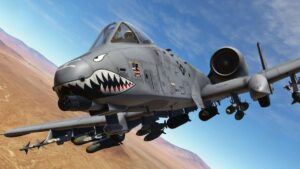
The A-10’s survival is not only about weapons or tactics.
It represents a deeper truth about warfare itself.
Military revolutions happen constantly. New technologies emerge. Experts predict the death of old systems again and again. Yet history repeatedly shows that battlefields are unpredictable, messy, and deeply human.
Sometimes the most advanced system is not the one troops trust most.
The A-10 survives because it solves a brutal battlefield problem exceptionally well:
keeping soldiers alive under fire.
No amount of futuristic marketing changes that reality.
The aircraft also symbolizes an older philosophy of military design — one focused not on elegance, but endurance. The Warthog was never intended to impress people at air shows. It was built to absorb punishment, stay in the fight, and protect those below.
In many ways, the A-10 reflects the character of the troops it supports.
Tough.
Unpolished.
Relentless.
Difficult to kill.
The Future Beyond 2030
Eventually, the A-10 will retire.
Time, maintenance costs, and technological evolution make that unavoidable. No aircraft serves forever. At some point, drones, AI-assisted attack systems, or entirely new aircraft concepts may inherit the close-air-support mission.
But replacing the A-10’s battlefield role will be far easier than replacing its reputation.
Few military aircraft in history have become cultural icons. The Warthog achieved that status because it earned the loyalty of the people who depended on it most.
Even after retirement, the aircraft will likely remain one of the most respected attack planes ever built.
And until that final day arrives, the unmistakable roar of the GAU-8 cannon may still echo across battlefields — reminding the world that sometimes old weapons endure because they still work better than anything else.
The Air Force tried to move on from the A-10.
But war itself keeps pulling the Warthog back into the fight.