An aircraft carrier is not just a ship.
It is a floating airbase, a moving city, and a self-contained military ecosystem capable of launching and recovering fighter jets in the middle of the ocean — thousands of kilometers away from any land support.
At the center of this engineering marvel is the flight deck, one of the most complex and dangerous working environments ever created in human history.
Modern carriers such as the USS Gerald R. Ford (CVN-78) operate like mobile airfields powered by nuclear energy, advanced electronics, and highly coordinated human precision.
You May Also Like
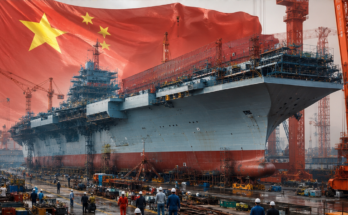
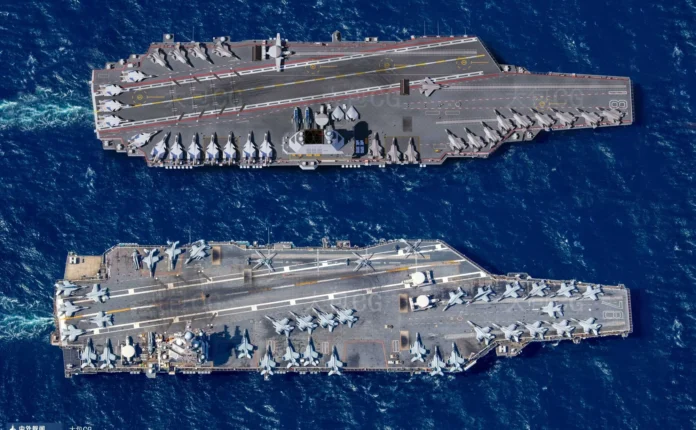
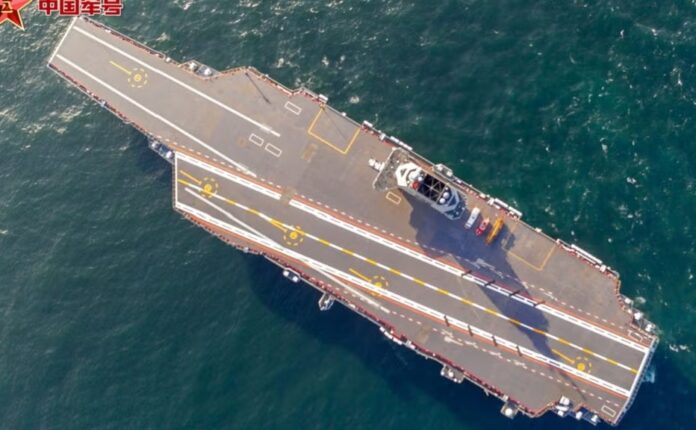
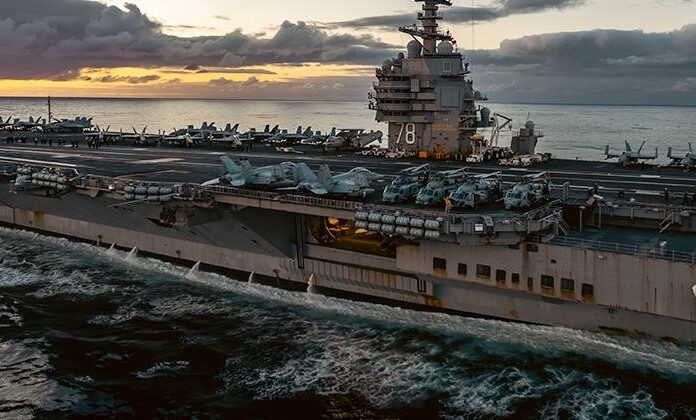
Every second on the flight deck is controlled chaos — where a single mistake can mean catastrophic loss of life and aircraft worth hundreds of millions of dollars.
The Aircraft Carrier Flight Deck: A Floating Runway in Motion
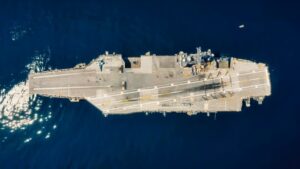
Unlike a normal airport runway, a carrier flight deck is constantly moving.
It is affected by:
- Ocean waves
- Wind speed and direction
- Ship velocity
- Combat conditions
- Aircraft traffic density
Despite this instability, aircraft must still take off and land with extreme precision.
This is why aircraft carriers are designed as multi-layered operational platforms, not just flat surfaces.
The flight deck functions as:
- A runway
- A launch platform
- A landing recovery zone
- A command battlefield control zone
- A logistics coordination hub
Everything happens simultaneously.
Why Aircraft Carriers Must Turn Into the Wind
One of the most critical operational techniques is simple but essential:
The carrier always turns into the wind.
Why?
Because aircraft need airflow over their wings to generate lift.
When launching jets like the Boeing F/A-18 Super Hornet or the Lockheed Martin F-35C Lightning II, the ship increases its own speed while turning into the wind to maximize relative airflow.
This effectively reduces the required runway distance needed for takeoff.
In simple terms:
The ocean wind + ship speed = artificial runway airflow
This allows fighter jets to take off in under 100 meters of physical deck space.
Catapult Launch System: From 0 to 240 km/h in Seconds
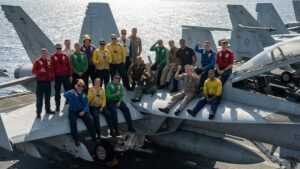
Modern aircraft carriers use advanced launch systems known as catapult systems.
On nuclear carriers like the Ford-class, this is the Electromagnetic Aircraft Launch System (EMALS).
Here’s how it works:
- The aircraft is positioned on the catapult track
- A launch bar connects to the nose landing gear
- A holdback device keeps the aircraft stationary
- Engines are pushed to full afterburner power
- The catapult releases energy instantly
Result:
v = \frac{150\ \text{mph}}{3\ \text{s}}
In less than 3 seconds, the aircraft is accelerated from zero to about 150 mph (240 km/h).
That is faster acceleration than a Formula 1 car — while carrying a fully armed military jet.
The aircraft leaves the deck already generating enough lift to sustain flight immediately.
There is no room for error.
Landing on a Moving Ship: One of the Hardest Tasks in Aviation
If launching is extreme, landing is even more dangerous.
Carrier landings are often described by pilots as:
“Controlled crashes on a moving target.”
Aircraft approach at around 160 mph (256 km/h), aiming for a landing strip that is:
- Narrow
- Moving up and down
- Moving side to side
- Constantly changing angle
The Arresting Wire System: Catching a Jet in Mid-Air Physics
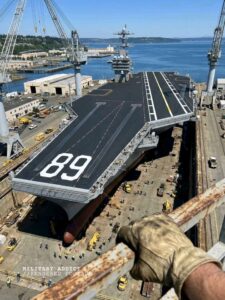
Every carrier landing depends on a system called the arresting wire system.
On the deck, there are usually four steel cables stretched across the landing zone.
Aircraft such as the F/A-18 or F-35C are equipped with a tail hook designed specifically for this purpose.
Here is what happens:
- The aircraft descends at high speed
- The pilot aligns precisely with the landing zone
- A Landing Signals Officer (LSO) guides final approach
- The tail hook drops just before touchdown
- The hook catches one of the arresting wires
The moment contact happens:
- Massive hydraulic systems absorb kinetic energy
- The aircraft stops in less than 2 seconds
- Pilots experience extreme deceleration forces
If we represent the energy absorption conceptually:
E_k = \frac{1}{2} m v^2
That energy must be safely absorbed by the arresting gear system — otherwise the aircraft would overshoot the deck.
What Happens If the Landing Fails? (The “Bolter” Maneuver)
If the tail hook misses all arresting wires, the aircraft does NOT crash.
Instead, the pilot immediately performs a go-around maneuver called a “bolter.”
This involves:
- Applying full engine power instantly
- Increasing altitude
- Circling back for another landing attempt
This system ensures safety even in near-failure conditions.
The Skewed Flight Deck: A Genius Safety Innovation
Modern aircraft carriers use a angled landing deck, known as a skewed or “angled” flight deck.
This design allows:
- Simultaneous takeoffs and landings
- Safer recovery if landing is missed
- Separation between launch and recovery zones
Without this design, carrier operations would be far more dangerous and chaotic.
It also enables continuous air operations — meaning jets can be launching and landing at the same time.
This is essential during combat operations where air superiority must be maintained continuously.
The Hidden Brain of the Carrier: Command and Control
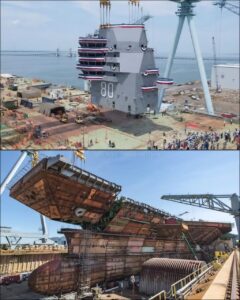
Below the flight deck lies a complex network of command centers.
These include:
1. Primary Flight Control (PriFly)
The nerve center of all air operations:
- Coordinates aircraft movements
- Tracks takeoffs and landings
- Communicates with pilots
- Manages air traffic within 5-mile radius
2. Ship Command Center
Controlled by the carrier captain:
- Navigates the entire vessel
- Adjusts speed and direction
- Coordinates with fleet commanders
3. Air Operations Control Center
Monitors:
- Aircraft readiness
- Mission planning
- Fuel and armament status
- Emergency response coordination
Every movement on the flight deck is tracked in real time — down to the position of every aircraft, fuel truck, and maintenance crew.
A City of 5,000 People on a Moving War Machine
A modern aircraft carrier is not just a ship — it is a floating metropolis.
It carries:
- 60–90 aircraft
- Thousands of sailors
- Multiple command centers
- Medical facilities
- Weapons storage systems
- Nuclear propulsion systems
It operates independently for months at sea without resupply.
This makes it one of the most powerful military tools ever created.
Flight Deck Safety: One of the Most Dangerous Jobs on Earth
The flight deck crew — often called “yellow shirts, green shirts, red shirts, and purple shirts” — operate in one of the most dangerous work environments in the world.
They handle:
- Jet engines at full afterburner
- Tight aircraft spacing
- Explosive fuel systems
- High-speed landing zones
- Constant rotor and jet blast danger
Despite this, operations continue with precision timing measured in seconds.
Why Aircraft Carriers Dominate Modern Warfare
Aircraft carriers provide:
- Global strike capability
- Rapid military response anywhere on Earth
- Air superiority without foreign bases
- Mobile nuclear-powered power projection
- Strategic deterrence against adversaries
They are the backbone of naval dominance for nations like the United States.
Final Reality: The Ocean Becomes a Runway of War
An aircraft carrier transforms the sea into something impossible:
A fully operational airport in constant motion — capable of launching warplanes into combat anywhere on Earth.
From catapult launches to arrested landings, every second on the flight deck is a balance between engineering, physics, and human precision.
And in modern warfare, whoever controls these floating airbases controls the skies above entire oceans.