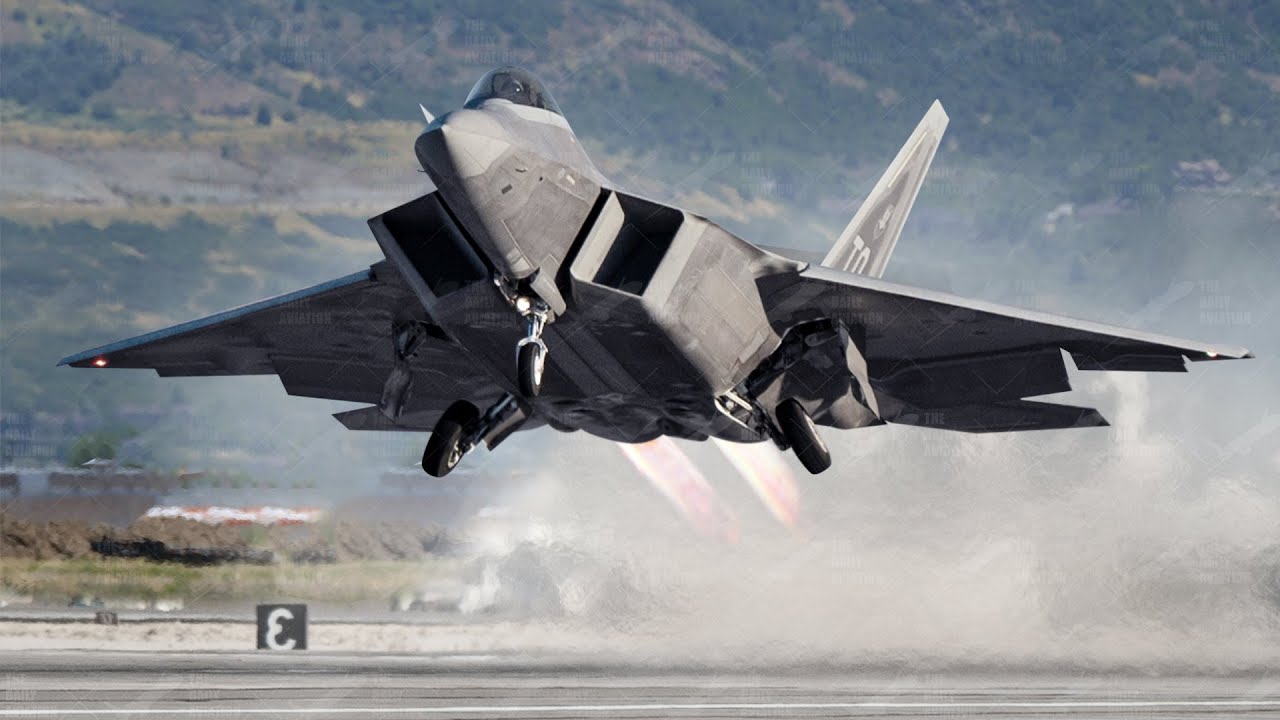
The emergence of the Chengdu J-20 marked one of the most significant shifts in modern military aviation. For the first time, China fielded a fifth-generation stealth fighter that could directly challenge Western air dominance.
To many defense analysts, however, the J-20 is not just a technological breakthrough — it is also one of the most controversial aircraft ever produced, largely because of its striking resemblance to the American Lockheed Martin F-22 Raptor.
The F-22, developed by Lockheed Martin, represents the pinnacle of United States air superiority engineering. It was designed to dominate the skies through unmatched stealth, thrust vectoring agility, sensor fusion, and extreme survivability in contested airspace.
When China unveiled the J-20, global observers immediately noticed parallels — not just in role or mission profile, but in deeper aerodynamic and structural philosophies.
You May Also Like


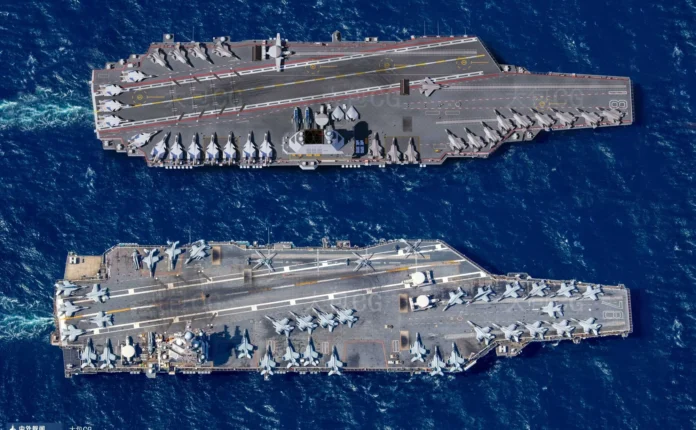
While China officially claims independent development, many Western defense experts argue that the J-20 reflects years of studying, analyzing, and potentially reverse-engineering stealth design principles pioneered by the F-22 program.
What followed was not just the birth of a new fighter jet — but the beginning of a technological rivalry that now defines twenty-first-century air warfare.
The Rise of the J-20: China’s Leap Into the Fifth Generation
The J-20 made its first flight on January 11, 2011, before being officially revealed to the public in 2016 at a major Chinese air show. By 2017, it had entered operational service, and combat training followed shortly after.
Within a remarkably short period of time, China transitioned from fourth-generation fighters to deploying one of the world’s most advanced stealth aircraft.
This rapid acceleration alarmed military analysts worldwide.
The J-20 is designed for:
- Air superiority missions
- Long-range interception
- Precision ground attack
- Deep penetration strikes
- Network-centric warfare operations
By 2018, the aircraft had already formed its first operational combat units.
Today, China is believed to have produced around 300 J-20 fighters, with continuous production still expanding — signaling long-term strategic commitment to stealth dominance.
But while the J-20 is officially labeled an indigenous design, comparisons with the F-22 remain unavoidable.
F-22 Raptor: The Benchmark of Stealth Superiority
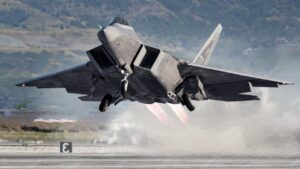
The F-22 Raptor remains one of the most advanced fighter aircraft ever built.
Developed during the Cold War’s final technological surge, the aircraft was designed to guarantee American air dominance against any adversary. It combines:
- Extreme low radar observability
- Supercruise capability (sustained supersonic flight without afterburners)
- Advanced thrust vectoring for unmatched maneuverability
- Integrated sensor fusion for battlefield awareness
- Highly classified stealth coatings and materials
Unlike most fighters, the F-22 was never exported due to concerns over preserving its technological advantage.
For decades, it remained uncontested in real-world air superiority capability.
Until the emergence of the J-20.
Core Similarities Between the J-20 and F-22
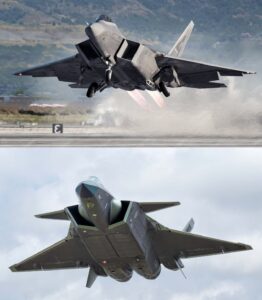
Below is a detailed breakdown of the most widely discussed similarities between the two aircraft, based on structural design, operational doctrine, and stealth philosophy.
1. Stealth-First Airframe Philosophy
Both aircraft prioritize radar evasion over traditional aerodynamic visibility.
- Smooth, blended surfaces
- Radar-deflecting angular geometry
- Internal weapon bays (to reduce radar signature)
- Reduced external protrusions
The J-20 clearly follows the same stealth-first design philosophy pioneered by the F-22 program.
2. Fifth-Generation Air Superiority Role
Both jets are classified as fifth-generation fighters designed for:
- Dominating enemy airspace
- Eliminating advanced fighter threats
- Operating in heavily defended environments
Their mission sets overlap almost entirely in strategic intent.
3. Internal Weapons Bay Configuration
Both aircraft store missiles internally to preserve stealth performance.
- Prevents radar reflection from external weapons
- Enables high-speed stealth penetration
- Maintains aerodynamic efficiency
This design choice is a defining feature of stealth fighter doctrine.
4. Advanced Avionics and Sensor Fusion
Both the J-20 and F-22 integrate multi-sensor data into a single cockpit display system.
- Radar tracking integration
- Infrared targeting systems
- Electronic warfare awareness
- Real-time battlefield data fusion
This allows pilots to “see” the battlefield in a unified digital environment.
5. Twin Tail and High Agility Layout
While not identical in shape, both aircraft feature:
- Twin vertical stabilizers
- Highly maneuverable airframe design
- Emphasis on agility at supersonic speeds
These features enhance stability during high-speed combat.
6. Stealth Shaping for Frontal Radar Reduction
Both aircraft are optimized to reduce radar signature from forward-facing detection systems.
- Angled nose structures
- Serrated panel edges
- Carefully aligned fuselage surfaces
This design reduces detectability during head-on engagements.
7. Long-Range Combat Doctrine
Both fighters are designed for beyond-visual-range combat rather than dogfighting alone.
- Advanced radar-guided missiles
- Early target detection advantage
- First-shot, first-kill doctrine
Modern air warfare prioritizes detection and engagement range over close combat.
8. High-End Electronic Warfare Integration
Both platforms incorporate electronic warfare capabilities.
- Radar jamming resistance
- Electronic countermeasure systems
- Secure data-link communications
These systems allow survival in contested electromagnetic environments.
9. Heavy Emphasis on Network-Centric Warfare
Both jets are designed to operate within larger military networks.
- Connected to satellites
- Integrated with ground command systems
- Linked to airborne surveillance assets
This ensures coordinated battlefield awareness.
10. Stealth Coating Dependency
Both aircraft rely heavily on radar-absorbing materials.
However, experts argue:
- F-22 coatings are more advanced and durable
- J-20 coatings are still evolving
- Maintenance complexity is higher for stealth aircraft
This remains one of the biggest performance gaps.
Where Experts Claim the J-20 Mirrors the F-22 Most Closely
Military analysts often highlight specific areas where similarities appear most pronounced:
1. Overall stealth silhouette logic
Both aircraft follow similar low-observable shaping principles.
2. Internal weapons placement philosophy
The structural concept is nearly identical.
3. Sensor fusion cockpit ideology
Both aircraft aim to reduce pilot workload through data integration.
4. Air dominance mission profile
Both are designed as pure air superiority fighters, not multirole compromises.
Key Differences That Still Separate the Two Aircraft
Despite similarities, major differences remain:
1. Engine performance gap
- F-22: supercruise capable, highly optimized engines
- J-20: still dependent on evolving Chinese engine technology
2. Stealth material maturity
- F-22: highly refined radar-absorbent materials
- J-20: believed to have higher radar cross-section in some conditions
3. Aerodynamic philosophy
- F-22: extreme agility and dogfight dominance
- J-20: prioritizes range and interception over close combat agility
4. Combat experience
- F-22: proven operational doctrine
- J-20: still developing real-world combat maturity
Controversy: Is the J-20 a Copy or an Evolution?
The central debate among defense analysts remains unresolved.
Some argue the J-20 is:
- A product of independent Chinese innovation
- A natural evolution of stealth fighter design principles
Others claim:
- It reflects years of studying Western stealth programs
- It incorporates design logic strongly influenced by F-22 architecture
- It benefited from indirect technology transfer and cyber intelligence exposure
China officially denies any copying allegations and insists the J-20 is fully indigenous.
However, its visual and conceptual similarities to the F-22 continue to fuel global debate.
Strategic Impact: Why This Comparison Matters
The J-20 vs F-22 comparison is not just about aircraft design.
It represents a broader geopolitical shift:
- The end of uncontested US air superiority
- The rise of peer-level stealth competition
- A new global arms race in fifth-generation aviation
- Rapid acceleration of Chinese aerospace capability
For the first time in history, American stealth dominance is being directly challenged at scale.
Final Assessment
The Lockheed Martin F-22 Raptor remains the benchmark of air dominance.
But the Chengdu J-20 represents something equally significant: the closing of a technological gap that once seemed unbridgeable.
Whether viewed as imitation, inspiration, or independent evolution, one fact is undeniable:
The era of uncontested American stealth superiority is no longer absolute.