
In a massive hall filled with thousands of Air Force officers, fighter pilots, aerospace engineers, defense executives, and military strategists, a single sentence suddenly changed the atmosphere.
The room went silent.
Then came the whispers.
Then the shock.
You May Also Like

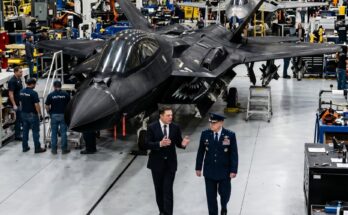
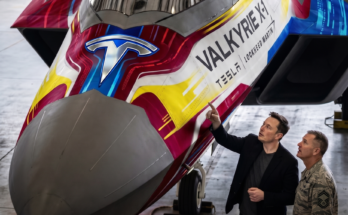
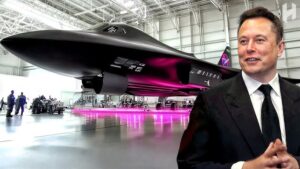
Standing before some of the most powerful military minds in the United States at the Air Warfare Symposium, Elon Musk delivered six words that sounded almost unthinkable to generations of fighter pilots:
“The fighter jet era has passed.”
For decades, fighter aircraft represented the peak of military power.
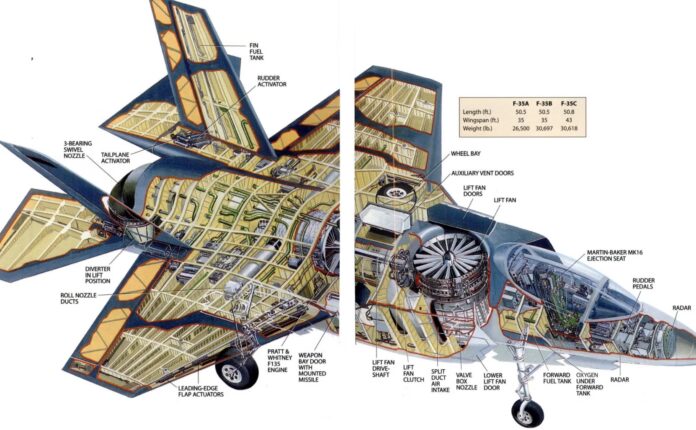
The roar of an Lockheed Martin F-35 Lightning II or the dominance of an Lockheed Martin F-22 Raptor symbolized technological superiority, national strength, and control of the skies.
But Musk was suggesting something revolutionary:
The future of air combat may no longer belong to human pilots.
Instead, it may belong to machines.
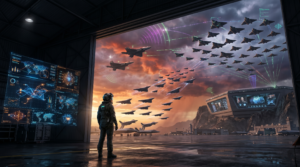
The Moment That Shook America’s Air Force
The statement was delivered during a major military conference attended by senior Air Force leadership and aerospace officials.
According to witnesses, after Musk declared the end of the fighter jet era, the audience froze in stunned silence.
Even David Goldfein reportedly leaned forward to hear what Musk would say next.
Then Musk explained:
“Locally autonomous drone warfare is where the future will be.”
The message was clear.
Future wars may not be fought by pilots sitting inside cockpits.
They may instead be fought by:
- AI-controlled drone swarms
- Autonomous stealth aircraft
- Networked combat systems
- Machine-learning battle algorithms
- Human-guided but machine-executed warfare
And according to Musk, traditional fighters may eventually become obsolete.
Why Musk Believes Human Pilots Are Becoming a Limitation
Modern fighter pilots are among the most highly trained humans on Earth.
They operate at:
- Twice the speed of sound
- Extreme G-forces
- Millisecond reaction times
- Complex multi-target combat environments
Yet even elite human reflexes have physical limits.
Machines do not.
AI-powered aircraft could theoretically:
- React faster than humans
- Endure higher maneuvering stress
- Process battlefield data instantly
- Coordinate with hundreds of drones simultaneously
- Fight without fear, fatigue, or hesitation
This is the core of Musk’s argument.
In future wars, the side with the fastest artificial intelligence may dominate the skies.
Musk’s Direct Attack on the F-35 Program
Musk didn’t stop at criticizing traditional fighter doctrine.
He specifically targeted the F-35 program itself.
The Lockheed Martin F-35 Lightning II is one of the most expensive military programs in history — designed to become the backbone of Western air power for decades.
But Musk argued the aircraft needed a competitor.
Not another manned fighter.
A drone.
He stated that the ideal challenger would be:
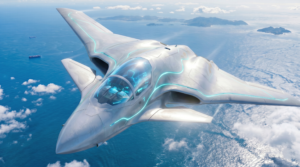
“A drone fighter plane that’s remote controlled by a human, but with its maneuvers augmented by autonomy.”
Later, he went even further on social media:
“The F-35 would have no chance against it.”
The statement ignited enormous controversy inside military and aerospace circles.
To supporters of manned aviation, the claim sounded outrageous.
To advocates of AI warfare, it sounded inevitable.
The Rise of Autonomous Warfare
For years, militaries worldwide treated drones mainly as surveillance tools or remote-controlled strike platforms.
Aircraft like the General Atomics MQ-9 Reaper changed warfare by allowing long-duration remote attacks.
But these systems still rely heavily on human operators.
Musk is talking about something much more radical:
Aircraft capable of fighting largely on their own.
This future battlefield would include:
- Autonomous drone wingmen
- AI-controlled interception systems
- Swarming attack formations
- Self-coordinating electronic warfare aircraft
- Machine-driven air combat tactics
Instead of one fighter pilot controlling one aircraft, a future pilot may command entire fleets of autonomous drones from a secure distance.
The Pentagon Is Already Moving in This Direction
While Musk’s comments sounded futuristic, the reality is that the US military is already developing many of these technologies.
The Air Force’s experimental Skyborg program aims to create AI-powered autonomous “loyal wingman” drones capable of flying alongside manned fighters.
These drones could:
- Scout enemy territory
- Jam radar systems
- Carry missiles
- Absorb enemy fire
- Extend sensor range
- Perform dangerous missions too risky for humans
The goal is not merely automation.
It is creating intelligent combat teammates.
Similarly, the Air Force Research Laboratory launched efforts to develop autonomous fighter systems capable of adapting dynamically during combat missions.
Meanwhile, manned-unmanned teaming experiments have already demonstrated:
- Fighter jets controlling drone formations
- AI-assisted targeting systems
- Coordinated electronic warfare operations
- Autonomous navigation in contested environments
The transformation has already begun.
Why Human Pilots Still Matter
Despite rapid AI advancements, many military leaders strongly disagree with Musk’s timeline.
Air combat is not just about speed or reaction time.
It involves:
- Uncertainty
- Ethics
- Judgment
- Adaptability
- Strategic intuition
- Emotional intelligence under chaos
According to many Air Force leaders, artificial intelligence still struggles with the unpredictable complexity of real warfare.
Mike Holmes, former head of Air Combat Command, acknowledged Musk’s ideas had merit — but stressed that human pilots remain essential.
He explained:
AI systems perform well in environments where all information is known.
War is not like that.
Real battlefields contain:
- Incomplete information
- Electronic deception
- Unexpected threats
- Dynamic human behavior
- Moral decision-making
Humans still outperform machines in handling ambiguity.
The Ethical Nightmare of Autonomous Killing Machines
One of the greatest fears surrounding autonomous warfare is simple:
What happens when machines decide who lives and who dies?
A fully autonomous combat drone could theoretically:
- Identify targets
- Prioritize threats
- Launch missiles
- Kill without direct human authorization
This raises massive ethical questions.
Who is responsible if AI makes the wrong decision?
Could software errors trigger catastrophic escalation?
Could hacked autonomous systems become weapons against their own creators?
Many defense experts argue that keeping humans “in the loop” is critical for moral and strategic reasons.
The End of the Traditional Fighter Pilot Culture?
Perhaps the most difficult challenge is not technological.
It is cultural.
For over a century, fighter pilots have represented the elite warrior identity of air forces worldwide.
They symbolize:
- Courage
- Individual skill
- Heroism
- Human dominance in the sky
Replacing pilots with algorithms would fundamentally transform military identity itself.
According to drone warfare experts, fully replacing human fighters would require:
- A complete strategic overhaul
- New doctrines
- New procurement systems
- New command structures
- A cultural revolution داخل air forces
Many pilots still deeply distrust fully autonomous combat systems.
The Future May Be Hybrid Warfare
Most experts now believe the future will not be fully human or fully machine.
Instead, it will likely be a hybrid ecosystem where:
- Manned fighters command battles
- Autonomous drones assist missions
- AI handles targeting and analysis
- Humans retain final decision authority
In this vision:
The F-35 becomes the “quarterback” of the battlefield while autonomous systems execute supporting roles.
This may represent the true next phase of air warfare.
Drone Swarms: The Most Dangerous Future Weapon
Perhaps the most terrifying possibility is swarm warfare.
Imagine:
- Hundreds of autonomous drones
- Networked together through AI
- Coordinating attacks in real time
- Adapting instantly to enemy defenses
Unlike traditional fighters, drone swarms could overwhelm enemy air defenses through sheer numbers and machine-speed coordination.
Future wars may involve:
- AI-vs-AI combat
- Autonomous electronic warfare
- Machine-driven suppression of air defenses
- Self-organizing attack formations
This could radically reshape global military balance.
Musk’s Broader Vision: Innovation or Irresponsibility?
Musk’s comments reflect his larger philosophy:
Innovation must move faster than tradition.
He believes organizations that resist disruptive technology eventually become obsolete.
This mindset helped transform:
Now he appears to be challenging military aviation itself.
Critics call his predictions reckless.
Supporters call them visionary.
History may decide which side is right.
What the Future Battlefield Could Look Like
The next generation of warfare may involve:
- Stealth fighters directing drone armies
- AI-powered missile interception
- Autonomous reconnaissance swarms
- Hypersonic unmanned strike systems
- Machine-speed battlefield decisions
Human pilots may gradually shift from direct combat participants to strategic battlefield commanders.
The cockpit itself may eventually disappear.
Final Reality: The Fighter Jet Era Is Not Over — But It Is Changing Forever
Despite Musk’s dramatic statement, fighter jets are not disappearing tomorrow.
Aircraft like the F-35 and F-22 will remain central to military power for decades.
But something profound is already happening.
For the first time in history, humans may no longer be the fastest intelligence in the sky.
Artificial intelligence is beginning to enter the battlefield not merely as a tool — but as a combat decision-maker.
The future of warfare may not belong solely to pilots or machines.
It may belong to the fusion of both.
And when historians look back, Elon Musk’s six words may be remembered as the moment the world realized the age of autonomous air combat had truly begun.
Key Takeaways From Musk’s Vision
1. Traditional fighter jets may gradually lose dominance
AI systems could outperform humans in reaction speed and coordination.
2. Future wars may rely heavily on autonomous drones
Drone swarms and AI wingmen are becoming central military priorities.
3. The Pentagon is already investing heavily in AI combat systems
Programs like Skyborg prove autonomous warfare is already under development.
4. Human pilots are still critical today
AI still struggles with uncertainty, ethics, and unpredictable battlefield conditions.
5. The future likely belongs to hybrid warfare
Humans and AI working together may become the dominant combat model.
6. Military culture itself may face massive transformation
The identity of fighter pilots and air combat doctrine may fundamentally evolve.