For more than three decades, the Northrop Grumman B-2 Spirit stood as one of the most feared and technologically advanced aircraft ever created — a nearly invisible flying fortress capable of penetrating the world’s most heavily defended airspace and delivering devastating nuclear or conventional strikes anywhere on Earth.
Its sleek black silhouette became a symbol of American military supremacy.
But now, one of these legendary stealth bombers will never fly again.
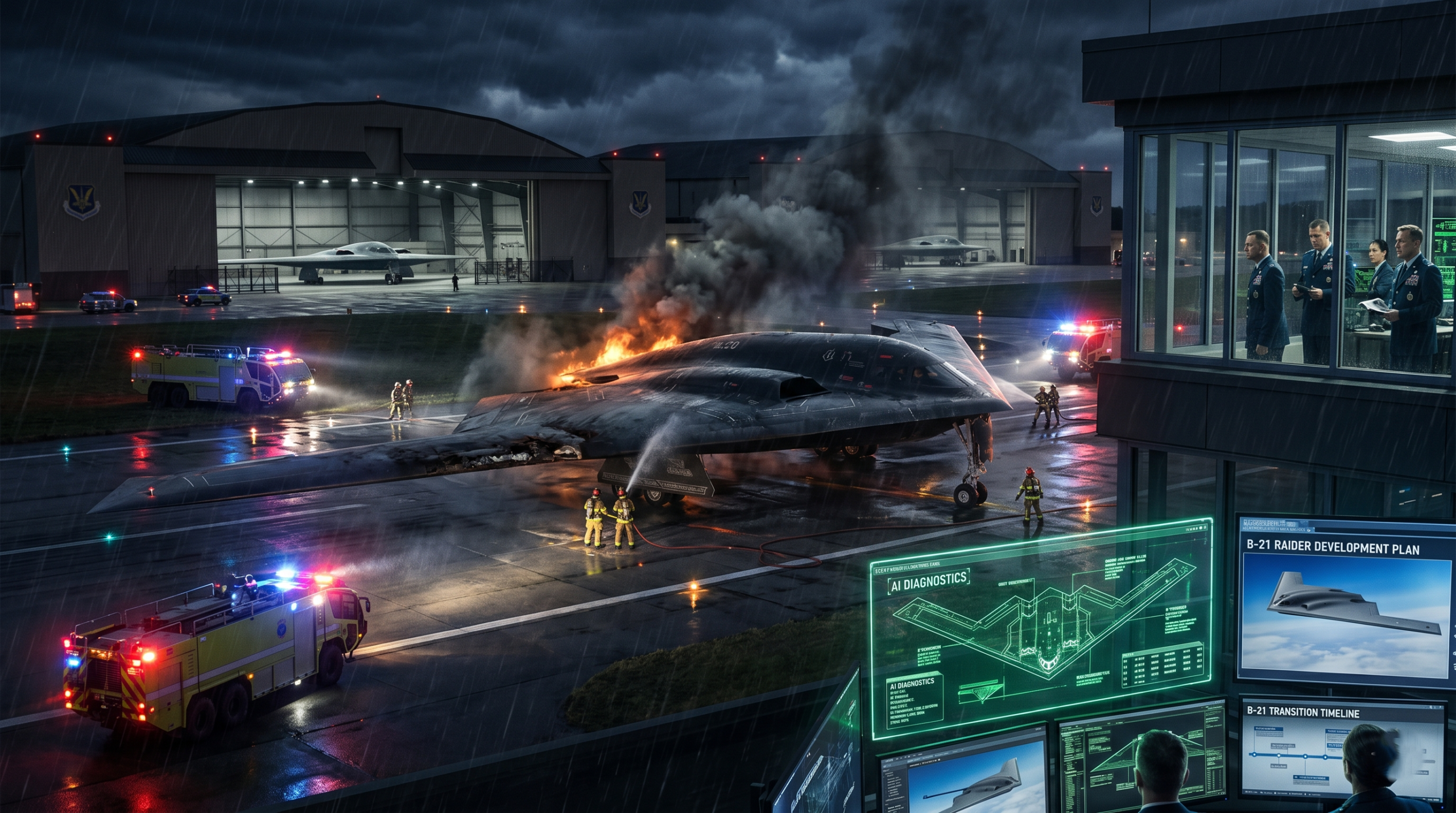
The United States Air Force has officially confirmed that the B-2 Spirit severely damaged in a 2022 accident at Whiteman Air Force Base is beyond economical repair. Rather than restoring the aircraft, the Pentagon has decided to permanently retire it from service — reducing America’s already tiny B-2 fleet from 20 aircraft to just 19.
You May Also Like
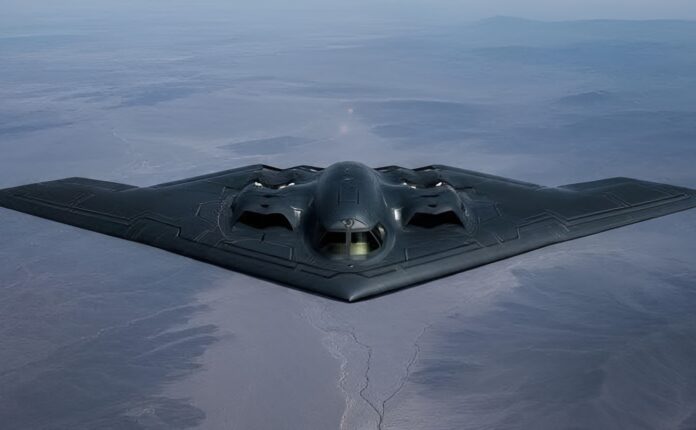
The decision marks a historic moment for US air power.
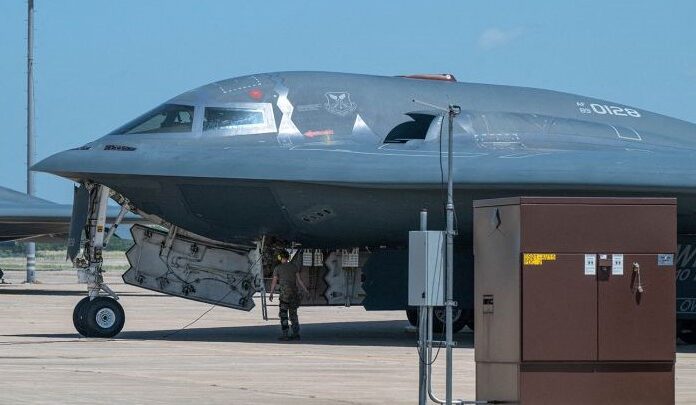
The B-2 is not an ordinary military aircraft. It is one of the rarest, most expensive, and most strategically important bombers ever built. Losing even a single aircraft dramatically impacts the operational strength of America’s stealth bomber fleet.
And in a world increasingly shaped by rising tensions with China and Russia, every stealth bomber matters.
The 2022 Fire That Changed the B-2 Fleet Forever
The doomed bomber was damaged during a serious accident in December 2022.
While operating near Whiteman Air Force Base in Missouri, the aircraft reportedly suffered an in-flight malfunction that forced pilots to conduct an emergency landing. During the landing sequence, the stealth bomber caught fire on the runway, triggering immediate emergency response operations.
The incident shocked military observers around the world.
Because the B-2 is such a rare and strategically critical platform, the Air Force responded with extreme caution. Following the mishap, the entire B-2 fleet was grounded for nearly five months while investigators examined the cause of the accident and assessed the overall safety of the aircraft.
Grounding the entire stealth bomber force demonstrated just how sensitive and irreplaceable these aircraft truly are.
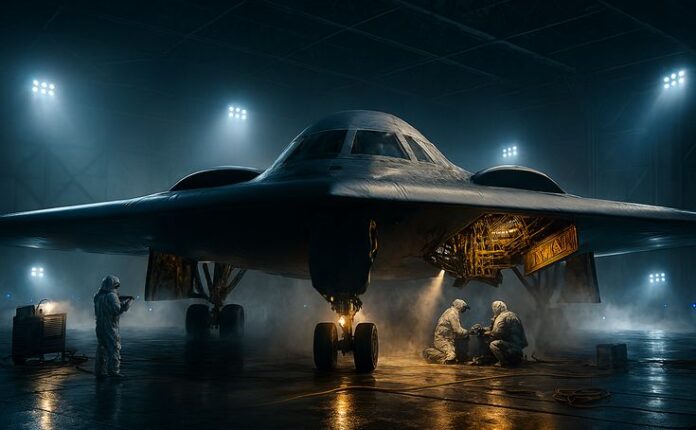
Unlike conventional bombers, the B-2 relies on highly specialized stealth coatings, complex structural materials, classified avionics systems, and extremely delicate radar-absorbent technologies. Even relatively small damage can require enormous repairs costing hundreds of millions of dollars.
After more than a year of technical evaluations and cost analysis, the Pentagon ultimately reached a painful conclusion:
Repairing the aircraft simply was not worth the cost.
“The B-2 is being divested in fiscal year 2025 due to a ground accident/damage presumed to be uneconomical to repair,” the Department of Defense stated in its official force-structure report.
The Air Force did not publicly reveal the estimated repair cost. However, experts believe restoring the stealth bomber may have required rebuilding major sections of the aircraft’s classified stealth structure and systems.
In essence, the bomber was too damaged — and too expensive — to save.
The Most Expensive Aircraft Ever Built
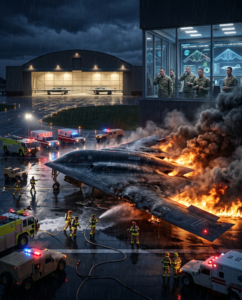
The loss of a B-2 is unlike losing almost any other military aircraft on Earth.
Only 21 B-2 bombers were ever produced.
Each aircraft cost roughly $2 billion, making the B-2 Spirit the most expensive aircraft ever constructed in human history.
Developed during the final years of the Cold War by Northrop Grumman, the B-2 was designed for one purpose above all others: surviving nuclear war.
Its revolutionary flying-wing design minimized radar detection, allowing the aircraft to slip through Soviet air defenses undetected and strike high-value targets deep inside enemy territory.
At a time when radar-guided missiles threatened traditional bombers, the B-2 changed military aviation forever.
The aircraft’s stealth characteristics were decades ahead of anything else in existence. Special radar-absorbing materials, hidden engine intakes, minimized heat signatures, and carefully engineered surfaces made the bomber extraordinarily difficult to detect.
Even today, the B-2 remains one of the stealthiest aircraft ever created.
Its operational history is equally legendary.
The B-2 has participated in military operations across:
- Serbia
- Afghanistan
- Iraq
- Libya
The bomber can fly intercontinental missions lasting over 40 hours with aerial refueling support, striking targets anywhere on Earth without relying on foreign bases.
Few aircraft symbolize global strategic reach more than the B-2 Spirit.
America’s Stealth Bomber Fleet Shrinks Again
The Air Force’s stealth bomber fleet has already suffered devastating losses before.
In 2008, another B-2 was destroyed during a crash at Andersen Air Force Base after faulty sensor readings caused the aircraft to lose control during takeoff.
That crash reduced the operational fleet from 21 bombers to 20.
Now, the 2022 accident brings the number down again — leaving only 19 operational B-2 Spirits.
For perspective, that means the United States possesses fewer than two dozen operational stealth strategic bombers capable of penetrating advanced enemy air defense networks.
Every aircraft is treated almost like a national strategic asset.
Each B-2 requires enormous maintenance support, specialized climate-controlled hangars, classified repair facilities, and highly trained personnel.
Maintaining stealth itself is incredibly difficult.
The bomber’s radar-absorbing coatings require constant inspection and repair. Even weather conditions, humidity, and surface imperfections can impact stealth performance.
This extreme maintenance burden is one reason the B-2 became so expensive to operate.
Enter the B-21 Raider: America’s Next Generation Stealth Bomber
Although the loss of a B-2 is significant, the Pentagon’s long-term focus has already shifted toward the future.
That future is the Northrop Grumman B-21 Raider.
The B-21 Raider is America’s next-generation stealth bomber designed to replace both the B-2 Spirit and portions of the aging Rockwell B-1B Lancer fleet.
Currently undergoing flight testing at Edwards Air Force Base, the B-21 represents the next evolution of stealth warfare.
Unlike the B-2, which was designed primarily during the Cold War, the B-21 is being built specifically for the modern battlefield — an era dominated by artificial intelligence, advanced radar networks, cyber warfare, drone swarms, and hypersonic missile threats.
Military officials plan to purchase at least 100 B-21 bombers.
That number alone reveals how dramatically the Pentagon intends to expand stealth strike capability in the coming decades.
The Raider is expected to feature:
- Next-generation stealth technology
- Advanced AI-assisted systems
- Long-range precision strike capability
- Nuclear and conventional weapon deployment
- Digital open-system architecture
- Improved maintenance efficiency
- Integration with unmanned systems
Many analysts believe the B-21 could become the backbone of American strategic air power for the next half century.
The Pentagon’s Massive Transformation
The B-2 retirement is only one small piece of a much larger military transformation happening inside the US Air Force.
According to Pentagon planning documents, the Air Force intends to retire 932 aircraft between fiscal years 2025 and 2029 in order to redirect resources toward emerging technologies.
This enormous restructuring is expected to save more than $18 billion.
The Air Force hopes to invest those savings into:
- Artificial intelligence
- Autonomous aircraft
- Drone warfare systems
- Cyber operations
- Advanced stealth technology
- Next-generation fighters
- Space-based military systems
The Pentagon increasingly believes future wars will depend less on sheer aircraft numbers and more on technological superiority.
Unmanned systems and AI-driven warfare are rapidly becoming central to American military doctrine.
This strategic shift reflects growing concern over China’s military rise and the possibility of future high-tech conflict in the Indo-Pacific region.
Congress May Resist the Cuts
However, the Air Force’s ambitious restructuring plan faces political resistance.
Members of United States Congress have historically opposed retiring military aircraft without guaranteed replacements already operational.
Many lawmakers worry that reducing aircraft inventories too quickly could weaken military readiness during a period of escalating global tensions.
The House Armed Services Committee has already signaled concern regarding some of the Air Force’s retirement plans.
Critics argue the Pentagon may be moving too aggressively toward future technologies while shrinking current combat strength.
Supporters counter that maintaining outdated aircraft drains enormous resources that could instead fund next-generation systems critical for future wars.
The debate reflects a deeper question now confronting the US military:
How do you prepare for tomorrow’s battlefield without weakening today’s defenses?
The End of an Era
The permanent loss of a B-2 Spirit marks more than the retirement of a damaged aircraft.
It symbolizes the slow transition from one era of warfare to another.
The B-2 was born during the Cold War, built for nuclear deterrence, stealth penetration, and strategic bombing dominance. It represented the pinnacle of twentieth-century aerospace engineering.
Now, as autonomous systems, artificial intelligence, cyber warfare, and next-generation stealth bombers reshape military strategy, the B-2 is gradually giving way to a new generation of machines.
Yet even today, few aircraft inspire the same level of awe as the black flying-wing bomber that once seemed almost invisible to the world.
With only 19 remaining, the B-2 Spirit is becoming rarer than ever — a fading but still terrifying symbol of American air power.