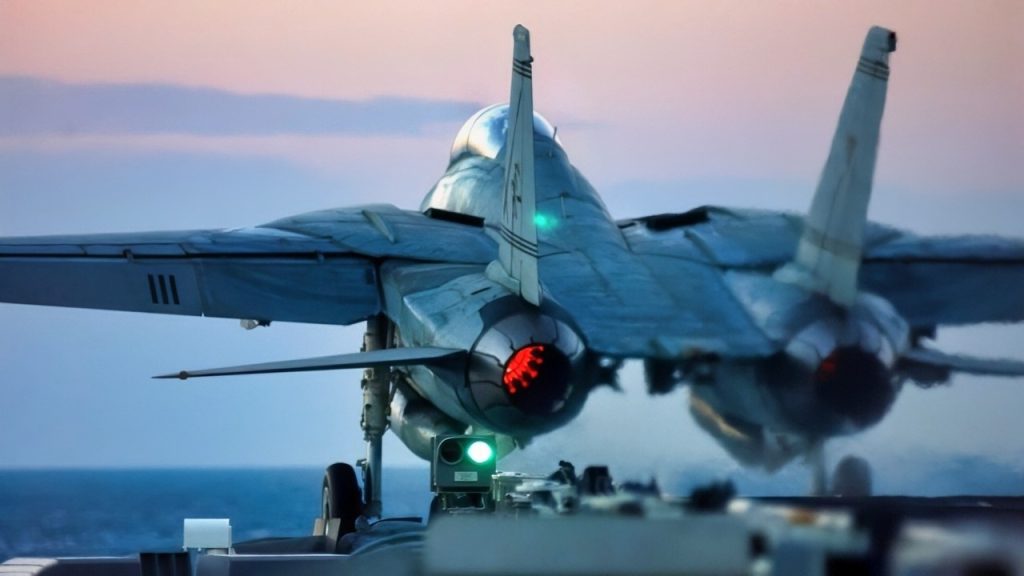
For nearly two decades, it was considered impossible.
Not difficult.
Not unlikely.
Impossible.
The legendary Grumman F-14 Tomcat — one of the most iconic fighter jets ever built — seemed destined to remain silent forever, locked away in museums, hidden inside desert boneyards, and protected by some of the strictest military restrictions ever imposed on a retired aircraft. Generations of aviation enthusiasts dreamed about seeing the Tomcat fly again over the United States, but most believed the idea belonged only to fantasy — a beautiful memory from another era that could never truly return.
Yet now, against all expectations, the impossible may finally become reality.
You May Also Like
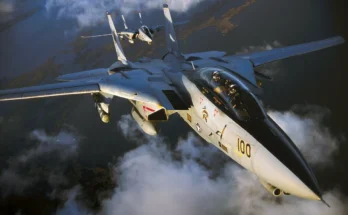
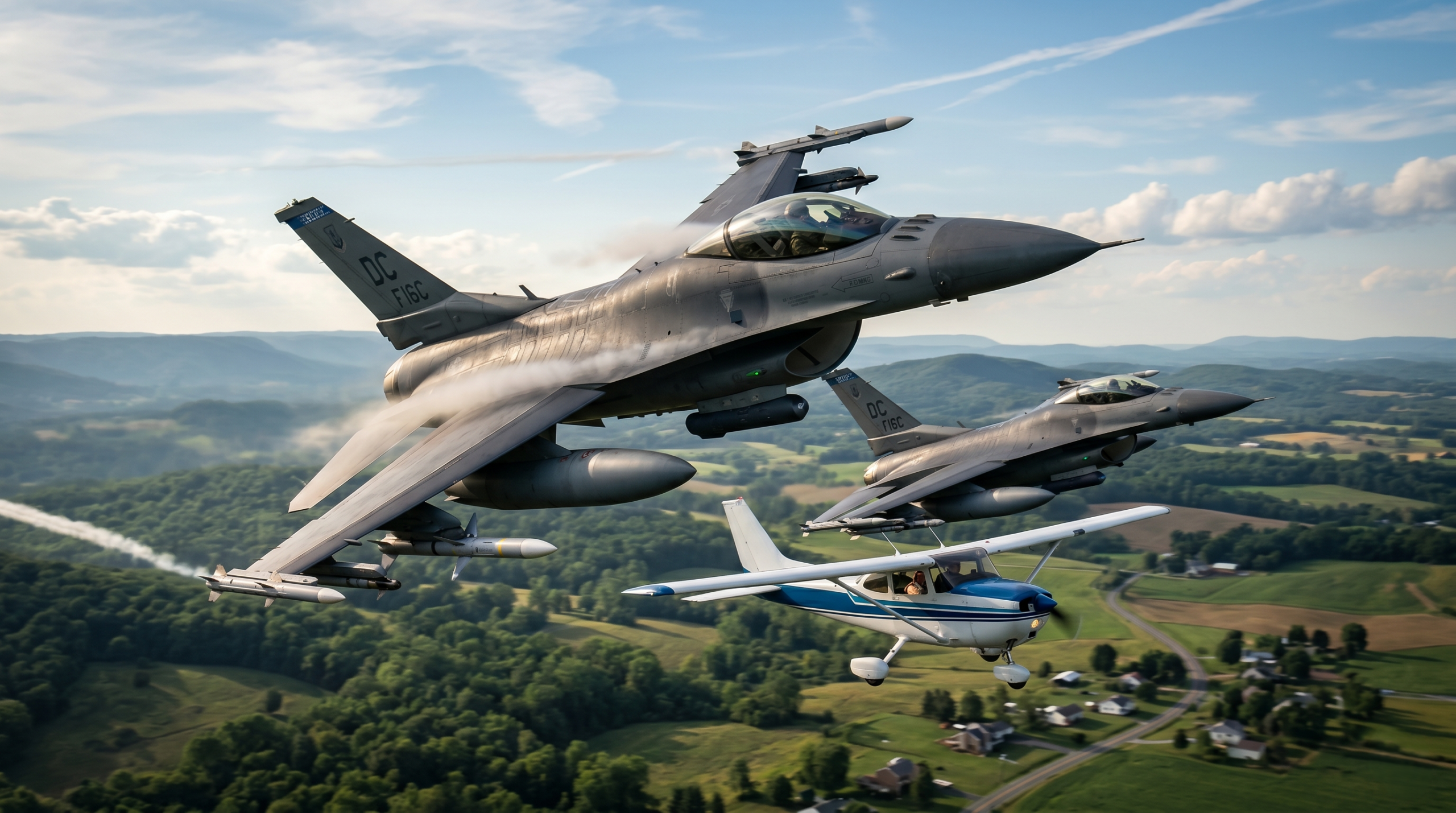
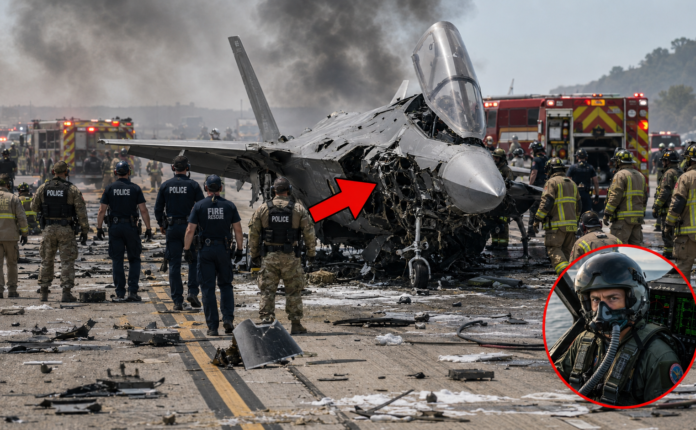
Legislation moving through Congress, appropriately called the “Maverick Act,” could open the door for one of America’s final surviving F-14D Tomcats to return to flight status for the first time since the Navy officially retired the aircraft in 2006 after 32 years of legendary service. Named after the iconic Top Gun franchise and the fictional Navy pilot Capt. Pete “Maverick” Mitchell, immortalized by Tom Cruise, the legislation has reignited a dream that countless pilots, veterans, engineers, and aviation fans refused to let die.
The bill was introduced in the Senate by Tim Sheehy, a former Navy SEAL and Naval Academy graduate, alongside co-sponsorship from Mark Kelly, the retired naval aviator, astronaut, and former A-6 Intruder pilot. In the House, the companion legislation was introduced by Abe Hamadeh, a U.S. Army veteran. The legislation has already passed the Senate by unanimous consent and now moves through the House, carrying with it the possibility of one of the most extraordinary aviation restorations in modern history.
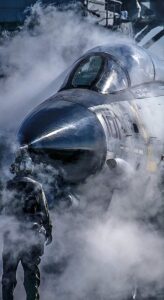
If passed into law, the Navy would be authorized to transfer three retired F-14D Tomcats to the U.S. Space & Rocket Center in Huntsville. On the surface, it sounds like a museum preservation effort. But buried within the legislation is the detail that has electrified the aviation world: the Navy would be permitted to provide enough excess spare parts to potentially make one of the aircraft flyable.
Not combat-ready.
Not armed.
But capable of returning to the sky.
Suddenly, the fantasy that once seemed impossible no longer feels out of reach.
The three Tomcats identified for transfer — Bureau Numbers 164341, 164602, and 159437 — are currently stored at Davis-Monthan Air Force Base, the legendary aircraft boneyard where thousands of retired military aircraft rest beneath the unforgiving desert sun. These are the only F-14D models still in storage there. Their exact condition remains unknown, but the very fact that they still exist has become profoundly significant.
For years, the fate of most retired F-14s was destruction.
And the reason was Iran.
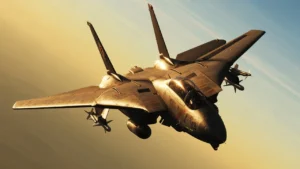
The story of the Tomcat is unlike that of any other American fighter aircraft ever built. Born during the Cold War, the F-14 became one of the most feared carrier-based interceptors in aviation history. With its massive radar, long-range missile capability, twin engines, and unmistakable swing-wing design, it symbolized American naval air dominance at its peak. But history took an unexpected turn when Iran, under the Shah, purchased F-14A Tomcats before the Islamic Revolution of 1979. After the revolution, the new Iranian regime continued flying the aircraft despite losing U.S. support, making Iran the only foreign operator of the Tomcat.
That single fact changed the aircraft’s future forever.
For decades, American authorities imposed extraordinarily strict controls on retired F-14 airframes and spare parts to prevent components from reaching Iran. Many Tomcats were deliberately shredded, dismantled, or destroyed outright after retirement. The aircraft became trapped between history, national security, and geopolitics. The idea of ever returning one to flight status inside the United States seemed almost unthinkable.
Yet history has a strange way of refusing to die.
The Maverick Act specifically states that the transferred aircraft would have no combat capability and no ability to launch weapons. They would be fully demilitarized. The Navy would not be responsible for restoring the jets, repairing them, or funding their operations. However, the legislation would allow the museum to partner with nonprofit organizations capable of helping restore and potentially operate the aircraft for public display, airshows, and commemorative events.
That single provision may change everything.
Because while restoring an F-14 would require staggering amounts of money, engineering expertise, manpower, and regulatory approval, the Tomcat has something few aircraft in history possess: emotional power powerful enough to inspire people to attempt the impossible.
The challenges would be enormous. After years in the desert, every structural component, hydraulic system, electrical circuit, avionics bay, and flight-critical subsystem would require exhaustive inspection and certification under Federal Aviation Administration standards. The Tomcat itself is infamous for being maintenance-heavy. It was designed as a high-performance Cold War fleet defense fighter, not an economical civilian aircraft. Just filling the aircraft with fuel would cost roughly $14,500 at current jet fuel prices, and external fuel tanks would increase that cost even further. During high-performance flight demonstrations, the F-14 can consume fuel at astonishing rates.
Keeping a Tomcat flying would require immense financial commitment.
But logic alone has never defined the legacy of the F-14.
The Tomcat is more than metal, engines, and wings. It is one of the few aircraft ever built that transcended military aviation and became a cultural icon recognized around the world. Its starring role in Top Gun transformed it into something larger than a fighter jet. The aircraft became a symbol of courage, speed, danger, freedom, and American airpower itself. Even decades after retirement, few aircraft command the same emotional reaction. Pilots idolize it. Veterans revere it. Aviation enthusiasts treat it with near-mythical admiration. The Tomcat became immortal long before it left Navy service.
Even legendary aviators like the late Dale Snodgrass — known throughout naval aviation as “Snort” — once dreamed of restoring a Tomcat to the skies. Yet for years, bureaucracy, cost, politics, and security restrictions crushed every serious attempt.
Now, for the first time in nearly 20 years, the impossible suddenly feels possible again.
Ironically, changing geopolitical realities may have helped make this moment possible. Recent joint U.S. and Israeli strikes between February and April reportedly may have effectively ended operational Tomcat service within the Islamic Republic of Iran Air Force. Even before those events, Iran was believed to possess only a handful of serviceable aircraft remaining. For decades, concerns over Iran’s continued operation of the Tomcat heavily shaped American policy toward retired F-14s and spare parts. Now, those fears may finally be fading.
And with them, perhaps the Tomcat’s future is changing too.
Whether the Maverick Act ultimately becomes law or not, the fact that such legislation even exists marks a stunning moment in aviation history. It signals that the Tomcat’s story may not be over after all. It reminds the world that some machines become so legendary that people simply refuse to let them disappear.
Because the F-14 Tomcat was never just another fighter aircraft.
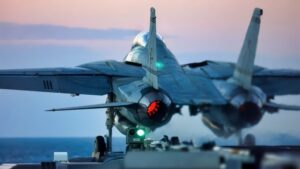
It was the thunder of afterburners over an aircraft carrier at sunset.
It was the sweep of wings cutting through the sky at supersonic speed.
It was the embodiment of Cold War naval aviation at its absolute peak.
It was power, fearlessness, and engineering ambition fused into one unforgettable machine.
And if one of those Tomcats ever roars back into American skies again, it will not simply be the return of a retired fighter jet.
It will be the resurrection of a legend.
A symbol from another era rising once more from the desert.
A machine once believed lost to history proving that some dreams are simply too powerful to die.
And for millions around the world, hearing the thunder of a Tomcat again would feel less like watching an airplane fly — and more like witnessing history itself come back to life.