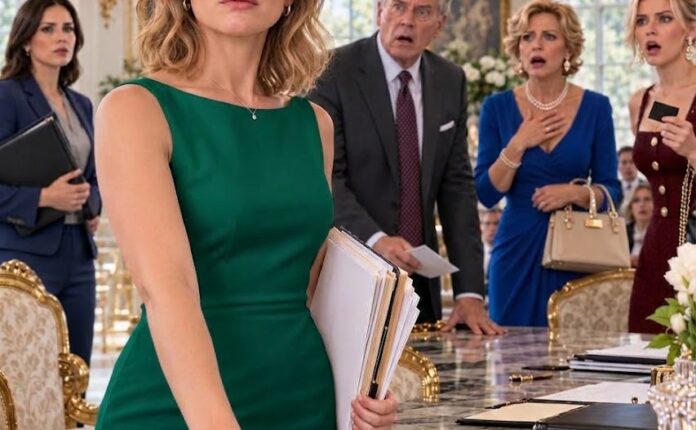
My Mom Slapped Me and Told Me to Leave My Own Malibu Mansion — Then Grandma Revealed the Painting on the Wall
On My 21st Birthday, Grandma Gave Me Her Malibu Mansion — Six Hours Later, My Family Tried to Steal It for My Spoiled Sister
On my twenty-first birthday, my grandmother handed me the deed to her Malibu mansion and said:
“This is yours now. Legally. Completely.”
You May Also Like




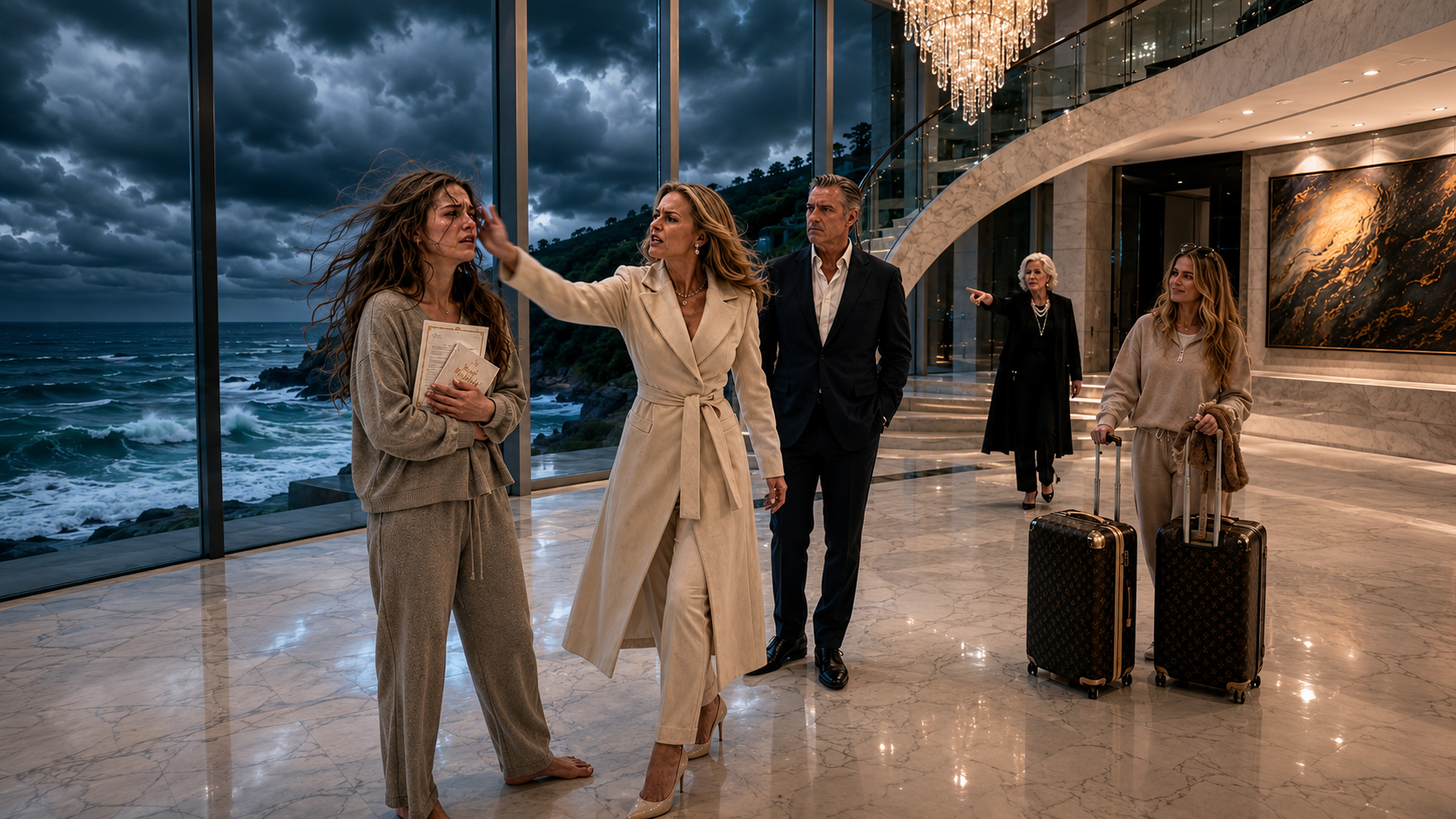
Six hours later, my mother showed up with my father behind her and my spoiled younger sister dragging designer suitcases across my marble floor.
“She’ll be moving in,” my mother announced. “The family needs this house more than you do.”
When I said no, she slapped me so hard the sound echoed through the foyer.
Then she told me to pack my things and leave my own home.
But just as they started talking about “fixing the paperwork later,” my grandmother stepped out of the hallway.
She pointed to the painting above the fireplace and said:
“Before anyone touches another suitcase, maybe Madison should know why this house was never meant for you.”
That night, the painting came down.
Behind it was the secret my parents had buried for nineteen years.
And by morning, my sister’s suitcases were outside, my mother was crying on the driveway, and my father finally told me the truth about why Grandma gave the mansion to me.
The Story
The first time my mother tried to throw me out of my own house, I was still holding the birthday card from the grandmother who had just given it to me.
I remember the sound before I remember the words.
The pounding came first.
Three violent strikes against the carved walnut front door.
Sharp enough to echo through the marble foyer and climb the glass walls of the Malibu mansion like an alarm.
Outside, the ocean wind hissed up from the cliffs, bending the cypress trees and dragging mist against the windows.
The Pacific was black beneath the last violet ribbon of evening, restless and enormous, throwing itself against the rocks as if it already knew something ugly was coming.
Only six hours earlier, I had stood in that same foyer while my grandmother, Vivien Brooks, pressed a leather folder into my hands.
“Madison,” she said, her voice steady in the way only truly powerful people can manage, “this is yours now. Legally. Completely. No one gets to take it from you.”
I had laughed then because I thought she was being dramatic.
I was twenty-one years old.
Still young enough to believe legal documents were stronger than family cruelty.
Still young enough to believe that if something was written clearly enough in black ink, people who loved you would respect it.
I held the folder like it might vanish if I breathed too hard.
Inside was the deed to the Malibu house, the cliffside mansion I had visited only a handful of times as a child, always under supervision, always reminded that it belonged to “the family,” even though nobody ever treated me like the kind of family things belonged to.
But the deed did not say family.
It said Madison Brooks.
Sole owner.
Not Amelia Brooks, my mother.
Not Jonathan Brooks, my father.
Not Aubrey Brooks, my younger sister, whose name had been written on nearly every soft thing my parents owned.
Patience.
Forgiveness.
Excuses.
Second chances.
Mine.
The mansion stood on a bluff above the Pacific, all glass, stone, and impossible light.
The west side opened toward the ocean through enormous floor-to-ceiling windows.
The floors were cool white marble veined with gray.
The staircase curved upward beneath a chandelier that looked like frozen rain.
There was a library with built-in shelves, a kitchen larger than my entire student apartment, a terrace where the wind smelled of salt and sage, and bedrooms with views that made the world seem too wide to belong to any one person.
I had felt like an intruder in every room.
Grandma watched me from the living room sofa, amused but gentle.
“You keep walking like a museum guard is about to ask for your ticket,” she said.
“I feel like one might.”
“This is your house.”
“That’s a ridiculous sentence.”
“It will become less ridiculous if you practice saying it.”
So I stood in the middle of the living room with the Pacific shining behind me and whispered, “This is my house.”
Grandma smiled.
“Again.”
“This is my house.”
“Louder.”
I laughed, embarrassed and overwhelmed.
“This is my house.”
“There,” she said. “Not so impossible.”
I wish I could say I believed it then.
I wanted to.
I wanted to believe the world could tilt in my favor without punishing me for it.
I wanted to believe that, for once, something good could happen to me without becoming a resource for everyone else.
I wanted to believe my grandmother, who had survived three marriages, two hostile boards, one federal tax inquiry, and my mother’s entire personality, knew exactly what she was doing.
But old fear is not persuaded by new paper.
I had grown up knowing that anything mine could become Aubrey’s if my mother wanted it badly enough.
A jacket.
A bedroom.
A birthday trip.
A car.
A savings account.
A future.
So when the pounding came that evening while I sat at the dining table reading and rereading Grandma’s birthday card, my body knew before my mind did.
Not them.
Please not tonight.
The card was still open in my hand.
Grandma had written in her slanted blue script:
For Madison, who has spent too long believing love means making room for everyone else. This house is not a reward. It is a boundary with walls. Live inside it boldly.
Then the pounding came again.
Grandma had gone, or so I thought.
She had left after an early dinner, kissing my cheek and saying she had one more errand in town before returning to her own place in Brentwood.
I believed I was alone in the house, with the folder open beneath the chandelier and a cup of tea cooling beside it.
I had not even decided which bedroom I would sleep in.
I had planned to spend the night walking from room to room, choosing slowly, letting myself imagine a life that did not have to ask permission.
The third round of pounding rattled the door.
“Madison!” my mother shouted from outside. “Open this door.”
My stomach folded in on itself.
I stood, the birthday card still in one hand, and walked toward the foyer.
The marble was cold beneath my bare feet.
Through the narrow glass beside the door, I saw my mother’s profile in the porch light.
Amelia Brooks.
Elegant as always.
Blond hair swept back.
Cream coat belted tightly.
One hand raised to knock again.
My father stood behind her, jaw set, both hands in his pockets.
On the driveway beyond them, a black SUV idled with its headlights on.
And beside it, my younger sister Aubrey was dragging three designer suitcases toward the door.
I opened it because I was still learning not to.
The wind rushed in first, cold and damp from the ocean.
My mother stepped inside before I invited her, brushing past me like the house had recognized her authority and opened itself.
My father followed more slowly.
Aubrey came last, rolling her suitcases over the threshold, the wheels clicking across the marble like insects.
My mother looked around the foyer and smiled.
Not with happiness.
With ownership.
“Well,” she said. “At least Vivien finally did something useful.”
I tightened my grip on the birthday card.
“What are you doing here?”
Aubrey rolled her eyes.
“Happy birthday to you too.”
My father looked at me.
“Maddie, sweetheart, we just need to talk.”
My mother cut him off.
“No, Jonathan. We are not talking. We are correcting an absurd situation.”
I looked at Aubrey’s suitcases.
“What situation?”
Aubrey pulled off her sunglasses even though it was night.
“I’m moving in.”
I stared at her.
“No, you’re not.”
My mother laughed once.
Sharp.
Cruel.
“Don’t be childish.”
“This is my house.”
The words came out quiet.
My mother turned slowly.
“What did you say?”
I swallowed.
Grandma’s voice echoed in my head.
Practice saying it.
I lifted my chin.
“This is my house.”
Aubrey snorted.
“You sound insane.”
My mother stepped toward me.
“Madison, do not embarrass yourself. Your grandmother is old and dramatic. She signed whatever little folder she gave you because she wanted attention. This house belongs to the Brooks family.”
“The deed says it belongs to me.”
“The deed can be adjusted.”
My father winced.
“Amelia.”
She shot him a warning look.
Then turned back to me.
“Aubrey needs this house.”
I almost laughed.
“Aubrey needs a Malibu mansion?”
Aubrey folded her arms.
“My engagement photos are next month. And Carter’s family expects a certain standard.”
“Then Carter’s family can provide it.”
My mother’s eyes narrowed.
“You always do this.”
“Do what?”
“Make everything difficult because you’re jealous of your sister.”
There it was.
The old blade.
Dull from overuse, but still sharp enough to hurt if I let it.
“I’m not jealous.”
My mother stepped closer.
“You’ve always resented her.”
“No,” I said. “I resented being told that loving her meant disappearing.”
My father whispered, “Maddie, please.”
I looked at him.
“Please what, Dad?”
He opened his mouth.
Nothing came out.
My mother snapped her fingers toward the suitcases.
“Aubrey, take the east bedroom. The one with the balcony.”
I moved in front of the staircase.
“No.”
Aubrey’s mouth fell open.
“Excuse me?”
“You’re not moving in.”
My mother’s face hardened.
“Madison, move.”
“No.”
For one second, she looked genuinely shocked.
Not because I had been rude.
Because I had disobeyed.
Then she slapped me.
Hard.
The sound cracked through the foyer.
My face snapped to the side.
The birthday card fell from my hand and slid across the marble.
The house went silent.
Even the ocean seemed to pull back.
My cheek burned.
Aubrey’s eyes widened.
My father said, “Amelia…”
But he did not step between us.
He did not touch my shoulder.
He did not ask if I was okay.
My mother leaned close, her voice low and shaking with fury.
“Pack your things and leave.”
I turned slowly back to her.
“My things?”
“Yes. Your things. Whatever little student boxes you brought. Aubrey will need space.”
“This is my home.”
“No, Madison. This is a family asset. You are a child who got confused because an old woman fed your ego.”
I looked at my father.
“Dad?”
He looked down.
That hurt more than the slap.
Aubrey shifted awkwardly.
“Mom, maybe we should just let the lawyers—”
“No,” my mother snapped. “We are not letting this ungrateful girl hold the family hostage.”
My father finally spoke.
“Maddie, maybe we can work something out temporarily. Aubrey can stay here, and you can take the guesthouse until the paperwork is clarified.”
“The paperwork is clear.”
My mother laughed.
“We’ll fix the paperwork later.”
My blood went cold.
Fix the paperwork.
That was when I heard a sound behind us.
A door opening.
Slow footsteps.
A cane tapping once against marble.
My grandmother stepped out from the hallway near the library.
She had not left.
She stood there in a dark green coat, silver hair pinned back, diamond brooch catching the chandelier light.
Her eyes were calm.
Too calm.
“Before anyone fixes paperwork,” Grandma said, “perhaps Madison should know why this house was never meant for any of you.”
My mother went pale.
“Vivien.”
Grandma ignored her.
She looked at me.
Then pointed to the large painting above the living room fireplace.
“Madison, take that painting down.”
The painting had always been there.
Even during the rare childhood visits when I was too young to understand art and too nervous to touch anything expensive.
It showed the Malibu coastline at sunrise.
Soft gold spilling over dark water.
A lone girl standing on the cliff, her back to the viewer, hair blowing in the wind.
I used to think it was my mother.
Then Aubrey.
Then some anonymous figure Grandma had bought because rich people liked paintings that looked lonely.
Now my grandmother pointed at it like it had been waiting its whole life to speak.
My mother’s voice sharpened.
“No.”
Grandma turned to her.
“You do not give orders in this house.”
Aubrey stepped behind my father.
“What is happening?”
My father looked sick.
He knew something.
I saw it then.
Not everything.
But enough.
“Madison,” Grandma said again, “take it down.”
I walked slowly into the living room.
My cheek still burned from the slap.
My hands shook as I reached for the frame.
It was heavier than I expected.
My father moved suddenly.
“Maddie, wait.”
Grandma’s voice cracked like a whip.
“Jonathan.”
He stopped.
I lifted the painting.
Behind it was a wall safe.
Small.
Steel.
Hidden perfectly in the paneling.
My mother sucked in a breath.
Aubrey whispered, “What is that?”
Grandma walked toward it.
“Insurance.”
She pressed her thumb to the scanner.
The safe clicked open.
Inside was a thick envelope, a flash drive, and a smaller leather folder.
Grandma removed them carefully.
Then she handed the envelope to me.
“Open it.”
My fingers trembled.
The envelope was marked in handwriting I recognized from old birthday cards.
My grandfather’s.
He had died when I was eight.
I slid out the papers.
A birth certificate.
Mine.
A trust amendment.
A notarized letter.
And a photograph.
I stared at the photo first.
A young woman in a hospital bed holding a newborn baby.
She looked exhausted.
Beautiful.
Tearful.
Not my mother.
I looked up slowly.
“What is this?”
My mother’s face had gone white.
My father whispered, “Vivien, please.”
Grandma looked at him.
“You were silent while your wife struck my granddaughter in her own home. You have used up your right to plead.”
My heart pounded.
I looked at the photo again.
“Who is she?”
Grandma’s eyes softened.
“Your birth mother.”
The room seemed to tilt.
My mother said sharply, “That is enough.”
I turned toward her.
“My what?”
Grandma stepped closer.
“Your birth mother was named Elena Marlowe. She was my goddaughter. Brilliant, stubborn, kind. She died three weeks after you were born.”
My breath disappeared.
I looked at my father.
“Dad?”
His eyes filled.
“Maddie…”
“Tell me she’s lying.”
He did not.
I took one step back.
Aubrey whispered, “Wait. Madison’s adopted?”
My mother’s face twisted.
“Don’t say it like that.”
Grandma’s eyes never left mine.
“Elena left everything she owned to you. Not much money then, but her family held the original land rights to this Malibu bluff. Your grandfather helped protect them in trust. After she died, Jonathan agreed to raise you.”
I looked at my father.
“You agreed?”
He wiped his face.
“Elena was my college friend.”
My mother laughed bitterly.
“Friend.”
The word landed strangely.
Grandma turned to her.
“Careful, Amelia.”
I stared at my father.
“Was she more than a friend?”
He closed his eyes.
The silence answered before he did.
My stomach turned.
“Oh my God.”
Aubrey looked from me to Dad.
“Dad?”
My mother’s voice shook with years of buried poison.
“Your father brought home another woman’s baby and expected me to smile.”
My father said, “You said you wanted to help.”
“I said what I had to say because your mother threatened to expose everything.”
Grandma smiled coldly.
“No, Amelia. I offered you dignity. You chose resentment.”
I could barely breathe.
“My whole life…”
Grandma touched my arm gently.
“Your whole life, this house was protected for you because it came through Elena’s bloodline and your grandfather’s legal structure. I maintained it until you turned twenty-one. Your mother knew. Your father knew. They were never allowed to sell it, borrow against it, or transfer it to Aubrey.”
My mother stepped forward.
“That house became ours through marriage.”
“No,” Grandma said. “You lived adjacent to someone else’s inheritance and mistook proximity for ownership.”
My mother’s eyes flashed.
“I raised her.”
Grandma’s voice turned quiet.
“Did you?”
The words sliced through the room.
I looked at my mother.
Every birthday where Aubrey’s party was bigger.
Every school award brushed aside.
Every holiday where I was told to share, move, give, accept.
Every time my mother said, “Aubrey needs it more.”
Suddenly, the shape of my childhood changed.
Not because I was adopted.
Because I had been punished for existing.
I whispered, “You hated me because I was hers.”
My mother did not deny it.
That was the answer that broke me.
Aubrey sat down on the edge of one suitcase.
For once, she looked small.
Not spoiled.
Not smug.
Just confused.
“So… I’m not your sister?” she asked.
I looked at her.
“You are.”
Grandma sighed.
“Blood is not the only thing that makes sisters.”
My mother snapped, “Don’t romanticize this.”
Grandma turned on her.
“I am not romanticizing anything. I am explaining why Madison owns this house and why you have spent nineteen years trying to take from her what you could not legally touch.”
My father finally stepped forward.
“Maddie, I wanted to tell you.”
I turned to him.
“When?”
He flinched.
“When you were older.”
“I’m twenty-one.”
“I know.”
“When I was eighteen?”
He said nothing.
“When Mom took my college fund for Aubrey’s modeling program?”
His face collapsed.
“You knew about that?”
I laughed once.
It came out broken.
“I knew my account was empty.”
Aubrey looked up sharply.
“What?”
I stared at her.
“You didn’t know?”
“My modeling program was paid by Mom’s bonus.”
I looked at my mother.
She lifted her chin.
“Family money.”
Grandma’s eyes became ice.
“Madison’s trust distribution for education.”
Aubrey stood.
“Mom.”
My mother ignored her.
“Madison never needed that school. She was always trying to run away from us anyway.”
“I was trying to go to college.”
“You were trying to prove you were better.”
“No,” I said. “I was trying to become someone who didn’t have to beg you to love me.”
That finally landed.
Not on my mother.
On my father.
He covered his mouth.
“Maddie.”
I shook my head.
“Don’t.”
Grandma handed me the leather folder.
“There is more.”
I almost laughed.
“More than this?”
“Yes.”
Inside were financial records.
Transfers.
Trust withdrawals.
Tuition payments redirected.
Checks signed by my father and mother.
My name appeared again and again.
College fund.
Medical trust.
Inheritance reserve.
Personal support distribution.
All reduced.
All redirected.
Many marked for “family necessity.”
And beside several transfers was Aubrey’s name.
A car.
A trip.
A talent agency deposit.
A luxury apartment lease.
Aubrey read over my shoulder and went pale.
“I didn’t know,” she whispered.
My mother snapped, “Aubrey, stop.”
Aubrey looked at her.
“You said Dad’s company paid for those.”
“It did.”
“No.” Aubrey shook her head. “This says Madison.”
My father sank onto the sofa.
“I signed some of them,” he whispered.
Grandma looked at him.
“Yes. You did.”
“Amelia said we would repay it.”
My mother turned on him.
“Don’t you dare put this on me.”
“You told me Vivien would never notice.”
The room froze.
Grandma’s smile was almost sad.
“Oh, Jonathan. I noticed everything.”
She looked at the flash drive.
“I simply waited until Madison was old enough to choose what kind of justice she wanted.”
My mother laughed.
It was not sane laughter.
It was sharp and desperate.
“Justice? For what? For raising a child who was not mine? For giving her food? Clothes? A home?”
Grandma’s voice dropped.
“For taking from her while telling her she should be grateful for crumbs.”
“I gave her my name.”
“No,” Grandma said. “You gave her your resentment and called it motherhood.”
My mother’s face twisted.
“You think you can shame me?”
“I think you have been shaming yourself for years. We are simply reading the receipts.”
Aubrey whispered, “Mom, stop.”
But my mother was beyond stopping.
She pointed at me.
“You want the truth? Fine. You were never supposed to be here.”
My body went cold.
My father stood.
“Amelia, don’t.”
“No,” she said. “Let her hear it. Elena was dying, Jonathan was grieving over a woman he swore he didn’t love, and Vivien decided we should take the baby to preserve appearances. I was expected to raise the proof of my husband’s betrayal and smile in family photos.”
I looked at my father.
“Is that true?”
He looked shattered.
“Elena and I… we were together before I married Amelia.”
“Before?”
He nodded.
My mother laughed.
“And after.”
My father’s face crumpled.
Grandma closed her eyes briefly.
The ocean slammed against the rocks below.
I felt like the house itself was listening.
My voice came out small.
“Am I your daughter?”
My father looked at me then.
Really looked.
“Yes,” he whispered. “You are my daughter.”
Aubrey made a small sound.
My mother looked victorious for half a second, as if pain was proof she had won something.
Then Grandma spoke.
“Elena did not know Jonathan was married when they reconnected.”
My mother turned.
“What?”
Grandma’s voice was sharp.
“Do not rewrite the dead to make yourself cleaner. Elena ended it the moment she learned the truth. She wanted nothing from him. She wanted Madison protected.”
My father covered his face.
“I loved her.”
My mother slapped him.
Hard.
The sound echoed through the room just like the slap she had given me.
But this time, no one moved to comfort her.
Aubrey stared at her mother like she no longer knew her.
My cheek still burned.
So did my father’s.
Grandma looked at both of us and said quietly, “Violence is often the last language of people whose lies are failing.”
My mother looked around the room and finally realized she had lost control of it.
The next few minutes happened strangely.
Slowly and quickly at once.
Aubrey pulled her suitcases back toward the door.
My mother snapped, “What are you doing?”
Aubrey’s voice shook.
“Leaving.”
“You are not.”
“I’m not moving into a house you stole from Madison.”
“I stole nothing.”
Aubrey pointed at the folder in my hands.
“You spent her college fund on me.”
“You deserved opportunities.”
“So did she!”
My mother looked stunned.
I did too.
Aubrey’s eyes filled with tears.
“She was always nice to me, Mom. Even when you weren’t. Even when you made her give me things. She helped me with homework. She covered for me when I crashed Dad’s car. She told me I could call her when I got scared at auditions.”
My throat tightened.
Aubrey looked at me.
“I thought you didn’t want those things. Mom always said you didn’t care.”
“I cared,” I whispered.
Her face broke.
“I’m sorry.”
My mother grabbed Aubrey’s arm.
“You will not apologize to her.”
Aubrey pulled away.
“Don’t touch me.”
That was new.
My mother froze.
Aubrey turned toward the door, then looked back at me.
“I don’t deserve this house.”
“No,” I said quietly. “You don’t.”
She nodded, crying.
“I know.”
For the first time in our lives, Aubrey did not argue.
She just dragged her suitcases back across the marble.
The sound was softer this time.
Less like insects.
More like an ending.
My father stood slowly.
“Maddie, what do you want me to do?”
I looked at him.
A thousand answers rose inside me.
Tell me why.
Apologize better.
Undo my childhood.
Bring back Elena.
Make Mom love me.
Give me my money.
Give me the years.
Give me the version of you who should have protected me.
But only one answer mattered that night.
“Leave.”
His face crumpled.
“Madison—”
“Leave,” I repeated.
He nodded.
Then he walked out.
My mother remained in the foyer.
She stared at me with hatred so old it looked almost tired.
“You think this makes you powerful?”
I looked around the house.
The marble.
The glass.
The ocean.
The painting on the floor.
Grandma behind me.
The deed in my hand.
“No,” I said. “It makes me done.”
My mother’s face twisted.
“You will regret humiliating this family.”
I almost smiled.
“You mean your version of it.”
She stepped closer.
Grandma’s cane tapped once.
“Amelia.”
My mother stopped.
Grandma’s voice was soft, but dangerous.
“You struck the legal owner of this house. You attempted to move into trust property without permission. You discussed altering documents after a deed transfer. You have been recorded by three hallway cameras and one foyer audio system.”
My mother’s face went pale.
Cameras.
Of course Grandma had cameras.
She had survived three marriages and hostile boards.
She was not a woman who trusted memory alone.
Grandma continued.
“If you return without Madison’s written invitation, you will be removed legally, not emotionally.”
My mother stared at her.
Then at me.
Then she walked out.
The door closed behind her.
And for the first time all night, the house became quiet.
I did not cry until I saw the birthday card on the floor.
It lay near the base of the staircase, slightly bent from where someone had stepped on it.
I picked it up carefully.
Grandma stood beside me.
“I’m sorry,” she said.
I looked at her.
“For what?”
“For waiting until tonight.”
The tears came then.
Hard.
Ugly.
Uncontrolled.
Grandma pulled me into her arms, and I sobbed like the child I had never been allowed to be.
“Why didn’t you tell me?” I cried.
Her hand moved over my hair.
“Because your father begged for time. Because Elena wanted you to have a childhood without scandal. Because I thought money and legal protections could shield you until you were old enough.”
“They didn’t.”
“No,” she whispered. “They did not shield your heart.”
I pulled back.
“Did Elena love me?”
Grandma’s eyes filled.
“Oh, Madison. Fiercely.”
She led me to the sofa and opened the envelope again.
Inside was one more letter.
Sealed.
My name written on the front.
For Madison, when she is ready to know she was wanted.
My hands trembled as I opened it.
The paper smelled faintly like cedar.
The handwriting was soft and careful.
My sweet Madison,
If you are reading this, then I did not get the years I begged God for. I need you to know one thing before anything else: you were wanted. Not tolerated. Not hidden. Not a mistake I regretted. Wanted.
I pressed the letter to my mouth.
Grandma held my hand while I read.
I cannot control what people tell you after I am gone. I cannot control whether Jonathan becomes brave or whether Amelia becomes kind. But I can control this house. This was my mother’s land before developers knew how to price ocean views. It goes to you because you are mine. Not because you must prove anything. Not because you must share it to deserve love.
A home should be the first place where no one asks you to disappear.
Live there loudly, my darling girl. Open the windows. Fill the library. Eat breakfast on the terrace. Keep flowers in rooms no one uses. Invite only people who make peace feel safe.
And if anyone tells you that love requires surrendering what protects you, remember this: love that needs you homeless is not love.
I will find you in the sound of the ocean.
Mom
I broke completely.
Not because I had lost something.
Because I had found something too late to touch.
Grandma cried too.
Quietly.
The ocean threw itself against the cliffs below, and for the first time, it sounded less like warning and more like witness.
The next morning, my mother’s attorney called before breakfast.
Then my father.
Then another attorney.
Then Aubrey.
Then my father again.
I answered none of them.
Grandma did.
She sat at the kitchen island drinking black coffee and destroying people with calm sentences.
“No, Amelia is not permitted on the property.”
“No, Jonathan cannot claim caretaker authority.”
“No, Aubrey’s belongings are not inside.”
“No, Madison will not attend a family meeting.”
“No, the trust records are not negotiable.”
“No, I do not care what Amelia told her book club.”
By noon, my mother had filed an emergency claim alleging that Grandma had manipulated me, that I was too young to manage the property, and that the deed transfer was part of an “elderly woman’s emotional instability.”
Grandma read the filing and smiled.
“Oh, good.”
I stared at her.
“Good?”
“She insulted my mental capacity in writing.”
“How is that good?”
“Because now my attorneys get to bring out the competency evaluations, the trust records, and the financial theft.”
I blinked.
“You already had those ready.”
“My dear, I had those ready when you were seventeen.”
At three o’clock, we met with Grandma’s legal team.
Not one attorney.
Four.
A trust attorney.
A real estate attorney.
A forensic accountant.
And a litigation attorney named Carla Reyes, who wore red lipstick and looked like she ate emergency petitions for breakfast.
Carla slid a folder toward me.
“Madison, the house is yours. That part is not in question. The question is whether you want to pursue recovery of misused trust distributions.”
I swallowed.
“How much?”
The forensic accountant adjusted his glasses.
“Preliminary estimate? Just under $1.9 million.”
I felt sick.
My mother had not just favored Aubrey.
She had funded Aubrey’s life with money meant to protect mine.
Grandma looked at me.
“You do not have to decide today.”
But I already knew.
If I let them bury this, they would call it healing.
If I stayed silent, they would call it family.
“No,” I said.
Carla leaned forward.
“No?”
“No more hiding. File it.”
Grandma’s eyes softened with pride.
Carla smiled.
“Excellent.”
The court hearing was two days later.
My mother arrived in white.
Of course she did.
White dress.
Pearls.
Soft makeup.
The costume of an innocent woman wronged by an ungrateful child.
My father arrived in a gray suit, alone.
Aubrey came too.
She sat behind my father, not my mother.
That surprised everyone.
Especially Amelia.
The judge listened while my mother’s attorney argued that the house should remain available for “family use” until the matter was resolved.
Carla stood.
“Your Honor, there is no matter to resolve regarding ownership. The deed is recorded. The trust terms are clear. Madison Brooks is the legal owner.”
My mother’s attorney tried to argue influence.
Carla placed Grandma’s competency records on the table.
He tried to argue family reliance.
Carla placed the trust documents beside them.
He tried to suggest my mother had acted as a parent and caretaker for me.
Carla looked at me once.
Then said, “We are prepared to present evidence that Mrs. Brooks and Mr. Brooks diverted funds from Madison’s education and support distributions for the benefit of their biological daughter, Aubrey Brooks, while concealing Madison’s inheritance structure.”
The courtroom went silent.
My mother’s face hardened.
My father lowered his head.
Aubrey began to cry.
The judge reviewed the documents.
Then looked over his glasses.
“Mrs. Brooks, are you currently residing at the Malibu property?”
My mother lifted her chin.
“No, Your Honor.”
“Do you have legal ownership interest?”
“She is my daughter.”
“That is not what I asked.”
My mother’s mouth tightened.
“No.”
“Do you have written permission from Ms. Brooks to enter or occupy the property?”
“No.”
“Then you are not to enter the property. The emergency request is denied.”
My mother looked stunned.
As if law was rude for not recognizing her feelings.
Outside the courtroom, reporters waited.
Not many.
Enough.
My mother began speaking before anyone asked.
“This is a private family matter being twisted by a confused young woman and an elderly manipulator.”
Grandma walked past her without stopping.
Carla whispered to me, “No comment is safest.”
I nodded.
Then Aubrey stepped forward.
“I have a comment.”
My mother spun around.
“Aubrey, no.”
But Aubrey faced the small cluster of reporters.
“My sister owns the house,” she said, voice shaking. “My grandmother gave it to her legally. I was wrong to show up with suitcases. I didn’t know the full truth, but I know enough now to say Madison should have been protected a long time ago.”
My mother looked like she might collapse.
Or explode.
Aubrey turned to me.
“I’m sorry,” she whispered.
This time, I believed she was beginning to understand what the word cost.
The legal fight lasted eight months.
My mother fought everything.
The deed.
The trust.
The repayments.
The family history.
The letters.
My birth mother’s wishes.
Even the painting.
She claimed Grandma had turned me against her.
Grandma responded by producing emails Amelia had sent over the years.
Emails about me.
About Aubrey.
About money.
One line became the center of everything:
Madison has always been too much like Elena. If Vivien insists on keeping assets for her, we should at least make sure Aubrey benefits before Madison gets old enough to ask questions.
I read that sentence until it stopped hurting in new ways.
Too much like Elena.
A woman I had never known.
A woman whose letter now lived in the drawer beside my bed.
Aubrey testified voluntarily.
She admitted Mom had always told her my accounts were “family funds.”
She admitted Mom encouraged her to ask for things she knew I wanted.
She admitted she had been spoiled, protected, and trained not to notice the cost.
My father testified too.
That was harder.
He cried on the stand.
Not dramatically.
Quietly.
He admitted he had signed transfers.
He admitted he let Amelia pressure him.
He admitted he knew I was Elena’s daughter and had failed to protect me because he was afraid of losing the life he had built after Elena’s death.
Carla asked him, “Mr. Brooks, did Madison ever consent to her funds being used for Aubrey’s benefit?”
“No.”
“Did she know?”
“No.”
“Why not?”
He looked at me then.
His voice broke.
“Because I was a coward.”
For a second, the courtroom disappeared.
He finally said the word.
Not lonely.
Not pressured.
Not confused.
Coward.
It did not fix anything.
But truth has weight.
And sometimes when a lie is finally removed, everyone can breathe even if the air hurts.
My mother refused to admit fault until the financial records became impossible to deny.
Eventually, she settled.
Repayment.
No-contact with the Malibu property.
No claim to the house.
No claim to the trust.
No public statements implying I had stolen family assets.
She signed because she had no choice.
Not because she was sorry.
Some people never become sorry.
They only become cornered.
The long ending came slowly.
Not with one courtroom victory.
Not with one dramatic apology.
Not with my mother suddenly realizing she had harmed me.
Real healing is less glamorous than revenge.
It came in mornings when I woke in the Malibu house and remembered I did not have to leave.
It came when I chose the bedroom facing the ocean, not because it was the biggest, but because the sunrise touched the floor like warm gold.
It came when I filled the library with books I had always wanted but never bought because Aubrey “needed” something first.
It came when I placed Elena’s letter in a frame beside Grandma’s birthday card.
It came when Aubrey texted before visiting instead of arriving like the world owed her entry.
It came when I learned to say no without explaining for twenty minutes.
My father and I met once a week on the terrace.
At first, Grandma sat with us.
Then, slowly, she stopped.
Dad never asked to come inside without permission.
He brought documents.
Old photographs.
Stories about Elena.
Not excuses.
Stories.
“She loved lemon cake,” he told me one morning.
“So do I.”
He smiled sadly.
“I know.”
Another week, he brought a photograph of Elena standing near the Malibu cliffs, hair blowing across her face, laughing at something outside the frame.
I stared at it for a long time.
“She looks happy.”
“She was.”
“Were you happy with her?”
He closed his eyes.
“Yes.”
“Were you happy with Mom?”
He looked toward the ocean.
“I was safe with your mother. I was alive with Elena. I was too selfish to understand the difference before everyone got hurt.”
That answer was ugly.
But honest.
I respected honesty more than comfort now.
Aubrey changed too.
Not overnight.
She still liked expensive clothes.
Still took too many selfies.
Still said things sometimes that made Grandma close her eyes like she was asking God for patience.
But she started trying.
She got a real job at a design firm.
Not one my mother arranged.
Not one paid for by hidden trust money.
She paid me back in small monthly amounts, even though the settlement did not require her personally to do it.
The first check was for $300.
The memo line read:
For the jacket I stole in ninth grade. Starting somewhere.
I laughed when I saw it.
Then cried.
Then deposited it.
Starting somewhere mattered.
My mother did not change.
For a while, that hurt.
Then it freed me.
I had spent my whole life waiting for Amelia Brooks to become the mother I needed.
Waiting for her to choose me.
See me.
Regret hurting me.
Explain herself in a way that made my childhood less lonely.
But some wells are dry.
You can lower the bucket forever and still pull up nothing.
She moved to Santa Barbara after the settlement.
She gave interviews to friends at charity lunches.
She called herself betrayed.
She called Grandma controlling.
She called me ungrateful.
But legally, she called me nothing.
That was enough.
One year after my twenty-first birthday, Grandma and I hosted a dinner at the Malibu house.
Not a gala.
Not a party meant to prove anything.
A dinner.
Aubrey came.
My father came.
Carla came because Grandma said every family dinner needs at least one attorney who scares people.
Mrs. Alvarez, the housekeeper who had worked for Grandma for twenty years, made sea bass, roasted vegetables, and lemon cake from Elena’s recipe.
When dessert came out, I cried before anyone said a word.
Grandma squeezed my hand.
Aubrey whispered, “Is this her cake?”
I nodded.
Aubrey took a bite.
Then smiled softly.
“It tastes like summer.”
Dad covered his face.
Grandma looked at me.
“Your mother said the same thing the first time she made it.”
My mother.
Elena.
The word still felt new.
Tender.
Dangerous.
But less painful than before.
After dinner, we walked into the living room.
The painting had been rehung.
But now I knew what lived behind it.
Not the safe anymore.
We had moved the documents.
Behind the painting now was a small brass plaque Grandma had installed.
It read:
A home should be the first place where no one asks you to disappear.
— Elena Marlowe
I stood in front of it for a long time.
Then I whispered, “This is my house.”
Grandma smiled behind me.
“Again.”
I laughed through tears.
“This is my house.”
“Louder.”
I turned toward the room.
Aubrey smiling sadly.
Dad wiping his eyes.
Grandma standing tall.
The ocean roaring beyond the glass.
“This is my house.”
And for the first time, I believed it.
Years later, people still talk about the night my mother showed up with Aubrey’s suitcases.
Some tell it like a rich family scandal.
Some tell it like inheritance drama.
Some tell it like revenge.
But it was never really about a mansion.
The house was beautiful, yes.
The marble floors.
The glass walls.
The ocean terrace.
The library.
The cliffside view.
But the real fight was never for square footage.
It was for the right to stop being erased.
My mother thought ownership meant whoever shouted loudest.
My father thought silence could keep everyone from bleeding.
Aubrey thought love meant receiving whatever was handed to her.
And I thought peace meant stepping aside before anyone got angry.
We were all wrong.
Ownership is not shouting.
It is proof.
Love is not taking.
It is seeing the cost.
Peace is not silence.
It is safety.
And family is not the person who tells you to pack your things and leave your own home because someone else wants it more.
Family is the grandmother who hides the truth behind a painting until the moment you need it.
The sister who finally rolls her suitcases back outside.
The father who says “I was a coward” instead of hiding behind grief.
The mother you never met, whose letter reaches across twenty-one years to tell you that you were wanted.
And sometimes, family is the house itself.
Holding the ocean.
Holding the secrets.
Holding the boundary.
Waiting for you to come home to yourself.
On my twenty-first birthday, Grandma gave me the deed to her Malibu mansion.
Six hours later, my mother slapped me and told me to leave.
But just as they started talking about fixing the paperwork, Grandma stepped out of the hallway and pointed to the painting on the wall.
Behind it was the truth.
Behind the truth was my mother’s letter.
And behind that letter was the sentence I had needed my whole life:
You were wanted.
That was the real inheritance.
The mansion was only where I finally learned to believe it.
My mother thought slapping me and ordering me out of my own Malibu mansion would make me surrender like always. But Grandma had hidden the truth behind a painting for twenty-one years. That night, I learned the house was mine, my childhood had been stolen piece by piece, and the mother I never knew had loved me enough to leave me walls no one could take.