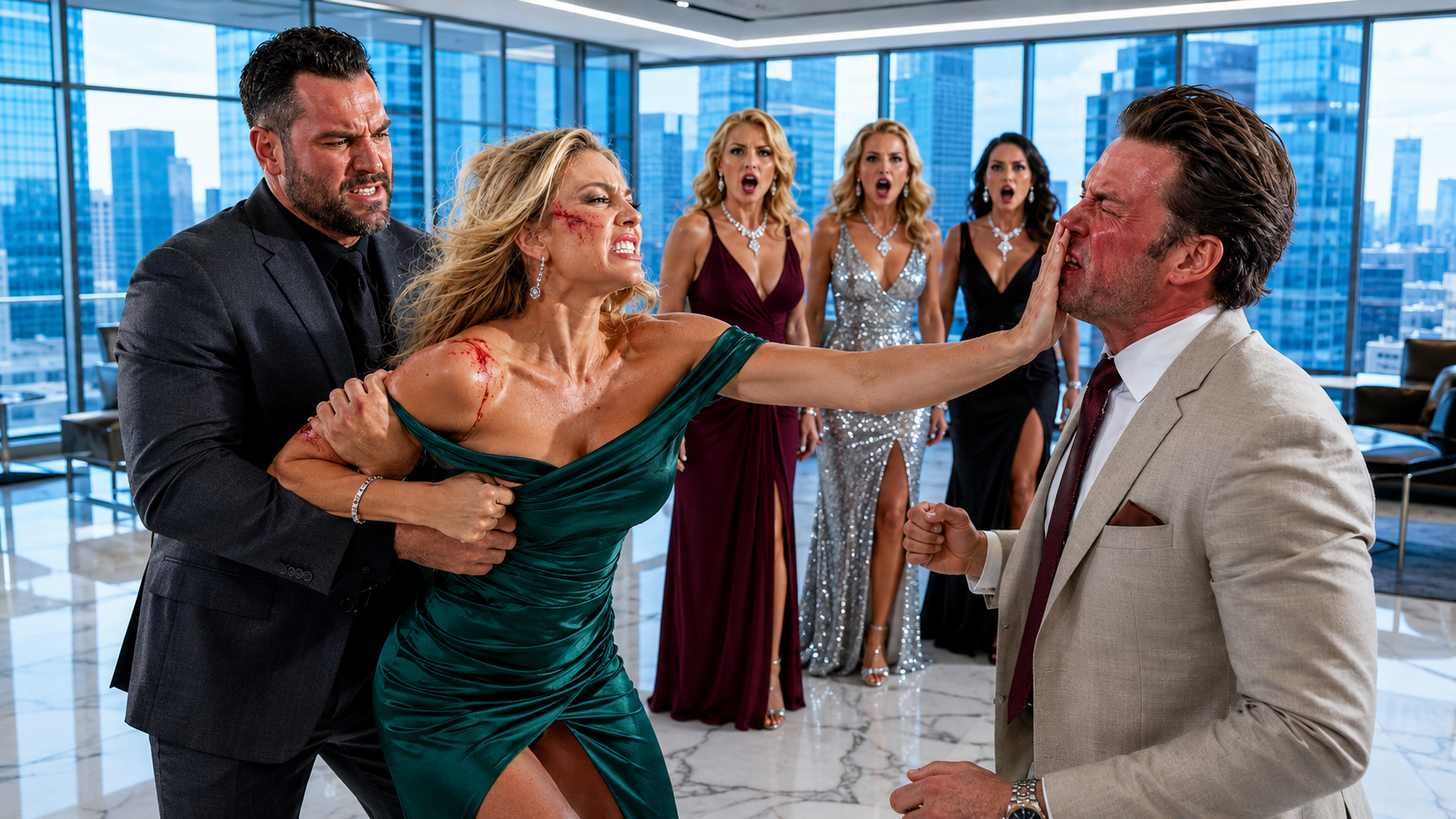
“I’ll see you in hell, Callaway.”
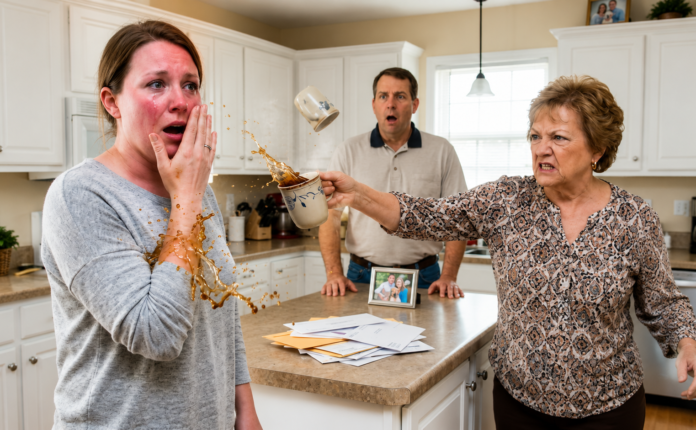
The slap echoed through his penthouse office like a gunshot.
My palm burned.
His cheek turned red.
You May Also Like
And for the first time since I had known him, Callaway Drexen—the coldest billionaire in Chicago—looked human.
Not powerful.
Not untouchable.
Not the man whose name appeared on towers, hospitals, investment firms, charity boards, and private aircraft hangars.
Just a man standing in a glass office above the city, stunned because a maid had finally done what no board member, investor, lawyer, or society woman had ever dared to do.
I had hit him.
And I did not regret it.
“You froze my bank account,” I said, my voice shaking with rage. “You called the clinic. You made them refuse my sick nephew. You watched me panic over a baby’s fever like it was entertainment.”
Callaway said nothing.
That almost made me angrier.
“You gave me that card and waited to see if I would become a thief,” I continued. “But you were the thief. You stole my peace. You stole my dignity. You stole my trust.”
He touched his cheek slowly.
“Celestine—”
“Don’t,” I snapped. “Don’t say my name like you know me.”
Behind him, on the giant wall of monitors, four receipts glowed under cold blue light.
Brianna: $45,870. Diamond necklace. Paris.
Tams: $121,600. Vintage Porsche. Miami.
Yolanda: $89,000. Private chalet. Aspen.
And mine.
Celestine: $231.49. Pharmacy. Clinic copay. Baby Tylenol. Infant formula. Rice. Chicken.
My entire crime was two hundred and thirty-one dollars and forty-nine cents.
Not for diamonds.
Not for champagne.
Not for a private jet.
For a feverish baby who could barely breathe.
Callaway stared at that receipt like it had become a mirror, and what he saw inside it terrified him.
Part 1: The Man Who Trusted No One
My name is Celestine Moore.
I was twenty-six years old, a single mother, and a live-in maid in a mansion so large it felt less like a home and more like a warning.
The Drexen estate sat above Lake Michigan behind black iron gates, stone walls, private guards, and cameras hidden in places I did not even know cameras could fit.
The house had seven kitchens, eleven bedrooms, a glass elevator, a wine cellar bigger than my childhood apartment, and a private indoor garden where rare orchids bloomed under artificial sunlight.
But it had no warmth.
Not really.
Everything inside the Drexen estate was beautiful, expensive, and silent.
Even the clocks seemed afraid to tick too loudly.
Callaway Drexen owned it all.
He was forty-two, unmarried, brilliant, and feared by everyone who needed something from him. He made his fortune in medical technology, private equity, and artificial intelligence systems used by hospitals around the world.
Some magazines called him a genius.
Some called him a monster.
His employees called him “Mr. Drexen” and kept their eyes down when he passed.
I called him “sir.”
At least in the beginning.
I started working for him because I had no choice.
My daughter, Liora, was four years old. Her father had disappeared before she was born, leaving me with hospital debt, rent notices, and a baby who smiled at me like I wasn’t falling apart.
My sister Naomi helped when she could, but she had her own struggles. She had a baby boy, Micah, who was born too early and needed constant care.
So when a staffing agency offered me a live-in maid position at the Drexen estate with steady pay, meals included, and a small private room where Liora could stay with me on weekends, I accepted before they finished explaining the rules.
There were many rules.
Do not enter Mr. Drexen’s private office unless summoned.
Do not touch the black piano in the west sitting room.
Do not speak to guests unless spoken to.
Do not ask personal questions.
Do not use the main staircase when guests are present.
Do not bring emotion into the house.
That last rule was not written anywhere, but everyone understood it.
The first time I met Callaway, I was polishing silver in the dining room at 5:30 in the morning.
He walked in wearing a dark suit, holding a tablet, his eyes locked on some chart that probably represented more money than I would make in a lifetime.
I stepped back quickly.
“Good morning, sir.”
He did not answer.
He poured black coffee into a white porcelain cup without looking up.
I returned to polishing.
Then he said, “You missed a spot.”
I looked down.
There was a tiny fingerprint on the edge of a serving spoon.
“I’m sorry, sir.”
“Why?”
I blinked.
“Because I missed it.”
“No,” he said. “Why did you miss it?”
I thought he was joking.
He wasn’t.
“I suppose I was tired.”
“Tiredness is not an explanation. It is a condition.”
I stared at him.
He finally looked at me.
His eyes were gray, cold, and painfully alert, as if he had spent his whole life expecting betrayal and had never been disappointed.
“What is your name?”
“Celestine, sir.”
“Celestine,” he repeated. “If you are responsible for the silver, the silver reflects you. If the silver is careless, you are careless.”
My face burned.
“Yes, sir.”
He walked away.
I hated him that morning.
Quietly, of course.
Poor people rarely have the luxury of hating loudly.
Over time, I learned Callaway’s habits.
He slept four hours a night.
He ate the same breakfast every morning: black coffee, plain eggs, half a grapefruit.
He held meetings with people who arrived smiling and left sweating.
He never laughed.
He rarely said thank you.
And he trusted no one.
One afternoon, while I was arranging fresh towels in the guest wing, I heard two house managers whispering in the hallway.
“Did you hear what happened to the last assistant?”
“Fired?”
“Worse. Investigated. Mr. Drexen found out she was selling details about his schedule to tabloids.”
“What about the chef before Marcus?”
“Stole wine. Two bottles worth eighty thousand.”
“And the woman he almost married?”
The other manager lowered her voice.
“She was sleeping with his CFO and helping him leak acquisition plans.”
I froze behind the door.
That explained something.
Not everything.
But something.
Callaway Drexen had built walls because people kept selling pieces of him.
Still, pain does not excuse cruelty.
I believed that then.
I believe it now.
Part 2: The Black Card Challenge
The strange night began with a dinner party.
Not a warm dinner party with laughter and music.
A Drexen dinner party.
Which meant rich people pretending not to measure each other while drinking wine older than my mother.
The guests arrived in designer gowns and tailored suits. The women were beautiful in a dangerous way, polished until they barely looked real.
There was Brianna Vale, a socialite with diamonds at her throat and ambition in her smile.
There was Tamsin “Tams” Cross, a venture capitalist who laughed too loudly and touched Callaway’s arm too often.
There was Yolanda Pierce, an art dealer with red lips, sharp eyes, and a reputation for turning wealthy men into stepping stones.
And then there was me.
The maid carrying champagne.
I was invisible until I wasn’t useful.
I passed by the study around midnight with a tray of empty glasses when Callaway’s voice stopped me.
“Celestine.”
I turned.
“Yes, sir?”
“Come in.”
I looked around, confused.
“Sir?”
“Inside.”
The three women were sitting in his mahogany-lined study, each holding wine and wearing expressions that made it clear they did not understand why the maid had been invited.
Brianna laughed softly.
“Callaway, is this part of the entertainment?”
Callaway ignored her.
“Stand there,” he told me.
I stood near the door, hands folded in front of my apron.
On his desk were four black titanium cards.
I recognized them from movies.
Cards with no visible limit.
Cards that looked less like money and more like power.
Callaway picked one up.
“Each of you will receive one card.”
Tams smiled.
“Now this is interesting.”
Yolanda crossed her legs.
“What are the rules?”
Callaway’s eyes moved from woman to woman.
“Seventy-two hours. No spending limit. No questions asked. Use it however you like.”
Brianna lifted one eyebrow.
“What’s the catch?”
“There is always a catch,” Yolanda said.
Callaway leaned back.
“The catch is that I will learn who you are.”
Tams laughed.
“By what we buy?”
“By what you justify,” he said.
The room went quiet.
Then he looked at me.
“Celestine, take one.”
My stomach tightened.
“Sir, I don’t think—”
“Take one.”
Brianna looked offended.
“Callaway, surely you’re not giving the help a Centurion card.”
The help.
I felt the words like a hand against my face.
Callaway’s gaze flicked toward her.
“Does that bother you?”
Brianna smiled.
“No. It amuses me.”
He looked back at me.
“Take it.”
I walked forward slowly and picked up the last card.
It was heavier than I expected.
Cold too.
Like holding a secret.
Callaway watched my face.
“You may use it for anything.”
“I don’t need anything, sir.”
Brianna laughed.
“Oh, sweetheart. That is what people say when they’ve never had the option.”
I looked at her.
“And sometimes people who have every option still have no character.”
Her smile died.
Callaway’s eyes sharpened.
For a moment, I thought I would be fired.
Instead, he said, “Seventy-two hours begins now.”
I placed the card in my apron pocket like it might burn through the fabric.
That night, after the guests left, I went to my small room near the staff corridor and hid the card inside my old sneaker.
I wanted nothing to do with it.
My daughter Liora was sleeping on the narrow bed, curled around her stuffed rabbit.
I sat beside her and whispered, “Some people test others because they don’t know how to trust.”
She slept peacefully.
I wished I could do the same.
The next morning, the spending began.
The house monitors in the staff kitchen displayed alerts for Callaway’s finance team. I wasn’t supposed to look, but everyone looked.
Brianna flew to Paris and bought jewelry before lunch.
Tams chartered a jet to Miami and placed a deposit on a vintage Porsche.
Yolanda booked an Aspen chalet, ordered champagne, and purchased a painting so ugly I assumed it was expensive.
The staff whispered.
“Three women. One night. Almost three hundred thousand.”
“Mr. Drexen expected this.”
“Then why do it?”
“Because rich people get bored.”
I said nothing.
My black card stayed in my sneaker.
By evening, I had almost convinced myself I would make it through the seventy-two hours without touching it.
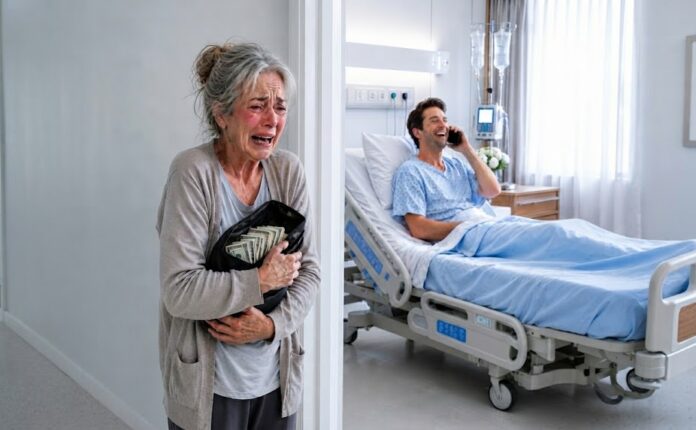
Then my phone rang.
Naomi.
I answered quickly.
“Hey. Is everything okay?”
She was crying.
“Celestine, I don’t know what to do.”
I stood up.
“What happened?”
“It’s Micah. His fever is 104. He’s breathing weird. I took him to urgent care, but they said there’s an outstanding balance from his last treatment. They won’t process the emergency prescriptions until I pay something.”
My blood ran cold.
“What? He’s a baby.”
“I know.”
“Where are you?”
“Outside the clinic. I tried calling everyone. I have twenty-two dollars. They said the copay and prescriptions are due tonight.”
“How much?”
“I don’t know. Two hundred something. Maybe more.”
I checked my bank app.
Four dollars and twelve cents.
My hands started shaking.
“Naomi, listen to me. Go back inside. Tell them I’m coming.”
“How? Celestine, you don’t have—”
“I’m coming.”
I hung up.
For thirty seconds, I stared at the sneaker under my bed.
No.
No, no, no.
The card was a test.
A trap.
A billionaire’s game.
But Micah’s fever was real.
His breath was real.
My sister’s panic was real.
I thought of Callaway saying, “Use it however you like.”
I thought of Brianna buying diamonds.
Tams buying cars.
Yolanda buying champagne.
Then I thought of a baby burning with fever.
I grabbed the card.
Part 3: The $231 Receipt
The pharmacy was open twenty-four hours, but at that hour it felt abandoned.
Rain hammered the glass doors.
The fluorescent lights buzzed overhead.
I rushed through the aisles, grabbing infant Tylenol, electrolyte solution, baby formula, a thermometer, rice, chicken broth, and a small pack of diapers because Naomi had said she was almost out.
At the counter, I spoke too fast.
“My nephew is at the clinic across the street. They said prescriptions and copay need to be handled. Can you process it here?”
The clerk looked tired but kind.
“I can try.”
“Please. He’s a baby.”
She typed something into the system.
“Name?”
“Micah Moore.”
She found the account.
“Outstanding clinic copay and prescriptions come to $231.49.”
I nodded, tears already forming.
“Okay.”
“Card?”
My hand shook as I pulled out the black titanium card.
The clerk looked at it, then at me.
I knew what she saw.
A maid in a worn coat, wet shoes, and panic.
Not someone who belonged to a card like that.
“It’s authorized,” I whispered.
She swiped it.
The machine beeped.
For one impossible second, I thought it had worked.
Then the screen flashed red.
TRANSACTION FLAGGED.
The clerk frowned.
“Is there another card?”
“No. Please try again.”
She tried.
Red again.
My stomach dropped.
Then the automatic doors opened.
Two men in dark suits entered.
Not pharmacy customers.
Security.
One stood by the door.
The other walked straight toward me.
“Celestine Moore?”
My fingers tightened around the bag.
“What is this?”
“You need to come with us.”
“No. I need to get this medicine to my nephew.”
The guard reached for my arm.
I pulled back.
“Don’t touch me!”
The clerk looked terrified.
My phone buzzed.
Unknown number.
I answered with trembling hands.
Callaway’s voice came through.
“I know exactly what you just did, Celestine.”
My body went cold.
I looked at the security men.
“You’re watching me?”
“Yes.”
“My nephew is sick.”
“I know.”
“Then approve the card!”
Silence.
“Callaway!”
His voice was quiet.
“Bring her back.”
The guard took my arm.
I screamed.
“Let me go! A baby is sick! Please!”
The pharmacist grabbed the medicine bag.
“She paid?”
The guard looked at her.
“Leave it.”
“No!” I shouted. “Please, the medicine—”
The lead guard touched his earpiece, then paused.
He listened.
Then he looked at the pharmacist.
“Process approved.”
The machine printed a receipt.
The pharmacist shoved the bag into my hands.
I clutched it to my chest.
“Naomi,” I whispered. “I have to get this to Naomi.”
The guard said, “Your sister is being handled.”
“What does that mean?”
No answer.
They led me into the freezing rain.
The SUV ride back to the estate felt like being buried alive.
My phone had no signal.
I tried texting Naomi.
Nothing.
I tried calling.
Nothing.
The guard in the front seat looked at me through the rearview mirror.
“Please,” I said. “Tell me if the baby is okay.”
He looked away.
“Please.”
No one answered.
By the time we reached the Drexen estate, I was shaking so badly I could barely walk.
They took me through the private elevator to Callaway’s penthouse office.
The doors opened.
He stood by the glass wall, looking out over Chicago.
Behind him, the city glittered through the storm.
He did not turn around.
“Do you know what most people do when given unlimited access to someone else’s money?” he asked.
I stared at his back.
“I don’t care.”
He pressed a remote.
The monitors lit up.
Receipts.
Photos.
GPS locations.
Brianna in Paris with diamonds.
Tams in Miami beside a Porsche.
Yolanda in Aspen wrapped in fur.
Then my receipt appeared.
$231.49.
Baby Tylenol.
Formula.
Rice.
Chicken.
Clinic copay.
Callaway finally turned around.
“Three hundred thousand dollars,” he said. “That is what they spent in less than a day.”
I glared at him.
“Good for them.”
“You spent two hundred and thirty-one dollars.”
“My nephew needed medicine.”
“You could have spent more.”
“It wasn’t mine.”
“You could have taken enough to change your life.”
I stepped closer.
“My life does not change by stealing.”
The words hit him. I saw it.
He studied me like I was something impossible.
“Why didn’t you buy something for yourself?”
“Because I don’t belong to your world, Mr. Drexen.”
“You had the card.”
“That doesn’t mean I had the right.”
His lips parted slightly.
I continued.
“You people think access means permission. It doesn’t. You gave me a card. You didn’t give me a conscience.”
For a moment, the room was silent.
Then he said, “I froze your bank account.”
The world stopped.
“What?”
“I had it frozen this morning.”
I stared at him.
“You did what?”
“I contacted the clinic. I instructed them to demand payment tonight.”
My ears rang.
“No.”
“I needed a real pressure point.”
“You used my nephew?”
“I had medical personnel nearby.”
“You used a sick baby?”
His face tightened.
“I needed to see what you would do when morality became expensive.”
Something inside me broke.
“You created this?”
“Yes.”
“You made my sister cry outside a clinic with her baby gasping for air?”
“I was monitoring—”
I slapped him.
Hard.
His head turned with the force of it.
The sound cracked through the office.
For a long second, neither of us moved.
Then I said, “I’ll see you in hell, Callaway.”
Part 4: The Truth Behind the Test
I turned toward the door.
“I quit. I will pay back every cent. You can take it from my final check, sue me, destroy my record, do whatever rich men do when their toys stop obeying.”
“Celestine.”
I kept walking.
“They’re safe.”
My hand froze on the door handle.
His voice sounded different.
Not cold.
Not controlled.
Broken.
“Your sister and Micah are safe.”
I turned slowly.
Callaway walked to his desk and lifted a tablet.
He held it out.
I did not want to take it.
But I did.
On the screen was a live video feed from a hospital room.
Not the urgent care clinic.
A private pediatric suite.
Naomi sat in a chair holding Micah. A doctor checked his breathing while a nurse adjusted an IV. Micah’s face was still flushed, but he was calm.
Alive.
Breathing.
My knees weakened.
“That’s Naomi,” I whispered.
“Yes.”
“Where is she?”
“Chicago Memorial. Private wing.”
I gripped the tablet.
“Micah?”
“Stable. His fever is down. It was a respiratory infection, but they caught it early. He is receiving full care.”
I sank into the nearest chair and covered my mouth.
The relief hit so hard it hurt.
For several seconds, I could not speak.
Then I looked up.
“You still did it.”
Callaway nodded.
“Yes.”
“You still scared us.”
“Yes.”
“You still played God.”
His eyes dropped.
“Yes.”
“Why?”
He stood in silence so long I thought he would refuse to answer.
Then he walked to the window.
“My mother died when I was nine,” he said.
I did not expect that.
“My father married again six months later. Her name was Evangeline. She was beautiful, charming, and kind when people watched.”
He stared out at the rain.
“When I was twelve, she convinced my father I needed boarding school. When I was fifteen, she convinced him I was unstable. When I was seventeen, she convinced him to change the trust terms. When I was nineteen, my father died and she tried to take everything.”
I said nothing.
Callaway continued.
“She failed because my father’s lawyers were better than hers. But before she disappeared, she told me something.”
He turned.
“She said, ‘People like you are not loved, Callaway. You are accessed.’”
The words sat heavy in the room.
“I spent the next twenty years proving her right,” he said. “Every friend, every partner, every woman, every executive, every charity board, every distant cousin. Everyone wanted something. Money. Access. Influence. Protection. A check. A name.”
His voice grew quieter.
“Eventually, I stopped looking for goodness. I only measured the price of betrayal.”
I wanted to stay angry.
Part of me still was.
But there was something terrible about seeing a powerful man reveal the child still bleeding inside him.
“That explains your pain,” I said. “It does not excuse what you did.”
He looked at me.
“I know.”
“No, you don’t. Because if you knew, you would understand that poor people do not have room for games. We live one emergency away from disaster. A fever is not a theory to us. A declined payment is not data. It is terror.”
His face tightened with shame.
“You’re right.”
“My sister thought her baby might die.”
“I know.”
“No, Callaway. You watched it. You monitored it. But you didn’t feel it.”
He closed his eyes.
“No. I didn’t.”
For the first time, he looked small.
I stood.
“I don’t care how many vultures surrounded you. Tonight, you became one.”
He flinched.
Good.
He needed to.
I placed the tablet on his desk.
“I’m going to the hospital.”
“I’ll take you.”
“No.”
“Celestine—”
“No. You will not buy your way into the ambulance of my forgiveness.”
He swallowed.
“I understand.”
“Do you?”
“I’m trying to.”
I looked at the receipt glowing on the screen behind him.
“Then start with this. Never test desperate people with survival. Test yourself with honesty.”
I left.
This time, no guard stopped me.
Part 5: The Maid Who Walked Away
At the hospital, Naomi cried when she saw me.
She handed Micah to the nurse and ran into my arms.
“What happened?” she sobbed. “They said a private doctor came. They said everything was paid. I thought maybe you—”
“I’m here,” I whispered. “That’s all that matters right now.”
Micah slept in the hospital crib with tiny monitors attached to him.
I stood beside him and touched his little hand.
His fingers curled around mine.
I cried quietly.
Not because he was sick.
Because he was safe.
Naomi looked at me.
“Celestine, whose card did you use?”
I closed my eyes.
“My employer’s.”
Her face changed.
“Are you in trouble?”
“I don’t know.”
“Did you steal?”
“No.”
“Then what happened?”
I looked at my sister.
How do you explain that a billionaire created your worst fear to measure your soul?
“I’ll tell you later,” I said.
That night, I slept in the chair beside Micah’s bed.
In the morning, a hospital administrator came in.
“Ms. Moore?”
I stood quickly.
“Yes?”
“All expenses for Micah’s treatment have been covered. Additionally, a pediatric care trust has been established in his name.”
Naomi looked confused.
“What does that mean?”
The woman smiled gently.
“It means his medical costs will be fully covered until adulthood.”
Naomi burst into tears.
I did not.
Because I knew who had done it.
And I was not ready to call it kindness.
Sometimes powerful people hurt you first, then give you gifts so you will call the wound a blessing.
I refused.
The next envelope came at noon.
Delivered by a driver from the Drexen estate.
Inside was my final paycheck.
A formal apology.
And a handwritten note.
Celestine,
You were right.
I measured pain without understanding it.
I mistook control for wisdom.
I mistook fear for intelligence.
I mistook your poverty for vulnerability and my wealth for strength.
Last night, you proved the opposite.
You owe me nothing.
Not the $231.49.
Not forgiveness.
Not conversation.
Not gratitude.
I have restored your bank account and doubled your severance. Your position remains available if you choose to return, but I understand if you never step inside my home again.
Micah’s care is covered without condition.
Naomi’s clinic debt is cleared.
No one will contact you unless you ask.
I am sorry.
Callaway Drexen
I read the note twice.
Then I folded it and put it away.
Naomi watched me.
“Do you believe him?”
“I believe he is sorry.”
“That’s something.”
“It’s not everything.”
“No,” she said softly. “It isn’t.”
For two weeks, I stayed away from the Drexen estate.
I took Liora to daycare.
I visited Micah.
I searched for new jobs.
I ignored three more letters from Callaway.
The first contained documents proving he had fired the private investigator who froze my account.
The second contained proof he had donated twenty million dollars to build emergency pediatric payment programs in clinics across Chicago.
The third was only one sentence.
I am learning that apology without change is just another form of vanity.
I hated that sentence.
Because it sounded true.
One rainy afternoon, I received a call from an unknown number.
I almost ignored it.
Then I answered.
“This is Celestine.”
A woman’s voice said, “Ms. Moore, my name is Dr. Evelyn Marris. I run the South Halsted Community Clinic. I was told you might be willing to consult on something.”
“Consult? I’m a maid.”
“I know who you are.”
That made me cautious.
“Who told you?”
“Mr. Drexen.”
I almost hung up.
Dr. Marris quickly said, “Please don’t worry. He didn’t ask me to call on his behalf. He asked me to build a patient dignity program, and he said the only person who could tell us if it was real or just billionaire guilt was you.”
I said nothing.
She continued.
“We’re designing emergency treatment policies so families are not turned away over unpaid balances. We need someone who understands what that fear feels like from the other side of the counter.”
My throat tightened.
“What exactly would I do?”
“Tell us the truth.”
The truth.
It seemed Callaway had finally learned the correct test.
Not a trap.
An invitation.
“I’ll come,” I said. “But I won’t protect his feelings.”
Dr. Marris laughed.
“He specifically said you wouldn’t.”
Part 6: The Clinic
The clinic sat in a neighborhood Callaway’s old world usually ignored.
The waiting room was full of tired mothers, elderly men, coughing children, and people holding paperwork like it might decide whether they deserved care.
Dr. Marris greeted me at the door.
She was in her fifties, with kind eyes and sneakers under her lab coat.
“You’re Celestine,” she said.
“Yes.”
“I’ve heard a lot about you.”
“I hope not from Callaway.”
“Mostly from the receipt.”
I blinked.
“The receipt?”
She led me into a conference room.
On the table were policy drafts.
Emergency care fund proposals.
Payment forgiveness models.
Patient transportation vouchers.
Medicine access programs.
And at the center of the table, copied and enlarged, was my pharmacy receipt.
$231.49.
I stared at it.
Dr. Marris said gently, “He said every program must answer one question: what would have prevented this receipt from becoming an act of desperation?”
I sat down slowly.
For the next three hours, I talked.
I told them what it felt like to count coins at a pharmacy counter.
What it felt like to fear judgment more than hunger.
What it felt like when a receptionist says, “Payment is due first,” while a child burns with fever.
What poor families need is not pity.
They need time.
Clarity.
Respect.
Payment plans that do not punish them for being sick.
Doctors who do not assume missed appointments mean laziness when bus fare costs money.
Pharmacies that do not make mothers choose between antibiotics and dinner.
At the end, Dr. Marris looked at me and said, “Would you consider staying on as a paid community advocate?”
I laughed because I thought she was joking.
She wasn’t.
“I don’t have a degree.”
“You have experience.”
“I clean houses.”
“You understand people this system fails.”
I looked down at the receipt.
For the first time, it did not look like shame.
It looked like evidence.
“I’ll think about it,” I said.
As I left the clinic, Callaway was standing outside near a black car.
No guards.
No expensive coat.
Just him, holding an umbrella.
I stopped.
“I didn’t know you’d be here.”
“I wasn’t sure if I should come.”
“Then why did you?”
“To ask permission.”
“For what?”
“To speak to you.”
That surprised me.
The old Callaway never asked permission.
I crossed my arms.
“You have two minutes.”
He nodded.
“I deserve that.”
“You deserve less.”
“I know.”
The rain fell between us.
He looked tired.
Not physically.
Spiritually.
“I’ve shut down the card experiment,” he said.
“Good.”
“I’ve apologized to Brianna, Tams, and Yolanda for using them as well.”
I raised an eyebrow.
“Even though they spent your money?”
“Yes.”
“Did they give it back?”
“No.”
I almost smiled.
“That sounds like them.”
“I deserved that too.”
“You seem to deserve many things.”
“I’m discovering that.”
For a moment, neither of us spoke.
Then he said, “I’m not asking you to return to work.”
“Good.”
“I’m asking if you will help build the clinics.”
I looked at him.
“You don’t need me. You need doctors.”
“I have doctors. I need conscience.”
The words were quiet.
I wanted to reject them.
But I thought of the mothers in that waiting room.
The children.
The unpaid bills.
The fear.
“This is not redemption for you,” I said.
“No.”
“If I help, it’s for them.”
“I understand.”
“And I will not be your symbol.”
“No.”
“No interviews. No charity gala speech. No poor maid saved billionaire nonsense.”
His mouth twitched.
“That headline would be terrible.”
I looked at him sharply.
He lowered his eyes.
“Sorry.”
I almost laughed.
Almost.
“I’ll help with the clinic,” I said. “But I still don’t trust you.”
“I know.”
“And I’m still angry.”
“I know.”
“And if you ever manipulate my family again—”
“I won’t.”
“I wasn’t finished.”
He nodded.
“Sorry.”
“If you ever manipulate my family again, I will slap you twice.”
For the first time, Callaway Drexen smiled.
Not a cold smile.
A real one.
“I believe you.”
“Good.”
Part 7: The Receipt on the Wall
Months passed.
The first clinic opened in South Chicago.
Then another.
Then three mobile pediatric vans.
Then an emergency medicine fund that paid pharmacies directly for children whose families could not afford prescriptions.
Callaway did not attend the ribbon cutting for the first clinic.
He stood in the back.
Quiet.
Listening.
When reporters asked him for a quote, he pointed to Dr. Marris.
“She did the work,” he said.
When they asked about the funding, he said, “Money is only useful when it stops worshiping itself.”
That quote went viral.
He hated it.
I enjoyed that.
Our relationship changed slowly.
Not romantically at first.
Trust does not bloom like fireworks.
It grows like a stubborn plant through cracked concrete.
We worked together.
We argued often.
He wanted efficiency.
I wanted dignity.
He wanted measurable outcomes.
I wanted waiting rooms with warm lighting and chairs big enough for mothers holding sleeping children.
He wanted digital intake forms.
I reminded him that not everyone had reliable phones.
He once suggested automated billing reminders.
I stared at him until he said, “That was stupid.”
“It was.”
“I’m learning.”
“Slowly.”
He smiled.
“Painfully.”
One evening, after a long clinic meeting, I found him sitting alone in the empty waiting room.
No laptop.
No phone.
Just Callaway, staring at a mural children had painted on the wall.
I sat two chairs away.
“You look lost.”
“I think I am.”
“That’s new.”
“Yes.”
He looked at the mural.
“When I was rich and cynical, everything made sense. People were selfish. Money revealed truth. Trust was foolish. Love was leverage.”
“And now?”
“Now I have no idea what I believe.”
I leaned back.
“That’s probably healthier.”
He laughed softly.
“I deserved that.”
“You say that often.”
“You’re often right.”
I looked at him.
“Callaway, why did you really choose me for the card test?”
He was quiet.
Then he said, “Because you never looked at me like you wanted something.”
“I was your maid. I wanted my paycheck.”
“Yes. But not me.”
I frowned.
He continued.
“Brianna wanted status. Tams wanted access. Yolanda wanted influence. Most people wanted some version of me they could use. You wanted to finish your work and go back to your daughter.”
“That made you curious?”
“That made me afraid.”
“Afraid?”
“If goodness existed that close to me and I couldn’t recognize it, then maybe the problem was never the world.”
I looked at him.
“Maybe it was you.”
“Yes.”
That honesty stayed with me.
A year after the pharmacy night, Callaway asked me to visit the Drexen estate.
I hesitated.
I had not been back since I quit.
When I arrived, the house felt different.
Less silent.
Some rooms had been converted into administrative offices for the clinic foundation.
The west sitting room had children’s drawings framed on the walls.
The black piano was still there, but now there were fingerprints on it.
I smiled.
Callaway noticed.
“What?”
“You let people touch the piano.”
He looked embarrassed.
“Liora played it last week.”
“My daughter touched your forbidden piano?”
“She played three notes and declared herself a genius.”
“That sounds like her.”
He led me to his private office.
The monitors were gone.
The wall that once displayed transaction feeds and surveillance maps now held four framed receipts.
I stepped closer.
Three were absurdly long.
Jewelry.
Cars.
Flights.
Luxury hotels.
The fourth was tiny.
Faded.
Ordinary.
Mine.
$231.49.
Under it, written in Callaway’s elegant handwriting, were the words:
This receipt changed my life.
My throat tightened.
“You framed it.”
“Yes.”
“Why?”
“So I never forget the night I mistook a test for truth.”
I looked at him.
He reached into his pocket.
For a second, I thought he was about to propose.
He wasn’t.
Instead, he handed me a document.
“What is this?”
“Ownership papers.”
I narrowed my eyes.
“Callaway.”
“Not for you personally,” he said quickly. “For the clinic foundation. I transferred controlling authority into an independent trust chaired by Dr. Marris.”
I opened the papers.
My name was listed too.
Celestine Moore: Community Ethics Director.
I stared at it.
“You gave away control?”
“Yes.”
“Voluntarily?”
He smiled faintly.
“I’m told it’s a sign of growth.”
I looked at him, surprised by the warmth in my chest.
“This is good.”
His expression softened.
“Coming from you, that means more than it should.”
“Don’t make it weird.”
“Sorry.”
I looked back at the receipt.
“What happened to Brianna, Tams, and Yolanda?”
“Brianna tried to sell a story to the press. Tams asked if she could keep the Porsche. Yolanda sent me an invoice for emotional distress.”
I burst out laughing.
Callaway laughed too.
And that was the moment something shifted.
Not dramatically.
Not like a movie.
Just quietly.
Like a locked door opening somewhere inside me.
Part 8: Love Without a Price Tag
Callaway and I did not fall in love because he was rich.
I had seen what wealth without humility looked like.
It looked like a man freezing a maid’s bank account to test her desperation.
No, I fell in love with the man he became after he stopped defending the worst thing he had done.
He showed up.
Not perfectly.
But consistently.
He came to Liora’s preschool fundraiser and bought only one cupcake because I told him not to “billionaire the bake sale.”
He visited Micah in the hospital months later for a routine checkup and sat on the floor stacking blocks with him.
He learned Naomi’s favorite coffee order.
He apologized to my daughter for once making her mother cry.
Liora looked at him seriously and said, “Don’t do it again.”
He said, “I won’t.”
She nodded.
“Okay. You can have one of my fries.”
That was how Callaway earned forgiveness from a four-year-old.
Mine took longer.
One evening, he walked me home after a clinic event.
Snow fell softly over Chicago.
We stopped outside my apartment building.
“You don’t have to walk me to the door,” I said.
“I know.”
“But you will anyway?”
“Yes.”
I smiled.
“You’re stubborn.”
“I prefer committed.”
“I prefer stubborn.”
He looked at me with that almost-smile.
“Celestine.”
“Yes?”
“I love you.”
The world went quiet.
I looked at him.
He did not move closer.
Did not reach for me.
Did not try to turn the moment into something he could control.
He simply stood there, vulnerable in the snow.
“I’m not saying it because I expect anything,” he said. “I just wanted to tell the truth without making it a transaction.”
My eyes burned.
“You have terrible timing.”
“I know.”
“I have laundry upstairs.”
“I expected nothing less romantic.”
I laughed.
Then I said, “I’m scared.”
“Of me?”
“Yes.”
He accepted that.
“You should be careful with me.”
“That is not comforting.”
“I mean, I know I hurt you. I know love does not erase that. If you let me near your heart, I want you to do it slowly. With your eyes open.”
I studied him.
“That might be the healthiest thing you’ve ever said.”
“I wrote it down first.”
I laughed again.
Then I stepped closer and kissed his cheek.
The same cheek I had slapped a year before.
“Goodnight, Callaway.”
His eyes closed briefly.
“Goodnight, Celestine.”
Part 9: The Proposal
One year after the pharmacy receipt, Callaway asked me to meet him at the first clinic we had helped build.
Not the mansion.
Not a restaurant with chandeliers.
Not some rooftop with violinists hiding behind plants.
The clinic.
It was after hours. The waiting room was empty except for soft lights and the children’s mural on the wall.
Naomi was there.
So was Micah, now healthy and laughing.
Liora stood beside him holding a tiny bouquet of daisies.
Dr. Marris smiled suspiciously from near the reception desk.
I looked at Callaway.
“What is happening?”
He looked nervous.
Actually nervous.
It was deeply satisfying.
“Celestine Moore,” he said.
“Oh no.”
Liora whispered loudly, “Mommy, don’t say oh no.”
Naomi covered her mouth, laughing.
Callaway got down on one knee.
I stared at him.
He opened a small velvet box.
Inside was a ring.
Beautiful, simple, not absurd.
But beside it was something folded beneath glass.
A copy of the $231.49 receipt.
I started crying before he spoke.
“Celestine,” he said, his voice shaking, “the night you slapped me was the first honest thing that had happened to me in years.”
Liora gasped.
“Mommy slapped him?”
Naomi whispered, “I’ll tell you later.”
Callaway smiled through his nerves.
“I deserved it.”
Liora nodded solemnly.
“Okay.”
Everyone laughed.
Callaway looked back at me.
“I used to believe money revealed people. But you taught me that hardship reveals them more. You taught me that integrity is not proven when life is easy. It is proven when your hands are shaking, your family is scared, and no one would blame you for taking more.”
He swallowed.
“You owed me nothing. Not forgiveness. Not trust. Not love. But somehow, you stayed long enough to help me become a man who could receive all three.”
My tears fell freely.
“I cannot promise I will never make mistakes,” he said. “But I promise I will never again test your pain, buy your silence, or treat love like something to measure. I promise to honor your daughter, your family, your voice, and the receipt that taught me the difference between wealth and worth.”
He held up the ring.
“Will you marry me?”
I looked at Liora.
She gave me a thumbs-up.
Micah clapped because everyone else seemed emotional.
Naomi cried.
Dr. Marris pretended not to.
I looked back at Callaway.
“Yes,” I whispered.
His face broke into the most beautiful smile I had ever seen on him.
“Yes?”
“Yes.”
He slid the ring onto my finger.
Liora ran into us, wrapping her arms around both of our necks.
“Are we rich now?” she asked.
I laughed through my tears.
Callaway looked at her seriously.
“We were rich before.”
She frowned.
“We were?”
“Yes,” he said. “You had your mother.”
Liora thought about it, then nodded.
“That’s true.”
I looked at Callaway and knew he finally understood.
Part 10: The Receipt That Built a Legacy
Years later, people would write articles about Callaway Drexen’s transformation.
They would mention the clinics.
The pediatric care funds.
The emergency pharmacy program.
The thousands of families helped.
The billionaire who stepped away from cold empire-building and poured his fortune into medical dignity.
Some would call him generous.
Some would call him redeemed.
Some would call it image repair.
But I knew the truth.
It started with a receipt.
Not a grand donation.
Not a speech.
Not a headline.
A small pharmacy receipt for $231.49.
Baby medicine.
Formula.
Rice.
Chicken.
A clinic copay.
A receipt that proved a poor woman with an unlimited card could still have boundaries.
A receipt that proved desperation did not have to become dishonesty.
A receipt that proved goodness could survive in places wealth never bothered to look.
On our wedding day, Callaway did not invite half of Wall Street.
I refused.
Instead, we married in the courtyard of the South Halsted Community Clinic. Patients, nurses, doctors, staff, my sister, Micah, Liora, and a few true friends filled the chairs.
No society photographers.
No champagne tower.
No guest list arranged by net worth.
Just people.
Before the ceremony, I stood alone for a moment near the clinic entrance.
Callaway found me there.
“You okay?” he asked.
I nodded.
“Just thinking.”
“About?”
“The pharmacy.”
His face softened.
“I think about it every day.”
“I know.”
“I’m still sorry.”
“I know that too.”
He looked at me carefully.
“Do you ever regret staying?”
I looked through the clinic windows.
A mother sat in the waiting room holding a sleeping child. A nurse brought her a blanket. No one asked for payment before kindness.
“No,” I said. “But I’m glad I walked away first.”
He smiled.
“So am I.”
“Because if I had stayed too quickly, you would have thought forgiveness was easy.”
“It wasn’t.”
“No,” I said. “It was earned.”
He took my hand.
“And still being earned.”
I squeezed his fingers.
“Good answer.”
During the reception, Liora stood on a chair and gave a speech no one expected.
“My mommy is the best,” she announced.
Everyone cheered.
“And Callaway used to be scary.”
People laughed.
Callaway covered his face.
“But now he is nice. And he lets me play the piano. And he says money is not for being mean. It is for helping babies and buying snacks.”
More laughter.
Liora lifted her juice cup.
“So I think we should keep him.”
I laughed until I cried.
Callaway whispered, “Best endorsement I’ve ever received.”
Later that evening, after everyone left, we walked through the quiet clinic hallway together.
On the wall near the entrance, framed under warm light, was a copy of the receipt.
Below it were the words:
No family should have to prove they are worthy of care.
I leaned against Callaway’s shoulder.
“You changed the inscription.”
“Yes.”
“I liked the old one.”
“This receipt changed my life?”
“Yes.”
He kissed my forehead.
“That one was about me. This one is about everyone else.”
I looked at him.
The man who once tested people with money had finally learned that the greatest use of wealth was not control.
It was protection.
Not performance.
Not power.
Protection.
And maybe that was the real miracle.
Not that a maid married a billionaire.
Not that a cruel man became kind overnight, because he didn’t.
He changed slowly.
Painfully.
Honestly.
The real miracle was that one small act of integrity—done in fear, done in desperation, done with shaking hands under fluorescent pharmacy lights—became the beginning of a legacy that saved thousands.
People always ask me about the slap.
Did I regret it?
No.
Not for one second.
Because sometimes truth enters the room quietly.
And sometimes it has to echo.
Disclaimer
This story is a fictional drama written for entertainment and inspirational purposes. Any resemblance to real persons, places, companies, or real events is purely coincidental.