My Husband Left Me and Our Newborn to Die in a Blizzard — Six Weeks Later, I Walked Into His Wedding Holding Our Baby
He Pushed Me and Our Newborn Into a Blizzard and Called It a Tragedy — But Six Weeks Later, I Walked Into His Wedding With the Daughter He Tried to Erase
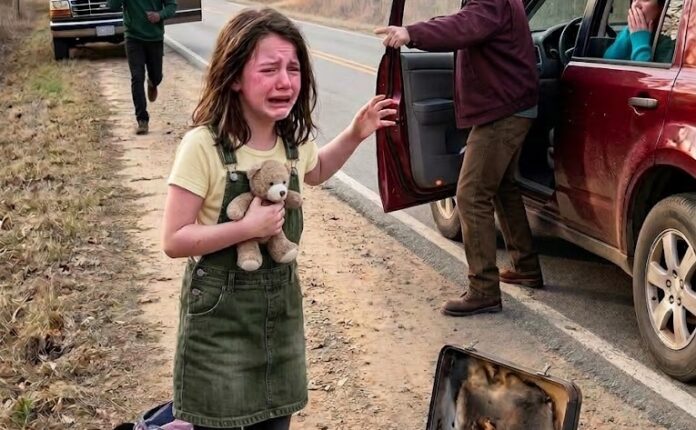
Six weeks after my husband left me and our newborn daughter in a blizzard, I stopped believing in mercy.
I started believing in timing.
You May Also Like


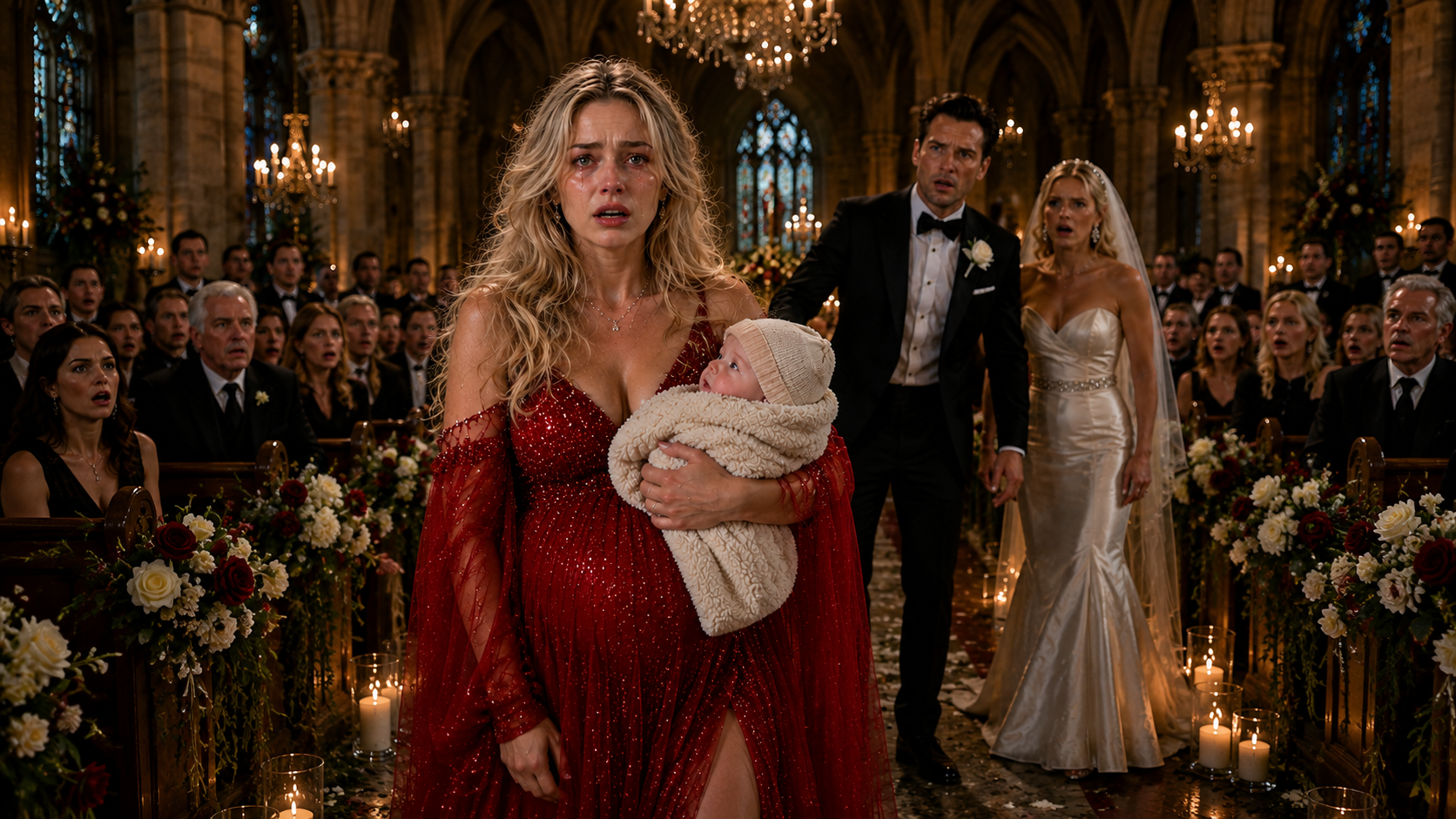
Tonight, I stood at the back of a candlelit chapel, holding my baby against my chest while Richard stood at the altar beside another woman.
He looked happy.
Clean.
Untouched.
Like a grieving widower who had finally found the strength to love again.
Then he saw me.
His face went rigid.
“Security,” he muttered.
But no one moved.
Every guard was already gone.
Every guest had already been told enough to stay seated.
I stepped forward, my daughter alive in my arms because I had refused to die in the snow.
“You always thought you controlled endings,” I said softly. “So I let you have this one.”
Then the projector lit up behind him.
And the first thing every guest saw was Richard abandoning his wife and newborn daughter on a mountain road during a blizzard.
The Story
Six weeks after my husband pushed me and our newborn daughter into a blizzard, I stopped believing in mercy.
I started believing in timing.
Tonight, I stood at the back of a candlelit chapel, holding Grace against my chest while Richard stood at the altar beside another woman.
White roses covered the aisle.
Soft violin music trembled through the air.
Two hundred guests sat in polished wooden pews, watching a man they believed was brave enough to love again after tragedy.
Richard wore a black tuxedo.
His hair was neatly combed.
His smile was soft and tragic.
He looked like a grieving widower who had survived the unbearable.
He looked clean.
Untouched.
Alive.
Like he had not left me bleeding in the snow.
Like he had not dropped our newborn daughter beside me like luggage.
Like he had not driven away while I screamed his name into a whiteout.
Then he saw me.
At first, his face did not understand what his eyes were seeing.
A woman at the back of the chapel.
A baby wrapped in a cream blanket.
A ghost in a dark blue coat.
Then recognition struck him.
His face went rigid.
The bride beside him, Celeste Whitaker, turned her head.
“Richard?” she whispered.
He did not answer her.
His lips barely moved.
“Security.”
But no one came.
Every guard had already been dismissed.
Every door was already being watched.
Every guest had already been told enough to stay seated.
I stepped forward, Grace warm and breathing against my chest.
The daughter he tried to erase.
The child whose tiny heartbeat had refused to surrender to the storm.
Richard backed away from the altar.
“No,” he whispered.
I smiled.
“You always thought you controlled endings,” I said softly. “So I let you have this one.”
The chapel lights dimmed.
The projector behind the altar flickered on.
A few guests gasped.
Celeste clutched her bouquet tighter.
Richard’s mother stood up from the front pew.
“What is the meaning of this?”
I looked at her.
“You’ll want to sit down, Margaret.”
Her mouth opened.
But before she could speak, the projector lit up fully.
And the first image appeared.
A snowy mountain road.
A black SUV.
A woman in maternity leggings being shoved into the storm.
And a newborn carrier dropped beside her into the snow.
The chapel went silent.
Richard closed his eyes.
Because he knew.
The snow had not buried everything.
Just two days after I uncovered Richard’s financial secrets, Grace was born.
I was still weak from labor when they discharged me.
My body ached.
My stitches pulled every time I stood.
My hands shook whenever I lifted my daughter from her bassinet.
I was not ready to leave the hospital.
But Richard insisted.
“We need to go home,” he said, kissing my forehead in front of the nurse. “You’ll rest better there.”
The nurse smiled.
“What a supportive husband.”
Richard smiled back.
He was excellent at being admired by strangers.
That was one of the things I had once loved about him.
He knew how to enter rooms.
He knew how to remember names.
He knew how to place one hand gently at the small of my back when people were watching.
He knew how to look like love.
But love does not hide money in stolen transfers.
Love does not forge loan documents.
Love does not open shell accounts under a dead man’s company name.
Two days before Grace was born, I had found the files.
At first, I thought I was looking at old business records from my father’s company.
Then I saw Richard’s signature.
Then mine.
Except I had never signed them.
There were loan agreements.
Property transfers.
Offshore accounts.
Vendor payments to companies that did not exist.
And one folder labeled Weatherfall.
That was the folder that made my blood turn cold.
Inside were insurance papers.
Mine.
Grace’s.
A life insurance policy Richard had increased four months earlier without telling me.
And a medical note I had never seen before, claiming I had “recent signs of postpartum instability.”
I had not even given birth yet.
I confronted him that night.
He smiled at first.
“What are you doing in my office?”
“I was looking for the hospital bag checklist.”
“On my encrypted drive?”
My heart pounded.
“You forged my signature.”
His smile faded.
“Abigail.”
“You used my father’s company name.”
“You don’t understand business.”
I held up the insurance file.
“I understand this.”
For the first time in our marriage, Richard looked at me without pretending.
No charm.
No warmth.
No husband.
Just calculation.
“You should not have touched that.”
I should have called the police that night.
I should have called my lawyer.
I should have left.
But labor started three hours later.
Pain took over.
Fear moved to the corner of the room and waited.
At the hospital, Richard became perfect again.
He held my hand.
He cried when Grace was born.
He kissed her tiny forehead.
“She’s beautiful,” he whispered.
I almost believed him.
That is the cruelest part of loving a liar.
Sometimes your heart still reaches for the man your mind already knows is dangerous.
When we left the hospital two days later, I expected him to drive toward the city.
Toward our house.
Toward warmth.
Toward home.
Instead, he turned onto the mountain pass.
I looked out the window.
Snow clouds pressed low over the trees.
“Richard,” I whispered. “The storm warning said not to take this road.”
“We need quiet family time,” he said.
He reached forward and turned up the radio.
Loud enough to drown out the emergency alert.
Outside, snow slammed against the windshield in thick white sheets.
Inside, Grace slept in her carrier, tiny fists curled beneath her chin, unaware that the predator was the man behind the wheel.
“Turn around,” I said.
Richard did not look at me.
“Rest, Abigail.”
“I said turn around.”
His hands tightened on the steering wheel.
“You always did have poor timing.”
My blood went cold.
“What does that mean?”
He smiled faintly.
“It means you found things you shouldn’t have.”
The road grew narrower.
The storm grew heavier.
The trees became shadows.
Then, on the most deserted stretch of the pass, Richard hit the brakes.
The SUV skidded on black ice and stopped inches from a drop-off.
Grace made a tiny sound from the back seat.
I turned toward her.
“Grace is cold. We need to—”
“Get out,” Richard said.
I stared at him.
“What?”
He unbuckled my seat belt.
“Richard, stop.”
He shoved open the passenger door.
Freezing wind punched the breath from my lungs.
“Richard, please. Grace is in the car.”
His smile was small.
Sick.
“That’s what makes the story believable.”
I grabbed his sleeve.
“Don’t do this.”
He leaned close.
“You should have signed the revised documents when I asked.”
“Richard—”
“Do you know how hard it is to build a future with a wife who keeps asking questions?”
Then he shoved me.
I fell into the snow.
Pain tore through my body.
I had given birth less than forty-eight hours earlier.
My body was not healed.
My strength was gone.
I tried to crawl back toward the SUV.
“Grace!” I screamed.
Richard opened the back door, lifted her carrier, and set it beside me in the snow.
Not gently.
Not carefully.
Like luggage.
I threw myself over the carrier.
Grace began to cry.
The sound cut through the storm like a tiny blade.
Richard stepped back into the SUV and locked the doors.
I pounded on the window.
“Richard! Please! She’s a newborn!”
He looked down at me through the glass.
“Nature is cruel, Abigail.”
His voice came muffled through the storm.
“Such a tragedy that my wife wandered off in a state of postpartum psychosis.”
I froze.
He had rehearsed it.
That terrified me more than the cold.
He continued.
“She took the baby. She got confused. She walked into the storm. I tried to find her.”
I sobbed.
“Please.”
His eyes were empty.
“Goodbye, Abby.”
Then he drove away.
His taillights vanished into the whiteout.
And I was left in a thin sweater, maternity leggings, hospital socks, and blood-stained shoes, holding a baby who had been alive for less than two days.
The cold did not feel like cold at first.
It felt like knives.
Then fire.
Then numbness.
That was when I became afraid.
Because numbness is the body’s way of closing doors.
My fingers shook so hard I could barely unclip Grace from the carrier.
She was crying.
Tiny.
Angry.
Alive.
“Good girl,” I whispered. “Good girl, Grace. Cry. Stay loud for Mommy.”
I pulled her out and pressed her against my bare chest.
Skin to skin.
The nurse had taught me that.
If the baby is cold, put her against you.
Your body will know what to do.
But my body was failing.
I wrapped my sweater around us both and tucked her tiny head beneath my chin.
Snow fell into my hair.
My lips cracked.
My breath came out in white clouds.
I looked down the road.
Nothing.
Only snow.
Only darkness.
Only the tire tracks Richard left behind, already being erased.
“Stay with me,” I whispered. “Please, baby. Stay with Mommy.”
I started walking.
Every step tore through me.
Snow rose to my thighs in places.
My stitches pulled.
Warm blood spread beneath the cold fabric of my leggings.
I did not look down.
If I saw it, I would lose courage.
So I looked at Grace.
At her closed eyes.
At her tiny mouth.
At the blanket wrapped around her body.
“You are going to live,” I said. “Do you hear me? You are going to live.”
The wind swallowed my words.
I walked until my feet stopped feeling real.
I walked until my knees buckled.
I walked until the shivering stopped.
That was when I knew my body was giving up.
People think freezing to death feels like fighting.
It does at first.
Then it feels like sleep.
Soft.
Heavy.
Inviting.
I collapsed beside a snowbank and pulled Grace tighter against me.
She made a weak sound.
“No,” I whispered. “No, no, no.”
I tried to stand.
I could not.
My legs did not answer.
I pressed my lips to her forehead.
Her skin was too cold.
Panic tore through me.
Not for myself.
For her.
I did not waste my last strength cursing Richard.
I prayed.
“Lord,” I whispered through cracked lips, “I am not afraid to come home to You. But please do not let evil take my child. Give me the strength of a lioness. Give me fire.”
My eyes began to close.
Then headlights appeared through the storm.
At first, I thought I was dreaming.
Two yellow lights, blurred by snow, moving slowly down the pass.
I tried to scream.
Nothing came out.
So I lifted one frozen hand.
The lights stopped.
A horn blasted once.
Then a man’s voice shouted through the storm.
“Hey! Hey, are you alive?”
I tried to answer.
Couldn’t.
Boots crunched through the snow.
A large man in a heavy coat dropped to his knees beside me.
“Jesus,” he breathed. “There’s a baby.”
He touched my shoulder.
“Ma’am, can you hear me?”
I forced my eyes open.
“Baby,” I whispered.
“I’ve got you,” he said. “I’ve got both of you.”
His name was Samuel Price.
A trucker hauling emergency generators to the city.
His dashcam had been recording the whole mountain road.
It had captured Richard’s SUV.
The stop.
The shove.
The carrier.
The taillights disappearing.
Samuel did not know that yet.
All he knew was that a woman and a newborn were dying in the snow.
He lifted Grace first and tucked her inside his coat.
Then he lifted me.
I remember screaming because my body came alive with pain again.
That was good.
Pain meant I was not dead.
Samuel carried us to his truck and radioed for help.
“Dispatch, this is Price on North Ridge Pass. I’ve got a postpartum woman and a newborn in severe cold exposure. Possible assault. Need medical now.”
A voice crackled back.
“Repeat, postpartum woman and newborn?”
“Yeah,” Samuel said. “And whoever left them here better pray the cops find him before I do.”
I woke in a hospital three days later.
At first, I did not know where I was.
The ceiling was white.
Machines beeped beside me.
My throat hurt.
My body felt like it had been broken open and filled with glass.
Then I remembered.
Snow.
Grace.
Richard.
I tried to sit up.
A nurse rushed to my side.
“Mrs. Whitmore, easy.”
“My baby,” I rasped. “Where is my baby?”
“She’s alive.”
Those two words cracked the world open.
Alive.
I sobbed so hard the monitors screamed.
The nurse held my shoulders gently.
“She’s in the NICU for warming and monitoring. She is small, but she’s fighting.”
“Take me to her.”
“You need rest.”
“Take me to her.”
A doctor entered with kind eyes and a tired face.
“Abigail, we need to talk first.”
“No. My baby.”
He looked at the nurse.
Then back at me.
“We’ll take you.”
They wheeled me to the NICU.
Grace lay inside a warm incubator, wrapped in soft blankets, wearing a tiny cap.
She looked impossibly small.
But her chest rose.
And fell.
Rose.
And fell.
I pressed one trembling hand to the glass.
“Hi, my love,” I whispered. “Mommy came back.”
Behind me, someone cleared his throat.
I turned.
A woman in a dark suit stood near the door.
“Mrs. Whitmore, my name is Detective Laura Bennett.”
A detective.
My stomach tightened.
“Richard?”
Her expression changed.
Not pity.
Something sharper.
“He reported you missing.”
I closed my eyes.
“Of course he did.”
“He told police you were experiencing postpartum psychosis and ran from the vehicle with the baby during a stop.”
I laughed once.
It came out broken.
“And they believed him?”
“At first.”
My hand stayed on Grace’s incubator.
“What changed?”
Detective Bennett stepped closer.
“The trucker who found you had a dashcam.”
My breath stopped.
She continued.
“It recorded enough.”
I started crying again.
Not from fear.
From the first taste of justice.
“Is he arrested?”
“Not yet.”
My head snapped toward her.
“What?”
“We need him to keep talking. We also need to understand why he did this.”
I stared at her.
“I know why.”
The detective waited.
“He forged my signature. Stole money through my father’s company. Hid transfers. Increased my life insurance. He wanted me dead before I could expose him.”
The detective’s face hardened.
“Do you have evidence?”
I closed my eyes.
Richard thought the snow had buried it.
He was wrong.
“Yes,” I whispered. “And I know exactly where it is.”
The next two weeks became a blur of doctors, detectives, lawyers, and federal agents.
Richard played the grieving husband beautifully.
He gave interviews outside our home with red eyes and a trembling voice.
“My wife was struggling,” he said to reporters. “I should have seen the signs.”
He released a statement asking for privacy while search teams “looked for Abigail and baby Grace.”
Search teams.
He knew where he left us.
He had watched the storm take our footprints.
He had stood at candlelight vigils while people prayed for our bodies.
At one vigil, he held my photograph and cried.
I watched the clip from my hospital bed and vomited into a plastic basin.
Detective Bennett turned it off.
“You don’t have to watch.”
“Yes,” I said, wiping my mouth. “I do.”
“Why?”
“Because I need to remember that monsters don’t always look like monsters.”
The detective sat beside me.
“Abigail, we can move on the assault and attempted murder charges with the dashcam.”
“No.”
She studied me.
“No?”
“He will say the footage is unclear. He will say I got out willingly. He will say I was unstable.”
“We have medical evidence.”
“We need everything.”
She leaned back.
“You want the financial crimes too.”
“I want him unable to become a victim in his own story.”
That was when I told her about Weatherfall.
The hidden folder.
The forged documents.
The insurance policies.
The stolen transfers.
The accounts under my father’s company name.
My father, Andrew Hartwell, had died four years earlier.
Hartwell Construction had once been one of the most respected building firms in the state.
After his death, Richard helped me “manage the estate.”
That was what he called it.
Helping.
In truth, he had used my grief to move through accounts I had not been ready to face.
He opened credit lines.
Forged approvals.
Used old company seals.
Moved money through shell vendors.
And when I began to notice, he created the only ending that protected him.
A tragedy.
A postpartum wife.
A baby lost to snow.
A grieving husband.
A life insurance payout.
Detective Bennett listened without interrupting.
When I finished, she said, “Where are the files?”
I looked toward Grace’s incubator.
“Three places.”
Richard had taught me to distrust him.
So I had learned well.
A copy on a hidden drive inside my father’s old drafting table.
A copy with my college roommate, now a corporate attorney in Denver.
And a copy scheduled to be emailed to three people if I failed to cancel an automated message every seventy-two hours.
Detective Bennett almost smiled.
“Mrs. Whitmore, you planned for this?”
“No,” I said. “I planned for divorce.”
Then I looked at Grace.
“He planned for death.”
Six weeks passed.
Grace grew stronger.
I healed slowly.
The frostbite in two toes remained painful, but the doctors said I would walk normally.
My body bore the memory of the storm, but my daughter’s heartbeat filled every empty space it left behind.
During those weeks, Richard changed his role.
When search teams found no bodies, he stopped being only a grieving husband.
He became a man “trying to move forward.”
Then came the second woman.
Celeste Whitaker.
The bride.
She was not new.
She had been Richard’s mistress for at least a year.
Blonde.
Elegant.
Daughter of a wealthy banker.
The kind of woman who looked like she had never been told no by anyone but called it destiny when she got what she wanted.
Richard announced their engagement quietly.
Too quietly.
But nothing stays quiet when money is involved.
A tabloid called it indecent.
Richard’s publicist called it “a private journey through grief.”
Celeste posted a black-and-white photo of her hand in Richard’s.
Caption:
Love after loss is still love.
I stared at the screen in the hospital apartment where I was staying under protection.
Detective Bennett stood beside me.
“You don’t have to do this,” she said.
“Yes, I do.”
“The wedding gives us an opportunity, but we can arrest him before that.”
I looked at Grace sleeping in her bassinet.
“No.”
“Abigail—”
“He wanted an ending.”
I touched my daughter’s tiny hand.
“So I’ll give him one.”
The plan formed quickly.
Legally.
Carefully.
With warrants.
With police.
With prosecutors.
With my lawyer.
The wedding chapel was on private property owned by Celeste’s family.
But the venue’s security contractor had already turned over communication records showing Richard had requested all guards be “loyal and discreet.”
Two of those guards were off-duty officers under investigation.
They were replaced quietly with state officers before the ceremony.
Guests received sealed envelopes under their chairs before the ceremony began.
Inside were instructions from law enforcement:
Remain seated. Do not interfere. Evidence presentation is part of an active criminal investigation. Officers are present.
Most guests thought it was some dramatic wedding surprise.
They were right.
Just not the kind Richard expected.
The chapel was beautiful.
That made me hate it more.
White candles lined the aisle.
Winter branches arched over the altar.
A string quartet played softly near the front.
Celeste stood beside Richard in a satin gown, smiling like a woman entering a future she believed belonged to her.
Richard held her hands.
The minister said, “If anyone knows any reason these two should not be joined—”
That was when I opened the chapel doors.
Every head turned.
The music faltered.
Grace slept against my chest in a cream blanket, her tiny face turned toward my heartbeat.
I wore navy.
Not black.
I was not mourning.
Richard saw me.
His mouth opened.
No sound came out.
Celeste frowned.
“Richard?”
He whispered, “Security.”
No one moved.
His mother, Evelyn Whitmore, stood from the front pew.
“What is this?”
I walked slowly down the aisle.
My legs still hurt.
Every step reminded me of snow.
But pain is different when it has purpose.
Richard backed away.
“No,” he said. “No, this is impossible.”
I looked at him.
“That’s what you counted on.”
Celeste stared at Grace.
Her bouquet lowered.
“That baby…”
“Our daughter,” I said.
The chapel erupted in whispers.
Richard turned toward the crowd.
“This is a trick. She’s unstable. She needs help.”
I smiled.
“That line worked better when I was freezing.”
The projector lit behind him.
The first video began.
Dashcam footage.
Snow.
A black SUV.
The passenger door opening.
Richard shoving me out.
Gasps filled the chapel.
Celeste covered her mouth.
Richard shouted, “That’s not what it looks like!”
The video continued.
Grace’s carrier set in the snow.
Richard returning to the driver’s seat.
The SUV leaving.
The taillights disappearing.
Then Samuel Price’s truck approaching minutes later.
The audio crackled through the speakers.
Samuel’s voice:
“Dispatch, this is Price on North Ridge Pass. I’ve got a postpartum woman and a newborn in severe cold exposure. Possible assault. Need medical now.”
A woman in the third row began crying.
Richard’s mother sat down slowly.
Celeste turned toward Richard.
“You told me she ran.”
Richard’s face twisted.
“She was sick.”
The second slide appeared.
Hospital records.
Severe hypothermia.
Postpartum trauma.
Newborn cold exposure.
Detective report.
Photos of Grace in the NICU.
Then came the financial files.
Forged signatures.
Life insurance increase.
Shell companies.
Loan documents.
Hartwell Construction accounts.
Transfers to Celeste Holdings LLC.
Celeste froze.
The room felt the shift.
I looked at her.
“You didn’t think I knew about that part, did you?”
Celeste’s lips parted.
“I didn’t know he—”
Richard snapped, “Shut up.”
The chapel went silent.
There it was.
The voice beneath the charm.
The voice I knew.
The voice Celeste had not yet heard directed at her in public.
Her face changed.
“Richard?”
He realized too late what he had done.
“Celeste, listen to me.”
She stepped back.
“No. You listen to me. What is Celeste Holdings?”
He looked around wildly.
“It’s complicated.”
I almost laughed.
Men like Richard always call theft complicated when simple words will do.
I looked at the projector operator.
“Next.”
The final document appeared.
A contract.
Signed by Richard.
Signed by Celeste’s father, Malcolm Whitaker.
A private financing agreement connected to Hartwell Construction assets.
Celeste stared.
“Dad?”
An older man in the front row stood slowly.
His face had gone gray.
“Celeste, I can explain.”
The chapel exploded.
Celeste looked from Richard to her father.
“You knew?”
Malcolm’s mouth opened.
No answer.
Richard’s mother whispered, “Oh God.”
That was the twist even Richard had not expected me to reveal at the altar.
Celeste had been a mistress.
But she had not been the mastermind.
Her father had helped Richard move stolen money through accounts tied to Celeste’s name.
Celeste had been used as both prize and shield.
Just as I had been used as wife and victim.
I looked at her.
“I don’t know what he told you,” I said. “But your name is on companies that received money stolen through my father’s business.”
Celeste dropped the bouquet.
White flowers scattered across the floor.
“You put my name on it?” she whispered to Richard.
He said nothing.
She turned to her father.
“You let him?”
Malcolm sat down like his bones had vanished.
At the back of the chapel, Detective Bennett stepped forward.
“Richard Whitmore, you are under arrest for attempted murder, child endangerment, insurance fraud, forgery, financial crimes, and conspiracy.”
Two officers moved toward him.
Richard backed away.
“No. This is illegal. This is a wedding.”
I held Grace tighter.
“No,” I said. “This is evidence.”
Richard tried to run.
Of course he did.
Men who build their lives on performance do not know what to do when the audience finally sees the script.
He shoved past the minister, nearly knocked over a candle stand, and ran toward the side exit.
The door opened before he reached it.
Samuel Price stepped inside.
The trucker.
The man who had found us in the storm.
He was wearing a dark suit that did not quite fit his broad shoulders.
Richard stopped so suddenly he almost fell.
Samuel looked at him with quiet disgust.
“You left a baby in the snow.”
Richard’s face went white.
Officers caught him from behind.
He struggled once.
Then twice.
Then stopped when he realized every camera in the chapel was pointed at him.
He turned toward me.
“Abigail,” he said. “Please.”
Please.
The word almost made me laugh.
He had not said please when I begged him to turn the car around.
He had not said please when I begged him to keep Grace warm.
He had not said please when I screamed from the snow.
I stepped closer.
Not too close.
Just enough for him to hear.
“You always thought you controlled endings,” I said. “This is the first honest ending you’ve ever earned.”
He looked at Grace.
For a second, something like fear crossed his face.
Not love.
Fear.
Because my daughter was alive.
Because I was alive.
Because his story was dead.
As they led him out, guests stood.
Not clapping.
Not cheering.
Just parting.
Making a path.
The way people step aside when something unclean is being carried out.
Celeste stood at the altar, shaking.
Her father was being spoken to by officers near the front pew.
Her veil hung crooked.
Her face was streaked with tears.
I expected her to hate me.
Instead, she looked at Grace.
“She’s so small,” she whispered.
I nodded.
“She was smaller in the snow.”
Celeste closed her eyes.
A sob tore through her.
“I didn’t know.”
“I believe you didn’t know everything.”
Her eyes opened.
“But I knew about you.”
That truth hung between us.
“I knew he was married,” she whispered. “He told me you were unstable. He told me you trapped him. He told me the baby might not be his.”
I looked at her for a long moment.
“He lied to you.”
“Yes.”
“But you wanted to believe him.”
Her tears spilled.
“Yes.”
I appreciated the honesty.
It did not heal anything.
But it gave the truth a place to stand.
Detective Bennett approached her.
“Ms. Whitaker, we need to speak with you.”
Celeste nodded.
Then she looked at me.
“I’m sorry.”
I shifted Grace against my chest.
“Be sorry enough to tell them everything.”
She nodded.
“I will.”
The trial lasted eight months.
Richard’s lawyers fought like men paid to confuse daylight.
They argued the dashcam was unclear.
They argued I left the vehicle willingly.
They argued postpartum confusion.
They argued financial misunderstandings.
They argued Richard panicked.
They argued Celeste’s father had manipulated the money trail.
They argued everything except the truth:
Richard left his wife and newborn child to die because death was cheaper than divorce.
Samuel Price testified first.
He was nervous on the stand, twisting his hat in his hands.
The prosecutor asked, “Mr. Price, what did you see that night?”
Samuel swallowed.
“Snow. Bad snow. Road was almost gone. Then I saw something moving near the bank.”
“What was it?”
“A hand.”
He looked toward me.
“Mrs. Whitmore’s hand.”
His voice broke.
“When I reached her, she had the baby under her sweater. She was barely conscious. But she kept saying, ‘Baby first. Baby first.’”
The courtroom was silent.
The prosecutor asked, “What did you do?”
“I put the baby inside my coat. Then I carried Mrs. Whitmore to the truck. I radioed dispatch.”
“Did you later review your dashcam footage?”
“Yes.”
“What did it show?”
Samuel looked at Richard.
“It showed that man leaving them.”
Richard looked away.
Then Detective Bennett testified.
Then the doctors.
Then the forensic accountant.
Then Celeste.
She entered the courtroom in a simple gray suit, no jewelry, no dramatic makeup, no bride’s glow left anywhere.
Richard stared at her like he still expected loyalty.
Celeste did not look at him.
The prosecutor asked, “Ms. Whitaker, did the defendant tell you his wife was missing?”
“Yes.”
“Did he tell you she was presumed dead?”
“Yes.”
“Did he propose marriage before his wife was legally declared dead?”
Celeste closed her eyes.
“Yes.”
A murmur moved through the courtroom.
“Did you know your name had been used in companies receiving funds connected to Hartwell Construction?”
“No.”
“Did you sign documents?”
“Yes, but I believed they were family investment papers. My father told me it was routine.”
“Did Richard ever tell you Abigail was mentally unstable?”
Celeste looked at me.
“Yes.”
“What do you believe now?”
She turned toward the jury.
“I believe he used that lie to make both of us useful.”
Richard’s jaw tightened.
Celeste continued.
“He wanted Abigail dead. He wanted me quiet. He wanted my father’s money and her father’s company. I was not innocent. I knew he was married. But I did not know he was a murderer.”
Richard stood.
“She’s lying!”
The judge banged the gavel.
“Mr. Whitmore, sit down.”
But the damage was done.
The jury had seen the mask slip.
When it was my turn to testify, I wore the same navy coat from the chapel.
Not because I wanted drama.
Because I wanted Richard to remember.
The prosecutor guided me through the story.
The hospital.
The mountain pass.
The shove.
The carrier.
The snow.
The prayer.
The headlights.
At one point, Richard’s lawyer stood for cross-examination.
“Mrs. Whitmore,” he said, “isn’t it true that you had recently given birth and were physically exhausted?”
“Yes.”
“Isn’t it true that postpartum women can experience confusion?”
“Yes.”
“Isn’t it possible that you misunderstood your husband’s intentions that night?”
I looked at him.
“No.”
He adjusted his glasses.
“You are certain?”
“Absolutely.”
“What makes you so certain?”
I turned toward the jury.
“Because a confused woman does not imagine her husband increasing her life insurance before her death. A confused woman does not forge her own signature. A confused woman does not throw herself and her newborn into a blizzard.”
The lawyer opened his mouth.
I continued.
“And a loving husband does not drive away.”
He closed his mouth.
The courtroom remained silent.
Richard did not look at me again.
The verdict came on a cold Friday morning.
Guilty.
Attempted murder.
Child endangerment.
Insurance fraud.
Forgery.
Conspiracy.
Financial theft.
Richard’s mother sobbed.
Celeste lowered her head.
Samuel Price cried openly in the back row.
Detective Bennett squeezed my shoulder.
I did not cry.
Not then.
My tears had frozen on a mountain road.
My tears had fallen over Grace’s incubator.
My tears had soaked hospital pillows during nights when I woke up reaching for a baby I was afraid the storm had taken.
By the time the verdict came, I did not need tears.
I needed breath.
And for the first time in months, I could breathe.
At sentencing, Richard asked to speak.
Of course he did.
Men like him always believe the last word belongs to them.
He stood in his prison uniform and turned toward me.
“Abigail,” he said, “I loved you.”
The room seemed to recoil.
I stood.
The judge looked at me.
“Mrs. Whitmore, you may respond.”
I walked to the podium.
Grace was with my mother in the hallway, safe from the weight of that room.
I looked at Richard.
“No,” I said. “You loved the life my father’s name gave you. You loved the money you could move through my grief. You loved the story you could tell if I died.”
His face tightened.
I continued.
“You left me in the snow because you thought a woman recovering from childbirth could not crawl back from death with a newborn in her arms.”
My voice did not shake.
“But you forgot something. A mother does not measure strength in muscle. She measures it in the child she refuses to let go of.”
Richard looked down.
“You told the world I wandered into the storm because I was unstable. So let the record show what really happened: I walked out of that blizzard alive because my daughter needed me to.”
The judge sentenced him to decades in prison.
Not enough, some people said.
But prison was never the whole justice.
Justice was Grace alive.
Justice was my father’s company restored.
Justice was Richard’s name stripped from every account, every document, every lie.
Justice was waking up without his footsteps in the hallway.
Justice was snow falling outside my window and not being afraid of it anymore.
I sold the house Richard and I had shared.
Not because I feared it.
Because walls remember what happens inside them.
The nursery was packed carefully.
Grace’s blankets.
Her tiny hats.
The rocking chair my mother had given me.
I kept those.
But I left behind the master bedroom, the office where I found Weatherfall, the garage where Richard loaded the SUV for the mountain pass.
I bought a smaller house near a lake.
Warm yellow kitchen.
Wide windows.
A fireplace that smelled like cedar.
No long driveway.
No locked office.
No rooms that belonged to lies.
Samuel Price visited once, bringing a wooden rocking horse he had made by hand.
“I’m not good with fancy gifts,” he said awkwardly.
I cried when I saw it.
Grace was four months old then, round-cheeked and bright-eyed, kicking her feet in my arms.
Samuel looked at her like she was a miracle.
Because she was.
“You saved her,” I told him.
He shook his head.
“You did.”
“You found us.”
“You kept her alive until I could.”
We stood in the doorway for a moment, both understanding that some debts cannot be repaid, only honored.
So I honored it.
I created The Snowlight Fund in Samuel’s name and Grace’s.
It helped postpartum women in crisis, especially those trapped in abusive marriages with financial control.
The first shelter opened eighteen months later.
On the wall near the entrance, we placed a small sign:
For every mother who kept walking.
Under it, another line:
For every stranger who stopped.
Samuel attended the opening.
He wore the same uncomfortable suit from the chapel.
This time, it made me smile.
Years passed.
Grace grew into a child who loved snow.
That surprised me.
The first winter she was old enough to understand it, she pressed her tiny hands to the window and squealed.
“Mommy! The sky is dropping sugar!”
For a moment, I could not move.
Snow still lived in my body.
In my toes when the weather changed.
In my dreams.
In the way I checked blankets twice at night.
Grace looked back at me.
“Can we go outside?”
My first instinct was no.
No snow.
No cold.
No mountain roads.
No white sky.
But trauma is a thief, and I refused to let it steal wonder from my daughter.
So I took a breath.
Then another.
“Yes,” I said. “We can go outside.”
I dressed her in the warmest coat I could find.
Pink mittens.
Blue hat.
Tiny boots.
We stepped into the yard.
Snow fell softly.
Not like knives.
Like feathers.
Grace held out her hands and laughed.
I stood there watching her, tears freezing on my lashes.
She turned around.
“Mommy, why are you crying?”
I knelt in the snow.
“Because you’re beautiful.”
She giggled and threw snow at my coat.
That was the day snow changed for me.
Not completely.
Never completely.
But enough.
It was no longer only the place where Richard left us.
It became the place where Grace laughed.
When Grace was seven, she asked about her father.
We were baking cinnamon bread in the kitchen.
Flour covered her nose.
Her hair was tied in two messy braids.
“Mommy,” she said, “why don’t I have a dad at school pickup?”
The question hit gently.
Not because it was easy.
Because I had prepared for it since the day she was born.
I wiped my hands on a towel and knelt in front of her.
“You do have a father,” I said softly. “But he made choices that hurt people.”
She frowned.
“Did he hurt you?”
I breathed in.
“Yes.”
Her eyes filled.
“Did he hurt me?”
I pulled her close.
“He tried to. But you were protected.”
“By who?”
I smiled through tears.
“By God. By a kind truck driver named Samuel. By doctors. By detectives. By Grandma. And by Mommy.”
Grace thought about that.
Then she whispered, “Was I brave?”
I kissed her hair.
“You were brave before you even knew what brave meant.”
She wrapped her arms around my neck.
“I’m glad we stayed alive.”
I closed my eyes.
“So am I, my love.”
Then she pulled away and said, “Can brave girls have extra icing?”
I laughed so hard I cried again.
“Yes,” I said. “Brave girls can have extra icing.”
Ten years after the blizzard, I returned to North Ridge Pass.
Not alone.
Grace came with me.
Samuel too.
Detective Bennett, now retired, joined us.
We stood near the place where Richard had stopped the SUV.
A guardrail had been repaired.
A memorial marker stood nearby—not for death, but for survival.
I had placed it there through The Snowlight Fund.
It read:
Here, evil tried to write an ending.
Here, love kept walking.
Grace stood beside me, holding white flowers.
She was old enough now to know more of the story.
Not every detail.
Enough.
She looked down the road.
“Is this where he left us?”
I nodded.
“Yes.”
She squeezed my hand.
“Were you scared?”
“Yes.”
“Did you think we would die?”
I looked at the snow-covered trees.
“Yes.”
Her voice became small.
“But we didn’t.”
I turned to her.
“No. We didn’t.”
Samuel cleared his throat behind us.
“Your mom had you wrapped up so tight I could barely see your face.”
Grace looked at him.
“You found us?”
“I did.”
She walked over and hugged him.
Samuel froze, then gently hugged her back.
“Thank you,” she whispered.
The large man cried like a child.
Detective Bennett wiped her eyes and pretended the wind was responsible.
I placed my flowers near the marker.
Not for Richard.
Not for the woman I almost became in the snow.
For the mother who prayed.
For the baby who cried.
For the headlights that came.
For the timing that mercy sometimes wears when it arrives late but not too late.
People still ask me if walking into Richard’s wedding was revenge.
I understand why.
It had all the shape of revenge.
The chapel.
The projector.
The bride.
The guests.
The video.
His face when he saw us alive.
But revenge is too small a word for what happened.
Revenge would have been wanting him humiliated.
Justice was wanting him stopped.
Revenge would have been making him suffer.
Justice was making sure he could never do to another woman what he did to me.
Revenge would have ended at the altar.
Justice continued in courtrooms, shelters, frozen bank accounts, restored company documents, and a little girl growing up free.
Richard thought he controlled endings.
He controlled signatures.
Stories.
Women.
Money.
Rooms.
He thought if he wrote “postpartum psychosis” on enough papers, the world would believe I had walked into a blizzard willingly.
He thought if he cried beautifully enough, people would never question the grieving husband.
He thought if the snow was heavy enough, it would bury the truth.
But he forgot the one thing men like him always forget.
Truth does not need perfect weather.
Sometimes it rides inside a trucker’s dashcam.
Sometimes it hides inside a drafting table.
Sometimes it waits in a hospital file.
Sometimes it sleeps against a mother’s chest, tiny and warm, breathing proof that the story is not over.
Richard left me and our newborn in a blizzard.
Six weeks later, I walked into his wedding holding our daughter.
He saw Grace first.
Then the dashcam footage.
Then his mistress’s face when she realized she had been used.
Then the financial files he thought the snow had buried with me.
And finally, he saw the truth.
I had not come back from the storm to beg.
I had come back to end the lie.
Richard left me and our newborn daughter in a blizzard because he thought the snow would bury his crimes. But six weeks later, I walked into his wedding holding Grace in my arms, and every guest watched the truth appear behind him on a chapel screen. He had written me as a tragedy. I returned as the witness.