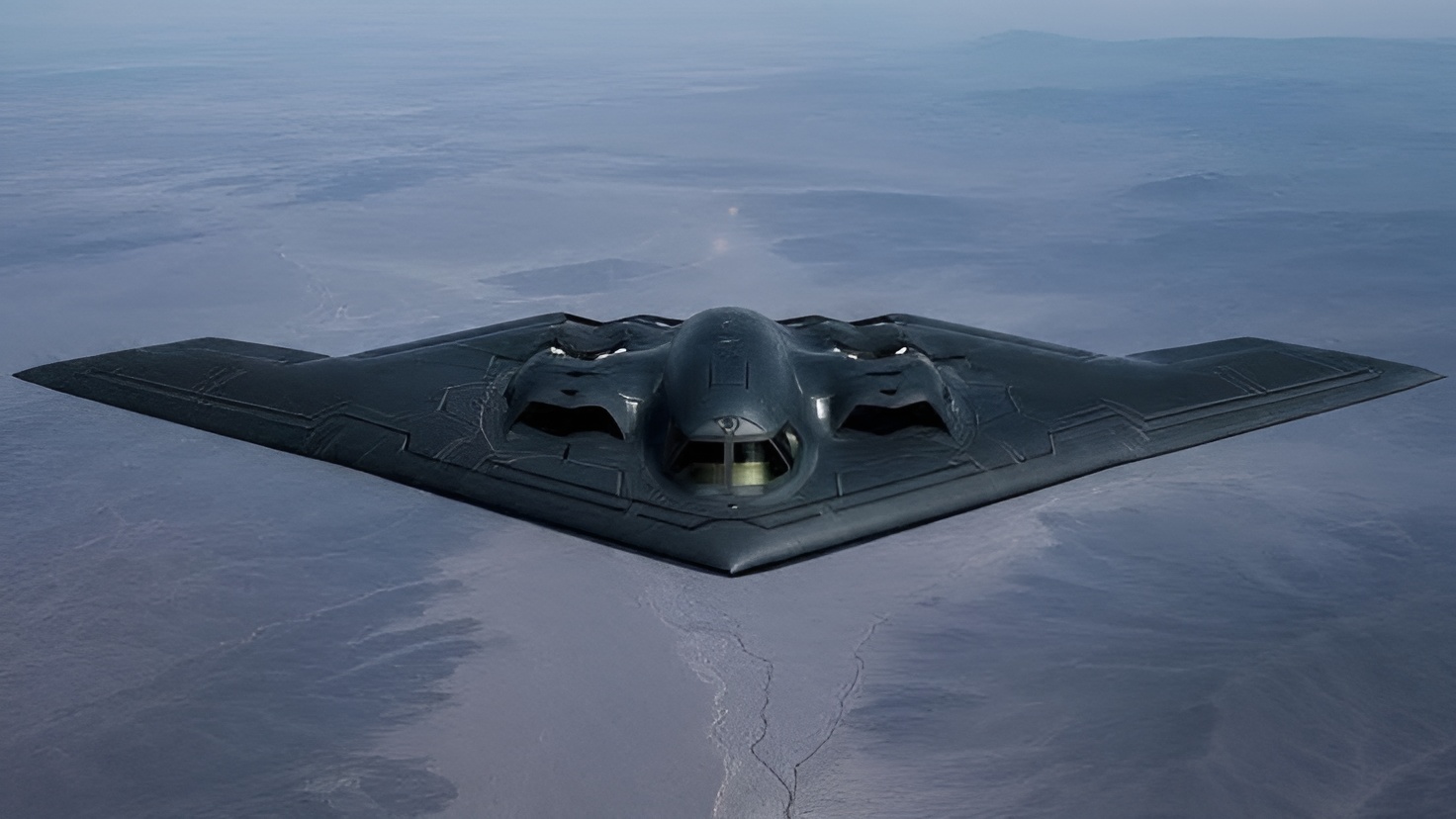
Developed toward the end of the Cold War and still operated by the United States Air Force today, the B-2 Spirit was designed to penetrate the most heavily defended airspace on Earth. Its stealth, payload, and range were all engineered for intercontinental missions. In our article, we will examine the B-2’s unrefueled flight endurance, the factors that influence it, how experts interpret its capabilities, and how it compares to other long-range military aircraft. We will also discuss the practical limits and trade-offs that come with such extreme endurance.
The Short Answer — And The Real Story Behind It

In practical terms, that endurance equals genuine intercontinental reach. During early operations over Kosovo and later Afghanistan, B-2 bombers routinely launched from Whiteman Air Force Base in Missouri, flew halfway around the world, delivered their weapons, and returned home. Although those missions made extensive use of aerial refueling, they underscored just how much of the journey the aircraft could theoretically complete on its own fuel if required.
You May Also Like


That impressive level of endurance was no accident. The B-2 was designed during a period when access to overseas bases and refueling tankers could not be assumed in a conflict with a peer or near-peer adversary. Northrop Grumman’s engineers prioritized internal fuel capacity and aerodynamic efficiency, accepting lower top speeds in exchange for exceptional range and persistence. The result was an aircraft built not for sprinting but for reaching almost anywhere and staying there as long as needed.
What Factors Influence B-2 Endurance?

Fuel Capacity and Aerodynamics: The B‑2’s internal tanks hold roughly 167,000 pounds of fuel, nearly 76 metric tonnes. That’s enough to glide silently across continents at high subsonic speeds, thanks to its sweeping flying‑wing shape that minimizes drag and maximizes stealth. This design lets the Spirit cruise efficiently, but it also means there’s no external fuel tankage; everything needed for range must be tucked inside that wing.
Mission Profile and Payload: Weight is especially important. A B‑2 lugging dozens of precision bombs will sip fuel faster than one merely transiting through friendly skies. On real missions, planners constantly balance ordnance, fuel, and refueling points to hit targets and still return home without compromising stealth or safety. Payload is one of the clearest variables, as the B-2 can carry up to 40,000 pounds of weapons internally while maintaining its stealth profile. However, that capability comes at a cost, as a heavier aircraft burns more fuel during climb and slightly more throughout cruise.
Aerial Refueling — The Key to “Unlimited” Range: Here’s the twist: although the B‑2 has a remarkable internal fuel capacity, its true endurance is practically infinite when aerial tankers enter the picture. With just one midair refueling, its reach expands from about 6,000 nautical miles to roughly 10,000 nautical miles. Operational history offers concrete examples. On some missions, the airborne capability could exceed 44 hours with multiple refuelings, as Business Insider reported. Even without tankers, those same aircraft would still have been capable of very long missions, but with less flexibility for extended loiter time over target areas.
The Unique Jet Engines Powering The USAF B-2 Spirit
Much of the B-2 program is on a classified level, what we do know about the aircraft and the power plant driving this aircraft is truly remarkable.
Voices From The Edge — What Pilots And Planners Say

Aviation experts and Air Force officials consistently describe the B-2’s endurance as one of its defining characteristics. Former bomber pilots often emphasize that the aircraft was built around range first, stealth second, and payload third, an unusual prioritization that reflects its strategic mission.
B‑2 crews who’ve pushed these missions to their limits describe flights that would humble even the longest-hauling airliner pilots. The bomber provides modest accommodations in the cockpit area, and the two pilots have to juggle flying, automated systems, rest, hydration, and digestion in cramped quarters, all while working closely with tanker crews to keep the bomber fueled and stealthy at every turn.
Despite very spartan conditions, pilots have all the necessary equipment to stay focused as long as possible: a WC, a folding sleeping cot, a medical kit, a mini-fridge, and even a microwave to make meals during extremely long flights. The broader implication is that the B-2’s endurance is about strategic unpredictability. An aircraft that can launch from the US mainland and reach virtually any target without relying on forward bases complicates adversary planning in profound ways.
How The B-2 Compares To Other Bombers

At the other end of the spectrum sits the B-1B Lancer. The B-1B excels at delivering large payloads quickly but pays for that performance in fuel consumption, as it was designed around speed rather than stealth or endurance. Its unrefueled flight time is significantly shorter, making it far less suited to the kind of intercontinental, nonstop missions the B-2 was built to fly.
Even so, the B-2 does not operate alone. Its overall endurance is only one piece of a much larger operational puzzle. Tanker aircraft extend their reach, fighter escorts provide protection where required, and electronic warfare platforms help shape the battlespace long before the bomber arrives. The result is a carefully organized mission designed to maximize reach, survivability, and strategic effect.
Range Without Refueling For The Main US Bombers:
| Aircraft | Approx. Unrefueled Range |
| B-2 Spirit | 6,000 nautical miles (11,100 km) |
| B-52 Stratofortress | 8,800 nautical miles (16,300 km) |
| B-1B Lancer | 5,100 nautical miles (9,400 km) |
| B-21 Raider | Classified (expected to be ≥6,000 nautical miles / ≥11,100 km) |
The Last USAF Bomber Without A Stealth Profile
This aging bomber continues to adapt, proving its resilience in a changing world.
Exceptions, Risks, And The Human Element

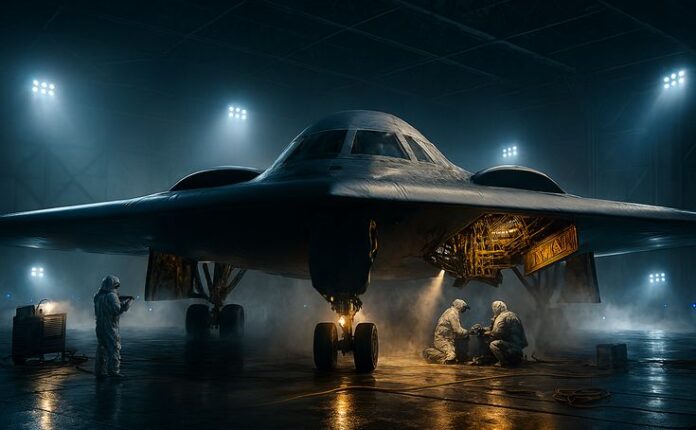
Despite its remarkable endurance, the B-2 is not without constraints. Extremely long, unrefueled missions place significant strain on both the aircraft and the crew. Extended flights increase maintenance demands upon the bomber’s return to base, particularly for its radar-absorbent coatings and tightly integrated systems, which are far more sensitive than those of conventional aircraft. Environmental conditions can also chip away at endurance. Persistent headwinds, turbulence, or the need to reroute around weather systems all raise fuel consumption.
Interestingly, the aircraft skin and sensors are also sensitive to high humidity and monsoon climates. For instance, the 2008 crash of a US Air Force B-2 Spirit stealth bomber in Guam was directly attributed to moisture (humidity) affecting critical air data sensors, leading to the most expensive airplane crash in history. But coming back to range, in a combat environment, additional factors come into play. Low-altitude segments, evasive maneuvering, or prolonged time on station can steadily erode the margins that make unrefueled flight possible in the first place.
From a planning perspective, relying solely on unrefueled endurance decreases flexibility. Aerial refueling, though not without risk, especially in contested airspace, provides commanders with options. Tanker support enables missions to be adjusted quickly, whether that involves extending loiter time, altering routing, or reacting to new intelligence as it becomes available. Mission planners must balance the advantages of long, unrefueled reach against the realities of aircraft wear, crew fatigue, and the unpredictable demands of real-world operations.
Overall Takeaway

So, how many hours can the B-2 Spirit bomber fly without refueling? In practical terms, around 12 to 15 hours, with an unrefueled range exceeding 6,000 nautical miles.
Beyond the raw figures, the B-2’s endurance reflects a broader approach to deterrence and global reach. It allows the United States to project power across vast distances without depending on forward bases or an extensive, highly visible support network — an advantage that becomes increasingly important in contested or politically sensitive regions.