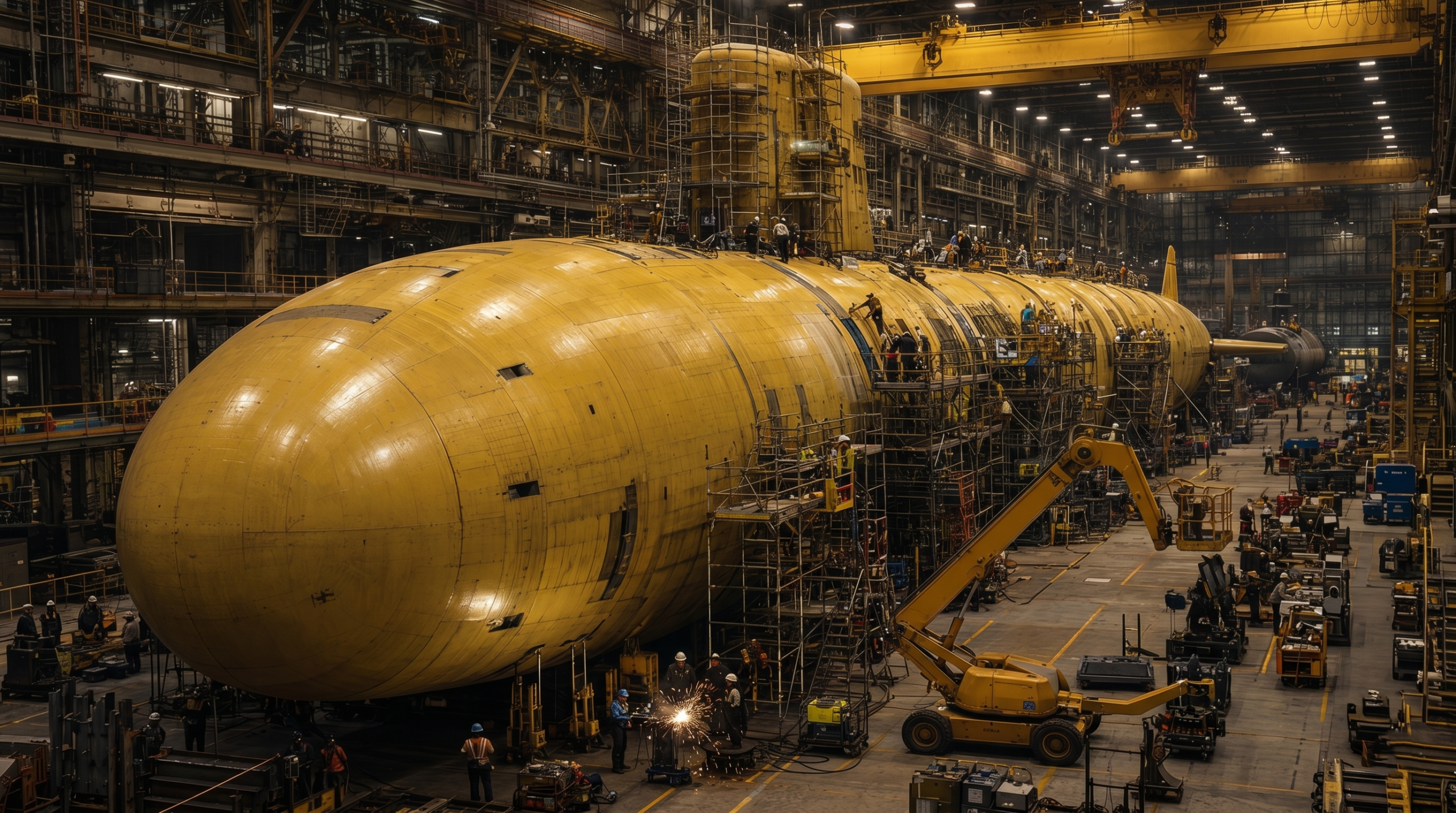
Before stealth fighters dominated the skies and before modern submarines silently patrolled the world’s oceans, there was a revolutionary vessel that redefined naval warfare.
Her name was the USS Seawolf (SSN-575).
Overshadowed by the more famous USS Seawolf (SSN-21), this earlier Seawolf was one of the most daring engineering experiments in American military history. She was only the second nuclear-powered submarine ever built, yet her influence transformed undersea warfare for generations.
The USS Seawolf was more than a submarine.
You May Also Like
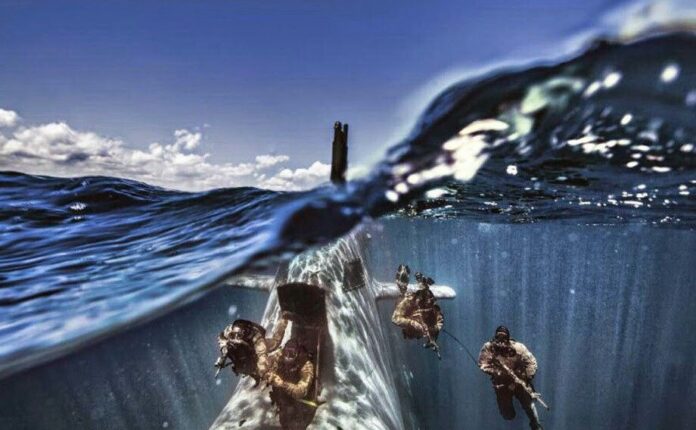
She was a glimpse into the future.
Born in the Dawn of the Atomic Age

In the early years of the Cold War, the United States and the Soviet Union were racing to master nuclear technology.
The U.S. Navy had already made history with USS Nautilus (SSN-571), the world’s first nuclear-powered submarine.
But Nautilus was only the beginning.
The Navy wanted to know how far atomic propulsion could go. Could submarines stay submerged for months? Could they cross entire oceans without surfacing? Could they become the ultimate strategic weapon?
To answer those questions, the Navy built USS Seawolf.
Laid down in 1953 and commissioned in 1957, she became an experimental platform for technologies that would shape the future of the Silent Service.
The Most Secret Submarine of Her Time


For much of her early career, Seawolf operated in near-total secrecy.
Her crew underwent intense training, and many missions were classified. The submarine participated in NATO exercises and tested how nuclear-powered submarines could be integrated into real-world operations.
At a time when most submarines had to surface regularly to recharge batteries, Seawolf could remain hidden underwater for weeks.
This was a strategic revolution.
A submarine that never needed to surface became one of the most elusive and powerful weapons ever created.
The Voyage That Shocked the World

In 1958, Seawolf completed a submerged voyage of 13,780 nautical miles.
She remained underwater from August 7 to October 6—nearly two months without surfacing.
To the world, this proved that a nuclear submarine could operate independently of Earth’s atmosphere for the duration of an entire war patrol.
Today this may sound routine.
In 1958, it was extraordinary.
The oceans had effectively become a domain where the United States could project power invisibly and persistently.
President Eisenhower Goes to Sea

Even Dwight D. Eisenhower was fascinated by Seawolf.
In 1957, the President boarded the submarine for a demonstration cruise.
Afterward, he remarked that what impressed him most was seeing the U.S. Navy at work and witnessing firsthand the machinery that represented America’s technological edge.
His visit underscored the national significance of nuclear submarines during the Cold War.
The Only Submarine Powered by Liquid Metal
What truly made Seawolf unique was her reactor.
She was the only U.S. submarine ever equipped with a sodium-cooled liquid metal nuclear reactor.
The design promised:
- Higher thermal efficiency
- Greater performance potential
- Valuable scientific insights
But it also introduced serious challenges.
Liquid sodium reacts violently with water and air, creating fire risks and maintenance difficulties. Corrosion and complexity ultimately outweighed the benefits.
After only two years, the Navy replaced Seawolf’s experimental reactor with a conventional pressurized water reactor—the design that became the standard for nearly all Western naval reactors.
Sometimes the most important breakthroughs come from learning what does not work.
A Special Projects Platform

For three decades, Seawolf served in missions that were often shrouded in secrecy.
She functioned as a “special projects platform,” supporting advanced testing and sensitive operations that remain only partially known.
Her work helped refine submarine technology, tactics, and operational concepts used by later generations of nuclear submarines.
In many ways, she was a floating laboratory for the future.
Technical Specifications

USS Seawolf (SSN-575)
- Length: 337 feet 11 inches (103 meters)
- Beam: 27 feet 11 inches (8.5 meters)
- Displacement: 3,209 tons surfaced; 4,045 tons submerged
- Speed: 23 knots surfaced; 19 knots submerged
- Armament: Six 21-inch torpedo tubes
- Crew: 101 officers and sailors
- Propulsion: Sodium-cooled reactor (later pressurized water reactor)
These figures represented cutting-edge technology for the 1950s.
The Legacy of USS Seawolf


Decommissioned in 1987 and later dismantled, USS Seawolf’s physical form is gone.
Her legacy is not.
The lessons learned from SSN-575 influenced every American nuclear submarine that followed—from Cold War hunter-killers to today’s Virginia-class submarine boats.
She proved that experimentation, even when risky and imperfect, drives military innovation.
Without Seawolf, the undersea dominance of the U.S. Navy might have looked very different.
Final Thoughts: The Submarine That Opened a New Frontier
The USS Seawolf (SSN-575) was not the largest submarine, nor the most heavily armed.
But she was among the most important.
She pushed the boundaries of engineering, validated the strategic power of nuclear propulsion, and helped usher in an era in which submarines became some of the most decisive instruments of national power.
Silent. Experimental. Revolutionary.
USS Seawolf did not merely patrol the oceans.
She changed them forever.