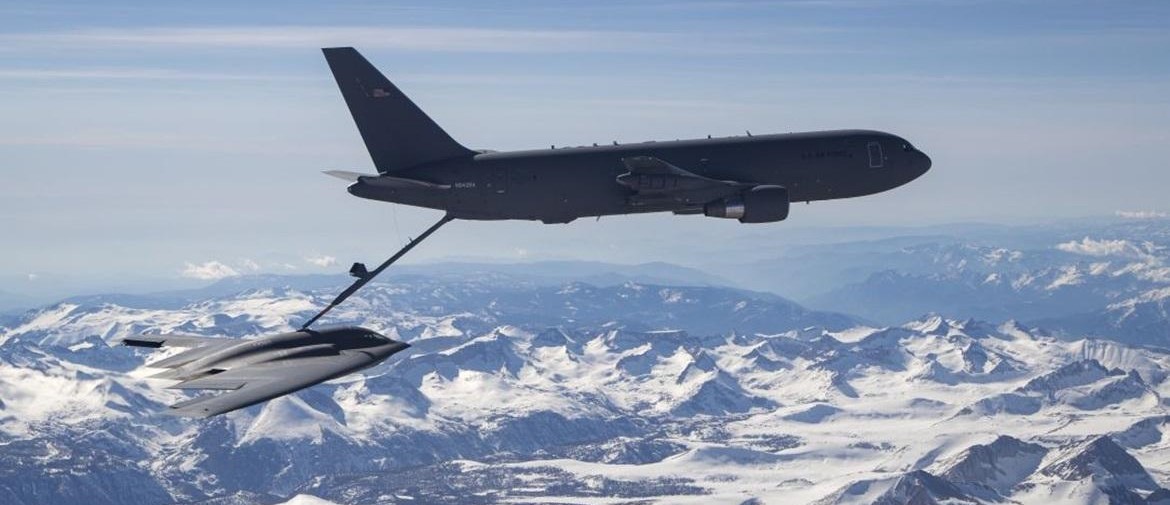
America’s stealth bomber was built for one terrifying purpose — to fly across the planet, penetrate enemy defenses, and return home unseen
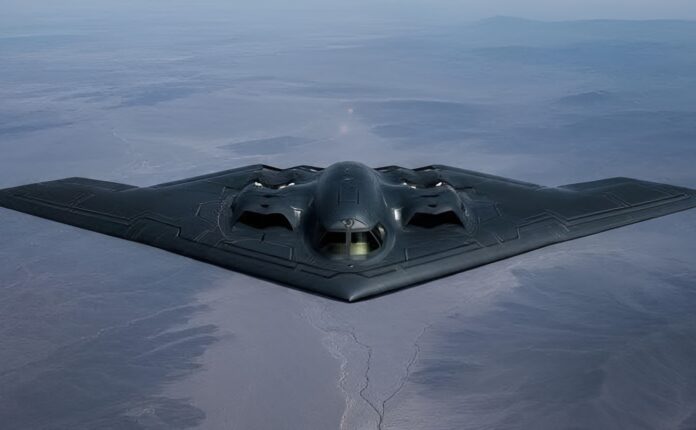
Few aircraft in history inspire the same level of awe, mystery, and strategic fear as the Northrop Grumman B-2 Spirit.
It does not rely on speed like a fighter jet.
It does not overwhelm enemies with massive formations.
Instead, the B-2 was designed around something even more powerful:
You May Also Like


The ability to quietly appear anywhere on Earth.
For decades, the stealth bomber has represented one of America’s most important strategic weapons — a flying symbol of endurance, invisibility, and global reach. While many of its true capabilities remain classified, one question continues to fascinate aviation experts and military observers alike:
How long can the B-2 Spirit fly without refueling?
The answer reveals why this aircraft remains one of the most extraordinary machines ever built.
A Bomber Designed to Cross Oceans Without Stopping
At the core of the B-2’s design is range.
According to publicly available U.S. Air Force data, the bomber can travel more than 6,000 nautical miles (11,000 kilometers) without aerial refueling.
That translates to approximately:
12 to 15 continuous hours in the air without landing
For a combat aircraft carrying weapons deep into hostile territory, that level of endurance is astonishing.


The aircraft can launch from the continental United States, cross entire oceans, strike targets thousands of miles away, and return home — all without touching a runway overseas.
This capability fundamentally changed modern warfare.
For enemies, it means nowhere is truly out of reach.
The Flying Wing Built for Endurance
The B-2’s incredible range comes from a combination of engineering brilliance and strategic compromise.
Unlike supersonic bombers built for raw speed, the B-2 prioritizes:
- Fuel efficiency
- Aerodynamic stability
- Stealth performance
- Long-duration survivability
Its iconic flying-wing design dramatically reduces drag while also minimizing radar visibility.

Inside the aircraft are enormous internal fuel tanks capable of holding roughly 167,000 pounds of fuel.
Because the B-2 carries everything internally — fuel, weapons, and systems — it preserves its stealth profile while maximizing efficiency.
The result is an aircraft designed not to sprint across battlefields, but to silently endure.
Real Combat Missions That Lasted Nearly Two Days
The B-2’s endurance is not theoretical.
It has already proven itself in real-world combat.
During operations in Kosovo, Afghanistan, Iraq, and Libya, B-2 bombers launched directly from Whiteman Air Force Base and flew missions spanning entire continents.
Some lasted more than:
40 hours continuously
Those extreme missions required multiple aerial refuelings, but they demonstrated something remarkable:
The bomber could strike anywhere on Earth while operating from the safety of the American mainland.


That strategic unpredictability is one of the aircraft’s greatest weapons.
An adversary may never know when a stealth bomber launched — or whether one is already approaching.
What Determines How Long the B-2 Can Stay Airborne?
Although 12–15 hours is the widely accepted estimate for unrefueled endurance, the real answer depends on several critical factors.
1. Payload Weight
The B-2 can carry up to 40,000 pounds of weapons internally.
The heavier the payload, the more fuel the aircraft burns during takeoff and flight.
A bomber loaded with precision-guided bombs will consume fuel differently than one flying a transit mission.
2. Flight Altitude
Like commercial airliners, the B-2 is most fuel-efficient at high altitude where thinner air reduces drag.
Flying lower to avoid radar or maneuver aggressively consumes significantly more fuel.
3. Weather Conditions
Strong headwinds, turbulence, storms, or rerouting around dangerous weather systems can dramatically reduce endurance.
Ironically, even this advanced aircraft is still at the mercy of Earth’s atmosphere.
4. Mission Profile
Loitering near targets, changing routes mid-flight, or remaining airborne for extended surveillance all affect fuel consumption.
Every hour in the air becomes a strategic calculation.
The Secret Ingredient: Aerial Refueling
Without aerial refueling, the B-2 is already extraordinary.
With aerial refueling, it becomes something close to limitless.
By connecting with tanker aircraft midair, the bomber can extend its reach far beyond its internal fuel limits.


This transforms the B-2 from a long-range bomber into a true global strike platform.
Military planners can redirect missions in real time, extend loiter time over targets, or attack from unexpected directions.
In strategic warfare, flexibility is power.
And aerial refueling gives the B-2 enormous flexibility.
Life Inside the Cockpit During Ultra-Long Missions
One of the most overlooked aspects of B-2 operations is the human challenge.
Flying for 15, 20, or even 40 hours pushes pilots to their physical and mental limits.
The cockpit includes surprisingly modest accommodations:
- A small sleeping cot
- A microwave for meals
- A mini refrigerator
- Limited restroom facilities
Even with advanced automation, the crew must remain alert through exhaustion, darkness, turbulence, and complex mission demands.


Modern airpower is not only about machines.
It is also about the endurance of the people inside them.
How the B-2 Compares to Other American Bombers
The United States operates several long-range bombers, but the B-2 occupies a unique position.
| Aircraft | Approximate Unrefueled Range |
|---|---|
| Northrop Grumman B-2 Spirit | 6,000 nautical miles |
| Boeing B-52 Stratofortress | 8,800 nautical miles |
| Rockwell B-1B Lancer | 5,100 nautical miles |
| Northrop Grumman B-21 Raider | Classified |
The B-52 may fly farther, but it lacks stealth.
The B-1B is faster, but consumes fuel far more aggressively.
The B-2 combines long-range endurance with low observability — a combination few aircraft on Earth can match.
The Hidden Weaknesses of the Stealth Giant
Despite its incredible capabilities, the B-2 is not invincible.
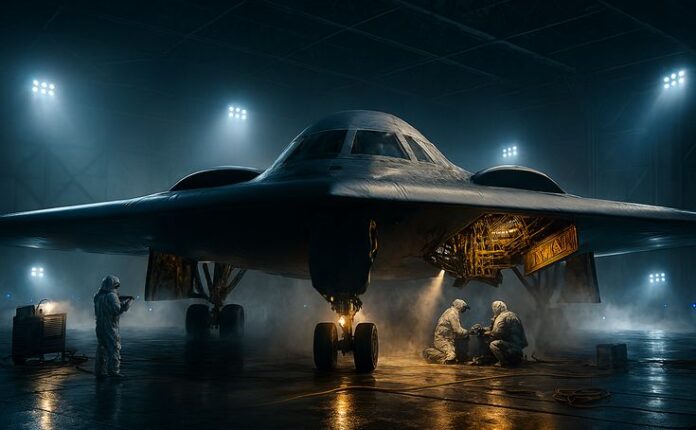
Its radar-absorbing stealth coatings require extensive maintenance. High humidity and tropical climates can affect sensitive systems.
One tragic example occurred in 2008 when a B-2 crashed in Guam after moisture disrupted air-data sensors — resulting in the most expensive aircraft crash in aviation history.
Long missions also create:
- Pilot fatigue
- Mechanical stress
- Increased maintenance demands
- Operational complexity
Endurance always comes at a price.
Why the B-2 Still Matters Today
Even decades after its first flight, the B-2 remains one of the most strategically important aircraft in existence.
Why?
Because modern warfare increasingly depends on the ability to strike quickly, invisibly, and globally — without relying on vulnerable overseas bases.


The B-2 embodies that philosophy perfectly.
It is not merely a bomber.
It is a message.
A message that distance no longer guarantees safety.
Final Reflection
So, how long can the B-2 Spirit fly without refueling?
Roughly 12 to 15 hours.
But the real answer is far more profound than a number.
The B-2 was built to erase geography itself — to project power across oceans, continents, and defenses with almost no warning.
In an era where speed often captures headlines, the B-2 proves that endurance can be just as powerful as firepower.
And somewhere high above the clouds, invisible to most of the world below, the Spirit still flies.