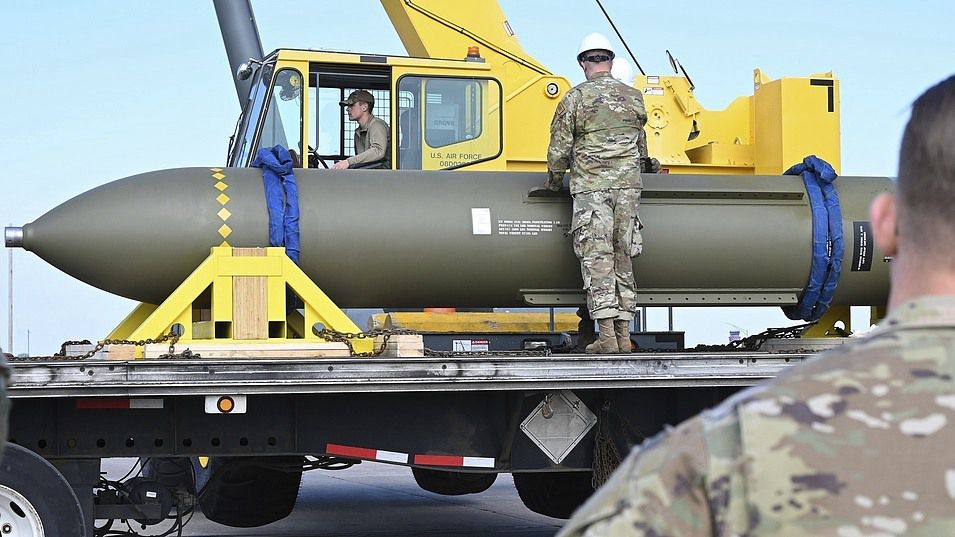
Even after 35 years, no other bomber on Earth can do what the B-2 Spirit was designed to do — silently penetrate enemy airspace and destroy targets buried beneath mountains of concrete and steel
In modern warfare, power is no longer measured only by speed, firepower, or numbers.
Sometimes, true power is the ability to strike a target that an enemy believes is untouchable.
That is precisely why the Northrop Grumman B-2 Spirit remains one of the most feared aircraft ever built.
For decades, the B-2 has represented the peak of American stealth airpower — an aircraft capable of crossing continents unseen, slipping through advanced air defenses, and delivering devastating precision strikes against heavily fortified targets.
You May Also Like

And after recent military operations involving Iran’s deeply buried nuclear infrastructure, one reality became unmistakably clear:
The B-2 is still the only bomber in the world capable of delivering the weapon designed to destroy underground nuclear fortresses.
The Mission Only the B-2 Can Perform
The key to the B-2’s strategic importance is not just stealth.
It is what the bomber can carry.
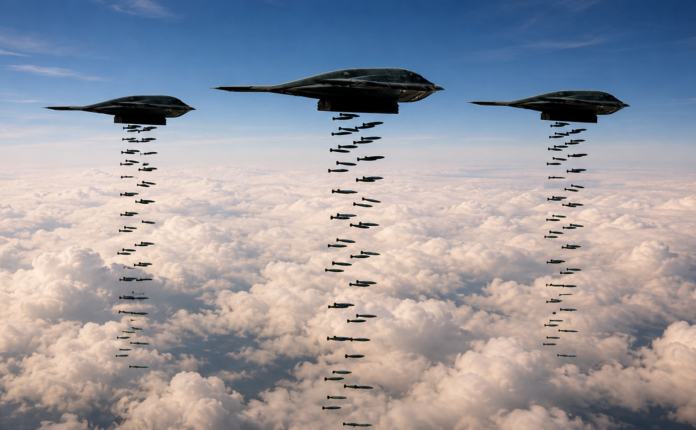
The aircraft is currently the exclusive operational platform capable of deploying the massive GBU-57 Massive Ordnance Penetrator — often called the MOP.
This is not an ordinary bomb.
It is a 30,000-pound precision-guided bunker buster specifically engineered to destroy deeply buried military facilities protected by reinforced concrete, rock, and underground tunnels.


The weapon can reportedly penetrate up to 200 feet underground before detonating.
That capability matters enormously because modern nuclear facilities are no longer built on the surface.
Countries such as Iran have spent years burying critical infrastructure deep inside mountains and hardened bunkers specifically to survive conventional air attacks.
Most air forces simply cannot reach those targets effectively.
The B-2 can.
Why Stealth Still Changes Everything
Many military analysts once believed stealth technology from the 1980s would eventually become obsolete.
The B-2 proved otherwise.
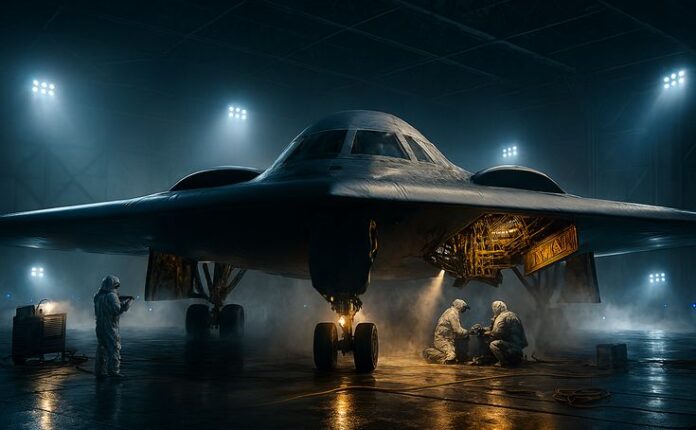
Despite being designed decades ago, the bomber remains extraordinarily difficult to detect due to its flying-wing shape, radar-absorbing materials, and minimized infrared and acoustic signatures.


Unlike traditional bombers, the B-2 was built to infiltrate heavily defended airspace alone.
Its mission is not merely to bomb targets.
Its mission is to survive sophisticated enemy defenses long enough to strike the targets no one else can reach.
That distinction makes the aircraft strategically priceless.
Even advanced systems such as the S-400 missile system were developed partly to counter stealth aircraft like the B-2.
Yet the Spirit continues receiving upgrades designed to keep it ahead of evolving threats.
The “Spirit Realm” — Giving a 35-Year-Old Bomber a Digital Brain
One reason the B-2 remains relevant is that it has never stopped evolving.
Behind the scenes, the U.S. Air Force and Northrop Grumman have transformed the bomber through continuous modernization programs.
One of the most important is known as Spirit Realm — a software-driven upgrade system that rapidly integrates new mission capabilities, avionics, targeting systems, and weapons.
This approach turns the B-2 into something rare in military aviation:
An aging aircraft that keeps becoming smarter.


The bomber’s new systems include:
- Modern digital displays
- Improved satellite communications
- Faster data sharing
- Open mission architecture for rapid updates
- Integration of newer bunker-busting weapons such as the GBU-72/B
The B-2 is no longer simply a Cold War relic.
It has become a continuously adapting stealth platform.
The Aircraft That Can Reach Anywhere on Earth
Perhaps the most terrifying aspect of the B-2 is not its stealth or weapons.
It is its endurance.
The bomber can travel approximately:
7,000 miles without refueling
With aerial refueling, that range expands to roughly:
10,000 nautical miles
That means the aircraft can launch directly from the United States, strike targets across the globe, and return home without relying heavily on foreign bases.


In 2001, B-2 bombers flew one of the longest combat missions in aviation history during operations over Afghanistan.
Some flights lasted more than:
70 consecutive hours
Pilots rotated through rest periods while the aircraft remained airborne through multiple refuelings.
The message to adversaries was unmistakable:
Distance no longer guarantees protection.
The Problem: America Has Only 19
Despite its extraordinary capabilities, the B-2 fleet is astonishingly small.
The original vision called for over 100 bombers.
After Cold War budget cuts, production shrank dramatically.
Today, the U.S. Air Force operates only:
19 active B-2 Spirits
That small number creates major strategic concerns.


If large-scale conflict erupted against major powers such as China or Russia, the demand for penetrating stealth bombers would surge immediately.
Military planners understand that a limited fleet means every aircraft becomes critically valuable.
And because the B-2 performs missions no other bomber can currently execute, losing even one would significantly impact America’s strategic strike capability.
The Coming Successor: The B-21 Raider
Eventually, the Northrop Grumman B-21 Raider will replace the aging B-2.
But the Raider represents more than a replacement.
It represents the next evolution of stealth warfare.
While the B-2 was built primarily to evade radar, the B-21 is being designed to survive against entire sensor ecosystems involving satellites, AI-driven tracking, cyber warfare, and networked detection systems.
Still, until the Raider fully enters service, the B-2 remains America’s premier penetrating bomber.
And even then, the lessons learned from the Spirit will shape the future of strategic airpower for decades.
Why the B-2 Still Matters More Than Ever
The modern battlefield is changing rapidly.
Air defenses are becoming smarter.
Missiles are becoming faster.
Satellites and drones are making the skies more transparent.
Yet one truth remains constant:
Nations will always try to hide their most important military assets underground.
And as long as that remains true, aircraft capable of destroying those hidden targets will remain indispensable.


The B-2 Spirit was not built to dominate headlines.
It was built to perform the missions no one else could accomplish.
Silent.
Invisible.
Relentless.
Even after more than three decades, the Spirit still carries a message every adversary understands:
There are no truly unreachable targets anymore.