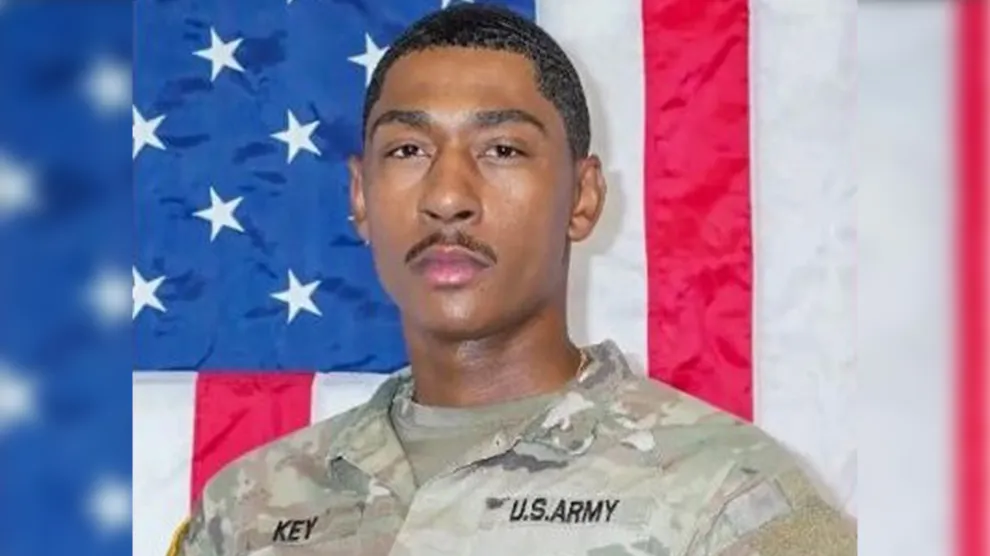
One soldier was rescued. One has been recovered. Another is still missing — as thousands continue searching the Moroccan coastline.
The powerful Atlantic waves crashing against Morocco’s rugged coastline became the scene of tragedy during one of the world’s largest multinational military exercises.
After more than a week of relentless searching, U.S. Army officials confirmed the recovery of Kendrick Lamont Key Jr., a 27-year-old Army officer from Richmond, Virginia, who disappeared during the multinational military exercise African Lion 26 in Morocco.
But the mission is not over.
A second American soldier remains missing, and search teams from multiple nations continue to scan the unforgiving waters near Cap Draa along Morocco’s southwestern coast.
You May Also Like


A Training Mission That Turned Into Disaster
What began as an ordinary evening after military drills quickly became a desperate fight for survival.
On May 2, several U.S. soldiers were hiking near ocean cliffs after completing training exercises near the Moroccan city of Tan Tan. According to reports, one soldier suddenly fell into the rough Atlantic waters below.
Without hesitation, two fellow soldiers jumped into the sea in an attempt to save him.
Only one made it back out.
The other two soldiers disappeared beneath the powerful currents.


For days, search crews battled difficult ocean conditions in hopes of finding the missing troops. American, Moroccan, and French military aircraft, naval vessels, and hundreds of rescue personnel joined the operation.
More than 1,000 military and civilian personnel participated in the search effort.
Then, on Saturday morning local time, Moroccan search teams located Key’s remains near the shoreline — approximately one mile from where the soldiers entered the water.
Remembering 1st Lt. Kendrick Key
To the Army, he was more than a missing officer.
He was a leader, mentor, teammate, and friend.
Kendrick Lamont Key Jr. served as a platoon leader with Charlie Battery, 5th Battalion, 4th Air Defense Artillery Regiment under the 10th Army Air and Missile Defense Command.
According to Army officials, Key entered the Army through Officer Candidate School in 2023 and earned his commission in 2024. He joined his current unit in 2025 and quickly built a reputation as a dedicated and inspirational officer.
His military decorations included the Army Achievement Medal and Army Service Medal.


Lt. Col. Chris Couch, commander of the 5th Battalion, described Key as:
“A selfless, inspirational leader whose unwavering dedication to his Soldiers and their development leaves an enduring legacy within our ranks.”
Brig. Gen. Curtis King, commanding general of the 10th Army Air and Missile Defense Command, also honored the fallen officer, saying the entire command is grieving alongside Key’s family, friends, and fellow soldiers.
Their words reflect the reality of military service that is often unseen by the public: beyond the uniforms and weapons are young men and women bound together by loyalty, sacrifice, and responsibility for one another.
African Lion 26 — One of the World’s Largest Military Exercises
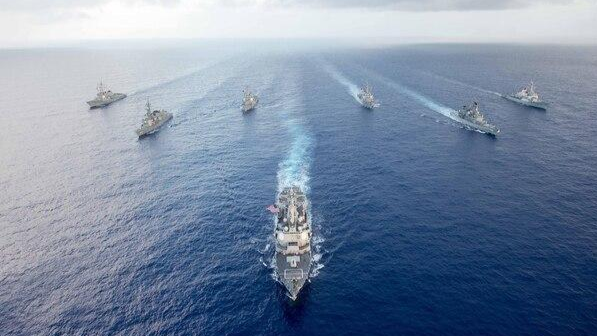
The tragedy occurred during African Lion 26, a massive multinational training operation involving forces from the United States, Morocco, and numerous allied nations across Africa and Europe.
The exercise includes training in:
- Air defense operations
- Artillery coordination
- Drone warfare tactics
- Amphibious maneuvers
- Counterterrorism operations
- Joint multinational combat readiness
The Cap Draa Training Area near Tan Tan has become a major strategic location for the drills.


African Lion is designed to strengthen military cooperation and readiness among allied nations, particularly as instability and security threats continue to evolve across Africa and the Mediterranean region.
But this heartbreaking incident also serves as a reminder that danger in military service is not limited to combat zones.
Even training exercises can turn deadly in seconds.
The Search Continues
Although Key has been recovered, the operation is far from over.
American personnel remain deployed around Cap Draa as rescue crews continue searching for the second missing soldier, whose identity has not yet been publicly released.
Search-and-rescue teams continue battling difficult sea conditions, shifting tides, and rocky coastlines in hopes of bringing another service member home.
For military families, uncertainty can be one of the heaviest burdens imaginable.
And for the soldiers still searching the shoreline, the mission has become deeply personal.
A Story of Courage and Brotherhood
What makes this tragedy especially powerful is the reason these soldiers entered the water in the first place.
They jumped in to save another human being.
In moments of crisis, military training often reveals something deeper than tactics or discipline — it reveals character.
The actions of these soldiers reflected one of the oldest values in military service:
Never leave a comrade behind.
That instinct to protect one another, even at enormous personal risk, is what defines the bond shared by service members across every branch and every nation.
It is also why losses like this resonate so deeply throughout the military community.
The Human Cost Behind Global Security
Large military exercises are often discussed in terms of strategy, geopolitics, and deterrence.
But behind every exercise are real people.
Young officers building careers. Soldiers far from home. Families waiting for phone calls. Friends serving side by side in dangerous conditions.
The loss of Kendrick Lamont Key Jr. is a reminder that service to one’s country carries risks that extend far beyond the battlefield.
And as the search for the second missing soldier continues, an entire military community waits, hopes, and mourns together.
For now, the Atlantic Ocean off Morocco’s coast holds both tragedy and heroism — a place where soldiers risked everything for one another, and where one young officer’s legacy of courage will not be forgotten.