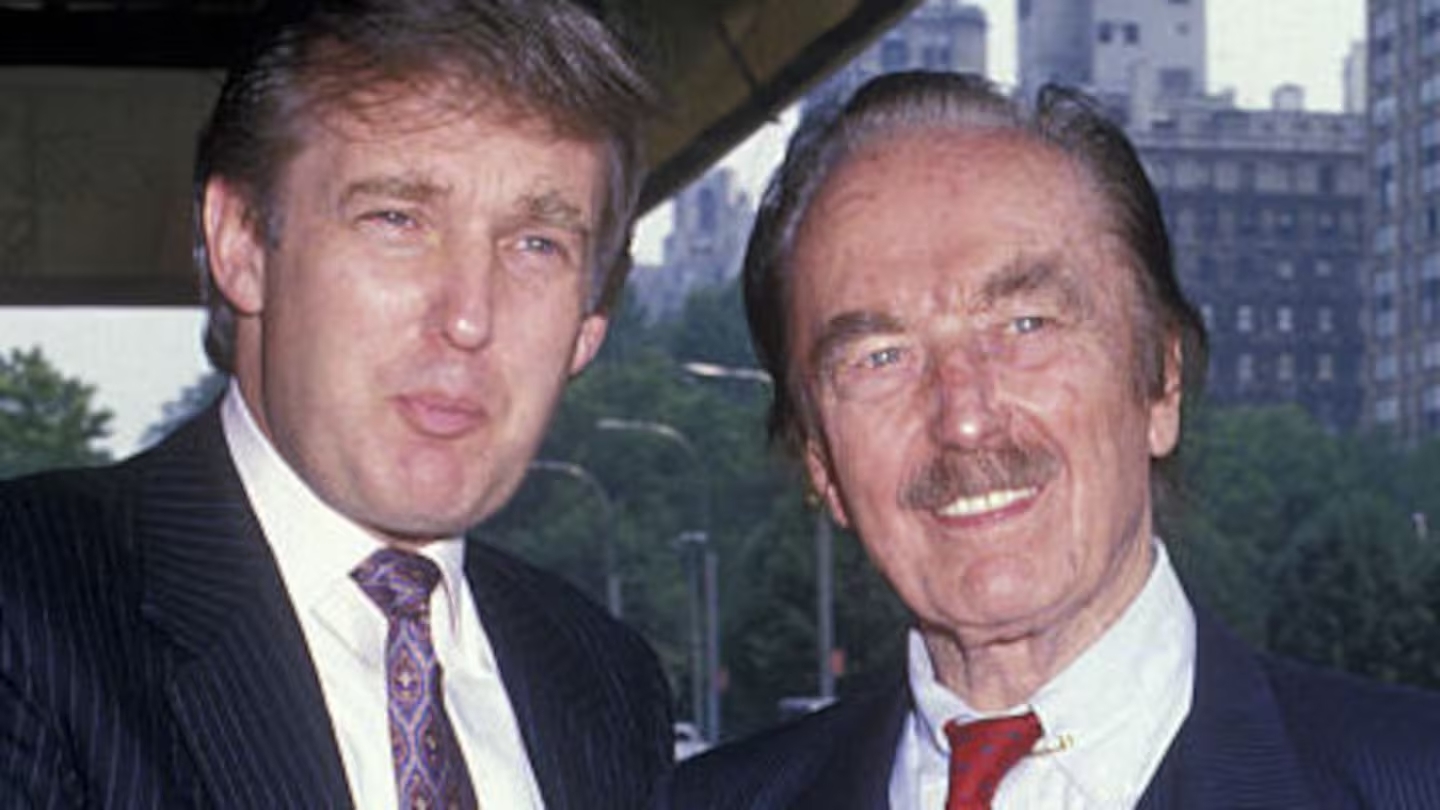
Long before Donald Trump became one of the most famous and divisive figures in American politics, another powerful man stood over his life: his father, Fred Trump.
To the public, Fred Trump was a successful New York real estate developer who built a fortune and trained his son to think in terms of power, winning, and survival. But according to Mary Trump, Donald Trump’s niece, the private story inside the Trump family was far darker.
In her book, Mary Trump paints a painful picture of a family ruled by pressure, humiliation, emotional distance, and a brutal idea of strength. At the center of that story was not only Donald Trump, but also his older brother, Fred Trump Jr., known as Freddy.
Freddy was the eldest son. In Fred Trump’s eyes, that meant he was expected to inherit the family business, carry the Trump name forward, and become the tough, ruthless successor his father wanted.
You May Also Like




But Freddy was not that kind of man.
He was described as sensitive, kind, lighthearted, and gentle. He did not share his father’s passion for real estate. Instead, he loved flying. He wanted to become a pilot, and eventually he achieved that dream.
To most parents, a son reaching his dream would be a source of pride.
According to Mary Trump’s account, Fred Trump saw it as betrayal.
Fred wanted his oldest son to become what he called a “killer” in business. Freddy, by nature, was the opposite. He did not want to crush people. He did not want to spend his life chasing deals. He wanted freedom, movement, and the sky.
That difference, Mary Trump argues, became one of the great tragedies of the Trump family.
Fred Trump reportedly mocked Freddy’s aviation career, dismissing him as a “bus driver in the sky.” The insult was not just a joke. It was a message. In Fred’s world, kindness was weakness, apology was shame, and choosing a different path was failure.
One story from Mary Trump’s book captures that family pressure with painful clarity.
In 1964, when Donald Trump was 18, he and his younger brother Robert visited Freddy at his home in Marblehead, Massachusetts. Freddy had already moved toward the life he wanted, away from the real estate empire his father expected him to join.
But according to Mary Trump, Donald arrived carrying his father’s message.
Before dinner had even begun, Donald allegedly told his older brother that their father was tired of him wasting his life. Freddy pushed back, saying he already knew what Fred thought and did not need Donald to repeat it.
Then Donald reportedly delivered the cruelest line: their father was embarrassed by him.
Freddy answered that Donald could work with their father if he wanted. He was not interested.
But Donald continued. He reportedly repeated the insult that cut deepest, calling Freddy a “glorified bus driver.”
For Freddy, the words were devastating. Not only because they came from his father’s thinking, but because they came out of his younger brother’s mouth.
That moment, according to Mary Trump, showed how Fred Trump’s influence reached beyond direct cruelty. It turned brother against brother. It taught Donald that to survive in the family, he could not be like Freddy. He had to reject softness, reject apology, reject kindness, and align himself with the father who held the power.
In Mary Trump’s telling, Freddy became the warning sign.
Fred did not respect Freddy, so Donald learned not to respect him either. Fred saw Freddy as weak, so Donald learned to see him that way too. In a household where love and approval depended on strength, Donald learned that humiliation was not cruelty. It was training.
That lesson may have shaped his worldview for the rest of his life.
Mary Trump argues that many of Donald Trump’s familiar traits echo Fred Trump’s beliefs: the obsession with winners and losers, the admiration for “killers,” the refusal to apologize, and the belief that admitting fault is a sign of weakness.
In that world, there could only be one winner. Everyone else was a loser.
And Freddy, the son who wanted to fly instead of fight for control, was treated as the loser.
Over time, Freddy’s life unraveled. He struggled with alcoholism and died at the age of 42. Donald Trump has often said his brother’s death is the reason he does not drink, a lesson he has publicly described as important and personal.
But Mary Trump suggests there was another lesson Donald never fully absorbed.
Freddy’s story was not only about alcohol. It was also about what happens when a person is ridiculed, devalued, and emotionally crushed for being different.
In a 2019 interview, Donald Trump admitted he had some regret about the pressure placed on Freddy to join the family business. He acknowledged that the family assumed everyone would want the real estate life and said that may have been a mistake.
But Mary Trump’s account goes further. She argues that Freddy was not simply pressured. He was mocked. He was made to feel small. He was punished for having a softer spirit and a different dream.
That distinction matters.
Pressure tells someone to try harder.
Humiliation tells someone they are worthless.
According to Mary Trump, Fred Trump’s treatment of Freddy did not only damage Freddy. It damaged Donald too.
Her argument is that Fred did not destroy Donald by crushing him the same way he crushed Freddy. Instead, he shaped Donald into someone who learned to block off parts of himself. In her view, Fred limited Donald’s ability to experience the full range of human emotion and taught him to see the world through dominance, fear, and victory.
That is the deeper tragedy in the story.
One son was broken because he could not become what his father wanted.
The other survived by becoming exactly what his father rewarded.
And all these years later, Fred Trump’s shadow still follows Donald Trump’s public image. The language of winning and losing, the suspicion of weakness, the refusal to apologize, and the admiration for toughness all echo the world Fred built inside his family.
The story of Fred Trump, Donald Trump, and Freddy Trump is not just a political family story. It is a warning about power inside the home. It shows how a father’s approval can become a weapon, how ambition can turn cruel, and how one generation’s emotional damage can shape the next.
Freddy wanted to fly.
Donald learned to fight.
And Fred Trump’s influence, according to Mary Trump, never truly left either of them.