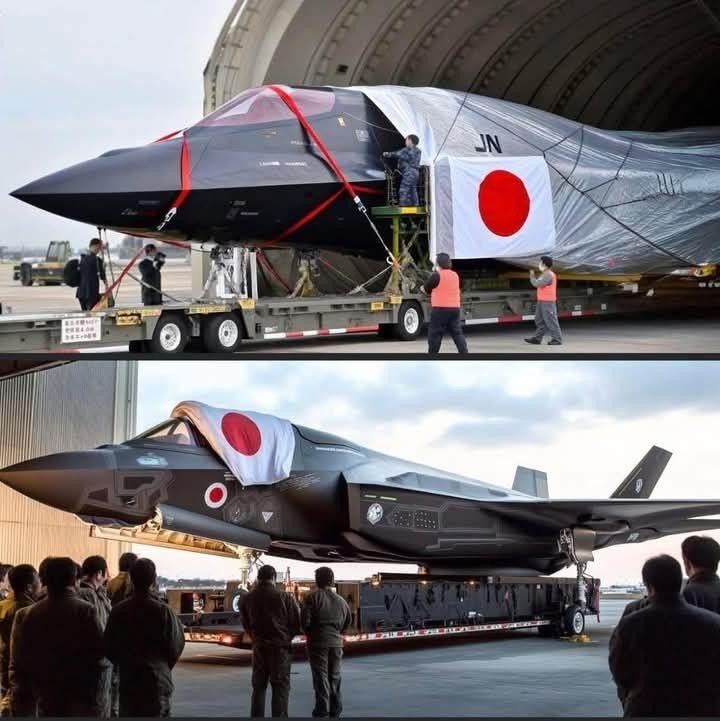
Japan is not simply a country that buys fighter jets.
It builds them.
It modifies them.
It upgrades them.
You May Also Like
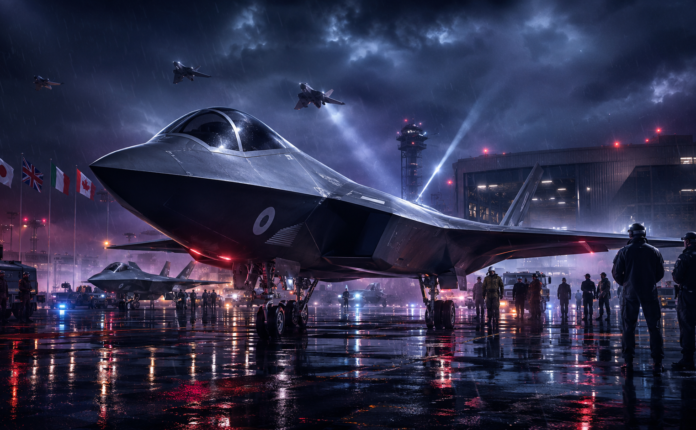
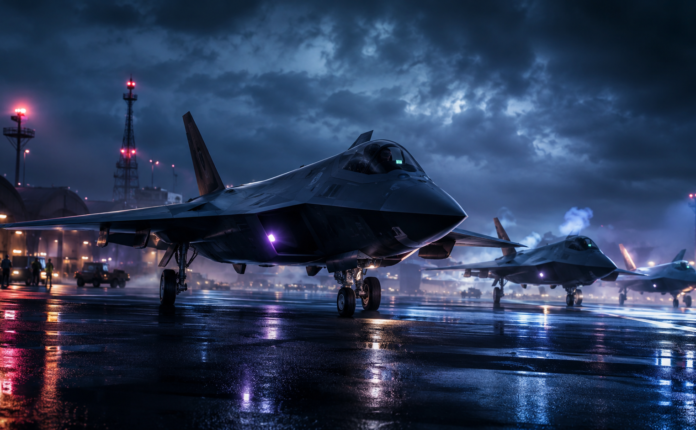
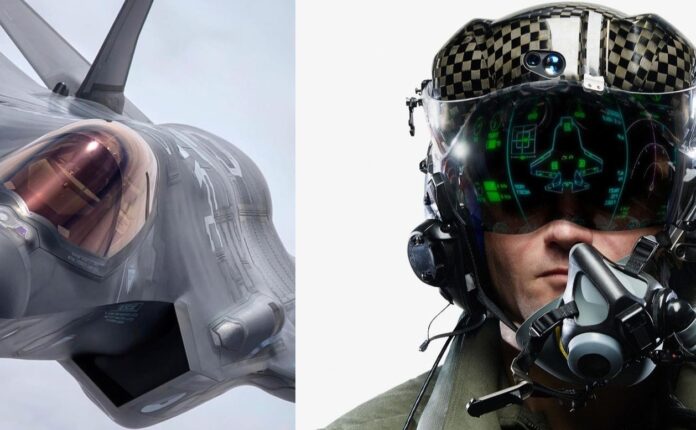
It maintains them.
And now, Japan is helping design one of the most advanced next-generation stealth fighters in the world.
For decades, Japan’s fighter aircraft strategy has followed a careful path: combine domestic engineering strength with trusted international partnerships. That approach has allowed the country to protect its airspace, strengthen its defense industry, and avoid relying completely on foreign suppliers.
At the center of this story is Mitsubishi Heavy Industries, Japan’s most important defense aerospace contractor.
From the F-15J to the Mitsubishi F-2, and now the Global Combat Air Programme, Japan has built a powerful foundation for its future air force.
And the next chapter could be the most important one yet.
Japan’s Fighter Jet Strategy: Build, Learn, Improve
Japan’s approach to fighter aircraft has never been simple.
The country faces a difficult security environment.
To the west, China’s air and naval power continues to expand.
To the north, Russia remains active in the region.
Nearby, North Korea continues to develop missiles and military capabilities.
For Japan, air defense is not a luxury.
It is a national necessity.
That is why Japan has spent decades investing in fighter aircraft that can defend its skies, intercept threats, and operate with advanced radar, weapons, and communications systems.
But Japan’s strategy is not only about buying aircraft.
It is about building knowledge.
Every license-built aircraft.
Every co-developed fighter.
Every radar upgrade.
Every maintenance program.
Every domestic production line.
All of it helps Japan keep its aerospace industry alive and ready for the next generation.
Mitsubishi Heavy Industries: The Heart of Japan’s Fighter Industry
When people talk about Japan’s fighter jets, one name appears again and again:
Mitsubishi Heavy Industries.
MHI has played a central role in Japan’s combat aircraft programs for decades. It has helped build, assemble, upgrade, and support major aircraft for the Japan Air Self-Defense Force.
This matters because modern fighter jets are more than machines.
They are ecosystems.
A country that can maintain and modify its own aircraft has more control over readiness, upgrades, and wartime resilience.
If a crisis happens, Japan cannot afford to wait helplessly for every repair, spare part, or upgrade decision to come from outside.
Domestic industrial capability gives Japan options.
And in military strategy, options are power.
The Mitsubishi F-15J: American Design, Japanese Production Strength
One of the most important aircraft in Japan’s fighter fleet is the F-15J.
The F-15 itself began as an American air-superiority fighter. But Japan did not simply buy every aircraft fully assembled from overseas.
Instead, Japan built many F-15J aircraft domestically under license.
That means Japan received permission to produce its own version of the fighter, with Mitsubishi Heavy Industries deeply involved in manufacturing and support.
This was a major step for Japan’s defense industry.
It allowed Japanese engineers, technicians, and factories to gain experience with a powerful frontline fighter.
The F-15J gave Japan a strong interceptor and air-defense platform.
It also gave Japan something just as valuable:
industrial knowledge.
Building and maintaining a fighter fleet at home teaches lessons that cannot be learned from paperwork alone.
It builds skill.
It builds confidence.
It builds a national aerospace base.
For Japan, the F-15J was not only a fighter.
It was a school for future airpower.
The Mitsubishi F-2: Japan’s Co-Developed Multirole Fighter
Japan’s Mitsubishi F-2 is another major piece of the story.
At first glance, many people compare it to the American F-16.
That is understandable because the F-2 was developed with Lockheed Martin and was based partly on F-16 technology.
But calling it “just a Japanese F-16” is too simple.
The F-2 included major Japanese contributions and localized engineering.
It featured advanced avionics, a larger wing, extensive composite materials, and strong anti-ship mission capability.
Japan needed an aircraft suited to its own defense geography.
Japan is an island nation.
Its air defense mission is closely tied to maritime defense.
That means aircraft must be able to operate across sea lanes, protect island chains, and help defend against naval threats.
The F-2 was designed with those needs in mind.
Why the F-2 Was Technologically Important
The Mitsubishi F-2 was important not only because it was domestically produced and co-developed.
It was also important because it pushed fighter technology forward.
One of its most famous achievements was its advanced radar system.
The F-2 became known for using an operational Active Electronically Scanned Array radar at a time when AESA technology was still rare in fighter aircraft.
AESA radar is a major advantage because it can scan faster, track multiple targets, improve reliability, and support advanced combat awareness.
In modern air combat, seeing first can mean surviving first.
The F-2 helped Japan build experience with advanced radar and avionics integration.
That experience matters today because the next generation of fighters will depend even more heavily on sensors, data, networking, and electronic warfare.
GCAP: Japan’s Leap Toward a 6th-Generation Fighter
Japan’s biggest future fighter project is the Global Combat Air Programme, known as GCAP.
This is not a normal aircraft upgrade.
It is a major next-generation fighter program involving Japan, the United Kingdom, and Italy.
Japan had previously been working toward its own future fighter concept, often called F-X or F-3. But building a 6th-generation aircraft is extremely expensive and technically difficult.
A modern fighter is not just an airframe with engines.
It needs advanced stealth.
Powerful sensors.
Secure data links.
Artificial intelligence support.
Electronic warfare systems.
Advanced weapons integration.
Possible control of unmanned aircraft.
The cost and risk are enormous.
That is why Japan joined forces with the UK and Italy.
Together, the three countries aim to build a fighter that can dominate future battlefields and replace older aircraft in the 2030s.
What Makes GCAP Different
The GCAP fighter is expected to be more than a traditional manned fighter jet.
It is being designed for a future where combat aircraft may operate as command centers in the sky.
That means the pilot may not only fly the aircraft.
The pilot may also manage sensors, weapons, data, and unmanned drone partners.
Future air combat could involve a fighter controlling loyal wingman drones, sharing information with ships and ground forces, and using artificial intelligence to process battlefield data faster than a human could alone.
This is where GCAP becomes strategically important.
It is not just about speed.
It is not just about stealth.
It is about information dominance.
The aircraft that sees first, understands first, and acts first may win before the enemy even knows the fight has started.
Why Japan Needs GCAP
Japan’s current fighter force includes aircraft such as the F-15J, F-2, and F-35.
The F-35 gives Japan advanced stealth capability today.
But Japan still needs a long-term replacement for older fighters and a platform designed for the future threat environment.
The Indo-Pacific region is changing quickly.
Air forces in the region are adding stealth aircraft, long-range missiles, advanced radar systems, and unmanned platforms.
Japan needs a fighter that can operate in this environment not just today, but decades from now.
GCAP is Japan’s answer.
It gives Japan a chance to help shape the aircraft from the beginning rather than simply buying a finished product later.
That means Japanese industry can influence design, maintenance, upgrades, and mission requirements.
For Tokyo, that is a major strategic advantage.
A Historic Partnership With the UK and Italy
The Japan-UK-Italy partnership is historic.
It connects Europe and the Indo-Pacific through one advanced combat aircraft program.
For the UK and Italy, GCAP helps replace older European fighter capabilities.
For Japan, it strengthens domestic industry and future air defense.
For all three countries, the program spreads cost and technical risk.
That matters because 6th-generation fighter development is too expensive for many countries to handle alone.
By working together, Japan, Britain, and Italy can combine experience in stealth, engines, sensors, weapons, manufacturing, and systems integration.
This is not only a fighter project.
It is a strategic industrial alliance.
Japan’s Balance: Independence and Partnership
Japan’s fighter jet story is not about choosing between independence and allies.
It is about balancing both.
The F-15J showed Japan could build and maintain a powerful fighter under license.
The F-2 showed Japan could co-develop a fighter with major domestic technology.
GCAP shows Japan is ready to help design the next generation of air combat from the ground up.
This balance is important.
A country that depends too much on foreign suppliers may face delays in a crisis.
But a country that tries to build everything alone may face overwhelming cost and technical risk.
Japan’s strategy sits between those extremes.
Work with allies.
Protect domestic capability.
Share technology where possible.
Keep enough national control to maintain readiness.
That is the logic behind Japan’s fighter programs.
Why Fighter Production Matters Beyond the Aircraft
Building fighter jets is about more than putting aircraft in the sky.
It supports thousands of skilled jobs.
It strengthens supply chains.
It trains engineers.
It develops radar, materials, software, engines, electronics, and manufacturing skills.
Those skills can support other defense programs as well.
Modern national power is not only measured by how many aircraft a country owns.
It is measured by how well a country can sustain, upgrade, and replace those aircraft over time.
Japan understands this.
That is why domestic aerospace capability remains central to its defense planning.
The Road to the Mid-2030s
GCAP is expected to move through years of design, testing, and development before entering service in the mid-2030s.
That timeline may sound far away, but in fighter development, it is close.
Advanced combat aircraft take years to design and test.
Every system must work together.
Airframe.
Engine.
Radar.
Cockpit.
Weapons.
Software.
Stealth coatings.
Communications.
Electronic warfare.
Drone-control systems.
A delay in one area can affect the whole program.
That is why the next decade will be critical.
If GCAP succeeds, Japan will enter the 2030s with one of the most advanced fighter programs in the world.
If it struggles, Japan and its partners may face cost pressure, schedule delays, and difficult industrial decisions.
But the ambition is clear:
Japan wants to be part of the future of air combat, not just a customer watching from the sidelines.
Final Reflection
Japan’s fighter jet story is often misunderstood.
Some people think Japan only buys aircraft from the United States.
That is not true.
Japan has built F-15Js under license.
It co-developed and produced the Mitsubishi F-2.
Now it is working with the UK and Italy on GCAP, a next-generation fighter that could shape airpower by the mid-2030s.
This shows a long-term strategy.
Japan wants advanced aircraft.
But it also wants domestic expertise.
It wants strong alliances.
But it also wants industrial independence.
It wants future stealth capability.
But it also wants the ability to maintain and upgrade aircraft at home.
In a region where airpower is becoming more important every year, that strategy matters.
Japan is not just preparing to defend its skies today.
It is preparing to build the fighter force of tomorrow.
And if GCAP succeeds, the next great Japanese fighter will not simply be a symbol of technology.
It will be a symbol of Japan’s determination to remain a serious airpower in one of the most contested regions on Earth.
THE END.