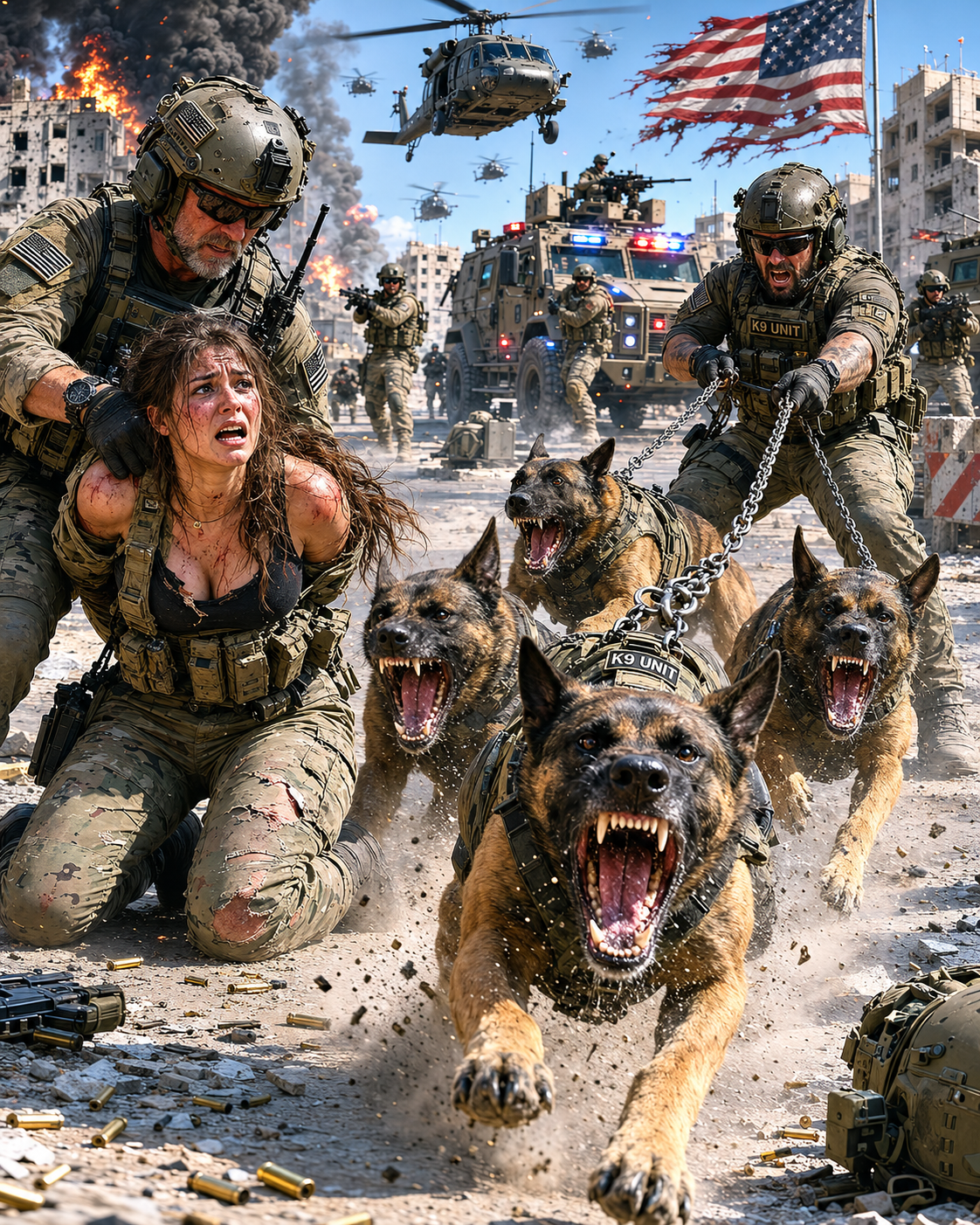
“Lock the gate and let them tear her apart.”
That’s what I heard them say before I even laid eyes on them. They actually thought I’d scream. They figured these three military dogs—completely starved of trust and running on nothing but grief—would charge me the second I stepped into that enclosure. To them, I was just some woman on administrative leave.
They forgot one major detail. I’ve survived a hell of a lot worse than teeth.
My name is Captain Evelyn Mercer. Eighteen years in the Navy, special ops, deployments to Afghanistan and Iraq. The kinds of places that definitely don’t make the family Christmas cards.
You May Also Like

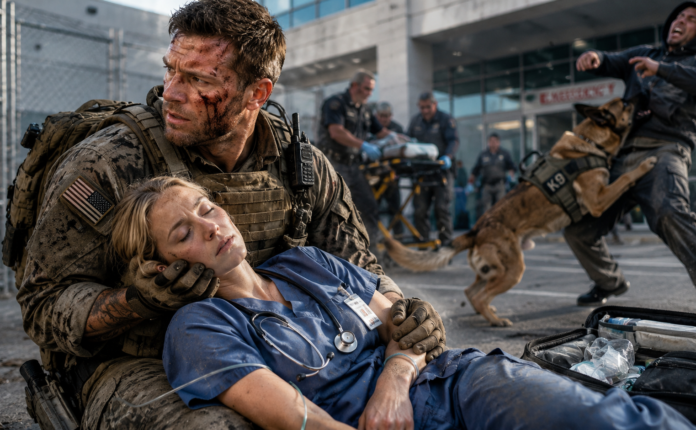
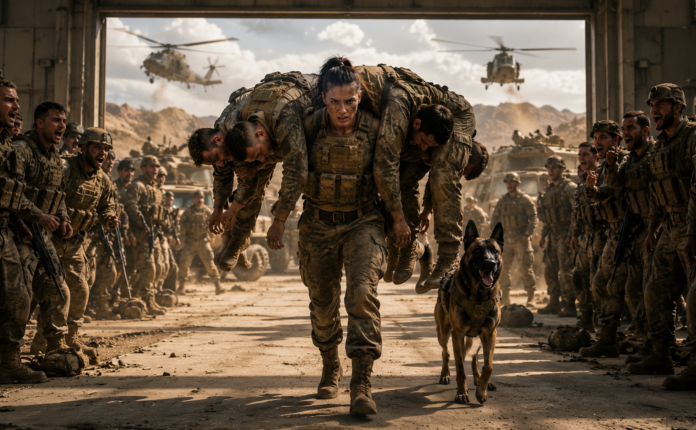
Three weeks before this whole mess, I was sitting in my truck outside a gas station off the I-5, choking down a sandwich that tasted like cardboard, when my phone rang. Unknown number. I picked up because people in my line of work always do.
“Captain Mercer,” the guy said. “This is Deputy Director Harlan Cross, Naval Special Warfare Command.”
His voice was flat and expensive—the exact voice of a guy who safely sits behind a polished desk while sending other people into the line of fire. He brought up my administrative leave and pending psych review, then smoothly pivoted to offering me an “opportunity.” I stared at my tired reflection in the windshield and told him opportunities from strangers usually come with a catch.
Then, he told me about the dogs.
Three Belgian Malinois: Ares, Zeus, and Thor. Their handler, Chief Petty Officer Marcus Dole, didn’t make it back from Kandahar eight months ago. Since then, Cross claimed the dogs had “deteriorated,” talking about them like they were busted machines instead of grieving animals. Two previous handlers had already begged for reassignment; one even froze inside the kennel for twenty minutes and refused to talk about it. Cross wanted me down at the Coronado Annex by Friday morning.
I showed up Thursday night. They didn’t like that. The lieutenant at the gate looked at my ID like it was radioactive and tried to tell me he wasn’t briefed on any “civilian consultant.” I reminded him I’m on leave, not a civilian, and made him open the gate.
The annex reeked of bleach, wet concrete, stale coffee, and working animals. Staff Sergeant Petrov met me in the hall, looking entirely sleep-deprived. He asked if I knew what happened to the last handlers, mentioning one had to be walked out by MPs. But when I asked about the dogs, he admitted they never actually touched her. That told me everything. A truly dangerous dog doesn’t bluff for twenty minutes; a grieving one does.
Petrov took me to the observation window. Ares was pacing the room, big and controlled, looking for a weak spot. Zeus was huddled in the corner, terrified. And Thor… Thor was just lying dead center in his run. Not sleeping. Just waiting. Petrov whispered he’d been like that for the full eight months since they got back. I pressed my hand to the glass, and Thor’s eyes met mine for just three seconds.
“I need you to leave,” I told Petrov. He tried to argue protocol, but I told him protocol had its chance for eight months and sent him for coffee.
I sat on the floor outside their runs for forty-seven minutes. I didn’t talk, didn’t offer treats, didn’t try to command or bargain with them. Men love making noise when they don’t get silence, but dogs understand silence better than anybody. By minute twelve, Ares stopped pacing. By minute nineteen, Zeus stepped forward. And at minute forty-seven, Thor’s breathing finally shifted.
Then the door swung open. It wasn’t Petrov. Colonel Brett Hargrove walked in, all polished authority and soft hands. He wasn’t happy I was on the floor and immediately laid out the rules for my evaluation. I was to enter the primary enclosure with all three dogs at once. No vest. No baton. No backup.
It wasn’t a real evaluation. It was a public execution with paperwork.
Watching me would be Cross, Hargrove, some behavioral contractors, and Brigadier General Daniel Whitfield. Whitfield was the exact guy who signed the sketchy after-action report blaming Marcus Dole for his own death. I’d read that report three times, and it was total garbage. When I pushed Hargrove on the dogs’ “aggression,” pointing out that seven strangers had failed them with seven different methods, I told him straight up: “They’re grieving. You just don’t have a box for that on your form.”
He looked at me like he suddenly realized I was going to be a massive problem and snapped, “0800.”
After he stormed out, I sat back down. “I know he’s not coming back. I’m not him,” I whispered to the dogs. Thor just watched me. “But I’m not leaving either.” His tail gave one slow sweep against the concrete.
I slept in my truck that night with my Glock in the cup holder. For the first time in eight months, I finally slept without replaying the death of my own dog, Shadow, in Afghanistan. He was my partner, my last good thing over there, and when he died with his head in my lap, he taught me that trust isn’t obedience—it’s what’s left when everything else is stripped away.
The next morning, when I walked into that enclosure, a room full of men waited behind the glass.
One of them muttered, “Tear her to pieces.”
I heard it.
I opened the gate anyway.
And the first dog came in.
PART 2 —
Ares entered like a verdict.
He did not bark.
He did not rush.
He walked toward me with the patience of something powerful enough not to hurry.
Behind the glass, the men leaned forward.
Waiting.
I kept my hands loose.
Ares circled me once.
His nose worked the air.
Fear has a scent.
So does honesty.
He found no fear on me.
After one full circle, he sat down at my left side.
The room behind the glass went dead silent.
Then Zeus came in.
He charged halfway across the enclosure, hackles high, grief wearing anger like armor.
I exhaled.
Long. Slow. Human.
Nothing to fight here, boy.
Zeus froze.
Then he walked to me and pushed his head so hard into my shoulder I almost lost balance.
Ares stayed beside me.
Zeus leaned against me.
Then I looked at the inner gate.
“Bring Thor in.”
Nobody moved.
So I said it louder.
“Bring him in.”
Thor stepped through the gate like a ghost returning to the room where he had died.
He looked at me.
I looked at him.
Then the dog everyone feared walked straight to my feet and sat down.
I put my hand on his head.
“Good boy,” I whispered.
And that was when the real war started.
PART 3 —
The men behind the glass did not clap.
They did not smile.
People who have already written your failure do not know what to do when you hand them proof.
I stayed inside the enclosure for twenty-two minutes.
Ares moved at my left.
Zeus stayed pressed against my right leg like he was afraid I might vanish if he gave me space.
Thor walked in front of me twice, then came back, then sat close enough that his shoulder touched my knee.
Not once did they lunge.
Not once did they threaten.
Not once did they become the monsters these men needed them to be.
When Petrov opened the gate, I walked out slowly.
The dogs watched me leave.
That was the part that almost broke me.
Not the teeth.
Not the risk.
The watching.
Because I knew that look.
I had seen it from hospital beds, church pews, airport terminals, base housing driveways, and soldiers’ wives standing on porches with folded flags in their hands.
Are you coming back?
That was all the dogs were asking.
Are you like the others?
Or are you coming back?
I entered the observation room.
Cross cleared his throat.
“Impressive initial response,” he said. “However, one successful introduction does not establish long-term behavioral stability.”
I looked at him.
“Have they injured anyone?”
He blinked.
“They have demonstrated significant aggression.”
“Have they injured anyone?”
The room tightened.
“No,” Cross said.
“Then put this on the record,” I said. “Three decorated military working dogs lost their handler, were passed between seven strangers, misdiagnosed, mishandled, and nearly sentenced to death because your protocol can’t recognize grief.”
One contractor shifted in his chair.
Dr. Rice.
I knew him from the file.
He had recommended euthanasia twice.
He looked like the type of man who washed his hands before shaking yours and after.
“You are oversimplifying a complex risk profile,” Rice said.
“No,” I said. “You are hiding cowardice behind clinical language.”
His face reddened.
Hargrove stepped in.
“Captain Mercer, this tone is inappropriate.”
“Colonel, what’s inappropriate is killing dogs because the paperwork is easier than the truth.”
Then Whitfield spoke.
“Captain.”
His voice was quiet.
That was why everyone heard it.
I turned.
The general stood at the far end of the room, hands behind his back, eyes fixed on me.
“You reviewed the Kandahar after-action report.”
“Yes, sir.”
“What did you think?”
Hargrove moved fast.
“General, I don’t think—”
“I asked Captain Mercer.”
So I answered.
“I think it blamed a dead man for failures made above him. I think Marcus Dole walked into bad intelligence. I think someone knew that intelligence was bad. And I think these dogs have spent eight months inside a facility run by men too proud to admit their handler was failed before the mission even started.”
Nobody breathed.
Whitfield stared at me for a long time.
Then he asked five words that changed everything.
“What do you need?”
Hargrove’s head snapped toward him.
Cross stiffened.
Rice looked down at his tablet.
I did not hesitate.
“Twelve weeks. No handler rotation. Full kennel authority. No contractor access without my approval. A new grief-based assessment framework. Petrov stays. I choose one candidate to train under me.”
I paused.
“And I want Marcus Dole’s after-action report reviewed by an independent board.”
That last sentence hit the room like a slammed door.
Cross said, “That is outside the scope—”
“Cross,” Whitfield said.
Just his name.
Cross stopped talking.
Whitfield looked at me.
“You’ll have it by end of day.”
Hargrove looked like his coffee had turned to poison.
That should have warned me.
Men like Hargrove never lose once and walk away.
They smile, step back, and start cutting wires in the walls.
The first wire was the kennel code.
Day three, 6:15 a.m.
I punched in my access code.
Red light.
Denied.
The duty officer said, “System update.”
“At 0200?”
“Routine maintenance.”
I stared at him until his ears turned pink.
Twenty-two minutes later, my code magically worked again.
Day five, the food delivery schedule changed without notice.
Day seven, maintenance entered the wrong wing.
Day eight, Petrov came to me with his face carved out of stone.
“Rice filed a supplemental assessment.”
“He’s off the case.”
“Apparently not. He sent it directly to Cross. Recommends capping rehabilitation at thirty days due to operational resource strain.”
Ares sensed my anger before I did.
His ears went back.
I exhaled and relaxed my hands.
That was the job.
Never let your storm become theirs.
“Who signed Rice’s contract extension?” I asked.
Petrov hesitated.
“Hargrove.”
Of course.
I requested a meeting with Whitfield.
He was in Washington.
So I did what women have done since the beginning of time when men in offices underestimate them.
I kept receipts.
Every changed code.
Every delayed form.
Every unauthorized work order.
Every “accidental” disruption.
Then came Lieutenant Erin Whitmore.
Hargrove sent six handler candidates to observe me, probably hoping one of them would write something that made me look unstable.
The others came in loud.
Whitmore came in quiet.
That was why I noticed her.
She was compact, watchful, with the kind of calm that comes from being the only woman in too many rooms where men hope you talk too much.
“You’re Captain Mercer,” she said.
“And you’re in a restricted wing.”
“Colonel Hargrove said candidates were cleared for observation.”
“Did he also tell you I’m unorthodox?”
Her mouth twitched.
“Yes, ma’am.”
I opened the kennel door.
“Then observe.”
She stepped inside and saw what Hargrove had not prepared her to see.
Ares relaxed.
Zeus alert but not frantic.
Thor sitting at the front of his run, nose pressed toward my hand.
Whitmore said quietly, “These are the dogs they said put handlers on leave?”
“They never hurt anyone,” I said. “They just made everyone believe they would.”
She watched Thor.
“They were testing.”
I turned.
“Testing what?”
“Whether the next person would leave.”
That was when I knew.
“You’re in,” I said.
Her eyes widened.
“Ma’am?”
“The other candidates can go back. You stay.”
Hargrove called within eight minutes.
I let it ring.
Some men confuse access with authority.
I was done helping them make that mistake.
By day nineteen, Zeus trusted me enough to sleep at the front of his run.
By day twenty, Thor walked on a loose leash.
By day twenty-one, Ares responded to hand signals again.
Then Hargrove struck harder.
A maintenance crew entered at 0500.
Unbriefed.
Loud.
Fast.
Direct eye contact.
By the time Petrov got there, Zeus had retreated to the back wall, shaking with old terror.
When I arrived, he looked at me like he had forgotten who I was and was begging me to prove it again.
I sat on the floor.
No commands.
No anger.
No performance.
Petrov crouched beside me.
“This is sabotage.”
“I know.”
“Aren’t you furious?”
“Yes.”
“You don’t look furious.”
“Because Zeus doesn’t need my fury. He needs my consistency.”
It took ten minutes.
Then Zeus came forward.
Three steps.
Stopped.
Four more.
Stopped.
Then he lay down six inches from the gate and pressed his nose to my fingers.
“There you are,” I whispered.
Petrov looked away.
I pretended not to notice.
Men like him deserved privacy when their hearts showed.
Day twenty-three, Hargrove filed for operational review.
His claim: my program created a safety liability.
His evidence: Zeus’s reaction to the maintenance crew Hargrove had sent.
I walked straight to Hargrove’s office.
His door was open.
He was on the phone.
He saw me and went still.
“Captain Mercer.”
“Who’s on the phone?”
“That’s not relevant.”
“Is it Cross?”
One beat.
Enough.
He placed the phone face down.
“You’re here without an appointment.”
“And you sent unbriefed maintenance into my kennel at 0500.”
His jaw tightened.
“You shifted food schedules, blocked access codes, kept Rice attached to the program, and filed a safety review based on an incident you caused.”
I sat without being invited.
“At what point did you decide I wouldn’t notice the pattern?”
He looked at me for a long time.
Then something in him cracked.
Not loudly.
Not dramatically.
Just enough.
“You don’t know what you’re pulling on,” he said.
“Then tell me.”
He leaned back.
“Marcus Dole came through my training program twelve years ago.”
I said nothing.
“He was the best handler I had ever seen. Patient. Instinctive. The kind you can’t manufacture. I pushed his file forward. I told the board he was exceptional.”
His voice roughened.
“I was right.”
“And when the report blamed him?”
“I knew it was wrong.”
The room went cold.
“You knew?”
“I knew Marcus didn’t make the mistakes in that report.”
“Then why stay quiet?”
His eyes dropped to the desk.
“Because the name on the intelligence suppression chain controls this facility’s budget.”
There it was.
Not grief.
Not confusion.
A transaction.
“You made a calculation,” I said.
“I made a calculation.”
“At the cost of Marcus Dole’s name.”
“At the cost of three dogs.”
“And your soul?”
He flinched.
Good.
Some words should cut.
Then he opened his desk drawer and pulled out a thick manila envelope.
He set it between us.
“How long?” I asked.
“Seven months.”
I stared at him.
Seven months.
Seven months of Thor lying in the center of his run.
Seven months of Ares pacing.
Seven months of Zeus living with his back against a wall.
Seven months of Marcus Dole’s wife believing her husband had died under a shadow he did not earn.
I picked up the envelope.
“Who?”
Hargrove swallowed.
“Rear Admiral Curtis Vance.”
I knew the name.
Men like Vance rarely shout.
They don’t need to.
They sign.
They redirect.
They bury.
They call death “unfortunate.”
They call lies “classified.”
They call consequences “resource concerns.”
I tucked the envelope inside my jacket.
“You’ll testify.”
Hargrove nodded.
“You understand what happens if you don’t?”
He looked at me.
“Yes.”
“No,” I said. “You don’t. If you back out, I don’t go to the press first. I don’t go to Whitfield first. I go to Sarah Dole.”
His face changed.
“You know about Sarah?”
“I know enough.”
“She has a daughter,” he said. “Eight years old. Marcus never met her.”
His voice finally broke.
“She deserves to know her father wasn’t careless.”
“Yes,” I said. “She does.”
I hand-carried the envelope to Whitfield.
No courier.
No system.
No convenient disappearance.
His aide took it with gloved hands.
At 14:17, Whitfield opened his office door.
“The documentation is enough for JAG.”
Then he said what I already knew.
“Vance will move fast. First he discredits Hargrove. Then you. Psych leave. Unorthodox methods. No formal publication. No peer review.”
I thought of Whitmore and the legal pad she had been helping me turn into a framework.
I thought of Thor’s face pressed through chain link.
“What does he do to the dogs?”
Whitfield did not soften it.
“If the program is suspended, the last formal recommendation goes active.”
“Rice’s euthanasia protocol.”
“Yes.”
The word sat there.
Ugly.
Final.
I could still smell kennel cleaner on my sleeves.
“Then we move faster,” I said.
Whitfield slid his personal phone across the desk.
“Sarah Dole can request expedited JAG review as surviving family.”
“You haven’t called her?”
His eyes darkened.
“I should have.”
I picked up the phone.
Sarah answered on the second ring.
“Mrs. Dole,” I said, “my name is Evelyn Mercer. I’m a Navy SEAL working with your husband’s dogs.”
Silence.
Then her first question nearly undid me.
“Are they okay?”
Not, why are you calling?
Not, what happened?
Are they okay?
I closed my eyes for one second.
“They’re getting there,” I said. “Thor especially.”
She exhaled.
“Marcus loved Thor.”
“I know.”
“No,” she said softly. “You don’t. He talked about those dogs every time he called. Ares was the boss. Zeus was the baby. Thor was… Thor was his shadow.”
I looked at Whitfield.
His face was turned toward the window.
“Mrs. Dole,” I said, “the report that blamed Marcus was wrong. We have documentation. Intelligence was suppressed before the mission. Your husband did not fail his team. He was failed.”
No sound came through the line.
Then Sarah whispered, “I knew it.”
Three words.
Eight months of loneliness inside them.
“I need you to file an expedited family review request with JAG.”
“What do I sign?”
No hesitation.
No drama.
Just a widow who had been waiting for the truth to knock.
That night, Vance filed the suspension.
Whitfield called me at 21:12.
“He moved.”
“How bad?”
“Facility safety suspension. Through Cross. Bypassed me.”
“And the dogs?”
“The suspension must be served to the facility commander.”
“Where is he?”
“Driving to Monterey for a family obligation. No duty phone until 0700.”
I almost laughed.
Almost.
“And JAG?”
“Board convenes at 0600.”
The math was beautiful.
One hour.
Sometimes justice doesn’t arrive like thunder.
Sometimes it arrives because one general finally decides to use procedure sharper than the men who abused it.
I did not sleep.
I sat outside the kennel corridor with my back against the wall.
Ares slept.
Zeus dozed.
Thor stayed awake with me.
At 2:00 a.m., I opened Shadow’s old intake file.
For eighteen months, I had avoided one section.
Previous primary handler.
Sergeant First Class Daniel Briggs.
Retired.
San Diego, California.
The note said: Handler requested quarterly status updates. Notify of assignment or status change.
Shadow had belonged to someone before me.
Someone had taught him the trust that saved me and broke me.
I sent Briggs a message.
He replied in four minutes.
I’m awake. Tell me where to be.
At 5:40, Briggs met me outside JAG.
He was older than I expected.
Bad knees.
Steady hands.
A shelter dog named Rebel at his side.
“You were Shadow’s handler,” I said.
He looked at me.
“You were there when he died.”
“Yes.”
“Was he afraid?”
“No.”
His eyes shone, but nothing fell.
“Good,” he said. “That means he knew he was loved.”
That sentence stayed with me all the way into the review room.
The board had three JAG officers and one civilian oversight representative, Dr. Margaret Holt, who looked like she had seen every excuse men invent when power gets nervous.
Hargrove testified.
His voice shook once.
Only once.
Then I testified.
I spoke about the dogs.
The failed protocol.
The suppressed intelligence.
Marcus Dole.
The maintenance sabotage.
Rice.
Cross.
Vance.
At 7:18, Commander Park looked at the file and said, “The evidentiary threshold is met.”
Dr. Holt set down her pen.
“The board finds the Kandahar after-action report materially inaccurate regarding Chief Petty Officer Marcus Dole and recommends immediate correction of his service record.”
Then she said the name clearly.
“Rear Admiral Curtis Vance.”
For two seconds, nobody moved.
Then Diaz stepped out with his phone already at his ear.
By 8:15, Vance’s suspension was no longer a safety measure.
It was evidence of obstruction.
By 8:40, Cross appeared in the hallway looking like a man who had just discovered the floor beneath him had been rented.
“The filing,” he said.
“Withdrawn,” Diaz replied pleasantly. “Processed at 0804. Check your inbox.”
Cross looked at me.
I said nothing.
Silence is a wonderful thing when your enemy has run out of paperwork.
Then Whitfield arrived.
“The program continues under Captain Mercer’s authority,” he said. “Lieutenant Whitmore transfers effective immediately. The grief-response framework will be submitted for formal institutional review. Chief Petty Officer Marcus Dole’s record will be corrected.”
He looked at Cross.
“As for Rear Admiral Vance, JAG will handle him.”
Cross said nothing.
Men like him never apologize when the room still has witnesses.
I returned to the kennel at 9:00.
This time, Briggs came with me.
I stopped outside the door.
“They may recognize something in you,” I told him. “Not consciously. But Shadow knew you. And I think some things go deeper than memory.”
Briggs nodded.
“What do I do?”
“Same thing you taught Shadow. Be steady.”
I opened the door.
Ares lifted his head first.
His nose worked the air.
Zeus stood.
Thor came to the front of his run.
Then he saw Briggs.
Something changed in him.
I still don’t have a clinical term for it.
His body shifted like grief had heard a familiar song in another room.
Briggs crouched.
“Hey, buddy.”
Thor pressed his nose through the chain link.
Briggs let him smell his hands, his sleeve, the old ache he carried.
Then Thor made a small sound.
Not a bark.
Not a whine.
A question.
Briggs answered by pressing his forehead lightly against the chain link.
“I know,” he whispered. “I miss him too.”
Behind me, Petrov looked at the ceiling.
Whitmore wiped her face and pretended she hadn’t.
I let them have that moment.
Some rooms become churches without needing a steeple.
Two weeks later, Sarah Dole came to Coronado.
She arrived in a rental car with Virginia plates, her daughter asleep in the back seat, a folded flag pin on her jacket.
Her daughter’s name was Lily.
She had Marcus’s eyes.
Thor knew before we opened the door.
I swear he knew.
He stood at the front of his run, still as stone.
Sarah stepped inside and covered her mouth.
“Oh,” she said.
Just that.
Thor lowered himself slowly, carefully, like he understood there was a child behind her.
Lily woke up in her mother’s arms and blinked.
“Is that Daddy’s dog?”
Sarah’s face crumpled.
But she didn’t fall apart.
She looked at me.
I opened Thor’s gate.
He walked out gently.
No rush.
No wildness.
He stopped in front of Lily and sat.
Lily reached out one little hand.
Thor bowed his head under it.
And Sarah Dole, who had spent eight months being handed lies by men in clean uniforms, finally cried into the fur of the dog her husband had loved.
Nobody stopped her.
Nobody told her to compose herself.
Nobody said protocol.
The correction to Marcus’s service record became official the following month.
His family received a formal apology.
Vance was removed pending investigation.
Rice lost his contract.
Cross resigned before anyone could force him to use a less graceful word.
Hargrove kept his rank, but not his command.
He testified fully.
That did not erase what he had done.
It did not return eight months to those dogs.
But truth is not a magic wand.
It is a door.
You still have to walk through it.
Ares, Zeus, and Thor were never euthanized.
Ares became the first dog in the new reintegration program.
Zeus trained with Whitmore, who turned out to be even better than I expected and twice as stubborn.
Thor?
Thor retired.
Not because he was broken.
Because he had given enough.
Sarah Dole adopted him.
The day he left the facility, every handler on site lined the driveway.
Even the ones who used to whisper.
Thor walked between Sarah and Lily like he had been born for that exact job.
At the gate, he stopped and looked back at me.
I knelt.
He came to me, pressed his forehead into my chest, and exhaled.
The same sound he had made the first day.
Only this time, it did not sound like grief leaving.
It sounded like peace arriving.
“Good boy,” I whispered.
Lily tugged Sarah’s hand.
“Mommy, is Thor coming home?”
Sarah smiled through tears.
“Yes, baby.”
Thor walked out through the gate.
No chains.
No committee.
No men betting on how long before the screaming started.
Just a little girl, a widow, and a dog carrying the truth home.
As for me, I went back to the kennel after they left.
Ares was waiting.
Zeus too.
Whitmore had coffee on the bench.
Petrov had taped a paper sign to the office door.
MERCER PROTOCOL — KNOCK BEFORE ENTERING OR LOSE A HAND.
I stared at it.
“Subtle,” I said.
Petrov shrugged.
“I considered adding please.”
I almost smiled.
Almost.
That afternoon, Whitfield called.
“Captain Mercer,” he said. “Your psychological review has been closed.”
“And?”
“You’re cleared for duty.”
I looked through the kennel window.
Ares was sleeping.
Zeus was dreaming, paws twitching.
For once, no one was waiting in the center of an empty room for a dead man to come back.
“I am on duty,” I said.
Whitfield was quiet.
Then he said, “Yes. I suppose you are.”
When I hung up, I walked into the enclosure and sat on the floor.
Ares came to my left.
Zeus came to my right.
The space in front of me stayed empty.
Thor’s space.
Marcus’s space.
Shadow’s space.
Not all empty spaces need to be filled.
Some only need to be honored.
I looked at the two dogs beside me and thought about all the men who had stood behind glass waiting for violence.
They had expected teeth.
They had expected blood.
They had expected proof that grief was dangerous and mercy was weakness.
Instead, three dogs sat down.
And a dead man got his name back.
And a room full of powerful men learned the hard way that a woman who does not scream is not a woman who has surrendered.
Sometimes she is simply listening.
Remembering.
Collecting evidence.
And waiting for the gate to open.
THE END.




One Comment on “I was supposed to fail the evaluation, but these traumatized dogs showed a room full of powerful men what loyalty looks like.”