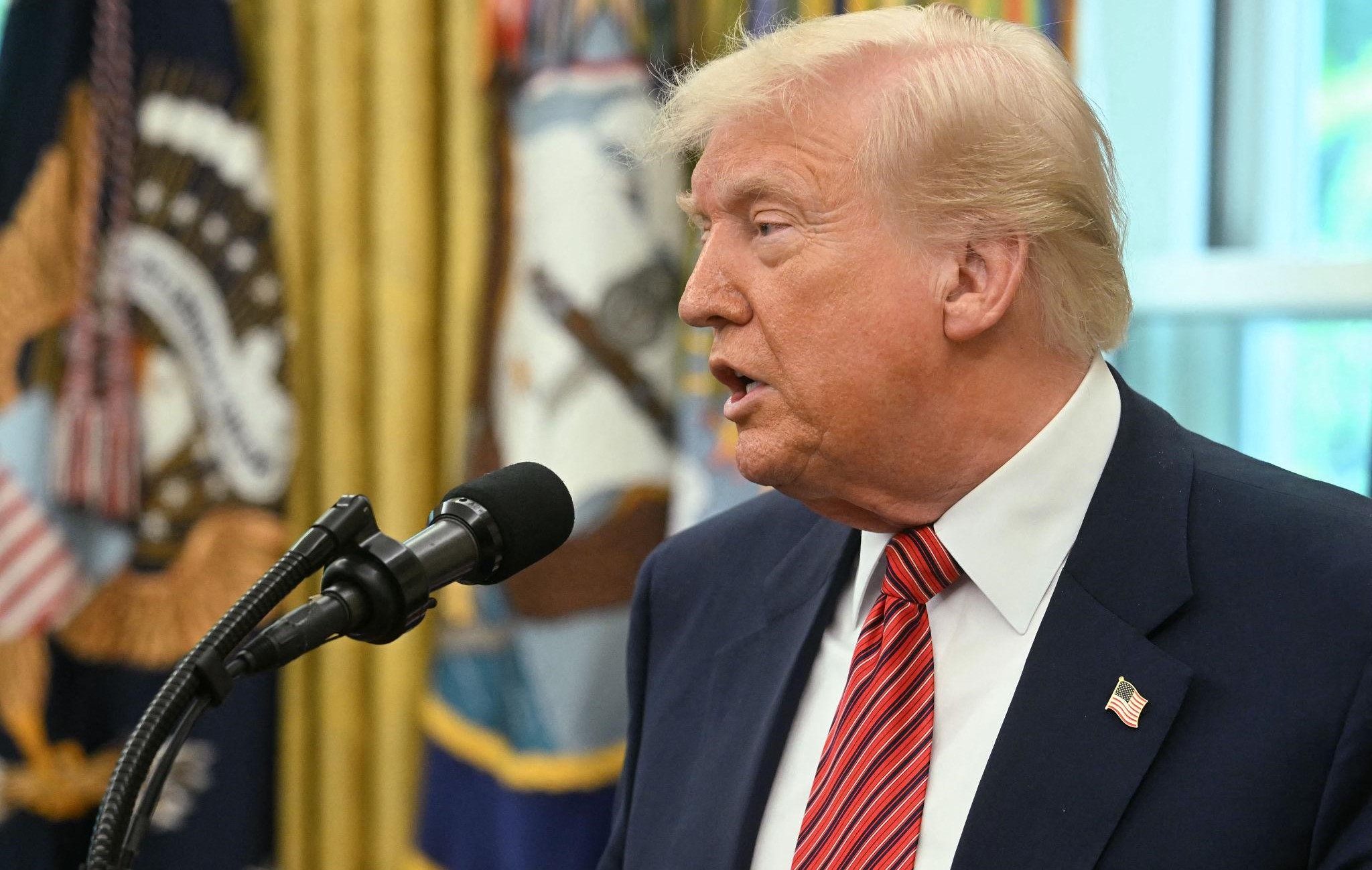
For generations, the American presidency has carried an unwritten expectation:
The office must stand above personal financial interests.
Presidents may arrive in Washington as businessmen, lawyers, generals, or celebrities, but once sworn into office, they are expected to separate national power from private profit. The presidency is not supposed to function like a family corporation.
Yet few political families in modern American history have tested that boundary more dramatically than the family of Donald Trump.
You May Also Like



Even after returning to the White House, Trump retained ownership of the Trump Organization through a trust controlled by his sons, while his adult children continued expanding business ventures tied to real estate, cryptocurrency, luxury development, private equity, media, and defense technology.
Supporters argue that the Trump children are private citizens pursuing legitimate business opportunities.
Critics argue something far more troubling:
That political access, presidential influence, and private wealth have become deeply intertwined in ways unprecedented in modern U.S. history.
The controversy is no longer just about ethics paperwork or political optics.
It has become a larger question about the future of democratic accountability itself.


The Presidency and the Problem of Private Power
Historically, American presidents took extraordinary measures to avoid even the appearance of conflicts of interest.
Presidents placed holdings into blind trusts, divested assets, or stepped away from active business management.
The goal was simple:
Ensure the public could trust that national decisions were being made for the country—not for personal enrichment.
Trump approached the presidency differently.
Instead of fully divesting from his business empire, he transferred operational control to his sons, primarily Donald Trump Jr. and Eric Trump.
Ownership, however, remained connected to the president himself.
That distinction became the foundation of years of ethics debates.
To supporters, the arrangement complied with legal requirements.
To critics, it created a system where the line between public office and private business became increasingly blurred.
And because the Trump brand itself is tied directly to political identity, every diplomatic relationship, policy announcement, and foreign partnership became subject to intense scrutiny.
A Global Business Empire Operating Alongside Political Power


Unlike previous presidential families that reduced international business exposure during periods of political office, the Trump family continued pursuing global deals across multiple strategic regions.
These included projects and licensing arrangements connected to:
- Saudi Arabia
- United Arab Emirates
- Qatar
The Trump brand remained associated with luxury developments, golf resorts, hotel partnerships, and investment initiatives throughout the Gulf region.
Critics argue this creates a profound conflict-of-interest concern.
Why?
Because foreign governments seeking favorable relationships with Washington may perceive business engagement with the Trump network as politically advantageous.
Even if no direct agreement exists, the perception alone can influence diplomacy.
Ethics experts warn that this dynamic risks transforming access to political power into a form of economic leverage.
Supporters counter that international business relationships existed long before Trump entered politics and that his family should not lose the ability to conduct private commerce simply because he holds office.
The debate ultimately centers on one fundamental question:
Can a president truly separate national policy from family financial interests when those interests are spread across strategically important countries?
The Middle East, Oil, and Strategic Influence


The Middle East occupies a unique place in global politics.
It is simultaneously:
- A center of energy production
- A critical military theater
- A hub for sovereign wealth investment
- A region deeply tied to U.S. defense policy
This makes any overlap between political influence and private business especially sensitive.
When foreign governments invest billions into American-linked ventures while also negotiating:
- Arms agreements
- Technology transfers
- Defense cooperation
- Intelligence partnerships
- Energy coordination
questions inevitably arise about whether business interests could shape strategic decision-making.
Critics fear that foreign powers may attempt to gain influence indirectly through commercial relationships connected to politically powerful families.
Even if no laws are broken, the appearance of influence can erode public trust.
And in geopolitics, perception itself carries enormous power.
Jared Kushner and the Gulf Investment Controversy


One of the most scrutinized figures in this debate is Jared Kushner.
After serving as a senior White House adviser and playing a major role in Middle East diplomacy, Kushner launched the private equity firm Affinity Partners.
The company reportedly pursued billions of dollars in investment from Gulf sovereign wealth funds.
Critics viewed the timing as deeply controversial.
Why?
Because Kushner had spent years building relationships with leaders from Saudi Arabia and other Gulf nations while serving in an influential diplomatic role.
To opponents, the transition from political adviser to investment manager created the appearance that political relationships established during public service were later monetized through private finance.
Supporters argue there is no evidence of illegal conduct and that Kushner, like any former official, has the right to pursue private business opportunities after leaving government.
But the controversy highlights a broader transformation in modern politics:
The growing overlap between diplomacy, investment networks, and personal wealth.
Cryptocurrency, Digital Wealth, and Political Influence


Another major source of scrutiny involves cryptocurrency and digital finance.
Congressional watchdog groups and ethics organizations have raised concerns regarding Trump-linked digital ventures and the broader financial ecosystem surrounding cryptocurrency investments connected to individuals close to the Trump orbit.
Critics argue that cryptocurrency introduces new transparency challenges because digital assets can move across borders rapidly and often operate within evolving regulatory frameworks.
Questions intensified following controversies surrounding favorable federal actions linked to major crypto industry figures.
One particularly debated case involved the presidential pardon of the founder of Binance, which drew accusations that financial and political relationships were becoming dangerously intertwined.
Supporters rejected allegations of wrongdoing, arguing that policy decisions and pardons were made independently of business interests.
Yet the controversy reflects a new reality:
Digital finance is becoming deeply entangled with political influence, lobbying, and geopolitical competition.
Defense Investments and Pentagon Contracts


Perhaps the most strategically sensitive controversy involves defense technology investments linked to Trump family members.
Reports indicate that Donald Trump Jr. and Eric Trump have held interests connected to drone, robotics, and defense-oriented technology firms that later secured Pentagon-related business opportunities.
This raised alarms among ethics experts for several reasons.
Defense spending is not ordinary commerce.
It directly involves:
- National security
- Military procurement
- Foreign alliances
- Warfighting capability
- Strategic competition
Critics argue that when politically connected individuals hold stakes in companies benefiting from defense expansion, questions emerge about whether policy decisions might indirectly benefit private investors.
The concern becomes even more serious when those companies market technologies to Gulf states involved in regional tensions surrounding Iran.
Supporters insist these investments are lawful private-sector activities and that no evidence proves presidential decisions were made to enrich family members.
Still, the overlap between defense policy and private financial interests has intensified calls for stricter oversight.
Foreign Governments and the Politics of Access

Ethics scholars frequently emphasize that corruption is not always direct bribery.
Sometimes influence operates through access, relationships, and expectation.
If foreign governments believe favorable treatment toward Trump-linked businesses could improve political relationships, that perception alone may shape diplomatic behavior.
This creates what experts call a “soft influence environment.”
In such an environment:
- Luxury developments become political symbols.
- Business deals become diplomatic signals.
- Investments become strategic tools.
Critics fear this weakens the firewall between American statecraft and private financial gain.
Supporters argue these accusations are politically motivated attempts to criminalize business success.
The divide reflects deeper disagreements over how modern political power functions in a globalized economy.
Congressional Oversight and Growing Political Warfare

Congressional investigators, particularly within oversight committees, have attempted to track foreign payments, licensing revenue, investment structures, and digital financial activity connected to Trump-linked networks.
Opponents argue these investigations are necessary to protect institutional integrity.
Supporters argue they represent partisan political warfare.
This battle has become one of the defining features of modern American politics:
A country increasingly divided not only over ideology, but over the meaning of ethics itself.
One side sees corruption risks requiring aggressive accountability.
The other sees political persecution targeting an unconventional outsider movement.
The result is a cycle of escalating mistrust that extends far beyond one family or one administration.
The Trump Family Defense


The Trump Organization and White House representatives have repeatedly denied allegations of unethical conduct.
Their defense rests on several key arguments:
- The adult Trump children are private businessmen.
- No law prohibits family members from operating businesses.
- The president does not directly manage company operations.
- Critics apply standards not imposed on other political families.
- Investigations are often politically motivated.
Supporters further argue that Trump entered politics already wealthy and therefore had less incentive for corruption than career politicians.
To millions of Americans, the attacks on the Trump family represent broader hostility toward outsider political movements challenging established elites.
This is why the controversy remains so politically explosive.
It is not merely legal.
It is cultural, ideological, and deeply emotional.
The Larger Crisis: Wealth, Power, and Democracy

The Trump ethics debate reflects a larger issue extending far beyond one administration.
Modern politics increasingly operates within a world dominated by:
- Billionaires
- Global finance
- Sovereign wealth funds
- Technology monopolies
- Digital currencies
- International lobbying networks
As wealth becomes more globalized, separating public service from private influence becomes more difficult.
This challenge affects Democrats and Republicans alike.
The real question confronting modern democracies is no longer simply:
“Can corruption be prevented?”
It is:
“How can democratic systems maintain public trust in an era where political power and global wealth are deeply interconnected?”
That question may define the next generation of American politics.
The Rise of Political Family Brands


The Trump family also represents a new phenomenon:
The transformation of political families into global commercial brands.
In previous generations, political dynasties built influence through party structures and public institutions.
Today, influence operates through:
- Social media
- Branding
- Celebrity culture
- Direct audience engagement
- Global business ecosystems
Politics and entertainment increasingly merge together.
This changes the incentives surrounding power.
Political influence can now generate enormous economic value beyond traditional lobbying or speaking fees.
Critics fear this creates dangerous incentives.
Supporters argue it reflects the realities of modern media and free-market capitalism.
Either way, the transformation is reshaping the nature of political influence worldwide.
International Reactions and Global Perception


America’s allies and rivals closely watch these controversies.
Why?
Because perceptions of corruption or conflicts of interest can affect:
- Diplomatic credibility
- Alliance trust
- Trade negotiations
- Intelligence cooperation
- Global democratic image
When private business networks overlap with geopolitical decision-making, foreign governments attempt to interpret how influence flows inside Washington.
That uncertainty itself can become strategically significant.
For rival powers such as China and Russia, internal American ethics controversies are often portrayed as evidence of Western hypocrisy and institutional weakness.
For allies, they raise concerns about policy predictability and strategic consistency.
Final Reflection: The Dangerous Fusion of Influence and Wealth

The ongoing scrutiny surrounding the Trump family is about far more than one presidency.
It is about the future relationship between democracy, wealth, and global influence.
The core danger identified by critics is not necessarily a single illegal act.
It is the gradual erosion of boundaries.
Boundaries between:
- Public service and private gain
- Diplomacy and investment
- National interest and family business
- Political influence and commercial opportunity
Supporters see the Trump family as successful entrepreneurs unfairly targeted because they challenged entrenched political systems.
Critics see a warning sign of how modern democracies can become vulnerable when political power merges with global wealth networks.
Both sides recognize one undeniable reality:
The scale of money, technology, and international influence surrounding modern politics has reached historic levels.
And as the worlds of government, finance, media, and global business continue to merge, the struggle to preserve transparency and public trust may become one of the defining political battles of the 21st century.
Because in the end, democracies do not survive on power alone.
They survive on confidence that power is being used for the public good—not private advantage.