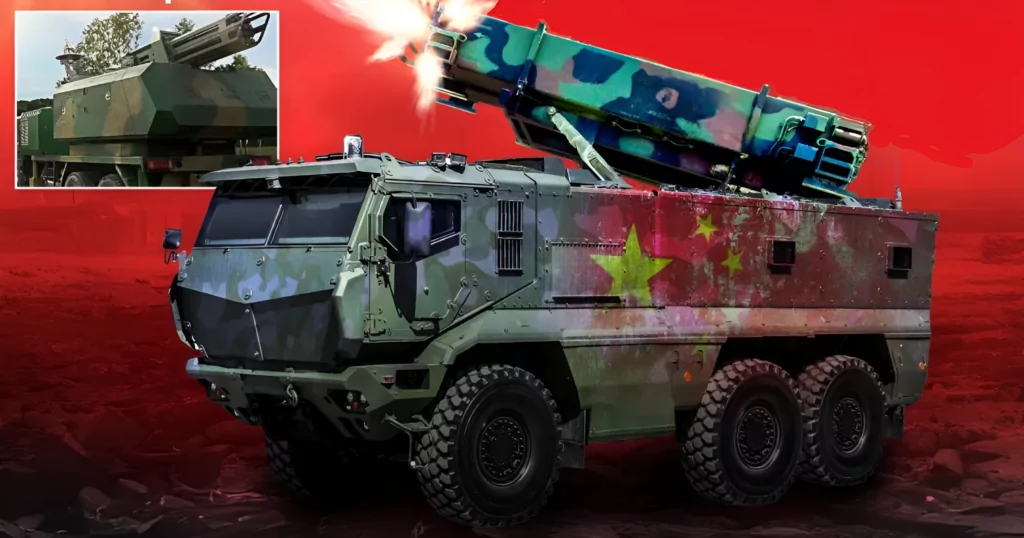
When headlines claim that China has unveiled a weapon capable of firing 450,000 rounds per minute, the number is so extraordinary that it sounds almost impossible.
At first glance, it appears to rewrite the laws of military engineering.
For comparison, the American Phalanx CIWS—one of the most respected point-defense systems in the world—fires approximately 4,500 rounds per minute. The M134 Minigun can reach around 6,000 rounds per minute. Even the famous Australian Metal Storm Limited concept, which stacked projectiles inside barrels and fired them electronically, remained largely experimental despite demonstrating extremely high theoretical rates.
So what does China’s announcement really mean?
You May Also Like




Has Beijing created a revolutionary anti-missile weapon?
Or is this a laboratory demonstration that showcases an impressive engineering concept rather than an immediately deployable battlefield system?
The truth lies somewhere in between.
And it reveals something profound about the future of warfare.
A Number That Demands Context

“450,000 rounds per minute” is a theoretical cyclic rate.
It does not mean the weapon can sustain that output for an entire minute. No practical ammunition supply, barrel system, or cooling solution could support that continuously.
Instead, the figure represents an extremely short burst capability, measured over fractions of a second.
That distinction is critical.
At such rates, the weapon is designed to create a dense cloud of projectiles in a tiny window of time—exactly the kind of effect needed to intercept fast-moving threats such as:
- Cruise missiles.
- Swarming drones.
- Precision-guided munitions.
- Mortar rounds.
- Potentially even some hypersonic threats in terminal phases.
In other words, this is less about spraying bullets and more about saturating a specific volume of space with metal.
How the Technology Works

The Chinese system reportedly uses a multi-barrel architecture inspired by the Metal Storm concept.
Instead of relying on traditional mechanical cycling, multiple projectiles are pre-loaded in each barrel and fired electronically in rapid sequence.
Reported features include:
- Five-barrel cluster.
- Stacked ammunition.
- Electronic ignition.
- Disposable magazine modules.
- Minimal moving parts.
This architecture allows firing rates that far exceed conventional Gatling guns.
The key innovation is replacing mechanical limits with electronic timing.
Why Electronic Firing Changes Everything
Mechanical weapons are constrained by motors, feed systems, and moving components.
Electronic firing compresses the interval between shots to microseconds.
This provides major advantages:
- Ultra-fast burst rates.
- Reduced mechanical wear.
- Precise timing.
- Programmable shot patterns.
- Potential integration with autonomous targeting systems.
The weapon effectively becomes a digitally controlled projectile dispenser.
Comparing the World’s Fastest Guns
| Weapon System | Country | Approximate Rate of Fire |
|---|---|---|
| Chinese Prototype | China | 450,000 RPM (claimed burst) |
| Metal Storm Prototype | Australia | Up to 1,000,000 RPM (theoretical) |
| M134 Minigun | United States | ~6,000 RPM |
| Phalanx CIWS | United States | ~4,500 RPM |
| AK-47 | Soviet Union/Russia | ~600 RPM |
The comparison illustrates just how radical the Chinese claim is.
But raw rate of fire alone does not determine battlefield effectiveness.
The Real Mission: Last-Ditch Defense

The most likely role for such a weapon is close-in defense.
Imagine a hostile missile racing toward a warship.
The defender has only seconds to react.
A weapon that can place an enormous number of projectiles in the missile’s path may dramatically increase the probability of interception.
This makes the concept attractive for:
- Naval defense.
- Airfield protection.
- Strategic infrastructure security.
- Counter-drone systems.
- Missile defense.
The goal is not to fire longer.
The goal is to fire decisively.
Can It Stop Hypersonic Missiles?
The phrase “hypersonic killer” is compelling, but the challenge is immense.
Hypersonic weapons travel at speeds above Mach 5 and may maneuver unpredictably.
To defeat them, a defense system needs:
- Early detection.
- Accurate tracking.
- Predictive targeting.
- Near-instant firing.
- Adequate projectile density.
An ultra-high-rate gun could help during the final moments of engagement, but success would still depend on sensors, software, and timing.
The gun is only one component of the kill chain.
The Engineering Challenges

Building a weapon that fires at 450,000 RPM in brief bursts requires solving formidable technical problems.
Heat
Extreme firing rates generate tremendous thermal stress.
Ammunition
The system must package and deliver rounds reliably.
Recoil and Vibration
Even short bursts can create severe structural loads.
Power
Electronic ignition demands high-voltage pulse systems.
Software
Targeting algorithms must make decisions in milliseconds.
The achievement is impressive because it combines mechanics, electronics, materials science, and computing.
The Rise of AI-Driven Defense
China is investing heavily in artificial intelligence for military applications.
An electronically fired gun pairs naturally with AI because software can:
- Track targets.
- Predict intercept points.
- Optimize burst timing.
- Manage ammunition use.
- Coordinate multiple systems.
This points toward a future where machines detect and engage threats faster than humans can react.
A Digital Shield Against Drone Swarms
One of the most significant threats on modern battlefields is the drone swarm.
Large numbers of inexpensive unmanned aircraft can overwhelm traditional defenses.
A high-rate system could counter this by placing a dense wall of projectiles into incoming formations.
This makes the concept especially relevant in an era where quantity can challenge quality.
Strategic Messaging and Technological Signaling
Publicizing such a weapon also serves a strategic purpose.
It signals that China is pursuing advanced defensive technologies and intends to compete at the forefront of military innovation.
Whether or not the system enters widespread service soon, the announcement itself can influence perceptions and planning.
The Legacy of Metal Storm
Metal Storm demonstrated that extremely high firing rates were technically feasible.
However, turning prototypes into practical systems proved difficult.
China’s effort suggests that the underlying concept continues to attract interest where rapid-response defense is a priority.
Beyond the Battlefield
The technologies involved have broader applications.
Potential civilian and scientific uses include:
- Materials testing.
- Ballistics research.
- High-speed impact studies.
- Specialized security systems.
Innovation in defense often leads to advances in other fields.
What This Means for the Global Arms Race
If China successfully operationalizes this concept, competitors may accelerate development of:
- Directed-energy weapons.
- Advanced close-in defense systems.
- AI-enabled targeting.
- Counter-hypersonic technologies.
The result could be a new generation of automated defensive networks.
The Human Dimension
As weapons become faster and more autonomous, a larger question emerges:
How much decision-making should be delegated to machines?
A system that reacts in milliseconds may leave little time for human oversight.
This raises important ethical and strategic considerations.
The True Significance

The most important lesson is not the number 450,000.
It is what that number represents.
It reflects a world in which:
- Speed is decisive.
- Sensors are as important as weapons.
- Software drives combat effectiveness.
- Automation increasingly shapes outcomes.
Modern warfare is becoming a contest of information, timing, and integration.
Final Thoughts: More Than a Gun
China’s 450,000-round-per-minute prototype is more than a headline-grabbing weapon.
It is a symbol of a larger transformation.
The battlefield of the future will not be defined solely by bigger platforms or heavier armor.
It will be defined by systems that can detect threats, process data, and respond almost instantly.
Whether this weapon becomes operational or remains a technological demonstration, it reveals the direction of military innovation.
The age of mechanical warfare is giving way to the age of algorithmic defense.
And in that new era, victory may belong to the nation that can think, decide, and act at machine speed.