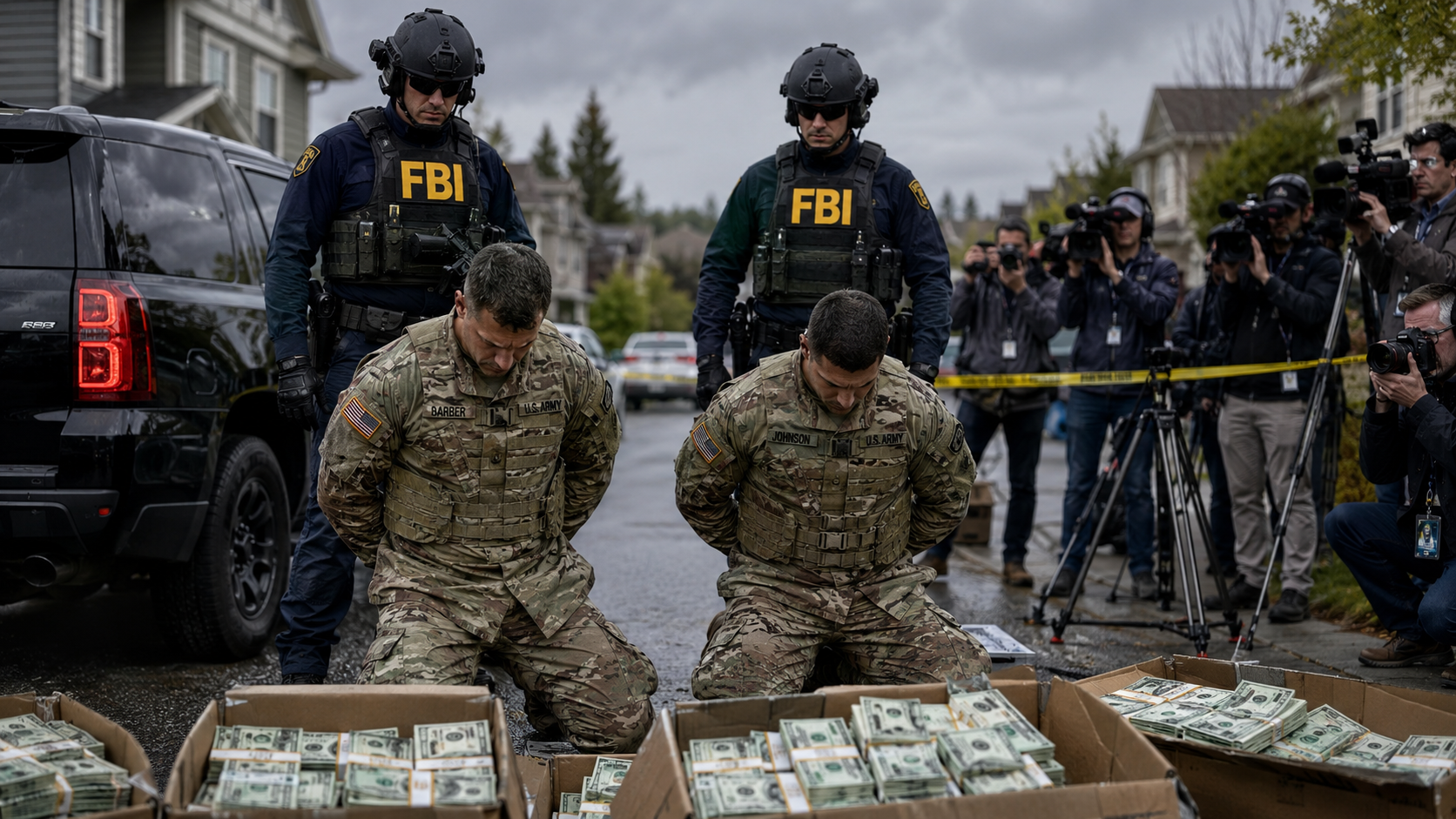
Part I — The Beginning: Shadows Beneath the Flag
The storm rolled across central Texas like a warning from history itself. Thick black clouds hung above the endless highways surrounding Fort Cavazos, while inside the massive military installation, engines rumbled through the darkness with routine precision. To the public, it looked like another ordinary night at one of America’s largest military bases.
But behind the steel doors of Hangar 12, America’s darkest military scandal was already unfolding.
For nearly eight months, federal investigators from the Federal Bureau of Investigation and the Drug Enforcement Administration had been quietly assembling fragments of a conspiracy so dangerous that senior officials initially refused to believe it could exist.
At first, the evidence seemed impossible.
You May Also Like
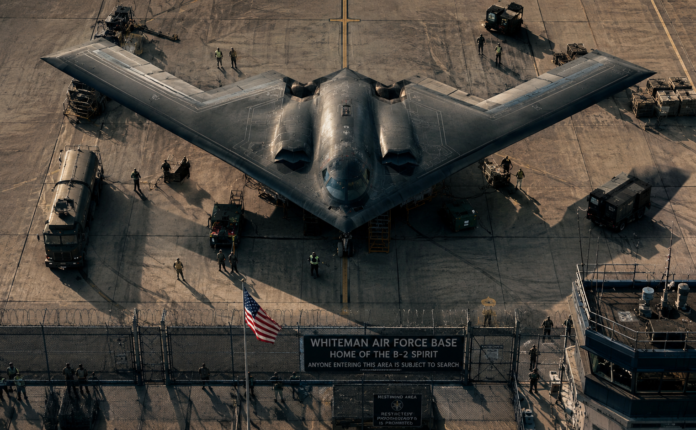
Cargo flights with incomplete manifests.
Military transport schedules altered minutes before departure.
Encrypted communications routed through classified Army logistics systems.
Entire containers disappearing after routine customs clearance.
Then came the anonymous message.
At exactly 2:13 a.m., Special Agent Marcus Vance received a heavily encrypted file through a secure FBI channel. Attached was a single sentence:
“The enemy is not crossing the border anymore. The enemy already wears the uniform.”
The file contained flight coordinates, storage records, and access logs tied to military cargo planes operating out of Texas. What investigators uncovered next sent shockwaves through Washington.
For years, a hidden criminal network had allegedly exploited official U.S. military transport systems to move narcotics across state lines while bypassing conventional law-enforcement checkpoints. The sophistication of the operation suggested military precision, insider access, and protection at levels no ordinary criminal organization could obtain.
Inside a secure underground briefing room in Washington, silence filled the air as intelligence analysts projected satellite images onto a massive digital screen.
“Six separate flights,” one analyst explained nervously. “All cleared through military channels. None inspected.”
Another investigator leaned forward.
“You’re telling me American military aircraft became cartel transport vehicles?”
The room fell silent.
Nobody answered immediately.
Because nobody wanted to say it aloud.
If the evidence was real, the scandal threatened not only the Pentagon’s credibility but the integrity of the entire chain of command.
Attorney General Elaine Mercer finally broke the silence.
“Who authorized these clearances?”
A technician hesitated before replying.
“That’s the problem, ma’am. The authorization codes originated from inside Washington.”
The room erupted.
“Impossible.”
“Codes can be spoofed.”
“Not military-grade clearance codes,” another official interrupted.
Special Agent Marcus Vance remained quiet as the arguments intensified around him. He stared at the screen, studying the movement patterns of the aircraft.
This was not random corruption.
This was organized infiltration.
And somebody powerful was protecting it.
Three weeks later, surveillance teams tracked suspicious activity inside a restricted hangar at Fort Cavazos. Trucks arrived only after midnight. Cargo containers were unloaded without digital registration. Armed guards rotated every twenty minutes using non-standard patrol schedules.
One undercover DEA operative whispered through his radio while observing the compound from nearly half a mile away.
“Something big is happening tonight.”
Inside Washington, emergency authorization for a tactical raid was finally approved.
The operation was classified at the highest federal level.
No leaks.
No warnings.
No mistakes.
Because investigators feared that if even one compromised official learned about the raid in advance, the entire network could disappear before sunrise.
At 1:47 a.m., armored FBI tactical vehicles rolled silently across the Texas desert under blackout conditions.
Helicopters flew low beneath radar coverage.
DEA assault teams prepared breaching charges.
Special Agent Marcus Vance looked across the convoy and gave one final order.
“Nobody fires unless fired upon. We bring the truth back alive.”
Then the convoy accelerated toward the gates of Fort Cavazos.
And America’s largest military corruption investigation officially began.
Part II — The Investigation: Corruption Inside the Machine
The raid exploded into chaos within seconds.
Floodlights shattered the darkness as federal agents breached the hangar doors with explosive charges. Armed soldiers inside scrambled in confusion while alarms screamed across the base.
“FBI! DEA! DROP YOUR WEAPONS!”
Some surrendered immediately.
Others froze in disbelief.
A few attempted to destroy encrypted hard drives before tactical teams subdued them.
Inside the hangar, investigators discovered mountains of sealed cargo containers stacked behind military vehicles and transport pallets. When DEA agents cut open the first crate, white powder spilled across the floor beneath the harsh tactical lights.
The test results came back within minutes.
Pure cocaine.
Tons of it.
Federal agents stared in stunned silence.
One investigator whispered:
“My God… this is military-scale trafficking.”
By dawn, authorities confirmed the seizure of 6.8 tons of narcotics along with millions in laundered cash, encrypted military communication devices, forged logistics records, and classified transportation schedules.
News spread across America like wildfire.
Television networks interrupted programming.
Former generals appeared on emergency broadcasts.
Politicians demanded answers.
“How deep does this go?”
“Who inside the Pentagon approved this?”
“Can Americans still trust their military institutions?”
The arrests of 50 active-duty soldiers became one of the largest military criminal cases in modern U.S. history.
But the deeper investigators looked, the more terrifying the truth became.
During interrogation, several soldiers insisted they believed they were participating in covert intelligence transport operations.
One young corporal reportedly broke down crying inside the interrogation room.
“They told us it was classified counterterrorism cargo,” he said. “We were ordered not to ask questions.”
Others refused to speak entirely.
But Staff Sergeant Robert Vance—the decorated veteran accused of managing operations inside the base—remained eerily calm.
“You think arresting us changes anything?” he asked investigators.
Special Agent Marcus Vance leaned across the interrogation table.
“Start talking.”
Robert smiled faintly.
“You still don’t understand who you’re dealing with.”
Hours later, forensic analysts uncovered something even more disturbing hidden inside the seized encryption systems: evidence suggesting that military transport flights had been manipulated for years through compromised authorization pathways connected directly to senior defense networks in Washington.
The conspiracy was bigger than anyone imagined.
Investigators soon learned that key digital records had been erased moments before the raid began.
Somebody had been watching.
And somebody escaped.
Security footage revealed two black civilian SUVs leaving the restricted perimeter less than four minutes before federal agents breached the compound. The vehicles vanished into the Texas desert before aerial teams could intercept them.
No license plates.
No identification.
Gone.
Inside the Pentagon, panic quietly spread through senior leadership.
Closed-door meetings turned hostile.
Officials accused each other of leaks.
Several high-ranking administrators abruptly resigned.
One intelligence officer reportedly disappeared before scheduled testimony before Congress.
Meanwhile, public anger intensified across the nation.
Veterans spoke out emotionally on television.
Families of military personnel demanded accountability.
Citizens questioned how criminal organizations could infiltrate institutions built to defend the nation itself.
But amid the outrage, something unexpected began happening across America.
People stopped treating the scandal as proof that the country was collapsing.
Instead, millions began seeing it as proof that corruption could finally be exposed.
Because for the first time in years, powerful people were no longer untouchable.
Federal agents kept digging.
Subpoenas expanded.
Financial trails spread across shell corporations, offshore accounts, defense contractors, and corrupt intermediaries operating under the illusion that nobody would ever challenge them.
But now the entire machinery of federal law enforcement was moving against them.
And the deeper the investigation went, the more Americans realized that the operation represented something larger than a drug bust.
It became a test.
A test of whether the United States still possessed the courage to confront corruption inside its own institutions.
Not foreign enemies.
Not outside threats.
But corruption within.
Part III — The Ending: America Fights Back
Six months later, Washington looked very different.
Congressional hearings dominated national headlines.
Multiple senior officials faced criminal investigations.
Military oversight systems underwent sweeping reforms.
Federal anti-corruption task forces expanded nationwide.
Inside a packed Senate chamber, cameras flashed as Special Agent Marcus Vance delivered testimony before the nation.
“Corruption survives when institutions fear exposing themselves,” he said firmly. “But the strength of America has never come from pretending we are perfect. Our strength comes from confronting the truth, no matter how painful that truth may be.”
Across the country, millions watched in silence.
Because despite the scandal, something powerful had emerged from the crisis:
A renewed belief that the country could still correct itself.
That the system, despite all its flaws, could still fight back.
In Texas, the once-sealed hangar at Fort Cavazos stood empty beneath the evening sun. The narcotics were gone. The criminal network had been dismantled. Dozens faced federal prosecution.
But the investigation left behind scars that would never fully disappear.
One evening, Marcus Vance stood alone outside the base perimeter while journalists gathered nearby.
A young reporter approached carefully.
“Agent Vance,” she asked, “after everything you uncovered… do you still believe in this country?”
Marcus looked toward the American flag waving above the installation.
For a long moment, he said nothing.
Then he answered quietly.
“More now than ever.”
The reporter looked surprised.
Marcus continued:
“Because corrupt people tried to hide behind the uniform… and America exposed them anyway. That’s the difference. In weak nations, corruption owns the system. In strong nations, the system eventually fights back.”
The wind moved across the Texas plains as federal vehicles departed the base for the final time.
Investigators knew the battle against corruption would never truly end. There would always be greed. Always be betrayal. Always be people willing to sell power for money.
But there would also always be Americans willing to confront it.
The scandal that once threatened to destroy public faith instead became a national reckoning.
A reminder that patriotism was not blind loyalty to institutions.
Patriotism meant protecting those institutions from corruption.
And across the nation, many began calling the crackdown a new chapter in the long promise to “Make America Great Again” — not through slogans alone, but through accountability, law, sacrifice, and the refusal to let criminal networks hide behind power or rank.
Because in the end, America’s greatness was never defined by being flawless.
It was defined by its ability to fight for justice even when the enemy was found within its own walls.
And as the sun finally rose over Texas, the message became clear to the entire world:
The United States had not surrendered to corruption.
It had declared war against it.