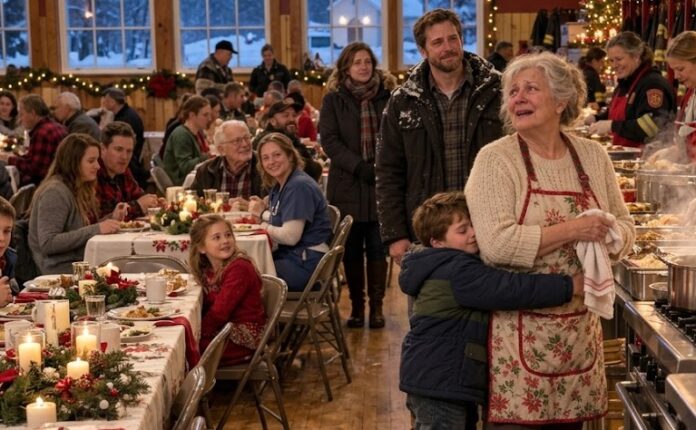
At 70, I Found My Daughter-in-Law Living in My Malibu Home — Then She Called Me a Parasite in Front of Everyone
My Daughter-in-Law Threw Me Out of the Malibu House I Built Stitch by Stitch — But the Deed in My Purse Destroyed Her Lie
At seventy years old, I returned to my peaceful Malibu beach house expecting the sound of waves.
Instead, I found strange cars in my driveway.
You May Also Like




Strangers in my garden.
Wet towels on my chairs.
Empty bottles near my flowers.
And my daughter-in-law standing on my terrace wearing the apron I had sewn by hand.
She looked me up and down and smiled.
“What is this old parasite doing here? There’s no room for you.”
Everyone laughed.
Her mother added, “So this is Brandon’s mother? I expected more.”
Inside my own home, my belongings were stuffed into garbage bags.
My late husband’s photo had been removed from the living room.
My bedroom was occupied by Chloe’s cousins.
And my son was not answering his phone.
They thought I was old.
Weak.
Easy to erase.
But they did not know what I was carrying in my purse.
A sealed envelope.
A certified deed.
And a letter my late husband had written before he died.
By sunset the next day, police were standing in my driveway, Chloe’s family was packing in panic, and my daughter-in-law finally understood the truth:
She had not moved into Brandon’s house.
She had invaded mine.
The Story
At seventy years old, I came home to my Malibu beach house and found strangers drinking wine on my terrace.
For twenty years, that house had been my sanctuary.
Not a luxury mansion.
Not a showpiece.
Not the kind of place people bought to brag about ocean views and imported stone.
It was simple.
White shutters.
Weathered wicker furniture.
A narrow garden path lined with lavender and rosemary.
A little kitchen with blue tiles.
A sewing room that caught the morning sun.
A back terrace where the Pacific stretched endlessly before me, breathing in and out like the world’s oldest prayer.
I bought that house after my husband, Arthur, died.
Every payment came from my own hands.
I sewed dresses late into the night.
I hemmed uniforms for nurses after twelve-hour shifts.
I repaired wedding gowns, curtains, children’s costumes, school blazers, baptism dresses, and grief-black suits for widows who could not stop crying long enough to find the right buttons.
I did not inherit that house.
I did not marry into it.
I earned it stitch by stitch.
Year by year.
Needle through fabric.
Thread pulled tight.
So when I pulled into my driveway that morning and saw unfamiliar cars filling the gravel space, I did not move at first.
Music spilled through the air.
Laughter echoed across my yard.
A young man I did not know walked through my garden barefoot, holding a beer bottle and stepping over the small white stones Arthur had placed there himself.
Wet towels covered my wicker chairs.
Empty bottles lay near the hydrangeas I had planted after my first winter alone.
Someone had dragged my porch bench into the sun and spilled red punch across the cushion.
Then I saw the living room window.
My late husband’s framed photograph had been removed from the mantel.
In its place sat a cooler.
A blue plastic cooler where Arthur’s face should have been.
That was the moment I felt it.
Not anger first.
Disbelief.
A quiet disbelief that spread through me slowly, like cold water under a door.
Then Chloe appeared.
My daughter-in-law stepped onto the terrace like a woman walking onto a stage built for her.
Barefoot.
Sunglasses pushed onto her head.
A drink in one hand.
Her hair loose around her shoulders.
And over her outfit, she wore my apron.
My apron.
The one I had sewn by hand from pale linen.
The one with the blue wave pattern embroidered along the pocket.
The one Arthur used to tease me about because I wore it even when I was not cooking.
The one I had stitched my initials into: E.S.
Evelyn Sterling.
Chloe’s eyes met mine.
Then she laughed.
Not nervously.
Not with surprise.
With contempt.
“What is this old parasite doing here?” she said loudly. “There’s no room for you.”
The terrace went silent for half a second.
Then came laughter.
Strangers laughing in my home.
At me.
Her mother, a tall woman with sharp cheekbones and a sharper mouth, stepped out behind her and looked me over like I was a stained curtain.
“So this is Brandon’s mother?” she said. “I expected more.”
Chloe smiled.
“I told you she was dramatic.”
I stood beside my car, holding my small leather purse.
The ocean wind moved through my gray hair.
My chest felt tight, but my voice stayed calm.
“Where is Brandon?”
Chloe rolled her eyes.
“Working. Unlike some people, he has responsibilities.”
A young woman behind her laughed.
I looked past Chloe into the living room.
People I did not know were sitting on my sofa.
Eating from my plates.
Walking barefoot on the rug Arthur and I had saved two years to buy.
A teenage boy opened my refrigerator like he lived there.
Near the hallway stood two black garbage bags.
At first, I thought they were trash.
Then I saw the sleeve of my blue cardigan sticking out.
A book.
A framed photo.
The corner of the quilt my mother made before she died.
My belongings.
Stuffed into garbage bags.
My throat closed.
“What are those?” I asked.
Chloe followed my gaze and shrugged.
“Your things. We needed space.”
“You put my things in trash bags?”
“Don’t be so sensitive. We didn’t throw them out.”
Her mother laughed.
“Yet.”
Chloe gave her a playful look, then turned back to me.
“The garage is dry enough.”
“The garage?”
She sipped her drink.
“Evelyn, we’re hosting family for the summer. Every room is taken. It would be awkward for you to stay here now.”
I looked at her.
“Awkward.”
“Yes.”
“In my house.”
She sighed like I was a child refusing bedtime.
“Brandon said we could use the house.”
“Use it,” I repeated.
“Yes. And honestly, you should be grateful. A house this size shouldn’t sit empty while you wander in and out acting like some lonely widow in a beach novel.”
The laughter came again.
Sharper this time.
I waited for tears.
They did not come.
There is a kind of pain that makes you cry.
And there is another kind that makes you clear-headed.
My eyes moved to the apron.
The wave embroidery.
My initials.
A faint coffee stain near the hem from the morning Arthur told me his cancer had returned.
That apron had held memories Chloe was not even old enough to respect.
“You are wearing my apron,” I said.
Chloe looked down at it.
“Oh. This?” She tugged at the pocket. “It was hanging in the kitchen. I thought it was cute in a sad little grandma way.”
Her mother laughed again.
Something inside me became very still.
“Take it off.”
Chloe blinked.
“What?”
“Take off my apron.”
Her smile faded.
“No.”
The terrace went quiet.
I said again, “Take it off.”
Chloe stepped closer.
“Listen to me, Evelyn. I don’t know what Brandon told you, but things are changing. You’re getting older. This house is too much for you. You should be somewhere smaller. Safer.”
“Safer for whom?”
Her face hardened.
“For everyone.”
Everyone.
A word that somehow no longer included me.
I looked at the strangers on my terrace.
At the cousins in my living room.
At Chloe’s mother holding a drink in my doorway.
At my belongings in garbage bags.
At my husband’s missing photograph.
Then I looked back at Chloe and smiled.
She mistook it for surrender.
“I’m glad you understand,” she said.
But I understood everything.
This was not a misunderstanding.
This was an attempt to erase me from my own life.
Inside my purse was a sealed cream-colored envelope I had almost forgotten.
Almost.
I touched it with two fingers.
My hand stopped shaking.
Then I turned around.
Chloe called after me, “Where are you going?”
I opened my car door.
“To find a room,” I said.
Her mother laughed.
“That’s probably best.”
Chloe lifted her glass.
“Good choice, Evelyn.”
I looked at her one last time.
“No,” I said quietly. “It’s the first one.”
Then I drove away while strangers slept in my house.
I spent that night at a small inn five miles down the coast.
Room 12.
Ocean view.
Thin curtains.
A kettle that took too long to boil.
I sat in a chair by the window and watched the waves crash under a moonless sky.
I did not sleep.
At seventy, people expect your anger to be loud or useless.
They expect trembling hands.
Begging.
Confusion.
They expect you to call your son crying and say, “Please fix this.”
I did call Brandon.
Seven times.
No answer.
I called once more.
Straight to voicemail.
His recorded voice said, “Leave a message.”
So I did.
“Brandon, this is your mother. I came home today and found your wife’s family living in my house. My belongings are in garbage bags. Chloe wore my apron and told me there was no room for me. I need you to call me tonight.”
He did not.
At midnight, I opened my purse and removed the sealed envelope.
Cream-colored.
Thick paper.
Arthur’s handwriting on the front.
For the day someone mistakes your kindness for permission.
I had found it in his desk after he died.
I had never opened it.
Maybe because I thought opening it would make him feel more gone.
Maybe because I believed I would never need whatever warning he had left inside.
That night, in a small inn room while strangers slept in my home, I broke the seal.
Inside were three things.
A certified copy of the deed of trust.
A letter from Arthur.
And a small brass key taped to a card.
The card read:
Sewing closet. False back panel.
My breath caught.
The sewing closet.
In my sewing room, behind shelves of thread and fabric, Arthur had built a narrow hidden space years ago.
He called it “the place for things people should not find unless they truly need them.”
I always thought he kept emergency cash there.
Maybe spare documents.
Maybe old love letters.
I unfolded his letter.
My dearest Evelyn,
If you are reading this, someone has made you feel unsafe in the life you built. I hope it is not Brandon. I pray I am wrong about the softness in him that bends toward whoever speaks loudest. But love is not blindness, and I have watched our son avoid hard truths when comfort was easier.
Tears blurred the ink.
Arthur had seen what I had spent years excusing.
I kept reading.
This house is yours. Not ours anymore. Yours. I signed the trust that way because I know what you did to earn it. Every late night. Every stitch. Every client who came to our door because your hands made people feel seen. If anyone ever says this house belongs to the family, remember: family did not pay the mortgage. Your labor did.
I pressed the paper to my chest.
Then forced myself to continue.
In the sewing closet, you will find additional certified documents, emergency legal contacts, and records of the trust. I also kept copies of conversations with Brandon about money. I did not want to hurt you while I was alive, but I wanted you protected after I was gone.
Kindness is a gift, Evelyn. Do not let anyone turn it into a leash.
Your Arthur. Always.
I cried then.
Not because Chloe had humiliated me.
Not because Brandon had failed to answer.
Because Arthur had loved me enough to protect me from a future I had refused to imagine.
By morning, I was done crying.
I called Sarah Jenkins, the attorney whose card was inside the envelope.
She answered at 6:12 a.m.
“Mrs. Sterling?”
“Yes.”
“I was wondering when you might call.”
That sentence told me Arthur had prepared more than papers.
I told her everything.
The cars.
The strangers.
The garbage bags.
The apron.
The forged confidence in Chloe’s voice.
Sarah listened without interruption.
Then she asked, “Do you have a safe place to stay?”
“Yes.”
“Do they currently have access to the house?”
“Yes.”
“Do you believe they have searched your private documents?”
I thought of the hidden closet.
“I don’t know.”
“Then we move quickly.”
At nine that morning, I drove back to my house.
Not to fight.
To collect evidence.
The driveway was still full.
Music was already playing.
A shirtless cousin was rinsing sand off his feet with my garden hose.
A child I did not know was digging near the lavender.
My lavender.
When I stepped out of the car, Chloe appeared at the door.
She was still wearing my apron.
This time, over a swimsuit.
My stomach turned.
“You’re back early,” she said.
“I live here.”
She laughed.
“Not today, you don’t.”
“I need some things from my sewing room.”
Her eyes sharpened.
“Why?”
“Because they’re mine.”
She blocked the doorway.
“Evelyn, don’t make this difficult.”
I looked behind her.
Inside, her mother was sitting in Arthur’s chair.
Not just any chair.
His chair.
The old leather one by the window where he used to read after dinner.
She had her feet on my coffee table.
My voice stayed calm.
“Move.”
Chloe blinked.
“What did you say?”
“I said move.”
For one second, she looked surprised.
Then amused.
“You have more backbone after one night at a motel.”
“An inn.”
“Cute.”
She stepped aside, but followed me through the house.
As I passed the hallway, I saw my family photos stacked on the floor.
Not broken.
Not yet.
Just removed.
Like my life was an inconvenience waiting for disposal.
In the sewing room, the damage was worse.
Fabric tossed from shelves.
Drawers opened.
Thread scattered.
My mother’s old scissors missing from the worktable.
The quilt I had been repairing for a neighbor was crumpled on the floor.
Chloe leaned against the doorframe.
“We were thinking this could be a bunk room for the kids.”
I opened the closet.
My hands were steady.
“Were you?”
“It’s wasted as a sewing room. Nobody does that anymore.”
I almost smiled.
“Nobody?”
“You know what I mean.”
“I do,” I said. “More than you realize.”
I moved the thread boxes.
Found the small brass lock behind the false back panel.
Used Arthur’s key.
The panel opened silently.
Inside were folders.
A flash drive.
A sealed packet.
And a small notebook in Arthur’s handwriting.
Chloe’s face changed.
“What is that?”
“Mine.”
She stepped into the room.
“Evelyn.”
I removed the folders and placed them in my tote bag.
Chloe reached for my arm.
“Let me see.”
I turned and looked at her hand.
She stopped.
Something in my face must have told her that the woman she had called parasite was no longer available for pushing.
“Do not touch me,” I said.
She pulled her hand back.
“You’re being paranoid.”
“No,” I said. “I am being careful.”
Her mother appeared behind her.
“What is going on?”
“Nothing,” Chloe snapped.
But it was not nothing.
Because in one of the folders was a copy of a document I had never signed.
A power of attorney.
My name.
My signature.
Forged.
Attached to a preliminary deed transfer request.
Recipient: Brandon Sterling.
Secondary occupant authority: Chloe Sterling.
Not completed yet.
Filed for review one week earlier.
They were not only disrespecting me.
They were trying to legally erase me.
My eyes lifted to Chloe.
She looked away too quickly.
That was all the confession I needed.
I put the folder in my bag.
Then walked out.
Chloe followed.
“Evelyn, wait.”
I did not.
Her voice rose.
“You can’t just come in here and take documents.”
I stopped at the front door and turned.
“In my house?”
Her mouth tightened.
“For now.”
I smiled.
That frightened her more than anger would have.
“Yes,” I said. “For now.”
By noon, Sarah Jenkins had copies of everything.
The forged power of attorney.
The deed transfer attempt.
The trust documents.
Photos of my belongings in garbage bags.
Videos of strangers occupying the property.
Messages from neighbors confirming Chloe had introduced herself as “the new lady of the house.”
The flash drive contained more.
Arthur had saved emails from Brandon.
Years of them.
Not cruel at first.
Weak.
Always asking.
Mom won’t mind if we use the beach house for a weekend.
Mom doesn’t need that much space.
Mom is too sentimental.
Chloe thinks we should start planning what happens when Mom can’t manage it.
One email from two months earlier made my hands go cold.
Brandon: Mom would never sell, but if we could get legal authority, the developer offer would solve everything.
Chloe: Then stop waiting for her to be reasonable. Old people don’t give up control unless you take it gently.
Brandon: I don’t want to hurt her.
Chloe: Then don’t call it hurt. Call it care.
I read that line three times.
Call it care.
That was how betrayal often dressed itself when family wanted to feel clean.
Sarah placed the emails on the table.
“Did Brandon know about the forged signature?”
“I don’t know.”
“But he knew they wanted control.”
“Yes.”
“And he avoided your calls.”
“Yes.”
Sarah nodded.
“Then we treat him as compromised until proven otherwise.”
My heart clenched.
“He’s my son.”
Sarah’s expression softened.
“I know. But right now, you need legal truth more than maternal hope.”
That sentence hurt.
Because it was right.
At three o’clock, Sarah filed for emergency eviction, asset protection, and investigation of elder financial exploitation and attempted property fraud.
At four, my bank accounts were placed under new security controls.
At five, the county clerk’s office flagged the fraudulent deed transfer.
At six, Sarah called me.
“We have the order.”
My hands tightened around the phone.
“When?”
“Now.”
The next morning, I returned to my Malibu house.
This time, I was not alone.
Three police cruisers pulled in behind my sedan, tires crunching over the gravel driveway.
Uniformed officers stepped out.
Behind them came Sarah Jenkins in a navy suit, carrying a briefcase.
A county clerk’s representative followed with certified documents.
A locksmith van waited at the curb.
Neighbors began appearing on porches.
Some shamelessly.
Some pretending to water plants.
Music still played from my terrace.
Then Chloe stepped out.
Still wearing my apron.
My apron.
For the third day.
She looked annoyed at first.
Then saw the badges.
Her casual smile vanished.
Her mother appeared behind her in a white linen dress, sunglasses on, face sour.
Chloe walked to the edge of the terrace.
“What is going on?” she demanded. “Evelyn, did you seriously call the police because you’re mad about rooms?”
Sarah stepped forward.
“Mrs. Sterling, we are not here about a domestic dispute. We are here to execute an emergency eviction and asset-freeze injunction.”
Chloe stared at her.
“What?”
Her mother lifted her chin.
“You can’t evict us. This is Brandon’s house. He gave us permission to stay here while he manages the estate.”
Sarah handed Chloe the top document.
“That is incorrect. This house belongs entirely to a private trust owned solely by Evelyn Sterling. Furthermore, the county clerk has flagged a fraudulent deed transfer attempt filed last week using a forged power of attorney.”
The terrace went silent.
Chloe’s hand began to shake.
Her mother’s face turned pale.
I stepped forward.
For the first time, I looked my daughter-in-law directly in the eye.
“Inside my purse yesterday was the original certified deed of trust Arthur and I signed twenty years ago. The hidden closet where you thought you would find my surrender contained the trap you walked into.”
Chloe’s mouth opened.
No words came.
Sarah turned to the officers.
“The court has granted immediate possession back to the rightful owner. Everyone who is not Evelyn Sterling has thirty minutes to remove personal belongings from the premises. Anything left behind will be considered abandoned property.”
Chloe’s mother erupted.
“This is outrageous! We have rights!”
An officer looked at her.
“Ma’am, you have the right to pack.”
Neighbors whispered.
A cousin ran inside.
Someone shouted for suitcases.
Children started crying.
The artificial kingdom Chloe had built on my terrace collapsed in less than a minute.
Chloe stood frozen.
Still wearing my apron.
I looked at it.
“Take it off.”
Her eyes filled with rage.
“You’re enjoying this.”
“No,” I said. “I am correcting it.”
“You’re humiliating me.”
I stepped closer.
“You called me a parasite in my own home.”
Her face flushed.
“I was upset.”
“You threw my belongings into garbage bags.”
“We needed space.”
“You removed my husband’s photograph.”
Chloe looked away.
I lowered my voice.
“You tried to steal my house.”
Her jaw trembled.
“That was Brandon’s idea too.”
There it was.
The blade underneath the skin.
I did not let it show.
“Then he will answer for his part.”
Chloe stared at me as if she had expected motherhood to make me weak.
But motherhood had taught me something else.
You can love a child without letting that child destroy you.
I held out my hand.
“My apron.”
For a long moment, she did not move.
Then, with shaking fingers, she untied it and dropped it onto the terrace floor.
I did not pick it up.
Not yet.
Some things need to stay where they fell until the right hands reclaim them.
By sunset, the cars were gone.
Chloe’s cousins had dragged suitcases across the gravel, no longer laughing.
Her mother left last, muttering about lawsuits.
The officers remained until every unauthorized person was off the property.
The locksmith changed every deadbolt.
New brass keys were placed in my palm.
The county clerk’s representative confirmed the fraudulent transfer had been suspended.
Sarah stood beside me at the door.
“You should not stay alone tonight.”
“I won’t,” I said.
“Good.”
“Gladys from next door is coming over with soup.”
Sarah smiled.
“Every neighborhood has a Gladys.”
“This one has two.”
Inside, the house looked wounded.
Chairs moved.
Floors sticky.
Cabinets open.
Sheets stripped from beds.
My framed photos stacked in a box.
Arthur’s chair angled toward the television as if his memory had been turned for entertainment.
I walked slowly through each room.
Not crying.
Taking inventory.
In the kitchen, I found the apron thrown on the counter.
The blue embroidery was stained.
A wine splash near the pocket.
Grease on the hem.
For a moment, I almost threw it away.
Then I remembered Arthur standing behind me years ago, tying the strings around my waist and whispering, “Every queen needs armor.”
I placed the apron in the washing machine.
Warm water.
Gentle soap.
Not because Chloe deserved to have her stains washed away.
Because the apron deserved to be restored.
At dusk, a lone car pulled into the driveway.
Brandon.
My son walked up the steps slowly.
Shoulders hunched.
Head lowered.
He did not use his key.
He knocked softly on the glass.
I opened the door but left the chain on.
He noticed.
His face crumpled.
“Mom.”
I waited.
His eyes were bloodshot.
His voice cracked.
“I’m so sorry.”
“Are you?”
He flinched.
“I didn’t know she was going to go that far.”
“That is not what I asked.”
He looked down.
“I didn’t know about the forgery.”
“But you knew she wanted me gone.”
His eyes lifted.
Pain crossed his face.
“Mom—”
“You knew she called me a parasite in my own home, and you turned off your phone because it was easier to let her break me than stand up to her.”
Tears filled his eyes.
“She told me you were getting older. That the house was too much. That you were lonely and confused.”
“And you believed her?”
“I wanted to.”
That answer hurt more than a lie.
At least it was honest.
“Why?”
His voice dropped.
“Because then I didn’t have to admit I wanted the house too.”
The ocean wind moved through the porch.
For a moment, I saw him at eight years old, running down that same path with sandy feet, shouting for his father.
Then I saw him grown.
Silent.
Complicit.
A man who had mistaken inheritance for entitlement.
“You forgot who your family was,” I said.
He cried openly then.
“I know.”
“I built this life stitch by stitch while your father was dying. I raised you to respect what people work for. And you allowed your wife to throw my memories into garbage bags.”
He reached for the door.
“Can I come in?”
“No.”
The word surprised both of us.
He stepped back.
I steadied my breath.
“I am cooperating with the prosecutor regarding Chloe’s forgery charges.”
He nodded, crying.
“And as for you, Brandon, I love you because you are my son. But love does not grant you residency in a house you refused to protect.”
“Can I ever fix this?”
“That depends on whether you are ready to build your own life instead of waiting to inherit mine.”
He covered his face.
“I’m sorry.”
“Be sorry in behavior.”
He looked at me.
“What does that mean?”
“Call me without asking for money. Visit without measuring the walls. Tell the truth even when it costs you. And never again call greed care.”
He nodded slowly.
“I’ll try.”
“No,” I said. “You will decide. Trying is what people say when they want credit before change.”
He lowered his head.
“Yes, Mom.”
I closed the door gently.
Then I turned the new deadbolt into place.
For the first time in two days, the sound felt like peace.
The legal process was not quick, but it was thorough.
Chloe denied everything at first.
Then she blamed her mother.
Then Brandon.
Then me.
She claimed I was confused.
Dramatic.
Manipulated by my attorney.
Too old to understand modern property management.
That phrase made Sarah smile in court.
“Modern property management,” Sarah repeated, placing the forged power of attorney in front of Chloe. “Is that what you call signing another woman’s name?”
Chloe’s face tightened.
Her attorney objected.
The judge overruled.
The evidence was clean.
County filing records.
Handwriting analysis.
Email correspondence.
Security footage.
Witness statements from neighbors.
Photos of my belongings in garbage bags.
The attempted deed transfer.
Chloe’s text messages to her mother:
Once we get the house into Brandon’s name, Evelyn won’t be able to do anything. Old women panic when paperwork starts.
Her mother replied:
Good. Make her feel like a guest until she leaves by herself.
I read those messages in Sarah’s office.
I did not cry.
I simply said, “They studied cruelty.”
Sarah looked at me.
“Yes. And documented it.”
Chloe received a heavy fine, five years of strict probation, and a permanent restraining order barring her from my property.
Her mother received separate penalties connected to conspiracy and harassment.
The forged deed transfer was permanently voided.
Brandon was not charged criminally after evidence showed he had not signed the forged documents, but the civil consequences hurt enough.
Legal fees.
Divorce filings.
Public embarrassment.
And the first true bill he had ever paid without expecting me to soften it.
When he called after the hearing, he did not ask for help.
He said, “Mom, I found a small apartment.”
“Good.”
“It’s not much.”
“It is yours.”
He went quiet.
Then whispered, “I think that might matter.”
“Yes,” I said. “It does.”
Six months passed.
The house became mine again slowly.
Not because the papers said so.
They always had.
But emotionally.
Room by room.
I washed the curtains.
Replanted the crushed lavender.
Rehung Arthur’s photograph above the mantel.
Repaired the wicker chair.
Repainted the sewing room.
Returned the fabric to its shelves.
The apron came clean, but not perfectly.
A faint wine shadow remained near the pocket.
At first, I hated it.
Then I embroidered around it.
Tiny blue waves.
A little crooked line of ocean foam.
A mark transformed.
Not erased.
One Sunday afternoon, Brandon came by.
He knocked.
He had started doing that.
Even though I had given him permission to visit the porch.
Never the house yet.
Not fully.
That day, he carried a small wooden frame.
“I brought Dad’s photo,” he said.
I looked at it.
It was the copy Chloe had removed and shoved into a box.
The glass had cracked.
“I fixed it,” he said. “Not well. But I tried.”
I took it.
The repair was imperfect.
A small seam showed in the corner.
But the frame was clean.
Arthur’s face smiled through the glass.
“Thank you,” I said.
Brandon swallowed.
“I filed for divorce.”
“I know.”
“She says I betrayed her.”
I looked at him.
“Did you?”
He gave a sad laugh.
“I think I betrayed everyone, including myself.”
That was an answer with weight.
We sat on the porch.
Not inside.
Not yet.
The ocean wind moved between us.
After a long silence, he said, “I used to think this house would be mine one day.”
“I know.”
“I don’t want to think that anymore.”
“Good.”
“It’s hard.”
“I know.”
He looked ashamed.
I softened, but only slightly.
“Brandon, wanting is human. Entitlement is when wanting turns into permission to harm.”
He nodded.
“I crossed that line.”
“Yes.”
“I’m sorry.”
This time, I believed he understood at least part of the word.
“Tell me about your apartment,” I said.
His face lifted slightly.
“It leaks.”
I almost smiled.
“Then buy a bucket.”
He laughed through tears.
“Dad would have said that.”
“Yes,” I said. “He would.”
A year after the eviction, I made a decision that shocked everyone.
I opened the house once a week.
Not to family who wanted rooms.
Not to tourists.
Not to Chloe’s relatives.
To women.
Older women mostly.
Widows.
Retired seamstresses.
Nurses.
Teachers.
Women whose children had begun saying things like:
“You don’t need all this space.”
“Let us handle the paperwork.”
“It’s better for the family.”
“Just sign here.”
I called the gathering The Stitch Circle.
At first, six women came.
Then twelve.
Then twenty.
They sat in my living room drinking tea while I taught them how to mend hems, read basic legal documents, organize property records, and recognize the language of financial manipulation.
Sarah came once a month to answer questions.
Gladys from next door baked lemon bread and pretended she was not also attending for advice.
One woman named Maribel brought a stack of papers her son had asked her to sign.
Sarah reviewed them quietly.
Then looked up.
“Do not sign these.”
Maribel’s hands started shaking.
“But he said it was to help me.”
I placed my hand over hers.
“Many traps arrive using the word help.”
Maribel cried.
We made tea.
Then we made copies.
Then we made a plan.
That night, after everyone left, I stood on the terrace wearing my apron.
The same apron.
Clean now.
Mended.
Mine.
Arthur’s photo glowed softly in the living room behind me.
I whispered to the ocean, “You were right. Kindness is not a leash.”
The waves answered in their old language.
Stay.
Stand.
Breathe.
Two years later, Brandon asked if he could attend a Stitch Circle meeting.
I nearly dropped my teacup.
“You want to sit in a room full of women discussing financial exploitation?”
He nodded.
“I think I need to hear it.”
“It will not be comfortable.”
“I know.”
“They may not like you.”
“I know.”
“They may recognize themselves in what you allowed.”
His face tightened.
“I know that too.”
I allowed it.
He sat in the corner.
Quiet.
No phone.
No interruptions.
A woman named Ruth told the group how her daughter-in-law called her “fragile” while slowly removing her from bank decisions.
Another woman described her son pressuring her to move into assisted living so he could rent her house.
Maribel talked about how the word care had been used like a glove over a hand reaching for her deed.
Brandon’s face changed as he listened.
After the meeting, he stood near the kitchen, pale.
“I sounded like their children,” he whispered.
I looked at him.
“Yes.”
He cried then.
Not to be forgiven.
Not to soften me.
Because truth had finally found the part of him that excuses could not protect.
“I don’t know how you can look at me,” he said.
“Some days, I don’t.”
He nodded, accepting it.
That mattered.
Then he said, “Can I help set up chairs next week?”
I studied him.
“Yes.”
That was how repair began.
Not with dramatic apologies.
With chairs.
Swept floors.
Coffee cups washed without being asked.
Sunday calls that did not include money.
A son learning that love is not access.
It is responsibility.
Chloe tried to come back once.
Three years after the eviction.
I was pruning the rosemary when a car stopped outside the gate.
She stepped out in a beige coat, hair shorter, face thinner.
The restraining order had expired the month before.
Of course she knew the date.
People like Chloe remember boundaries mostly to test them.
I stood behind the locked gate.
“What do you want?”
She looked past me at the house.
“I heard about your little women’s group.”
“It is not little anymore.”
“So you turned yourself into a victim saint?”
I almost smiled.
“You drove here to say that?”
Her face tightened.
“I lost everything.”
“No,” I said. “You lost what was not yours.”
“You ruined my marriage.”
“You used your marriage to try to steal my home.”
“Brandon was weak.”
“He was. But you enjoyed that.”
She looked away.
For one second, I saw the girl beneath the cruelty.
Not innocent.
Just empty.
“I grew up with nothing,” she said.
I softened only in my voice.
“So did many people who never forged a widow’s signature.”
Her eyes flashed.
“You think you’re better than me?”
“No,” I said. “I think I made different choices.”
She laughed bitterly.
“You’re cold.”
“I am locked.”
“What?”
“There is a difference.”
She stared at me.
I looked at the gate between us.
“I hope one day you build something that belongs to you honestly. But you will never again build anything inside my life.”
Then I walked back to the rosemary.
She shouted my name once.
I did not turn.
Not every person deserves a final scene.
Some only deserve a closed gate.
Years passed.
The Malibu house weathered storms, salt air, and seasons.
So did I.
The Stitch Circle became a registered nonprofit called The Sterling House Project.
We helped older women protect homes, review documents, secure bank accounts, and build support systems that did not depend on children who saw love as a future asset.
We kept the sewing classes too.
Because mending is holy work.
A torn hem.
A broken trust.
A life after humiliation.
All of them require patience.
Needles.
Good light.
And the courage to pull the thread through again.
On my seventy-fifth birthday, the house filled with women, neighbors, flowers, and laughter that did not feel like mockery.
Brandon came early to set up chairs.
He brought a cake he had baked himself.
It leaned slightly to the left.
Gladys stared at it.
“Did it survive an earthquake?”
Brandon sighed.
“It’s lemon.”
Gladys poked the frosting.
“That was not my question.”
I laughed so hard I had to sit down.
Later, Brandon stood on the terrace beside me.
The sun was setting.
The ocean turned gold.
“Mom,” he said.
“Yes?”
“Thank you for not giving me the house.”
I looked at him in surprise.
He smiled sadly.
“If you had, I think I would have stayed the kind of man who thought love meant eventually receiving keys.”
I turned back to the ocean.
“You’re welcome.”
He hesitated.
“Do you forgive me?”
The question had changed over the years.
Before, it had sounded like a child asking to escape punishment.
Now it sounded like a man asking to understand the cost of what he broke.
I took a long breath.
“Some days, yes.”
His eyes filled.
“And other days?”
“Other days, I remember the garbage bags.”
He nodded.
“That’s fair.”
“It is honest.”
“I can live with honest.”
I looked at him.
“Then we are getting somewhere.”
He smiled.
For the first time in years, I touched his cheek.
He closed his eyes.
Not forgiven fully.
Not restored to what we were.
But touched.
Sometimes healing comes not as a flood, but as one careful hand.
When I rewrote my will, I did not leave the house to Brandon.
He knew before anyone else.
I invited him to sit with me and Sarah.
He listened quietly while Sarah explained that after my death, the Malibu house would remain protected as the permanent home of The Sterling House Project.
A living center.
A legal aid space.
A sewing school.
A refuge for older women who needed to remember they still owned their lives.
Brandon nodded.
“I expected that.”
Sarah looked at him.
“Do you object?”
He looked at me.
“No.”
I searched his face.
He meant it.
Then he said, “Can I still volunteer?”
I smiled.
“Yes.”
After Sarah left, Brandon walked through the house slowly.
The kitchen.
The sewing room.
The terrace.
The garden path.
Finally, he stopped by Arthur’s photo.
“I used to think Dad would be disappointed in me,” he said.
“He would have been.”
He winced.
I continued.
“And then he would have asked what you planned to do next.”
Brandon laughed softly.
“Buy a bucket.”
“Yes.”
He looked at me.
“I’m buying buckets, Mom.”
“I know.”
That was enough.
Now, when people ask what happened at my Malibu house, they expect a story about eviction.
Police cars.
Forged documents.
A daughter-in-law in an apron that was never hers.
And yes, all of that happened.
But the real story is not about Chloe.
It is not even about Brandon.
The real story is about a seventy-year-old woman who almost believed she had to disappear from the life she built because younger, louder people said there was no room.
The real story is about a house earned stitch by stitch.
A husband wise enough to leave a key.
A hidden closet.
A sealed envelope.
A new deadbolt.
A son learning late that love is not inheritance.
A group of women gathered around tea, thread, and legal papers, remembering that family does not get to rename theft as care.
My house still stands on the Malibu coast.
White shutters.
Weathered wicker furniture.
Lavender along the path.
A sewing room full of light.
Arthur’s photograph above the mantel.
My apron hanging by the kitchen door.
Clean.
Mended.
Mine.
Sometimes, when the sunset turns the ocean silver, I stand on the terrace and remember Chloe’s voice.
“What is this old parasite doing here?”
I no longer flinch.
I look at the waves.
I touch the apron pocket where my initials still sit in blue thread.
And I answer in my heart:
This old woman is home.
This old woman owns the ground beneath her feet.
This old woman knows how to sew a life back together after someone tries to tear it apart.
And this old woman opens the door only when she chooses.
That is the ending Chloe never saw coming.
She thought she was taking over a house.
But all she did was wake up the woman who built it.
Chloe thought calling me an old parasite would make me disappear from the Malibu house I built stitch by stitch. She wore my apron, threw my memories into garbage bags, and tried to file forged papers behind my back. But inside my purse was the original deed, and inside my sewing closet was the proof Arthur left to protect me. By sunset, she was packing under police orders, and I was standing in my own doorway with new keys in my hand.