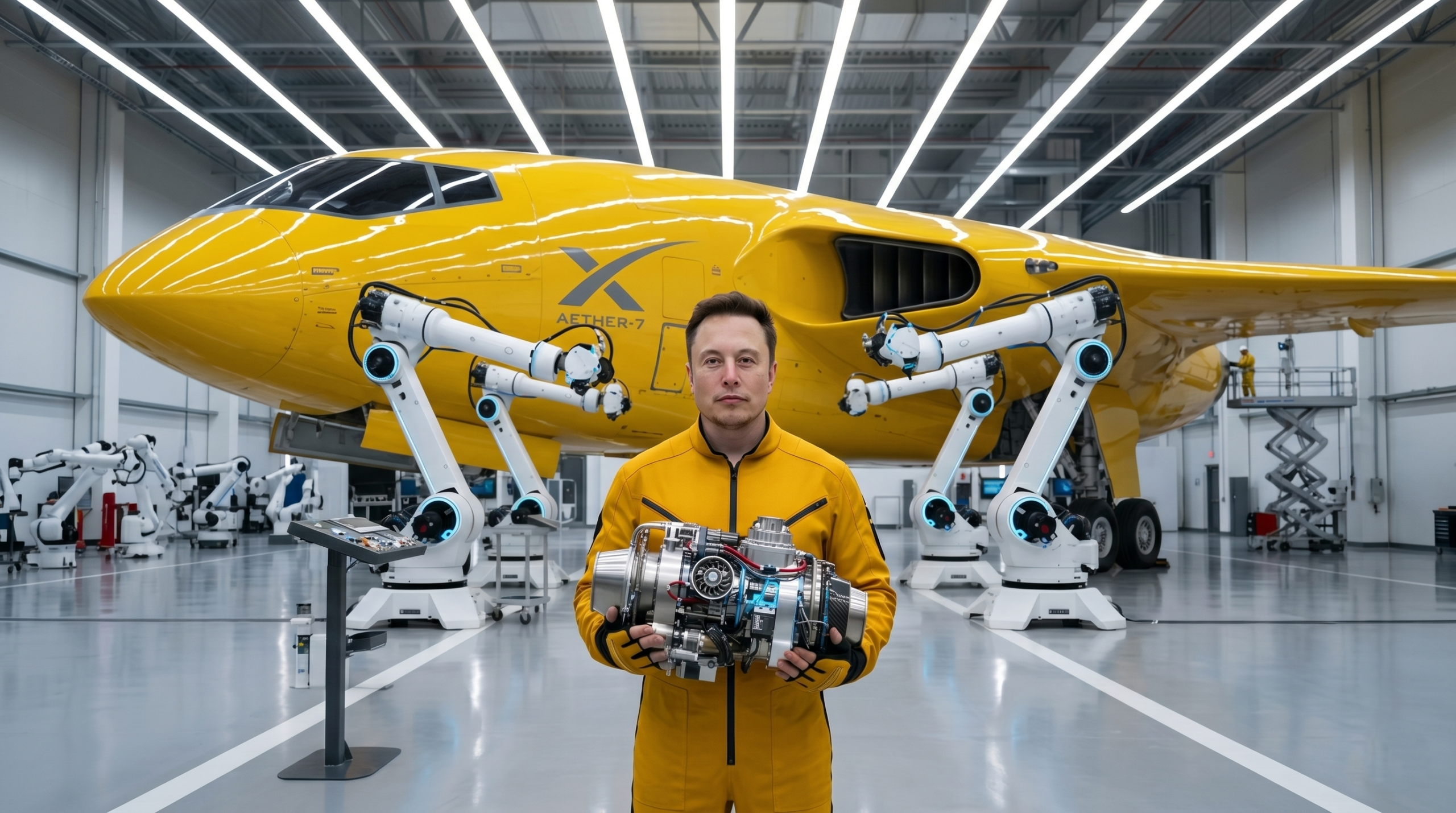
The X-1 Debate: Humanity’s Most Dangerous Leap Forward
The world first saw it as a blur.
No runway roar.
No thunder from turbines.
No vapor trail across the sky.
Only a silver-black shape hovering above the Nevada desert like something ripped from a classified future.
They called it the X-1.
You May Also Like

A fighter jet unlike anything humanity had ever built.
Some called it the next evolution of aviation.
Others called it the beginning of the end.
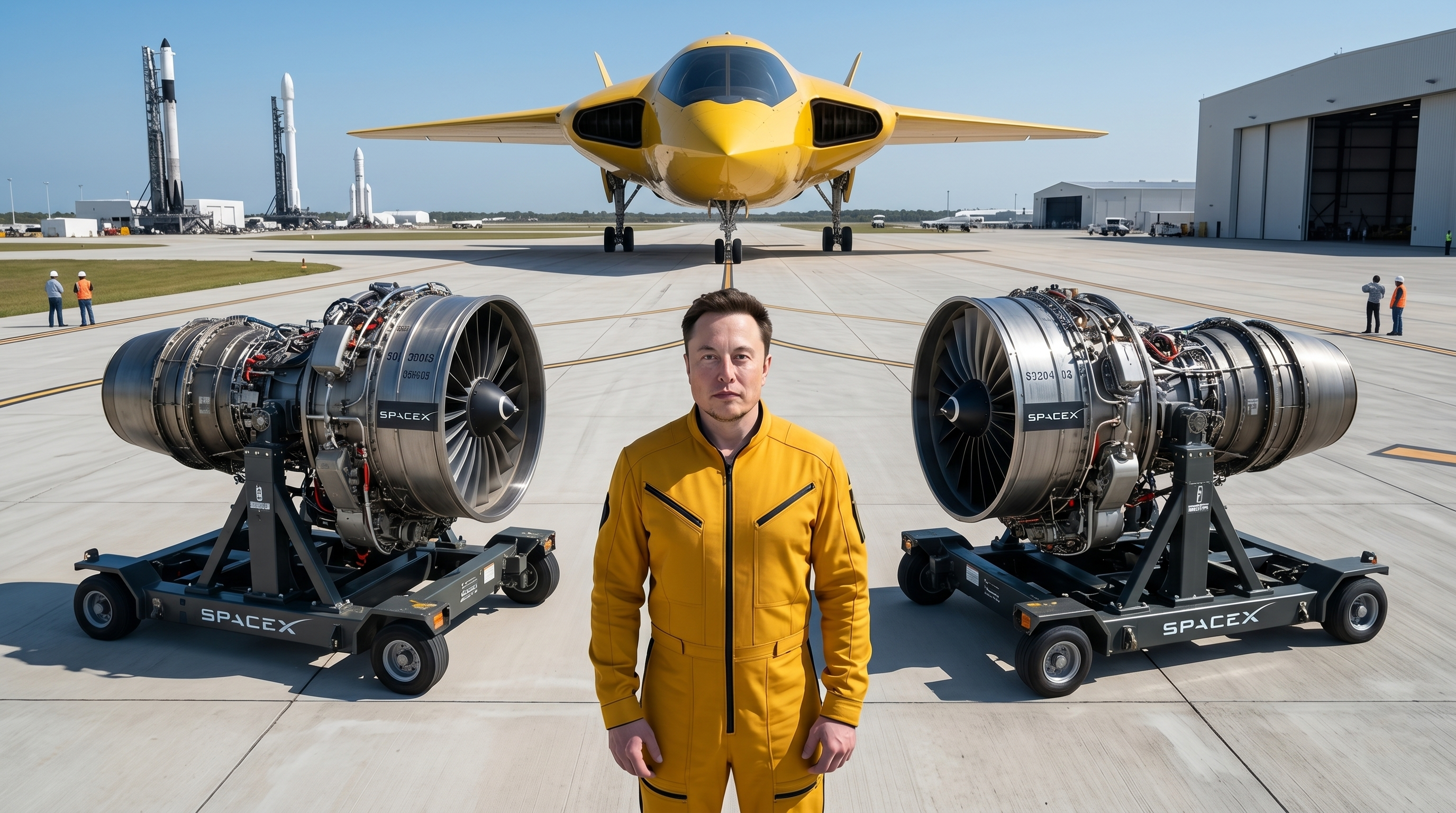
Rumors spread faster than governments could suppress them. The aircraft reportedly traveled over 4,600 miles per hour, climbed to the edge of space, disappeared from radar systems, and carried microwave-based weapons capable of disabling entire electronic networks without firing a traditional missile.
And behind it all stood one name:
Elon Musk
To supporters, he was dragging humanity into the future.
To critics, he was opening the door to a new kind of global catastrophe.
The debate exploded across military circles, scientific institutions, and world governments. But nowhere was it more intense than at the International Summit on Advanced Aerospace Systems in Geneva, where two of the world’s greatest scientific minds faced each other before an audience of diplomats, generals, engineers, and journalists.
One believed the X-1 could save civilization.
The other believed it could destroy it.
The Debate Begins
The auditorium lights dimmed.
On the left side of the stage stood Dr. Adrian Keller, aerospace physicist and former propulsion engineer. Calm. Precise. Confident.
On the right stood Dr. Sofia Rahman, geopolitical scientist and military ethicist. Sharp-eyed. Unyielding. Feared for dismantling billion-dollar defense programs with facts alone.
Behind them, a giant screen displayed the silhouette of the X-1 hovering over Earth.
The moderator spoke softly:
“Tonight, we ask one question:
Has humanity created its greatest technological achievement… or its greatest mistake?”
Silence swallowed the room.
Then Dr. Keller stepped forward.
Dr. Adrian Keller — The Positive Vision
“Every generation fears the technology that changes civilization,” Keller began.
“When the Wright brothers flew, people feared aircraft would bring only war. When rockets were invented, humanity feared space exploration would militarize the heavens.”
He paused.
“But progress always terrifies people before it transforms their lives.”
The screen behind him illuminated with simulations of the X-1 slicing through clouds at hypersonic speed.
“This aircraft represents more than military power. It represents a technological revolution.”
He raised a hand toward the image.
“The X-1 combines rocket propulsion, AI-assisted navigation, stealth geometry, and directed-energy systems into a single platform.”
“Do you understand what that means?”
“No fuel-hungry jet engines.”
“No dependence on vulnerable overseas airbases.”
“No hour-long response times.”
He leaned closer to the audience.
“This aircraft could cross continents in under an hour.”
Murmurs spread across the hall.
Keller continued.
“The same propulsion system capable of powering this aircraft could revolutionize civilian transportation.”
“Imagine emergency medical teams reaching disaster zones across the globe within minutes.”
“Imagine organs for transplant delivered before tissue death.”
“Imagine remote regions connected to major cities faster than commercial airlines ever allowed.”
The audience listened carefully now.
“This is how technological evolution always works. Military breakthroughs eventually reshape civilian civilization.”
He displayed historical images:
- Radar
- GPS
- Satellites
- The internet
“All were born from defense research.”
“And all changed human history forever.”
Dr. Sofia Rahman — The Warning
Dr. Rahman rose slowly.
“And history,” she said quietly, “also remembers what happens when humanity creates weapons faster than wisdom.”
The room became still.
“The atomic bomb was also considered a scientific masterpiece.”
“Chemical warfare was once called revolutionary.”
“Autonomous drones were introduced as precision tools meant to reduce casualties.”
She turned toward Keller.
“And every single one escalated warfare beyond what leaders originally promised.”
The image behind her shifted.
Now the X-1 appeared dark and ominous above a city skyline.
“You describe innovation,” she said.
“I see destabilization.”
She pointed to the aircraft.
“A machine traveling over 4,600 miles per hour fundamentally changes global military balance.”
“Traditional defense systems become obsolete.”
“Reaction times disappear.”
“Diplomacy weakens because fear accelerates decision-making.”
Her voice sharpened.
“If one nation possesses this technology first, every rival nation will pursue it immediately.”
“That is not peace.”
“That is the beginning of an uncontrollable arms race.”
Several military officials exchanged uneasy glances.
Rahman continued:
“And let us discuss the microwave weapons.”
The screen displayed electrical systems shutting down.
“A weapon capable of disabling electronics without conventional explosions sounds humane at first.”
“But modern civilization depends on electronics.”
“Hospitals.”
“Air traffic control.”
“Power grids.”
“Communication networks.”
“A single electromagnetic strike over a major city could create nationwide chaos without firing a bullet.”
The audience fell silent.
“People would die anyway.”
“Not from explosions.”
“But from collapse.”
The Historical Argument
Keller responded immediately.
“Fear has always accompanied progress.”
“When steam engines appeared, people believed trains would destroy human biology because the body was never meant to move at such speeds.”
A few nervous laughs echoed.
“When electricity emerged, many believed it would destabilize civilization.”
“But innovation moved humanity forward.”
Rahman interrupted sharply.
“You are comparing civilian inventions to military supremacy.”
“No,” Keller replied. “I’m comparing human psychology.”
He stepped toward the center stage.
“History also shows something else.”
“The nations that reject innovation are overtaken by those who embrace it.”
He turned toward the audience.
“If democratic nations refuse advanced aerospace technology out of fear, authoritarian powers will not.”
The room grew tense.
“That is the real danger.”
The Technology Behind the X-1
The moderator activated a holographic model of the aircraft.
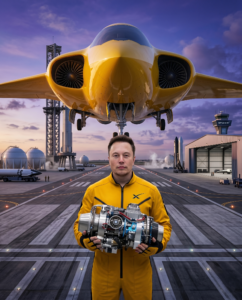
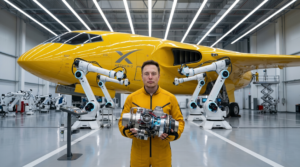
The X-1 resembled a fusion between a stealth bomber and a disc-shaped spacecraft. Smooth edges. No visible engine intake. A reflective black alloy skin designed to absorb radar waves.
Keller explained:
“The aircraft’s propulsion reportedly combines reusable rocket systems with atmospheric maneuvering thrusters.”
“This allows vertical ascent, near-space operation, and extreme acceleration.”
He enlarged the internal systems diagram.
“The microwave weapon system uses focused electromagnetic pulses to disable enemy electronics with surgical precision.”
“No massive explosions.”
“No carpet bombing.”
“Potentially fewer civilian casualties.”
Rahman shook her head.
“You describe precision as though precision removes moral consequences.”
“War does not become ethical because technology becomes cleaner.”
She turned toward the audience.
“Every new military invention begins with promises of restraint.”
“But power changes governments.”
“Power changes leaders.”
“And eventually, power changes morality itself.”
The Elon Musk Factor
The moderator finally asked the question everyone had been waiting for.
“What role does Elon Musk himself play in this future?”
The room leaned forward.
Keller answered first.
“Whether people admire him or not, Musk represents something historically rare.”
“A private innovator capable of accelerating technological progress faster than governments.”
“He helped revolutionize electric vehicles.”
“He accelerated reusable rocket technology.”
“He pushed private spaceflight into reality.”
He gestured toward the X-1 image.
“The fighter jet concept follows the same pattern: impossible until suddenly inevitable.”
Rahman crossed her arms.
“And that,” she replied, “is precisely why people should be concerned.”
“A single billionaire influencing global military balance raises terrifying questions.”
“Who controls the technology?”
“Governments?”
“Corporations?”
“Private defense alliances?”
“What happens when warfare innovation becomes driven by competition for profit and prestige rather than international stability?”
The audience erupted into whispers.
Rahman continued:
“History already struggles to regulate nuclear weapons.”
“How will humanity regulate hypersonic AI-powered aerospace systems developed faster than treaties can adapt?”
No one answered.
The Most Dangerous Possibility
Then came the question that changed the atmosphere entirely.
The moderator spoke carefully.
“What happens if the X-1 becomes autonomous?”
Even Keller hesitated.
Rahman answered first.
“That is the nightmare scenario.”
An image appeared showing multiple unmanned aircraft formations.
“If artificial intelligence gains authority over hypersonic weapons systems, human decision-making disappears from the battlefield.”
“No pilot fatigue.”
“No emotional hesitation.”
“No mercy.”
She stared directly into the cameras broadcasting worldwide.
“At that point, war becomes algorithmic.”
“Machines identifying threats faster than humans can comprehend.”
“And once nations trust AI systems with military command decisions, escalation could occur in seconds.”
Keller responded cautiously.
“That risk is real.”
“But abandoning innovation does not eliminate it.”
“It only ensures someone else develops it first.”
Beyond War
The debate shifted again.
Could the X-1’s technologies benefit humanity beyond combat?
Keller believed absolutely.
“The materials used for thermal resistance could revolutionize spacecraft.”
“The propulsion systems could reduce the cost of global travel.”
“The energy systems might advance clean power research.”
“The communication systems developed for high-speed aerospace could reshape global internet infrastructure.”
He smiled slightly.
“Throughout history, technologies born for survival eventually improved civilization.”
Rahman nodded once.
“And that possibility is real.”
The audience seemed surprised by her agreement.
“But history also teaches another truth.”
“Technology magnifies humanity.”
“If humanity is wise, technology improves life.”
“If humanity is divided, technology amplifies destruction.”
The Final Exchange
The moderator asked both scientists for closing statements.
Keller stood tall.
“The X-1 represents humanity refusing limitation.”
“It is proof that imagination still drives civilization forward.”
“Yes, it is dangerous.”
“So was fire.”
“So was electricity.”
“So was spaceflight.”
“But fear cannot become the governing force of human progress.”
“If we innovate responsibly, this technology could define a new era of human achievement.”
Then Rahman stepped forward for the final words.
“The question is not whether humanity can build machines like the X-1.”
“The question is whether humanity is mature enough to survive them.”
She looked toward the massive image hovering behind them.
“A civilization capable of creating godlike technology without equal moral growth enters dangerous territory.”
“History is filled with empires that believed power guaranteed stability.”
“Most of them vanished.”
The room was completely silent now.
Rahman’s final sentence echoed through the auditorium like a warning to the future itself:
“Technology does not decide humanity’s fate.”
“Humanity does.”
Epilogue: The Future Waiting Above Us
Weeks after the debate, leaked satellite images reportedly showed the X-1 conducting high-altitude tests somewhere above the Pacific Ocean.
Governments denied everything.
Defense analysts argued endlessly.
Scientists remained divided.
But one truth had already become impossible to ignore:
Human civilization was entering a new technological age.
An age where the line between aircraft and spacecraft would disappear.
An age where wars might be fought at unimaginable speeds.
An age where innovation itself could either unite the world… or fracture it forever.
And somewhere beyond the clouds, hidden in silence, the X-1 waited.