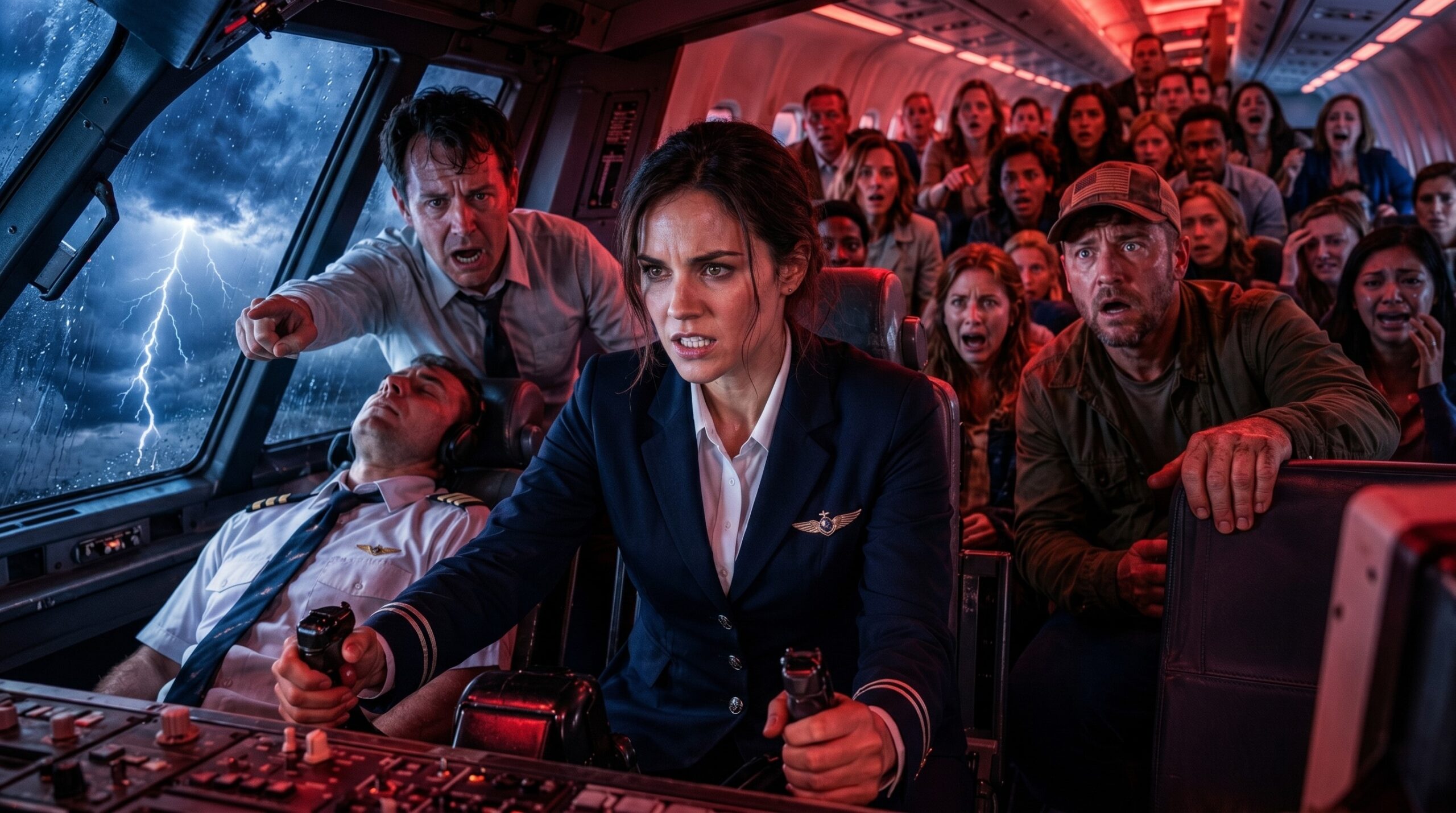
The flight from Seattle to Los Angeles had started like any other.
I moved quietly through the cabin, collecting cups, helping passengers with bags, and calming nervous travelers whenever turbulence rattled the aircraft. Most people never remembered me after a flight.
That was fine.
I preferred it that way.
At twenty-nine, I had become very good at being invisible.
My name was Emma Parker, and to the passengers aboard Flight 728, I was just another flight attendant in a navy-blue uniform.
The cabin smelled of coffee, recycled air, and the occasional burst of perfume whenever someone passed through the aisle. Business travelers worked on laptops. Families watched movies. A group of military veterans sat together near the rear of the aircraft, quietly observing everything around them with the awareness that never fully leaves people who’ve worn a uniform.
Outside, the weather had been rough since departure.
The Boeing 747 shuddered repeatedly as it pushed through heavy turbulence.
Every time the aircraft jolted, I checked seat belts, secured carts, and reassured frightened passengers.
Then everything went wrong.
Without warning, the plane dropped.
Hard.
Coffee splashed from cups.
Luggage slammed against overhead compartments.
Children screamed.
The seatbelt signs flashed red across rows of terrified faces.
Then an alarm began blaring from behind the cockpit door.
A sound no flight attendant ever wants to hear.
Moments later, the first officer’s voice crackled over the intercom.
Broken.
Panicked.
Then silence.
The nose dipped again.
The entire cabin seemed to tilt toward the earth.
Panic spread instantly.
People prayed.
Some cried.
One passenger vomited into an airsickness bag.
As I rushed toward the cockpit, a businessman grabbed my arm so hard it twisted my sleeve.
“What do you think you’re doing?” he shouted. “You’re a flight attendant! Stay out of the way!”
The smell of fear seemed stronger than the recycled air.
I looked down at his hand gripping my arm.
Then back into his eyes.
I said nothing.
Calmly, I pulled free and continued forward.
“Are you trying to kill us?” another passenger yelled.
The cockpit door opened.
Inside was chaos.
Captain Reynolds was unconscious.
The first officer sat trembling, drenched in sweat, struggling to breathe.
Warning alarms screamed from every direction.
The autopilot had disengaged.
The aircraft was losing altitude.
Fast.
I slid into the captain’s seat.
Someone behind me whispered, “Emma… don’t.”
But my hands were already moving.
They settled onto the controls as naturally as if they had never left.
Years of buried instinct returned in seconds.
I eased the yoke back.
Corrected the bank angle.
Stabilized the descent.
The engines roared.
The nose slowly lifted.
Then lifted again.
The terrifying sensation of falling disappeared.
Throughout the cabin, screams became gasps of disbelief.
The aircraft steadied.
For the first time in minutes, people could breathe.
But the businessman wasn’t finished.
He appeared in the cockpit doorway, pointing at me.
“This is insane!” he shouted. “She doesn’t know how to fly this plane!”
Others joined him.
Fear always looks for someone to blame.
And sometimes a frightened crowd trusts the loudest voice more than the person solving the problem.
I ignored them.
Ten years.
For ten years I had buried my past.
Ten years of serving drinks, demonstrating seat belts, and pretending I didn’t understand aviation systems better than many pilots.
Ten years of hiding.
The first officer stared at me.
“How?” he whispered. “How are you doing this?”
I didn’t answer.
In row 37, one of the veterans was watching carefully.
Not my uniform.
My hands.
The way I anticipated the aircraft’s response before it happened.
The way I listened to warning tones.
His expression changed instantly.
“That’s military training,” he murmured.
The man beside him frowned.
The veteran’s face went pale.
“No,” he whispered. “Not just military.”
The radio suddenly crackled.
Air traffic control was calling.
The businessman pointed toward the microphone.
“Don’t touch that!”
For the first time, I looked directly at him.
Then I reached for the radio.
The veteran in row 37 abruptly stood up.
His eyes widened with recognition.
Because he knew exactly who I used to be.
I pressed the transmit button.
The cockpit fell silent.
My heart pounded once.
Then I spoke the call sign I had buried for an entire decade.
And somewhere beyond the storm clouds, two F-22 Raptors immediately broke radio silence and responded—
What did they know about the flight attendant that no one else on that aircraft did?
…The entire story is in the comment 
Part 2
I pressed the transmit button.
For one second, only static answered.
You May Also Like
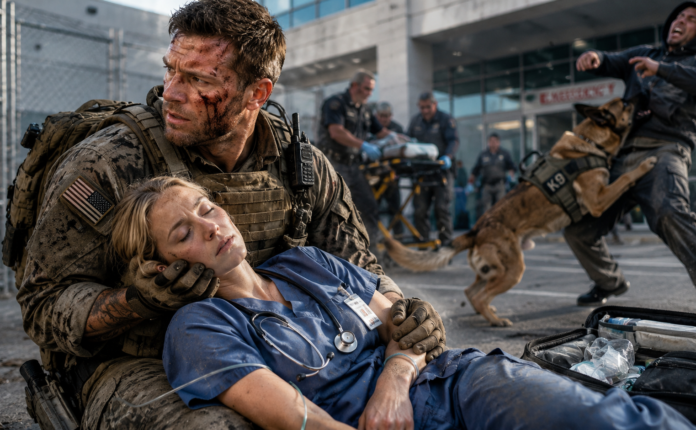
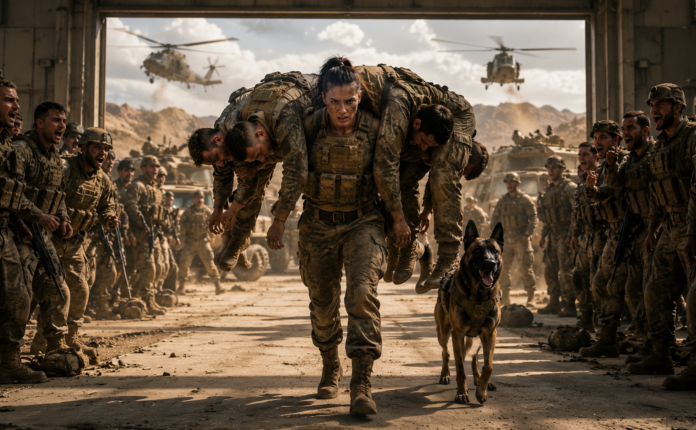
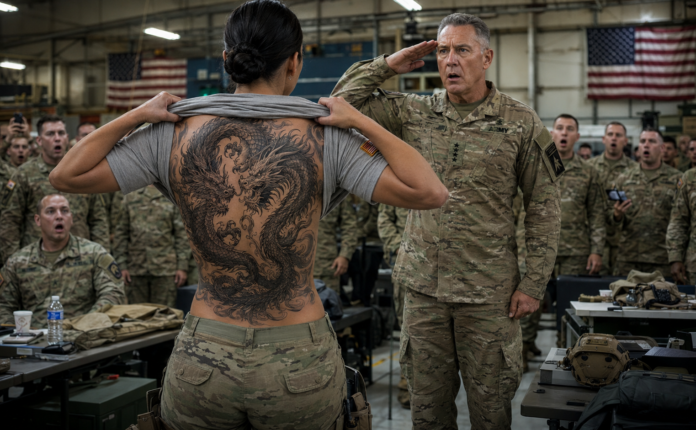
Rain hammered the windshield in silver sheets. Lightning flashed somewhere inside the storm, illuminating the cockpit in sharp white bursts. Warning lights blinked across the panels like angry eyes.
Behind me, the businessman was still breathing hard.
The first officer stared at my hand on the radio as if I had just reached into a locked grave.
Then I spoke.
“Raptor Guard, this is Valkyrie Seven.”
The words left my mouth quietly.
But they changed everything.
The veteran in row 37 went completely still.
I could feel him behind me, standing somewhere beyond the open cockpit door, hearing the name I had promised myself I would never use again.
For ten years, Emma Parker had been my name.
Before that, in another life, above deserts, oceans, and burning horizons, I had been Valkyrie Seven.
Static cracked.
Then a voice came through.
Calm.
Sharp.
Military.
“Valkyrie Seven, authenticate.”
The cockpit froze.
The businessman’s mouth opened, but no sound came out.
The first officer whispered, “Oh my God.”
I swallowed once.
“Valkyrie Seven authenticates Delta-Niner-Blackbird.”
A pause.
Then another voice.
Lower.
Older.
Stunned.
“Valkyrie Seven… this is Raptor One. We read you.”
Something inside my chest tightened so violently I nearly lost my breath.
I knew that voice.
Major Caleb Ross.
At least, he had been Captain Ross the last time I heard him.
Ten years ago, he had been the last pilot in the sky who still believed I was alive.
“Raptor One,” I said, steadying the aircraft through another violent roll, “civilian aircraft Flight 728, Boeing 747, Seattle to Los Angeles. Captain incapacitated. First officer impaired. Aircraft encountered severe systems disruption in storm conditions. I have control for now.”
“For now?” Raptor One repeated.
“We have intermittent instrument failure, altitude instability, and unknown electrical faults. Request immediate escort and emergency diversion.”
The response came instantly.
“Valkyrie Seven, two F-22s inbound. We are approximately one hundred twenty miles northwest of your position. Maintain heading if able.”
If able.
I looked at the instruments.
The numbers were not my friends.
Altitude still falling in small, ugly increments. Airspeed fluctuating. The artificial horizon flickering like it could not decide whether to tell the truth. Rain and turbulence battered the aircraft with the force of something alive and furious.
“Unable to guarantee,” I said.
The first officer made a choking sound beside me.
I glanced at him.
He was pale, shaking, one hand pressed against his chest. His eyes were open but unfocused.
“Breathe,” I told him.
“I can’t,” he whispered.
“Yes, you can. Look at me.”
He did.
Barely.
“What’s your name?”
“D-David Keller.”
“David, I need you to listen. I am flying the aircraft. You are going to monitor altitude and call out any major deviation. Nothing else. One job.”
He nodded, but terror still had its claws in him.
“One job,” I repeated.
“Altitude,” he whispered. “Altitude. Right.”
Behind me, the businessman finally found his voice.
“What is happening?” he demanded, but his tone had changed. Less command. More fear. “Who are you?”
I did not look back.
“Get out of the cockpit.”
“You can’t just—”
The veteran from row 37 appeared in the doorway.
He was in his late fifties, broad-shouldered, gray at the temples, with the quiet authority of a man who had given orders under gunfire.
“She told you to get out,” he said.
The businessman turned on him.
“Who the hell are you?”
“Someone who knows enough to shut up when a pilot is saving my life.”
The word pilot struck the cockpit harder than thunder.
Pilot.
Not flight attendant.
Not little girl.
Not somebody in the way.
The businessman stepped back, shaken by the veteran’s certainty.
“Sir,” I said without turning, “secure the door area. No passengers past this point.”
“Yes, ma’am.”
The veteran did not hesitate.
That, more than anything, told me he knew.
Not guessed.
Knew.
The cockpit door closed behind him.
For the first time since the emergency began, I had space to think.
The aircraft pitched again.
I corrected.
Too much pressure, and the old giant fought back. Too little, and the nose wanted to sink. A 747 was not a fighter jet. It did not respond like the aircraft I had known. It carried weight differently. It moved like a cathedral with wings.
But the sky had rules.
Storm or no storm.
Machine or no machine.
Fear or no fear.
The sky always had rules.
And I remembered them.
“Flight 728,” air traffic control called, breaking through the frequency. “Confirm pilot identity and status.”
I keyed the mic.
“ATC, this is acting flight deck control aboard Flight 728. Captain is unconscious. First officer is medically distressed but responsive. I am maintaining control. Request priority emergency vector to nearest suitable runway.”
A tense pause followed.
“Acting control, state credentials.”
There it was.
The question that could kill us if bureaucracy got stubborn.
“My name is Emma Parker. Former United States Air Force pilot. I am qualified on multiple high-performance aircraft, not type-rated on the 747, but currently the only person in this cockpit capable of maintaining stable flight.”
Silence.
Then ATC came back, changed now.
“All stations, emergency traffic only. Flight 728, you are cleared priority. Stand by for diversion options.”
The first officer stared at me.
“Former Air Force?”
“Yes.”
“What did you fly?”
I kept my eyes forward.
“Things smaller than this.”
From the cabin came muffled crying, prayers, and the low murmur of hundreds of frightened people trying not to fall apart.
The aircraft shook again.
A red light blinked.
Hydraulic pressure fluctuation.
Of course.
“David,” I said.
He jolted.
“Check hydraulic indications.”
His hands moved clumsily. Training resurfaced through panic.
“System two fluctuating. System three low but holding.”
“Good. Keep watching.”
“I can’t believe this is happening.”
“Believe later.”
Lightning exploded ahead.
For one terrifying second, the whole world beyond the windshield turned white.
Then the aircraft lurched.
A warning tone screamed.
The left side dipped.
Passengers screamed behind us as the cabin tilted.
I fought the roll, jaw clenched, arms steady though every muscle in my body burned with old memory.
Not again.
Not like this.
The storm had teeth.
It clawed at the wings, shoved at the tail, dropped air out from beneath us in sudden invisible holes. The aircraft groaned around me, metal and rivets and human hope straining together.
“Altitude!” I barked.
“Twenty-eight thousand six hundred! Dropping! Twenty-eight three!”
I adjusted pitch.
The nose lifted slowly.
Too slowly.
“Come on,” I whispered.
The aircraft shuddered.
Then held.
David let out a broken breath.
“Twenty-eight four. Stabilizing.”
“Good.”
Raptor One returned.
“Valkyrie Seven, we have visual through intermittent cloud break. You’re descending through heavy cells. Recommend heading two-one-zero to exit worst turbulence.”
I almost smiled.
Almost.
Military jets were out there in the storm, invisible to everyone aboard except me, sliding through the dark like wolves beside a wounded whale.
“Copy two-one-zero,” I said. “Correcting now.”
The 747 began a slow turn.
In the cabin, the veteran’s voice rose, firm and controlled.
“Everyone stay seated. Seat belts tight. Heads back. Listen to the crew.”
Another flight attendant, Mia, came over the interphone.
“Emma?”
Her voice trembled.
“I’m here.”
“People are asking what’s happening.”
“Tell them we have emergency military escort and are diverting. Tell them to stay seated and prepare for a rough descent.”
“Emma… are you flying?”
“Yes.”
A small silence.
Then she whispered, “Okay.”
Just that.
Not how.
Not why.
Okay.
I loved her for it.
“Check the captain,” I said. “Pulse, breathing. Use the medical kit. Ask for a doctor.”
“We have two nurses and one ER physician already assisting.”
“Good.”
I ended the call and adjusted trim.
David was watching me again.
“You said Valkyrie Seven.”
My hands tightened slightly.
“Monitor altitude.”
“I heard stories.”
“David.”
“People said Valkyrie Seven died.”
My throat closed for half a second.
“She did.”
He looked at me.
I looked back at the storm.
“She had to.”
The cockpit went quiet except for alarms, rain, and the breathing of two people trying to keep more than three hundred others alive.
Ten years earlier, Captain Emma Parker had not disappeared because she wanted a simpler life.
She disappeared because the official report had needed a ghost.
Operation Nightglass was never supposed to exist. Six aircraft. Black route. No markings. No public record. We were sent into a region where our government was not officially operating to extract an intelligence asset whose information was supposedly too valuable to lose.
The mission went wrong before we reached the target.
Bad coordinates.
Compromised signals.
A surface-to-air system waiting where none should have been.
My wingman was hit first.
Then Raptor One—Caleb Ross—took damage and had to break formation.
I stayed.
That was the part they never forgave me for.
Not the enemy.
My own people.
Because I heard a distress beacon below.
Because I saw movement near the extraction zone.
Because I disobeyed the abort order long enough to confirm that the asset was not alone.
There were civilians there.
Families.
Children.
People no briefing had mentioned.
The official order was to withdraw.
I did not.
By dawn, two aircraft were gone, three pilots were dead, and a classified operation had become a political nightmare waiting to happen.
So the story was buried.
The dead received medals with no explanations.
The living signed papers.
And I was told, with smiles colder than the altitude I used to fly, that Captain Emma Parker would never sit in a military cockpit again.
My career ended in a room without windows.
My call sign became a rumor.
And I became a flight attendant because being near the sky hurt less than leaving it entirely.
“Flight 728,” ATC called. “Nearest suitable diversion is Travis Air Force Base. Civilian runways in your path are below minimums due weather and traffic saturation. Travis reports emergency acceptance. Can you proceed?”
Travis.
Air Force.
Of course.
I closed my eyes for less than a second.
“Flight 728 proceeding Travis,” I said.
Raptor One came in immediately.
“Valkyrie Seven, we’ll guide you in.”
His voice was calm, but underneath it I heard the past.
The last time we flew together, I vanished into classified silence.
Now he was returning through a storm to bring me home to a base I had never wanted to see again.
The first officer swallowed hard.
“Military base?”
“Yes.”
“Can this aircraft land there?”
“It has runways. We have need. That’s enough.”
He nodded, though he looked like he might faint.
I gave him another job.
“Set emergency frequency backup. Confirm cabin secured. We’ll need fuel, weight, weather, runway conditions.”
He moved.
Slowly at first.
Then more steadily.
Fear, when given a task, sometimes becomes serviceable.
Minutes passed like hours.
The storm began to thin, then returned with fresh violence. Twice we lost reliable altitude readings. Once the aircraft yawed so hard a chorus of screams broke from the cabin. Every correction had to be measured, patient, almost gentle.
The businessman’s voice came faintly through the door at one point, arguing with the veteran.
“She lied to everyone!”
The veteran answered, “She saved everyone.”
That ended the argument.
At least for a while.
Mia called again.
“Emma, the doctor says Captain Reynolds may have had a cardiac event. He’s alive, but unconscious.”
“Keep him stable.”
“Passengers are scared.”
“I know.”
“One man is telling people you’re not licensed.”
I almost laughed.
“Is he wearing a gray suit?”
“Yes.”
“Tell him I’ll accept complaints after landing.”
Mia gave a shaky little breath that might have been a laugh.
“Okay.”
Raptor Two broke in.
“Flight 728, we are now on your right side, one mile out. Raptor One left side. You will not see us consistently due cloud cover, but we have you.”
Through the rain-streaked windshield, a shadow moved.
Then another.
For half a second, lightning revealed the sleek shape of an F-22 off our wing, silver and deadly and beautiful.
A sound rose from somewhere behind me.
Someone in first class had seen it.
Then others.
The cabin erupted—not in panic this time, but awe.
People pressed against windows despite the warnings. Phones lifted. Children cried out. Adults whispered.
Two fighter jets had appeared beside them in the storm.
And the woman they had dismissed was talking to them like old ghosts.
“Raptor One,” I said quietly, “good to see you.”
A pause.
Then Caleb Ross answered.
“You too, Valkyrie.”
For a moment, the cockpit blurred.
I blinked hard and forced it away.
Not now.
Never now.
ATC gave us weather.
Travis runway active.
Crosswinds ugly.
Visibility poor but improving.
Emergency services standing by.
Military and civilian authorities coordinating.
The words became math in my head.
Wind.
Weight.
Speed.
Distance.
Systems.
Human fear.
Machine tolerance.
Luck.
Always luck.
David looked at the runway data and went pale again.
“That crosswind—”
“I see it.”
“This is going to be bad.”
“Yes.”
He stared at me.
I turned to him.
“Bad is not impossible.”
He nodded once.
That helped him.
Maybe it helped me too.
We began descent.
The cabin was told to brace for emergency landing. Mia’s voice over the intercom was calm enough that I knew she was crying between words.
“Ladies and gentlemen, this is your crew. We are preparing for an emergency landing with military escort. Please remain seated with seat belts fastened. Follow all crew instructions. Heads down when commanded. We are going to get through this together.”
We.
That word mattered.
In a crisis, people need someone to blame.
But even more, they need someone to follow.
Descent through the storm felt like lowering a cathedral down a mountain in the dark.
The aircraft bucked.
Wind slammed us sideways.
David called altitude.
“Ten thousand.”
“Speed?”
He answered.
“Hydraulics?”
“Holding. Barely.”
The runway lights did not appear until we were much lower than I wanted.
At first, they looked like a string of pale beads trembling beneath the clouds.
Then they sharpened.
Straight ahead, but not easy.
The wind shoved from the side.
I corrected.
The 747 resisted.
Raptor One stayed with us as long as he could before peeling away.
“You’re lined up,” Caleb said. “Slight right correction. Wind shear reported near threshold.”
“Copy.”
Then, softer, he added, “Bring them home, Emma.”
He had not used my first name until then.
The old me and the new me collided in that single word.
Emma.
Valkyrie.
Flight attendant.
Pilot.
Ghost.
Woman.
Alive.
“Brace!” Mia’s voice rang through the cabin.
The aircraft dropped.
Hard.
The runway jumped toward us.
I adjusted.
Too much sink.
Correct.
Crosswind.
Correct.
Airspeed fluctuating.
Hold.
Hold.
Hold.
The wheels struck the runway with brutal force.
A scream tore through the cabin.
The aircraft bounced once.
For a terrifying second, we were airborne again.
I pushed just enough.
Not panic.
Not force.
Control.
The wheels hit again.
This time they stayed.
Reverse thrust roared.
The runway blurred past.
The aircraft shuddered like it might shake apart. David shouted speeds. I worked the rudder, fighting the crosswind trying to shove us off centerline.
The giant slowed.
Slowly.
Too slowly.
Emergency vehicles raced alongside us, red lights flashing through rain.
Finally, the aircraft rolled to a heavy, trembling stop.
Silence fell.
A silence so complete it was almost holy.
Then someone in the cabin began to sob.
Another person clapped once.
Then again.
Within seconds, the entire aircraft erupted.
Applause.
Crying.
Prayers.
People shouting thanks to anyone who could hear them.
David dropped his head into his hands.
I sat still, both hands on the controls.
My body had not yet accepted that it was over.
Because it wasn’t.
Not really.
The cockpit door opened.
Mia appeared, mascara streaked, eyes shining.
“Emma,” she whispered.
I turned to her.
She looked at my hands still resting on the controls.
Then at my face.
“You landed it.”
“No,” I said quietly. “We did.”
Behind her, the veteran from row 37 stood at attention.
Actually stood at attention.
His face was pale.
His eyes were wet.
“Captain Parker,” he said.
The title moved through the cockpit like a returned possession.
I looked at him.
“You knew?”
He nodded.
“I was maintenance support at Al Dhafra when Nightglass vanished from the boards. I heard the name Valkyrie Seven once from a colonel who thought nobody enlisted was listening.”
Mia stared between us.
“Captain?”
Before anyone could ask more, uniformed personnel entered the aircraft.
Medics first.
Then military security.
Then a man in an Air Force flight suit stepped into the cockpit.
Older now.
A thin scar along his jaw.
Eyes exactly the same.
Caleb Ross removed his helmet.
For ten years, he had existed in my memory as a voice shouting through static.
Now he stood in front of me.
Alive.
Real.
“Emma,” he said.
I tried to stand and nearly collapsed.
He caught my arm.
The motion was instinctive.
Old.
Too familiar.
“I’m fine,” I lied.
“You were always a terrible liar.”
I pulled my arm back gently.
“Major now?”
“Lieutenant Colonel.”
“Congratulations.”
His mouth twitched.
“Hardly the moment.”
David looked like he might combust from confusion.
Caleb glanced at him.
“You did good staying with her.”
David shook his head.
“She did everything.”
“No,” I said. “He stayed at his station.”
That mattered.
A shaking man who stays is still braver than a confident man who runs.
Outside the cockpit, passengers began evacuating row by row under supervision. Some touched my shoulder as they passed. Some whispered thank you. Some could not look at me, perhaps remembering what they had shouted when fear made them cruel.
Then the businessman appeared.
His gray suit was wrinkled. His face was pale.
He stopped at the cockpit entrance.
For once, he did not point.
“I…” he began.
I looked at him.
Words failed him.
Maybe apology requires more courage than accusation.
He lowered his eyes and walked on.
That was enough for the moment.
When the aircraft was nearly empty, two military police officers stepped into view.
Their posture was wrong.
Not emergency response.
Not gratitude.
Purpose.
Caleb saw them and stiffened.
“What is this?”
One of the officers looked at me.
“Emma Parker?”
I did not answer.
Because I already knew.
The other officer said, “Also known as Captain Emma Parker, call sign Valkyrie Seven?”
Mia’s hand flew to her mouth.
David whispered, “What?”
Caleb stepped forward.
“She just saved a civilian aircraft with over three hundred people aboard.”
The officer’s face did not change.
“Sir, we have orders.”
“From whom?”
“Air Force Office of Special Investigations. She is to be escorted for debrief regarding unauthorized transmission of classified call sign, possible breach of sealed operational identity, and matters relating to Operation Nightglass.”
The past had waited ten years.
Then it met me on the runway.
I stood slowly.
Pain ran through my shoulders and spine from fighting the controls. My knees felt weak. My palms were marked red from pressure.
But I stood.
Caleb turned to me, anger burning beneath his restraint.
“Emma, don’t say anything without counsel.”
I almost smiled.
“Still giving orders.”
“Still ignoring them?”
“Only the bad ones.”
One of the officers gestured toward the exit.
“This way, ma’am.”
Mia stepped in front of me.
“No. She’s crew. She needs medical.”
The officer softened slightly.
“Medical will evaluate her after initial secure transfer.”
Caleb’s voice dropped.
“That is not acceptable.”
Before the argument could escalate, a voice spoke from behind the officers.
“It’s acceptable because I authorized it.”
The officers moved aside.
A woman entered.
Mid-sixties. Silver hair cut sharp at her jaw. Dark civilian coat. No uniform, but every person in military clothing reacted as if rank had entered the room.
My stomach turned cold.
I had seen her only once before.
Ten years ago.
In the windowless room where Captain Emma Parker was erased.
“Hello, Valkyrie,” she said.
Caleb’s face hardened.
“Director Hale.”
So she had climbed higher.
Of course she had.
Evelyn Hale looked at me with the same calm expression she wore when she told me my career was over for reasons of national stability.
“You made quite an entrance today,” she said.
“I was busy keeping people alive.”
“Yes. You always were inconveniently good at that.”
Caleb stepped closer.
“Director, this is not the time.”
Her eyes did not leave mine.
“On the contrary. This is exactly the time. She spoke a buried call sign on an open emergency frequency. Half the passengers recorded military assets responding to her. By midnight, the world will be asking why a flight attendant can summon F-22s by using a name that officially never existed.”
I said nothing.
Hale smiled faintly.
“That silence used to be your best quality.”
Something inside me, already strained beyond endurance, went still.
“No,” I said. “It was yours.”
For the first time, her expression flickered.
Caleb glanced at me.
The officers shifted uneasily.
Hale recovered fast.
“We need to talk privately.”
“I’m done with private rooms.”
“You may not have a choice.”
Behind her, the veteran from row 37 had stopped near the exit.
He had his phone in his hand.
Recording.
Hale saw him.
So did I.
So did Caleb.
For ten years, their power had depended on closed doors.
Today, there were hundreds of cameras.
Hundreds of witnesses.
Hundreds of people who had heard the name Valkyrie Seven and watched the sky answer.
Hale’s gaze sharpened.
“You don’t understand what you’re risking.”
I stepped closer.
Rain streaked the cockpit windows behind me. Emergency lights flashed red and white across her face.
“No,” I said softly. “You don’t.”
At that exact moment, Caleb’s radio crackled.
A voice came through, urgent and shaken.
“Colonel Ross, priority secure traffic. We just received an anonymous data dump tied to Operation Nightglass. Transmission logs, cockpit audio, command overrides. Sir… it’s already hitting the press.”
Hale went utterly still.
Caleb stared at me.
But I hadn’t sent anything.
I hadn’t even known the files existed.
Then my phone buzzed in my pocket.
One message.
Unknown sender.
You brought the plane down safely. Now let’s bring the truth down too.
Attached was an audio file.
The title made my breath stop.
NIGHTGLASS_FINAL_ORDER_MARCUS_PARKER.wav
Marcus Parker.
My older brother.
The man the official report said died before I disobeyed orders.
The man whose voice I had not heard in ten years.
The man I had been told I failed to save.
I looked up at Director Hale.
For the first time since I had known her, she looked afraid.
THE END OF PART 2 – LIKE, SHARE AND COMMENT “FULL STORY” IF YOU WANT TO READ FULL STORY.

One Comment on “They called me “just a flight attendant” while a Boeing 747 plunged through a storm with more than 300 souls on board. Passengers screamed. The captain was unconscious. The first officer was falling apart. And when I finally reached for the radio and spoke a name I had hidden for ten years, military jets hundreds of miles away broke radio silence. That’s when everyone realized I wasn’t who they thought I was.”