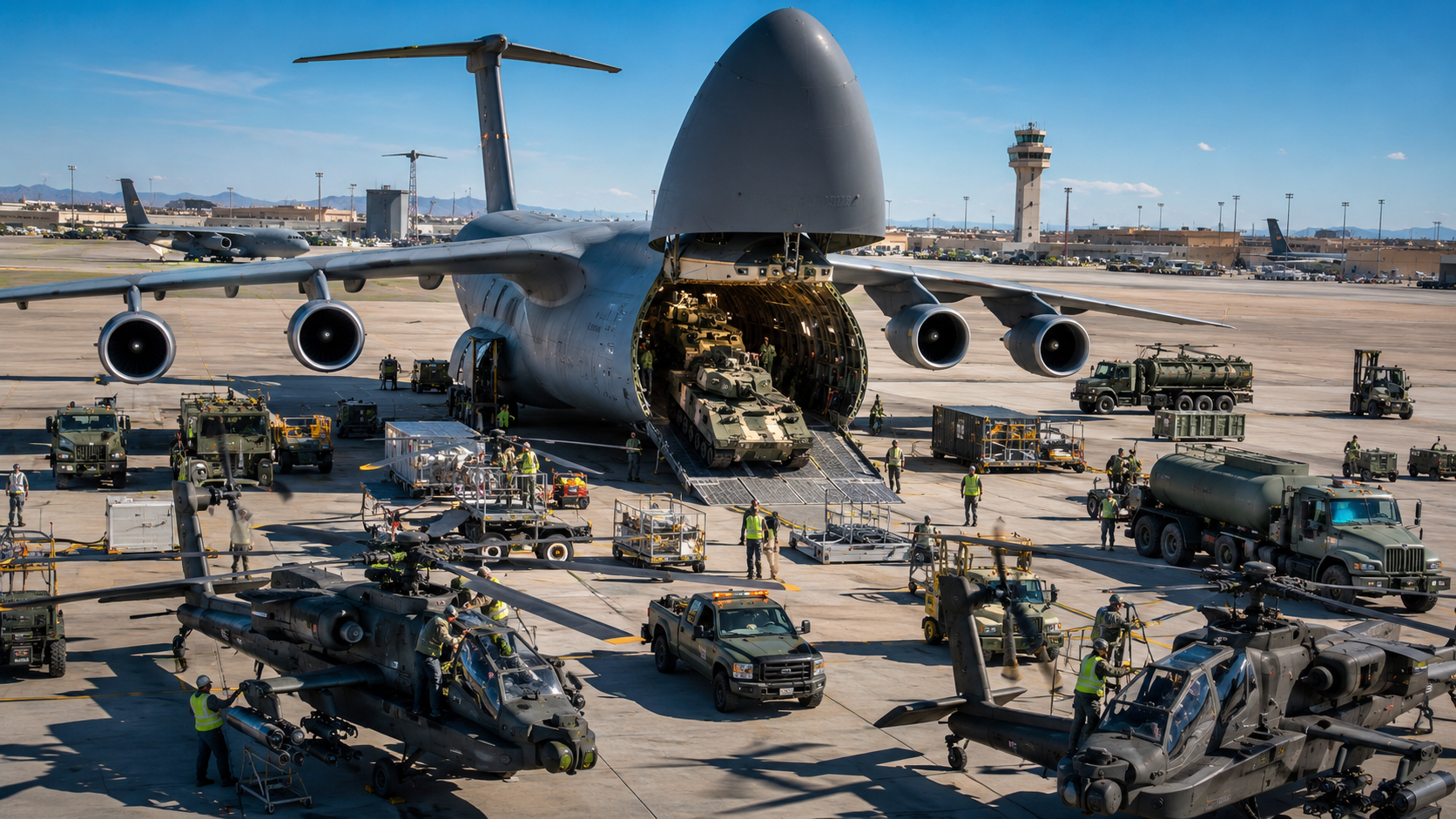
Under floodlights that cut through the midnight haze, the first C-17 Globemaster III touched down with almost no public warning. Within minutes, another followed. Then another. By 12:43 a.m., what had begun as a routine-looking sequence of landings at a U.S.-controlled airfield had turned into something far bigger—an operation so large that even veteran ground crews stopped pretending it was ordinary.
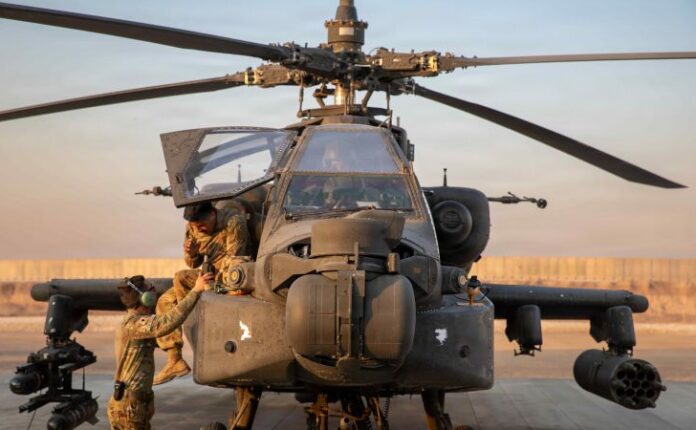
From the yawning cargo bays, AH-64 Apache attack helicopters emerged one after another, rotors locked, fuselages wrapped in transport restraints, escorted by security teams moving with unusual urgency. Witnesses described a scene of controlled chaos: forklifts, armored tugs, fuel crews, engineers, and military police all working under blackout discipline, with phones restricted and access points tightened. The helicopters were rapidly staged in rows, each one inspected, reassembled, and prepared for onward movement before dawn.
Pentagon officials, when pressed early Sunday, refused to discuss exact numbers or final destinations. Still, current and former defense personnel familiar with large-scale aviation logistics said the pace alone suggested more than a routine repositioning. Transporting even a fraction of that many Apaches requires weeks of planning, specialized maintenance support, ammunition coordination, and airspace management across multiple commands. Doing it at night, with such compressed timing, signaled something else: urgency.
Residents living miles from the installation reported hearing waves of heavy aircraft overhead beginning shortly after midnight. Local traffic cameras showed long convoys of fuel tankers and support vehicles entering secure gates hours before the first arrival. Satellite-watch forums quickly lit up with speculation, while military analysts on cable news split into competing camps. Some argued it was a preemptive deterrence move intended to send a message without firing a shot. Others warned it looked more like the opening phase of a deeper combat posture—one designed to place overwhelming attack aviation close to a crisis point before the public even knew the crisis had fully formed.
You May Also Like
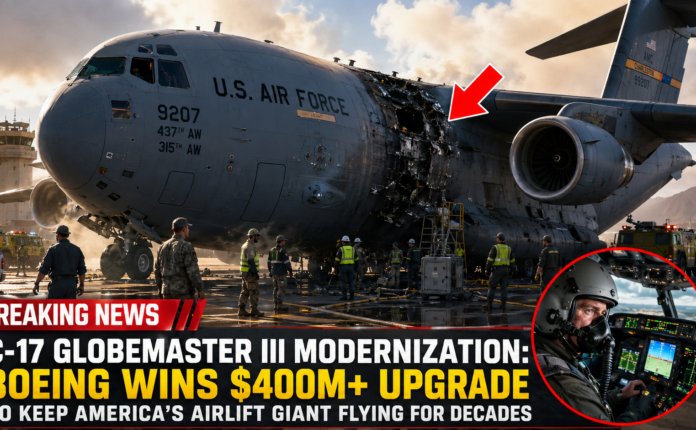
Inside Washington, the silence may be speaking louder than any statement. Several lawmakers privately demanded classified briefings by sunrise, according to congressional staffers familiar with the calls. The key questions were immediate and explosive: Why move so many attack helicopters so quickly? Why at night? And why now?
Because as the last C-17 taxied into position and crews rushed to clear the runway before sunrise, a second mystery began to spread through defense circles—reports that some of the Apaches were not being parked for storage at all, but were being armed, fueled, and assigned to crews already on standby.
If this was only a deployment, why did it already look so much like the first hour of a war—and what exactly was waiting beyond dawn?
PART 2
By sunrise, the airfield no longer looked like a transit point. It looked like a launch platform.
Rows of AH-64 Apaches that had arrived only hours earlier were now lined beside temporary maintenance tents and mobile command vehicles, while crews in reflective vests moved between them with clipboards, sealed cases, and ammunition carts. The most striking change was not simply the number of aircraft—it was the speed with which the site had shifted from receiving mode to combat readiness. Retired Army aviators interviewed by major U.S. networks said that pace alone would be hard to dismiss as symbolic. One former brigade aviation commander described it as “the kind of timeline you use when somebody believes the window for decision is closing.”
The official explanation, when it finally came, was narrow and carefully worded. A Defense Department spokesperson called the movement “a contingency-based force posture adjustment intended to protect U.S. personnel, reassure partners, and preserve operational flexibility.” But the statement offered no detail on the trigger, no clear endpoint, and no explanation for why the deployment had been conducted almost entirely under cover of darkness. That omission instantly became fuel for a political storm in Washington.
On Sunday morning talk shows, lawmakers split sharply. Supporters of the operation argued that fast deployments save lives precisely because they create uncertainty for hostile actors. Critics pushed back, saying the American public has seen this pattern before: vague language, urgent troop movement, and then a slow revelation that the military commitment was far broader than first described. The argument sharpened when leaked logistics chatter, unverified but widely discussed online, suggested that some Apache units had arrived with expanded support packages usually associated with sustained operations rather than short-term deterrence.
Then came the first major controversy.
At 9:17 a.m., video filmed from outside a secured perimeter began circulating on X, TikTok, and cable news. The footage appeared to show one Apache being moved off a taxiway after a hard mechanical incident during reassembly or systems testing. Military officials would later deny there had been a “crash,” but they did acknowledge that one aircraft experienced a severe ground-side malfunction and that several personnel were medically evaluated. The video itself was grainy, but the reaction was instant. Critics of the deployment seized on it as evidence the operation had been rushed. Supporters said it proved the opposite: that the military was working at the edge of urgency because the strategic stakes were real.
The human side of the story deepened the national attention. Two service members were reportedly treated for non-life-threatening injuries, according to local emergency coordination logs described by a state official briefed on the response. One ground mechanic, identified by colleagues only as Michael Torres, was said to have suffered facial lacerations and a shoulder injury after debris or equipment struck him during the incident. Another crew chief was treated for burns to the hands. Neither injury was fatal, but the images of medics moving quickly across the tarmac gave the deployment a visible cost—and transformed a secretive military movement into a public emotional event.
By early afternoon, helicopters were being test-rotated in sequence. Then came the next sign that this was not just for show. Flight trackers, though limited around military airspace, captured unusual patterns of restricted movement corridors opening farther south and east. That did not reveal a final destination. It did, however, support what regional observers had begun to suspect: this operation was tied to more than simple asset dispersal. Attack helicopters are not prestige cargo. They are instruments for escort, interdiction, close air support, and armed overwatch. You move them in bulk when you expect conditions where those missions may soon matter.
And yet, the unanswered questions kept growing.
Why had additional fuel bladders and mobile communications arrays been delivered before the aircraft? Why were some families of base personnel reportedly told to expect extended duty cycles before the first C-17 ever landed? Why did multiple congressional offices receive notice of “rapid force activity” but no region-specific language? That final omission triggered a fresh wave of speculation among defense reporters. If the administration did not want the destination known, was it because the mission was politically sensitive—or because public disclosure could compromise negotiations already underway behind the scenes?
By evening, the operation had taken on a second life far beyond the military sphere. Veterans debated the deployment on local radio. Law professors questioned whether the executive branch was stretching its authority. Former diplomats warned that even a defensive movement can be misread abroad as preparation for escalation. Social media fractured into familiar camps: some called it overdue strength, others called it managed opacity. But the most unsettling detail came from those who had watched the airfield overnight.
Several witnesses insisted that not all of the arriving Apaches matched the same configuration. Some appeared stripped for transport in standard fashion. Others, they claimed, were accompanied by unusually heavy mission support pallets and priority movement teams. Defense experts cautioned against reading too much into visual impressions from a distance. Still, that detail fed a theory that has not gone away: the possibility that the midnight airlift included multiple mission sets under one public narrative—deterrence on paper, but rapid strike capability in practice.
Late Sunday, after nearly eighteen hours of official restraint, one senior administration official offered the closest thing yet to a clue. Speaking on background, the official said the deployment was not a response to a single event, but to “a pattern of indicators” that had accelerated over the previous seventy-two hours. That phrase—pattern of indicators—landed like a thunderclap. In national security language, it can mean many things: intelligence intercepts, militia mobilization, threats to embassies, drone activity, partner force instability, or evidence that an adversary believes the U.S. is distracted and slow to respond.
If that assessment is true, then the midnight unloading of hundreds of Apaches was not the story’s beginning. It was the answer to something the public still hasn’t been told.
And there is one more detail officials have not fully explained. According to two defense observers who monitored support traffic around the base, at least several outbound movements after dark did not resemble routine repositioning to storage or training fields. They resembled staggered launch preparation. Not mass departure, not a ceremonial show, but selective assignment—the kind that suggests planners are keeping options open while waiting for a final order.
That may be the most revealing fact of all. In modern American military operations, massive visible force is often used not only to fight, but to pressure, signal, and shape choices before fighting begins. The Apaches on the tarmac may never fire a shot. Or they may have already changed the calculations of every actor watching from across the map. The uncertainty is the message. But uncertainty also creates danger. Opponents can misread it. Allies can overread it. Citizens can be asked to trust decisions whose premises remain classified.
So tonight, the helicopters are fueled, some crews are standing by, Congress is demanding answers, and the public has only fragments. Was this midnight surge a successful warning that prevented a larger disaster—or the quiet first step into a conflict officials are still unwilling to name?
What do you think America is really preparing for—and what should the public be told before the next aircraft leaves the ground? Comment below now.