For decades, air defense has followed a familiar pattern.
A missile detects a target.
A launcher fires.
A single interceptor destroys a single threat.
This approach has worked against aircraft, helicopters, and even ballistic missiles.
But warfare is changing.
You May Also Like
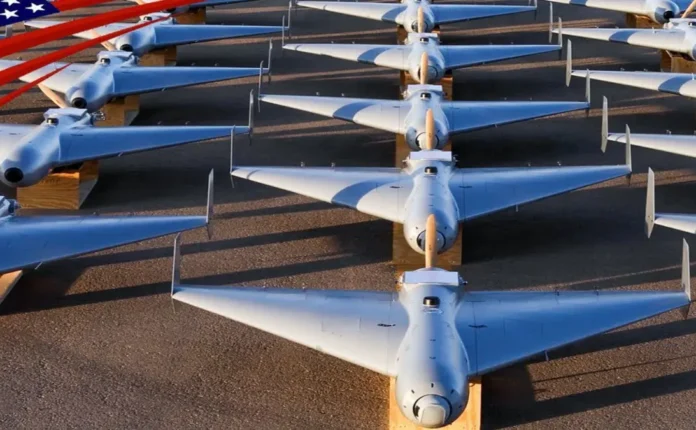

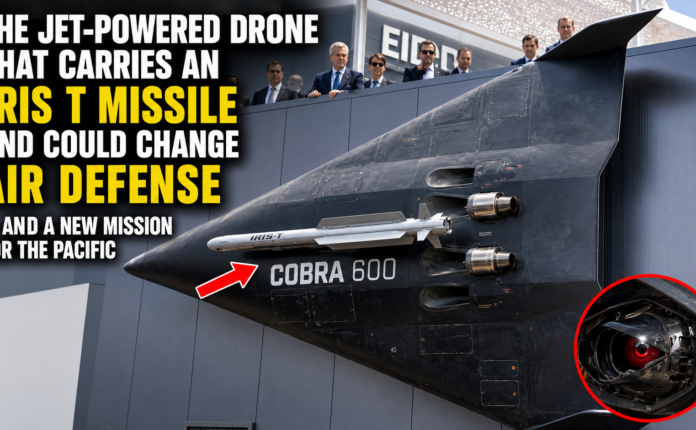

Today, a battlefield commander may face not one aircraft, but hundreds of inexpensive drones approaching simultaneously from multiple directions. Some may be armed. Others may serve as decoys. A few may be autonomous enough to continue their mission even if communications are jammed.
Destroying such a swarm with traditional missiles can become economically and tactically unsustainable.
The United States military believes it has found a different answer.
Not a faster missile.
Not a bigger gun.
Not even a more powerful laser.
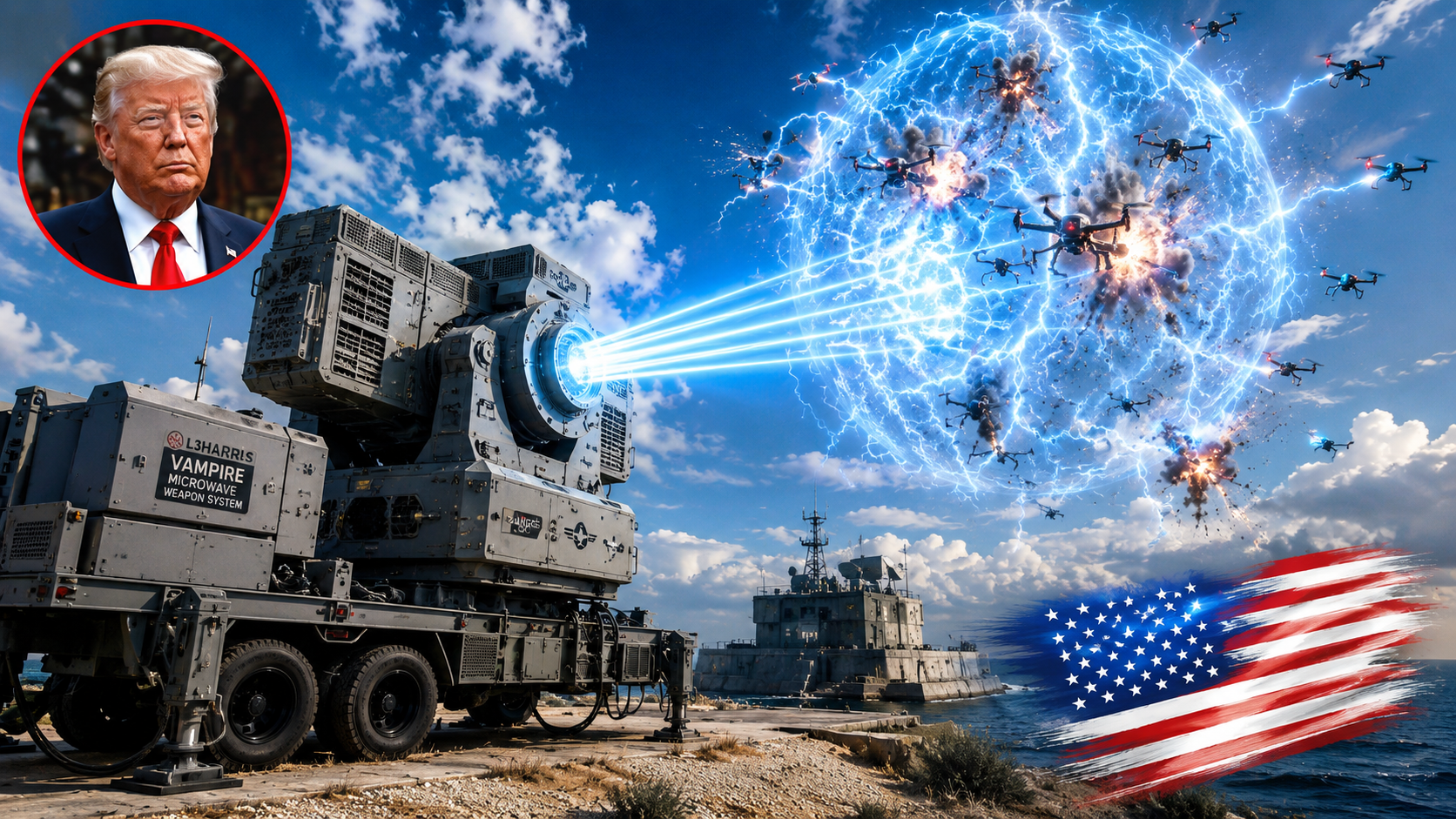
Instead, it is harnessing invisible pulses of electromagnetic energy powerful enough to disable dozens of drones at once.
The weapon does not explode.
It leaves no shrapnel.
It can strike repeatedly as long as power is available.
And when it fires, the effect is instantaneous.
This is the promise of High-Power Microwave technology—one of the most transformative developments in modern air defense.
A New Kind of Weapon

High-Power Microwave (HPM) systems use concentrated bursts of radio-frequency energy to overwhelm and damage electronic circuits.
Most drones depend on delicate components:
- Flight-control computers
- GPS receivers
- Radio links
- Sensors
- Power-management systems
A sufficiently strong microwave pulse can disrupt or permanently damage these electronics.
The drone may lose navigation, crash, or simply fall from the sky.
Unlike conventional weapons, HPM attacks the target’s nervous system rather than its structure.
One Burst, Many Targets

The greatest strength of HPM weapons is their ability to engage multiple threats simultaneously.
A missile usually destroys one target.
A gun must engage targets one by one.
A laser often focuses on a single drone at a time.
A microwave weapon emits a broad cone of energy that can affect numerous drones within its field of view.
Against swarm tactics, this area effect is revolutionary.
It turns defense from a sequence of individual engagements into a single coordinated electronic strike.
The Economics of Modern Warfare

One of the most dangerous trends in warfare is the cost imbalance between attack and defense.
A low-cost drone may cost a few thousand dollars.
The missile used to intercept it may cost hundreds of thousands—or more.
This asymmetry favors the attacker.
High-Power Microwave weapons help restore balance.
Because they rely on electrical power instead of expensive interceptors, each engagement can cost dramatically less.
This concept is often described as a “deep magazine.”
As long as the system has power, it can continue fighting.
Proven Systems Leading the Way
Several U.S. programs have demonstrated the maturity of this technology.
U.S. Air Force Research Laboratory THOR
The Tactical High-power Operational Responder (THOR) was developed to counter drone swarms at forward bases. In public demonstrations, THOR disabled multiple drones with a single pulse.
Epirus Leonidas
Leonidas uses solid-state microwave technology and has been selected for U.S. military counter-drone efforts. The company describes it as an electronically scalable shield against swarms.
U.S. Department of Defense Programs
The Pentagon continues to test and field microwave systems for both land and maritime deployment.
How Microwave Weapons Work

The concept is elegant.
- Sensors detect incoming drones.
- Fire-control software identifies the swarm.
- The microwave emitter points toward the threat.
- A burst of radio-frequency energy is released.
- Electronics inside the drones malfunction.
To an observer, there may be no visible beam.
Yet moments later, multiple drones can lose control almost simultaneously.
Why Drone Swarms Are So Dangerous

Drone swarms represent one of the most disruptive trends in warfare.
They can:
- Saturate defenses.
- Conduct reconnaissance.
- Deliver explosives.
- Jam communications.
- Force expensive responses.
Even modestly equipped adversaries can deploy large numbers of inexpensive systems.
This has made counter-swarm technology a strategic priority.
Beyond Drones
Microwave weapons may also affect other electronic systems, depending on power levels and operational parameters.
Potential applications include disabling:
- Sensors
- Communications equipment
- Small robotic systems
Because HPM primarily targets electronics, physical structures may remain largely intact.
This makes the technology especially attractive in sensitive environments.
Ideal for Urban Defense

Traditional explosive interceptors risk collateral damage.
In urban settings, falling debris and blast effects can be hazardous.
A microwave system can neutralize drones while minimizing damage to nearby infrastructure.
That precision makes HPM a compelling option for defending cities, airfields, and critical facilities.
Challenges and Limitations
Despite its promise, HPM is not a universal solution.
Operational constraints may include:
- Line-of-sight requirements.
- Power demands.
- Environmental effects.
- Variable effectiveness against hardened electronics.
Future drone designs may improve shielding and resilience.
As with all military technologies, offense and defense will continue to evolve.
Mobile and Naval Integration
The Pentagon is working to deploy HPM systems on:
- Tactical vehicles.
- Fixed installations.
- Naval vessels.
Mobile systems would allow commanders to protect maneuver forces and expeditionary bases.
Shipboard integration could provide a cost-effective defense against massed aerial threats.
The Invisible Shield
Microwave weapons represent a profound shift in defensive thinking.
Instead of destroying threats with physical force, they neutralize the electronics that make those threats function.
The result is a silent, reusable, and scalable form of protection.
In many ways, HPM systems are an invisible shield.
A Strategic Transformation
The rise of autonomous and inexpensive drones has forced militaries to rethink defense.
High-Power Microwave technology offers a response aligned with the realities of modern warfare:
- Low cost per engagement.
- Multi-target effectiveness.
- Minimal collateral damage.
- Sustainable operations.
It changes the economics and the physics of battlefield defense.
Final Thoughts: The Future May Be Won by Energy, Not Ammunition
Military revolutions often begin quietly.
The radar.
The jet engine.
The precision-guided bomb.
Stealth technology.
High-Power Microwave weapons may join that list.
They transform electricity into battlefield power and replace costly interceptors with repeatable bursts of energy.
In a world where adversaries can launch hundreds of autonomous drones, the ability to disable them all in seconds could become one of the most important defensive capabilities of the 21st century.
The next great shield may not be made of steel.
It may be made of invisible energy—silent, instantaneous, and decisive.