HER STEPMOTHER GAVE HER AWAY TO A HOMELESS STRANGER—SHE HAD NO IDEA HE WAS A BILLIONAIRE WHO COULD CHANGE EVERYTHING
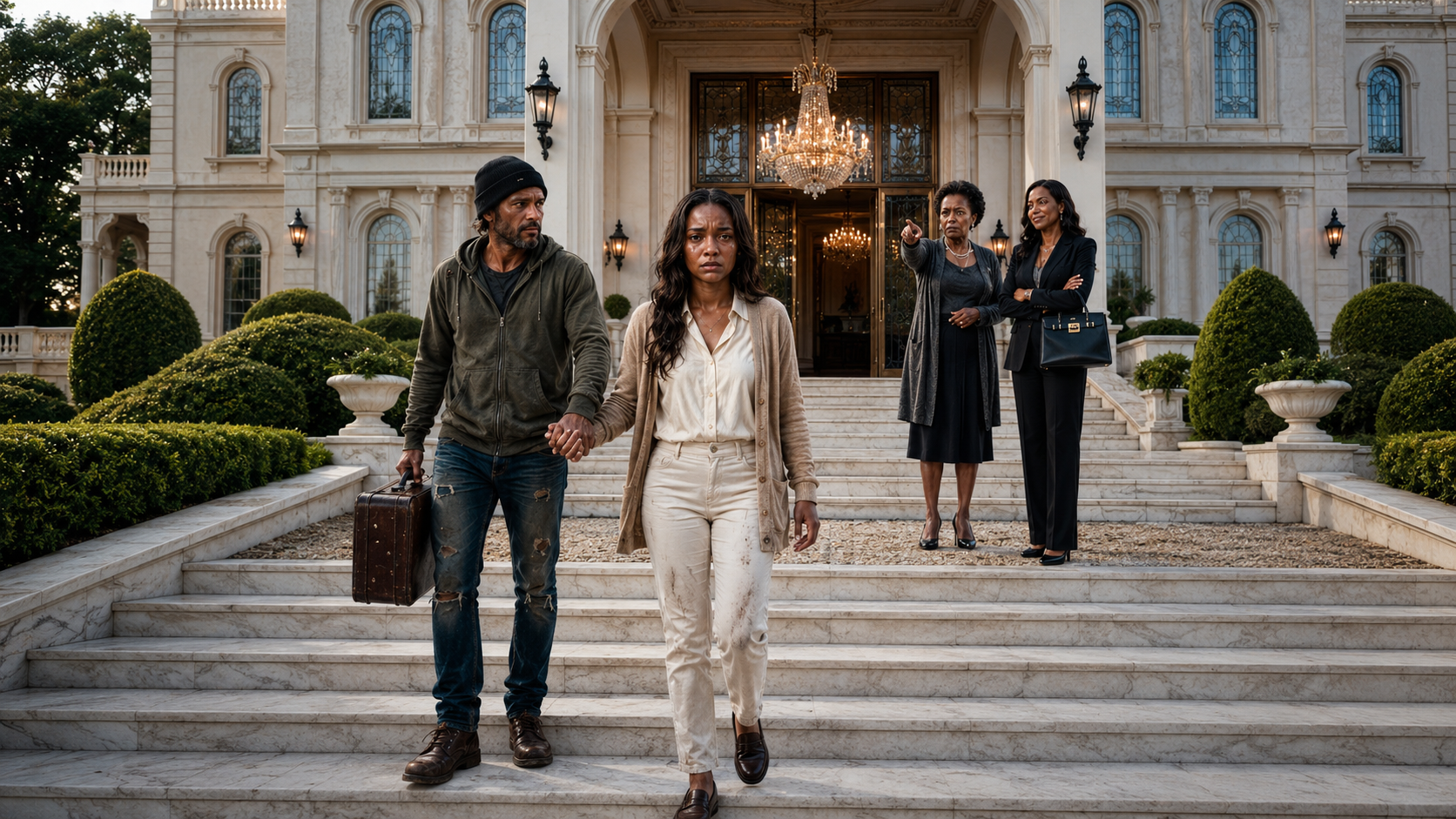
The night Eleanor Hayes threw her stepdaughter into a storm and coldly told a homeless stranger, “She is yours now,” she believed she was finally getting rid of the greatest burden in her life.
She never asked the stranger’s name.

You May Also Like
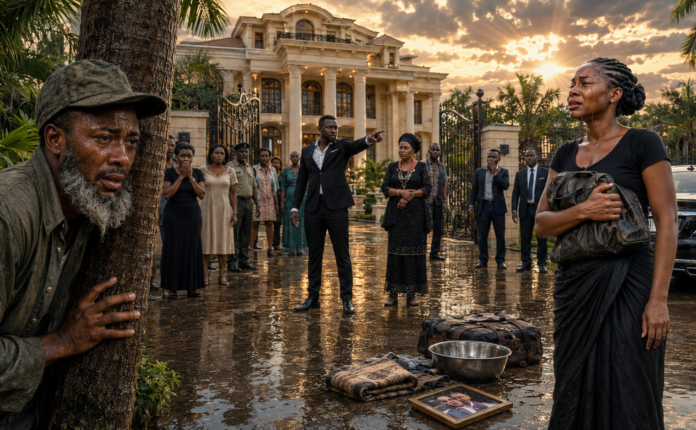



She never wondered why, beneath his torn coat, he spoke like a man accustomed to being heard.
And she certainly never imagined that before the year was over, the “homeless man” standing outside her mansion would walk into one of the most powerful boardrooms in the country, take the seat at the head of the table, and say seven quiet words that would make Eleanor’s entire world stop.
“Bring Claire Whitmore into my office. Now.”
But on the night they met, Daniel Carter looked like a man who had nothing.
The storm had arrived in Willow Creek shortly after sunset.
It did not begin gently.
There was no warning drizzle, no soft gray sky slowly becoming dark. Wind came first, rattling the windows of the expensive houses along Hawthorne Ridge. Then rain struck the town in hard silver sheets, turning streets into rivers and forcing even the wealthiest residents to admit that nature did not care how much their homes had cost.
Behind the black iron gates of the Hayes estate, Claire Whitmore was carrying dinner plates from the formal dining room to the kitchen.
She had been doing some version of that for ten years.
At twenty-nine, Claire had perfected the art of making herself useful without becoming noticeable.
She knew exactly how Eleanor liked her tea.
She remembered Vanessa’s appointments better than Vanessa did.
She knew which florist delivered the lilies for the drawing room and which dry cleaner would tolerate Eleanor’s habit of calling five minutes before closing.
When the housekeeper’s mother became ill, Claire quietly covered three weeks of duties without asking for extra money.
When the gardener hurt his back, Claire woke before sunrise to water the roses so Eleanor would not complain that the west lawn looked neglected.
She organized.
She repaired.
She remembered.
She made things easier.
And somehow, in Eleanor Hayes’s house, the more Claire did, the less anyone seemed to notice she was a person.
“Claire!”
Eleanor’s voice traveled from the dining room.
Claire stopped halfway through the kitchen door.
“Yes?”
“My water.”
Claire looked at the half-empty crystal glass still sitting beside Eleanor’s plate.
“You have water.”
“I asked for sparkling.”
Claire closed her eyes for half a second.
Then she turned around.
“Of course.”
Vanessa Hayes sat across from her mother, scrolling through her phone.
At twenty-seven, Vanessa had inherited Eleanor’s ability to make disapproval look elegant.
Her dark hair had been professionally styled that afternoon. Her cream sweater probably cost more than Claire’s entire wardrobe.
“Did you pick up my blue dress?” Vanessa asked.
Claire placed a bottle of sparkling water on the table.
“The alterations weren’t finished.”
Vanessa looked up.
“I need it Friday.”
“I told them.”
“Did you explain who I am?”
Claire paused.
“The tailor knows your name.”
“That wasn’t my question.”
Eleanor sighed.
“Claire, don’t start.”
Claire stared at her stepmother.
“I didn’t say anything.”
“Your face did.”
Claire looked away.
That was another rule she had learned in the Hayes house.
Silence could still be considered an argument if Eleanor disliked the expression accompanying it.
A violent crack of thunder shook the windows.
Vanessa flinched.
Claire glanced outside.
Rain blurred the terrace lights.
The storm reminded her of another night, years earlier, when her father had driven through weather just like this to reach her university because Claire had called him crying after failing an economics examination.
Charles Whitmore had arrived carrying two terrible coffees and a paper bag of cinnamon rolls.
He had sat beside Claire in an empty student lounge until two in the morning.
“You failed one exam,” he had told her. “You did not fail at being a human being.”
Claire had laughed through tears.
Her father had always known how to separate achievement from worth.
Eleanor had never understood the difference.
Charles had married Eleanor three years after Claire’s mother died.
At first, Claire had tried to love her.
She truly had.
Eleanor was polished, intelligent and socially effortless in ways Claire had never been. She could enter a charity dinner knowing nobody and leave with six invitations.
Charles admired her confidence.
Claire wanted her father to be happy.
So she ignored the small things.
The way Eleanor rearranged family photographs and gradually moved pictures of Claire’s mother into less visible rooms.
The way Vanessa’s preferences became household decisions.
The way Eleanor introduced Claire as “Charles’s daughter” but called Vanessa “my beautiful girl.”
Small things.
Small things were easy to forgive.
Until small things became the architecture of an entire life.
When Charles died suddenly from a heart condition, Claire was twenty-one.
He left behind a complicated estate, several business investments and a mansion that Claire had believed was partly protected for her.
She had been wrong.
Charles’s financial affairs were tangled.
There were debts.
Tax issues.
A development project that collapsed less than a month before his death.
Eleanor became the legal owner of the Willow Creek residence.
Claire inherited a modest investment account and a collection of her father’s personal belongings.
Then Eleanor cried in the kitchen one evening.
“We could lose the house.”
Claire had looked at her.
“What?”
“The mortgage restructuring. Your father handled everything.”
Vanessa had been studying abroad.
Eleanor said she could not manage alone.
Claire had been planning to move to Chicago.
She had an entry-level position waiting at a consulting firm.
She had dreams.
A small apartment.
A career.
A life that existed beyond Hawthorne Ridge.
Claire sold most of her investment account.
Then she withdrew from the Chicago position.
“Just for one year,” she told herself.
One year became three.
Three became six.
By the tenth year, no one remembered that Claire had ever planned to leave.
Least of all Claire.
Thunder rolled again.
She picked up the remaining dishes.
Then she heard something.
A soft metallic sound from outside.
Claire stopped.
The security light near the front gate had flickered on.
She placed the plates down.
“Where are you going?” Eleanor asked.
“I heard something.”
“Security will handle it.”
“The gate camera isn’t working.”
Eleanor looked irritated.
“Then call someone.”
Claire was already walking toward the hall.
She found an umbrella in the front closet and opened the door.
Wind immediately pushed rain beneath the covered entrance.
Claire stepped outside.
The driveway stretched from the mansion to the front gates, bordered by old oak trees whipping violently in the storm.
At first, she saw nobody.
Then lightning flashed.
A man stood outside the gate.
Claire froze.
He was not trying to enter.
He simply stood near one of the stone columns with his shoulders slightly lowered against the rain.
His clothes were soaked.
A dark jacket hung heavily from his frame.
His trousers were worn.
One of his shoes appeared to be separating at the sole.
He carried a small plastic bag.
Everything about him suggested exhaustion.
Claire hesitated.
She was alone outside.
The storm was loud enough that nobody inside would hear a normal conversation.
Common sense told her to return to the house.
Then the man saw her.
He immediately stepped backward from the gate.
The gesture surprised Claire.
“I’m sorry,” he called.
Even through the rain, his voice was calm.
“I didn’t mean to frighten you.”
Claire remained several feet away.
“What are you doing here?”
The stranger looked toward the road.
“Trying to get out of the storm.”
“There are shelters downtown.”
“I know.”
“Are they full?”
He hesitated.
“Yes.”
That was not entirely true.
Claire did not know it.
The stranger knew precisely how many beds were available in three shelters because, six months earlier, his foundation had funded one of them.
But that truth belonged to Daniel Carter.
Tonight, Daniel was trying not to be Daniel Carter.
Claire studied him.
He looked to be in his late thirties.
Tall.
Even beneath wet, shapeless clothing, she could see the broad lines of his shoulders.
His dark hair was plastered to his forehead.
There was something unusual about his face.
Not handsomeness, although he was handsome beneath the exhaustion.
Control.
The man looked uncomfortable.
Cold.
Wet.
But not defeated.
“Do you need money?” Claire asked carefully.
“No.”
The answer came immediately.
“Then what?”
The stranger looked embarrassed.
“I haven’t eaten.”
Claire said nothing.
He lowered his eyes.
“I am sorry. Forget I asked.”
He began walking away.
“Wait.”
Daniel stopped.
Claire looked toward the house.
Then back at him.
“Stay there.”
His mouth almost lifted.
“I wasn’t planning to break through the gate.”
Claire realized how ridiculous her instruction sounded.
“I’ll be back.”
She hurried inside.
Eleanor was standing in the hall.
“Who is it?”
“A man.”
Vanessa emerged behind her.
“What man?”
“Someone outside.”
Eleanor’s face tightened.
“Did you call security?”
“He’s hungry.”
Vanessa blinked.
“What?”
Claire walked toward the kitchen.
“He asked for food.”
“Claire.”
She opened the refrigerator.
Eleanor followed her.
“What exactly do you think you’re doing?”
“Making a plate.”
“No.”
Claire turned.
“He hasn’t eaten.”
“I heard you.”
“Then why are we arguing?”
“Because you are not feeding a strange man at my gate.”
Claire looked at her.
“It’s food.”
“No.”
Eleanor’s voice became sharper.
“It is never just food with you.”
Claire slowly lowered the plate.
“What does that mean?”
“It means this.”
Eleanor gestured toward Claire as though presenting evidence.
“You always have to rescue someone.”
“The gardener needed help.”
“The gardener receives a salary.”
“His wife was in the hospital.”
“And last Christmas?”
“The shelter needed coats.”
“And the woman at the pharmacy?”
“She was short twelve dollars.”
Vanessa leaned against the doorway.
“She does have a point, Claire. You collect sad people.”
Claire looked at her stepsister.
“I helped someone pay for medicine.”
“And then she probably went home and laughed about the rich fool who paid.”
Claire’s expression changed.
Vanessa shrugged.
“What?”
Claire picked up the plate again.
“Nothing.”
Eleanor stepped in front of her.
“You are not taking that outside.”
Claire held her gaze.
For years, she had learned to retreat.
It kept the peace.
It protected the house.
It made life easier.
Tonight, perhaps because of the rain, perhaps because she was tired, Claire did not retreat.
“Move.”
Eleanor stared.
“What did you say?”
“He is hungry.”
“You don’t know him.”
“I don’t need his biography to give him bread.”
“Claire.”
“Move.”
The kitchen became silent.
Vanessa lowered her phone.
Eleanor’s face changed.
Claire knew immediately that she had crossed some invisible line.
Still, she walked past her.
Eleanor did not stop her.
Claire returned to the front gate.
The man was still there.
He looked genuinely surprised.
“You came back.”
Claire held out a covered plate.
“Chicken. Potatoes. Bread.”
The man stared at the food.
“You didn’t have to do this.”
“Yes, apparently I did.”
He looked at her.
Claire sighed.
“Sorry. That wasn’t about you.”
Daniel accepted the plate.
His hands were cold.
“Thank you.”
“You don’t have to thank me.”
“I do.”
Claire gave him the bottle of water she carried.
“Everyone deserves to eat.”
Daniel Carter had sat across from presidents.
He had attended dinners where one bottle of wine cost more than the average worker earned in a month.
He had listened to executives praise his vision, politicians praise his generosity and journalists describe him as one of the most influential businessmen of his generation.
Four words from a woman in a wet sweater affected him more than any of it.
Everyone deserves to eat.
Claire did not know his name.
She did not know his company employed more than forty thousand people.
She did not know his investment group owned stakes in transportation systems, medical technology firms, renewable energy projects and construction companies across nine countries.
She saw torn clothes.
A damaged shoe.
A stranger.
And she brought him dinner.
Daniel looked down at the plate.
“Why?”
Claire frowned.
“Why what?”
“Why did you help me?”
“You said you were hungry.”
“That isn’t an answer.”
“It seems like one.”
“Most people don’t stop.”
Claire looked through the gate at the dark road.
“I know.”
Daniel heard something in her voice.
“You know?”
Claire smiled faintly.
“Sometimes people can look directly at you without seeing you.”
Daniel stared.
Before he could respond, the front door opened.
“Claire!”
Eleanor stormed down the drive without an umbrella.
Vanessa followed beneath a large black one, carefully avoiding puddles.
Claire closed her eyes.
“Wonderful.”
Eleanor reached the gate.
“What exactly do you think you are doing?”
“Eleanor—”
“I told you no.”
“He was hungry.”
“I heard you.”
“It’s just food.”
“No, Claire.”
Eleanor laughed sharply.
“No. It is never just anything with you.”
Daniel quietly lowered the plate.
“I can leave.”
Claire immediately looked at him.
“You don’t have to apologize for being hungry.”
Daniel went still.
Eleanor stared at her stepdaughter.
Then something inside her seemed to break.
Or perhaps something long hidden finally emerged.
“I have had enough.”
Claire turned.
“Enough of what?”
“You.”
The answer was immediate.
Claire’s face went blank.
Vanessa looked up.
Even she seemed surprised.
Eleanor continued.
“Your attitude. Your judgment. This ridiculous performance of goodness.”
Claire stared.
“Performance?”
“You walk around this house acting morally superior because you help people.”
“I have never said I was better than anyone.”
“You don’t have to say it.”
Eleanor pointed toward the plate in Daniel’s hands.
“This. Everything you do is designed to make other people feel cruel.”
Claire laughed once.
A stunned sound.
“I gave a hungry man dinner.”
“And embarrassed me in my own house.”
“How?”
“By ignoring me.”
The rain continued.
Daniel watched Claire carefully.
He had negotiated hostile acquisitions with men who smiled while attempting to destroy him.
He knew manipulation.
Eleanor Hayes was not angry about food.
This was accumulated resentment.
And Claire knew it too.
Something in her face changed.
She looked tired.
Not physically tired.
Soul tired.
“Ten years,” Claire whispered.
Eleanor frowned.
“What?”
“I stayed ten years.”
“Here we go.”
“No.”
Claire’s voice became stronger.
“No, actually. For once, you’re going to hear me.”
Vanessa shifted.
Eleanor’s eyes narrowed.
Claire continued.
“I sold the investments Dad left me because you said the house was in danger.”
“We were family.”
“I gave up Chicago.”
“Nobody forced you.”
Claire physically flinched.
Daniel saw it.
“You cried,” Claire said. “You told me you couldn’t do it alone.”
“And?”
“And I believed you.”
Eleanor folded her arms.
“That was your choice.”
The cruelty of the sentence seemed to shock even the storm into temporary silence.
Claire’s mouth opened.
Nothing came.
Vanessa looked away.
Claire finally whispered, “You’re right.”
Eleanor blinked.
Claire nodded slowly.
“It was my choice.”
A tear moved down her cheek.
“I chose you.”
Her voice cracked.
“I chose this house. I chose Vanessa. I chose Dad’s memory. Every year, I kept choosing this family.”
She looked at Eleanor.
“And somehow, you made me feel like I should apologize for staying.”
Eleanor’s expression hardened.
“You always make everything about yourself.”
Claire stopped breathing.
Daniel watched the last hope leave her face.
It happened quietly.
No shouting.
No dramatic collapse.
Just a woman finally understanding that the love she had spent ten years earning had never been available.
Claire nodded.
“Okay.”
Eleanor frowned.
“Okay?”
“Yes.”
Claire wiped her face.
“Okay.”
Something about her calmness made Eleanor more angry.
“Don’t stand there pretending to be a victim.”
“I said okay.”
“Pack your things.”
Vanessa’s head snapped up.
Claire stared.
“What?”
Eleanor stepped closer.
“You heard me.”
“Eleanor.”
“Pack your things.”
Claire’s voice became small.
“Where am I supposed to go?”
Daniel’s jaw tightened.
Eleanor did not hesitate.
“That is not my problem anymore.”
Claire stared at her.
“After ten years?”
“After everything,” Eleanor replied, “I think we have all suffered enough.”
Claire looked at Vanessa.
For one desperate second, perhaps she expected her stepsister to intervene.
Vanessa opened her mouth.
Then closed it.
Eleanor looked toward Daniel.
A bitter smile appeared.
“Since you care so much about him, go with him.”
Claire went still.
“What?”
“Congratulations.”
Eleanor gestured toward her.
“She is yours.”
Daniel’s expression changed instantly.
“I don’t think—”
Vanessa gave a small, shocked laugh.
“Oh my goodness.”
Claire turned.
Vanessa covered her mouth, but the damage had been done.
“She is actually giving herself away to a stranger.”
Claire stared at her stepsister.
For years, Vanessa’s words had made her angry.
Tonight, Claire felt nothing.
That frightened her.
She looked at Eleanor.
Waited.
Maybe Eleanor would realize what she had said.
Maybe the woman would suddenly remember Charles Whitmore.
Maybe she would look at Claire and see the nineteen-year-old who had tried desperately to become part of her new family.
Maybe she would say, Claire, wait.
Nobody did.
Claire nodded once.
Then turned toward the house.
Daniel watched her walk away.
Eleanor exhaled as though a problem had been resolved.
Daniel looked at her.
For a moment, neither spoke.
Then Eleanor noticed something in his expression.
“You can leave too.”
Daniel’s voice was soft.
“You have no idea what you just did.”
Eleanor laughed.
“Excuse me?”
He looked toward the mansion.
“No idea.”
Then Daniel placed the untouched plate carefully on the stone wall beside the gate.
And waited for Claire.
Upstairs, Claire entered the room she had occupied for ten years.
She closed the door.
Then leaned against it.
Her body began shaking.
The room was not large.
A narrow bed.
A wooden dresser.
Two shelves of books.
A desk beside the window.
One framed photograph sat on the bedside table.
Claire crossed the room.
She picked it up.
Her father smiled from behind the glass.
The photograph had been taken at Claire’s university graduation.
Charles’s tie was crooked.
Claire had spent the entire morning trying to fix it.
He kept ruining it intentionally because he thought her frustration was funny.
“I wish you were here.”
Her voice disappeared into the storm.
Claire sat on the edge of the bed.
“What am I supposed to do?”
The man in the photograph did not answer.
Claire laughed through tears.
“Excellent advice.”
She pressed the frame against her chest.
For years, she had imagined her father would be disappointed if she left Eleanor.
Charles had loved his wife.
Claire believed loyalty to him required loyalty to the family he created.
Tonight, she wondered whether she had misunderstood him.
Charles had taught her compassion.
He had never taught her to disappear.
Claire wiped her face.
Then pulled an old suitcase from beneath the bed.
She opened the closet.
Ten years.
Her life should have required more than one suitcase.
It did not.
Claire packed clothes.
Three books.
Her mother’s silver bracelet.
Her father’s photograph.
A small wooden box containing letters.
At the back of the closet was a business suit still protected by plastic.
Claire touched it.
Dark blue.
Simple.
She had bought it for her Chicago position.
She had never worn it.
The sight of it nearly destroyed her.
Claire removed the plastic.
Folded the suit.
Placed it in the suitcase.
Then she closed the lid.
Ten years fit inside one piece of luggage.
Claire carried it downstairs.
Eleanor stood in the drawing room.
Vanessa was sitting on the sofa.
Neither moved.
Claire stopped near the front door.
She waited.
She hated herself for waiting.
Still, she did.
Eleanor looked toward her.
Claire held the suitcase.
This was the moment.
One word.
Please.
Stay.
Anything.
Eleanor looked away.
Vanessa picked up her phone.
Claire nodded.
“I hope the blue dress is ready by Friday.”
Vanessa looked up.
Claire smiled sadly.
“I called the tailor. They’ll deliver it.”
She opened the door.
Then walked into the rain.
The door closed behind her.
Claire stood on the porch.
For several seconds, she could not move.
Daniel was waiting near the driveway.
He had retrieved the plate.
Claire laughed weakly when she saw him.
“You kept the food.”
“I was hungry.”
“Good.”
She lifted the suitcase.
“I suppose we’re both homeless now.”
Daniel looked at the mansion.
Then at her.
“I am sorry.”
“Why?”
“That happened because you helped me.”
Claire shook her head.
“No.”
She walked past him.
“That happened because it was waiting to happen.”
Daniel followed.
“Where are you going?”
“I don’t know.”
“Do you have friends?”
Claire continued walking.
“I used to.”
“Family?”
“No.”
“Money?”
She stopped.
“That’s a very personal question.”
Daniel almost smiled.
Claire stared at him.
Then she looked down.
“Thirty-eight dollars.”
Daniel’s expression changed.
“Thirty-eight?”
“And seventeen cents.”
“You counted the cents.”
“I am unemployed and homeless. The cents are suddenly important.”
She began walking again.
Daniel followed.
Claire glanced at him.
“You don’t have to follow me.”
“I know.”
“Then why are you?”
“Because you are walking into a storm with a suitcase.”
“So are you.”
“I have a plastic bag.”
“Right. Completely different situation.”
For the first time that night, Daniel laughed.
Claire looked at him.
The sound surprised her.
It seemed too warm for the man he was pretending to be.
They walked nearly a mile.
Claire’s suitcase wheels struggled against wet pavement.
Eventually, they reached a bus shelter.
Claire sat down.
Daniel remained standing.
“Sit.”
He did.
Rain hammered the shelter roof.
Cars passed.
Claire stared at the road.
Then suddenly, without warning, she began to cry.
Not quietly.
Not elegantly.
Years of restraint disappeared.
Claire covered her face.
“I am sorry.”
Daniel looked at her.
“For what?”
“This.”
“You’re crying.”
“I noticed.”
“You don’t need to apologize.”
“I hate crying in front of people.”
“Why?”
“Because they always want you to stop.”
Daniel said nothing.
Claire lowered her hands.
He was simply sitting beside her.
No empty reassurance.
No instruction to look on the bright side.
He did not tell her everything happened for a reason.
Claire appreciated him immediately for that.
“You don’t have to stay,” she whispered.
“I know.”
“Then why are you here?”
Daniel looked at the road.
“Because tonight you gave food to someone you thought had nothing.”
Claire said nothing.
He turned.
“But you were the one starving.”
Her eyes filled again.
“That’s not fair.”
“What?”
“Saying something like that when I’m trying to stop crying.”
“Sorry.”
“No, you’re not.”
“No.”
She laughed weakly.
Daniel smiled.
Claire studied him.
“What is your name?”
He hesitated.
“Daniel.”
“Just Daniel?”
“For tonight.”
Claire lifted an eyebrow.
“That sounds suspicious.”
“What about you?”
“Claire.”
“Just Claire?”
She smiled.
“For tonight.”
They sat together for several minutes.
Then Daniel stood.
“Come on.”
“Where?”
“You need somewhere safe.”
“So do you.”
“I know a place.”
Claire looked at his clothing.
“A shelter?”
“Something like that.”
It was not something like that.
Daniel walked three blocks to an old convenience store.
He asked Claire to wait.
Then he entered the restroom.
Inside, Daniel locked the door and removed a second phone from a hidden interior pocket in his jacket.
He turned it on.
Forty-three missed calls.
He ignored them.
Then he called one number.
His driver answered immediately.
“Mr. Carter?”
“Walter.”
“Sir, where are you? Security has been—”
“I am fine.”
“Mr. Carter—”
“Bring the car to Seventh and Rose. Stay one block east.”
Silence.
“Sir?”
“And bring cash.”
“How much?”
Daniel glanced at his reflection.
Wet hair.
Secondhand jacket.
“Five hundred.”
Walter sighed.
“Is this another one of your attempts to understand normal life?”
Daniel almost smiled.
“Something like that.”
Twenty minutes later, Daniel led Claire to a small motel.
The Riverside Motor Lodge was clean, inexpensive and operated by a seventy-year-old man named George whose daughter worked for a Carter Industries subsidiary.
Claire stopped outside.
“I can’t afford this.”
“I know George.”
“You know everyone?”
“Apparently.”
Claire narrowed her eyes.
Daniel used the cash Walter had slipped into his hand behind the building.
He paid for two nights.
Claire noticed.
“Where did you get money?”
“I had some.”
“You said you were homeless.”
“I said I had nowhere to stay tonight.”
“That is not the same thing.”
“No.”
“Daniel.”
He held out the motel key.
“Please.”
Claire stared at him.
“Are you a criminal?”
He laughed.
“No.”
“You answered too quickly.”
“I run a business.”
“What kind of business?”
“Several things.”
“That sounds even more criminal.”
Daniel smiled.
Claire slowly accepted the key.
“This is a loan.”
“No.”
“Yes.”
“Claire.”
“I will repay you.”
He saw something in her expression.
Pride.
Not vanity.
Dignity.
Daniel nodded.
“All right.”
“How much?”
“Forty dollars.”
The room actually cost eighty-nine.
Claire narrowed her eyes.
“Forty?”
“George likes me.”
“Suspicious.”
“Very.”
She looked at him.
“What about you?”
“I’ll be fine.”
“You can’t sleep outside in this weather.”
“I have somewhere I can go.”
Claire frowned.
“You said—”
“Things changed.”
She studied him.
For one terrifying second, Daniel thought she had already seen through him.
Instead Claire sighed.
“Thank you.”
Daniel nodded.
“Sleep.”
“You always give orders?”
“Occupational habit.”
“What business did you say you’re in?”
“I didn’t.”
Claire smiled despite herself.
“Good night, suspicious Daniel.”
“Good night, just Claire.”
The next morning, Claire woke at six fifteen.
She had no reason to.
Nobody needed breakfast.
No laundry waited.
No flowers required watering.
For the first time in ten years, nobody expected Claire to be anywhere.
The freedom felt terrifying.
She sat on the edge of the motel bed.
Her suitcase stood beside the wall.
The room was silent.
Claire looked at her hands.
“What now?”
A knock interrupted her.
She froze.
Then crossed the room.
Daniel stood outside holding two paper bags and coffee.
Claire stared.
“You came back.”
He frowned.
“I said I would.”
“People say things.”
“Yes.”
“Then they forget.”
Daniel held out a coffee.
“Then people should become better at keeping promises.”
Claire accepted it.
The cup was warm.
“You found breakfast?”
“There is a diner nearby.”
“What did you buy?”
“Eggs. Toast. Fruit.”
“Fruit?”
“People eat fruit.”
“Not homeless people paying for motel rooms.”
Daniel paused.
Claire narrowed her eyes.
He handed her the bag.
“Eat.”
“You are avoiding my question.”
“Yes.”
They sat outside the motel room.
Morning mist hung above the road.
Claire ate.
Daniel drank coffee.
For an hour, they talked.
Nothing important at first.
Books.
Weather.
Terrible roadside coffee.
Claire discovered Daniel had never read Jane Austen.
She looked genuinely offended.
“I’ve been busy.”
“For forty years?”
“Thirty-eight.”
“You’ve had time.”
Daniel smiled.
He learned Claire had studied business administration.
“You went to university?”
“Yes.”
“What happened?”
Claire looked down.
“Life.”
Daniel hated the answer because he understood it immediately.
Sometimes dreams did not die dramatically.
Sometimes nobody destroyed them in one terrible moment.
Sometimes a person simply postponed themselves one day at a time until years passed.
“What did you want to do?”
Claire laughed.
“That’s a dangerous question.”
“Why?”
“I haven’t asked myself in years.”
“Ask now.”
She looked at him.
Daniel waited.
Claire stared at the road.
“I wanted to work in strategic development.”
Daniel’s eyebrows lifted.
“Specific.”
“I liked solving complicated problems.”
“You still do.”
“You met me yesterday.”
“You solved the problem of a hungry stranger while simultaneously arguing with an unreasonable woman.”
Claire smiled.
“That was hardly corporate strategy.”
“You identified a need. You ignored irrelevant noise. You allocated resources.”
She stared at him.
Daniel realized his mistake.
Claire narrowed her eyes.
“You definitely work in business.”
“I told you.”
“What kind?”
“Large.”
“How large?”
Daniel drank his coffee.
“Daniel.”
“Would you like more toast?”
“You’re impossible.”
But Claire was smiling.
Over the next four days, Daniel returned every morning.
Claire began searching for work.
She applied at administrative offices.
A hotel.
Two small companies.
A legal services firm.
Nobody called.
Daniel watched her grow quieter.
On the fifth morning, he found Claire at a library.
She was using a public computer.
“What are you doing?”
“Failing professionally.”
Daniel pulled out a chair.
Claire pointed at the screen.
“Fourteen applications.”
“And?”
“One automated rejection.”
“Give it time.”
“I have one more night at the motel.”
Daniel’s expression changed.
Claire noticed.
“Don’t.”
“Don’t what?”
“Offer money.”
“I wasn’t.”
“You were thinking about it.”
“I think about many things.”
“I don’t want to be rescued.”
Daniel was silent.
Claire turned toward him.
“I mean it.”
“I know.”
“No, you don’t.”
Her voice softened.
“I spent ten years making myself necessary because I thought usefulness would make people love me.”
Daniel listened.
“Then one night, I learned they could still throw me away.”
Claire looked at the screen.
“If I let someone else build my entire life now, I’ll always be afraid they can take it back.”
Daniel understood.
It was perhaps the first moment he realized Claire did not need a savior.
She needed a door.
Whether she walked through it had to be her choice.
“What if I know of a job?”
Claire looked at him.
“What job?”
“Project coordination.”
“Where?”
“A company.”
She gave him a look.
“That narrows it down.”
“Carter Industries.”
Claire laughed.
Daniel did not.
Her laughter slowly stopped.
“Carter Industries?”
“Yes.”
“One of the largest development groups in the country?”
“Yes.”
“They don’t hire homeless women from motel rooms.”
“They hire competent people.”
“I have no recent experience.”
“You ran a household, managed contractors, scheduled staff, solved vendor problems, controlled expenses and coordinated emergencies for ten years.”
Claire stared.
“That doesn’t count.”
“Why?”
“Because I wasn’t paid.”
Daniel leaned forward.
“Claire, unpaid work is still work.”
The sentence struck something in her.
She looked away.
Daniel continued.
“I can get your résumé in front of someone.”
“Who?”
He hesitated.
“Human resources.”
“You know people there?”
“Yes.”
“That mysterious large business of yours?”
“Connected.”
Claire studied him.
“You are strange.”
“I’ve been told.”
She looked at her old résumé.
“What if I fail?”
“Then fail.”
Claire blinked.
Daniel shrugged.
“People survive failure.”
“Comforting.”
“You already survived being thrown out in a storm.”
He pointed toward the computer.
“I suspect an interview will struggle to defeat you.”
Claire smiled.
“Fine.”
“Fine?”
“Send the résumé.”
Daniel nodded.
“But no special treatment.”
“Agreed.”
He lied.
Not entirely.
Claire would receive no guaranteed position.
But Daniel Carter personally sent one message to Olivia Grant, Carter Industries’ chief human resources officer.
Review this candidate.
Judge her fairly.
Do not tell her who sent the résumé.
Olivia responded in twelve seconds.
Of course, Mr. Carter.
Two days later, Claire received an interview.
She called Daniel.
He answered during a board meeting.
Twenty-two executives stopped talking when their CEO lifted one hand.
“Claire?”
“I got an interview.”
Daniel smiled.
The board stared.
Nobody had seen that expression on his face in months.
“When?”
“Tomorrow.”
“Good.”
“Daniel?”
“Yes?”
“I am terrified.”
“Also good.”
“How is that good?”
“It means you understand the opportunity.”
Claire was silent.
“Wear the blue suit,” Daniel said.
She frowned.
“How do you know I have a blue suit?”
“You mentioned it.”
“I did?”
“At breakfast.”
Claire tried to remember.
“You remember everything?”
“Most things.”
“That sounds exhausting.”
“It is.”
Daniel ended the call.
Twenty-two executives were staring at him.
“What?” he asked.
His chief financial officer, Marcus Lee, slowly smiled.
“Nothing.”
“Continue.”
“Yes, sir.”
The following morning, Claire Whitmore entered Carter Tower.
She stopped in the lobby.
Glass rose forty stories above her.
Digital screens displayed projects from around the world.
Employees moved quickly.
Security officers wore immaculate dark suits.
Claire looked down at her blue suit.
It had waited ten years.
The fabric was slightly outdated.
Claire did not care.
She touched her father’s photograph inside her handbag.
“Okay, Dad.”
She breathed.
“Let’s see if I remember how to dream.”
The interview lasted fifty-six minutes.
Olivia Grant asked difficult questions.
Claire answered honestly.
“Your résumé shows a ten-year employment gap.”
“Yes.”
“What were you doing?”
“Managing a private household.”
“Were you employed by the household?”
Claire hesitated.
“No.”
“Then why list the experience?”
Claire looked at her.
“Because for ten years I coordinated contractors, managed schedules, negotiated vendor disputes, controlled household expenses and solved problems for four people.”
Olivia leaned back.
Claire continued.
“I made the mistake of believing work only counted when someone respected it enough to pay me.”
The room became quiet.
“I no longer believe that.”
Olivia smiled slightly.
The next question was harder.
“Why Carter Industries?”
Claire thought about Daniel.
His worn jacket.
His impossible questions.
His mysterious knowledge of corporate life.
“I met someone recently who reminded me that solving problems is still the thing I enjoy most.”
Olivia studied her.
“Who?”
Claire smiled.
“A suspicious man named Daniel.”
Olivia’s pen stopped.
Claire did not notice.
“You know Daniel?”
“Do you?”
Olivia recovered immediately.
“It’s a common name.”
“True.”
The interview ended.
Claire returned to the motel.
She packed.
The room had been paid through Friday.
She had no plan after that.
At four fifteen, her phone rang.
“Ms. Whitmore?”
“Yes?”
“This is Olivia Grant from Carter Industries.”
Claire sat down.
“We would like to offer you a six-month probationary position as project coordination assistant in our urban development division.”
Claire stopped breathing.
“Ms. Whitmore?”
“Yes.”
“Are you still there?”
“Yes.”
“Do you accept?”
Claire began crying.
She laughed at the same time.
“Yes.”
Olivia smiled in her office.
“Good. We will see you Monday.”
Claire immediately called Daniel.
He answered on the first ring.
“I got it.”
“I know.”
Claire froze.
“What?”
Daniel closed his eyes.
Mistake.
“How do you know?”
“I assumed.”
“No. You said you know.”
“I meant—”
“Daniel.”
He sighed.
“Olivia called the person who forwarded your résumé.”
Claire became quiet.
“You.”
“Yes.”
“You said human resources.”
“I sent it to human resources.”
“You sent it to the chief human resources officer?”
“Yes.”
“Who are you?”
Daniel looked through the glass wall of his executive office.
Below him, the city stretched in every direction.
“Someone who believes you earned an interview.”
“That is not an answer.”
“No.”
Claire waited.
Daniel’s assistant entered.
“Mr. Carter, the Singapore call—”
Claire heard it.
Silence.
Daniel closed his eyes.
Claire whispered, “Mr. Carter?”
He said nothing.
“Daniel.”
“Claire.”
“Daniel Carter?”
Her voice changed.
Daniel looked down.
“Yes.”
Claire ended the call.
For ten minutes, Daniel sat motionless.
Then he stood.
“Cancel Singapore.”
His assistant stared.
“Sir?”
“Cancel everything.”
Daniel reached the motel in nineteen minutes.
Not dressed as the man Claire knew.
That was his second mistake.
A black sedan stopped outside.
Daniel stepped out wearing a charcoal suit.
His watch was back on his wrist.
Security remained near the car.
Claire stood outside her room.
Her suitcase was beside her.
She stared.
Daniel stopped.
“Hi.”
Claire laughed.
It contained no humor.
“Hi?”
“I can explain.”
“You own Carter Industries.”
“Yes.”
“You are Daniel Carter.”
“Yes.”
“Billionaire Daniel Carter.”
He hesitated.
“Yes.”
Claire folded her arms.
“The same Daniel Carter whose photograph is literally in the lobby of the building where I interviewed?”
“That photograph is six years old.”
She stared at him.
Daniel sighed.
“Not relevant.”
“You pretended to be homeless.”
“Yes.”
“Why?”
Daniel looked at his security team.
Then at Claire.
“Can we talk inside?”
“No.”
“Claire.”
“I gave you food.”
“I know.”
“I cried beside you.”
“I know.”
“You sat there while I told you I had thirty-eight dollars.”
Daniel’s face tightened.
“I know.”
“You paid for my motel.”
“Yes.”
“With forty dollars?”
“Eighty-nine.”
Claire closed her eyes.
“I knew it.”
“Claire—”
“You watched me apply for jobs.”
“I did.”
“You knew you owned one of the largest companies in the country.”
“Yes.”
She stared at him.
“Do rich people do this for entertainment?”
Daniel flinched.
“No.”
“Because it seems incredibly entertaining from your side.”
“It wasn’t.”
“Then explain.”
Daniel was silent.
Cars passed.
Claire waited.
Finally he spoke.
“I was tired.”
She laughed.
“Poor billionaire.”
“I deserve that.”
“Yes.”
“But it is the truth.”
He stepped closer.
Claire did not move.
“For years, every conversation I had became a transaction.”
His voice became quieter.
“People knew my company. My net worth. My connections.”
Claire listened despite herself.
“I stopped knowing what was real.”
“So you bought bad shoes?”
“Yes.”
“Daniel.”
“I left my car. Changed clothes. Walked through the city.”
“Why Willow Creek?”
Daniel hesitated.
Claire saw it.
“Why Willow Creek?”
“I had seen you.”
Her face changed.
“What?”
“From my car.”
“That sounds terrible.”
“I know.”
“How many times?”
“Several.”
“Define several.”
“Months.”
Claire stared.
Daniel rubbed his forehead.
“This is becoming worse as I explain it.”
“Yes.”
“I passed the Hayes house on my way to a project site.”
He continued quickly.
“I saw you outside most mornings.”
“Doing what?”
“Working.”
Claire frowned.
“You watched me sweep a courtyard?”
“Not intentionally.”
“But repeatedly.”
“Apparently.”
She nearly smiled.
Nearly.
Daniel continued.
“You once helped an elderly delivery driver carry boxes after Vanessa walked past him.”
Claire remembered.
“You saw that?”
“Yes.”
“Another morning, you gave your umbrella to the gardener.”
“It was raining.”
“You got wet.”
“He was older.”
Daniel looked at her.
“I started wondering who you were.”
Claire’s expression hardened.
“So the homeless act was about me?”
“No.”
He answered immediately.
“I didn’t know you would open the door.”
“Then why my gate?”
“I walked there without deciding where I was going.”
Claire raised an eyebrow.
“Daniel.”
He sighed.
“Maybe part of me hoped I would see you.”
“At least that is honest.”
“Yes.”
“For once.”
The words hurt.
Daniel accepted them.
Claire looked away.
“Was the job real?”
“Yes.”
“Did I earn it?”
“Yes.”
“Did you order them to hire me?”
“No.”
“How do I know?”
“You don’t.”
Claire turned back.
Daniel’s voice softened.
“And that is my fault.”
Silence.
“I forwarded your résumé.”
He looked directly at her.
“Nothing more.”
“Why?”
“Because I saw what they didn’t.”
“Who?”
“Eleanor. Vanessa. Maybe you.”
Claire became still.
Daniel continued.
“You organized a house for ten years and called yourself unemployed.”
He pointed toward her suitcase.
“You sacrificed your career and called yourself useless because nobody gave you a title.”
“Stop.”
“No.”
Daniel’s voice strengthened.
“You told me you did not want to be rescued.”
“I don’t.”
“Good.”
“Then why are you here?”
“Because opening a door is not the same as carrying you through it.”
Claire looked at him.
“You got the interview because I opened a door.”
He stepped closer.
“If you get the job, Claire, you walk through it yourself.”
Her eyes filled.
Daniel stopped.
“I am sorry I lied.”
“You should be.”
“I am.”
“I don’t trust you.”
“I know.”
Claire looked at the black car.
Then his suit.
“You look different.”
“Better or worse?”
“Expensive.”
“That is not an answer.”
“Now you know how it feels.”
Daniel almost smiled.
Claire did too.
She hated herself a little for it.
“Monday,” she said.
“What?”
“I start Monday.”
Daniel nodded.
“Yes.”
“I will work there.”
“Good.”
“But you stay away from my department.”
He blinked.
“Claire.”
“No special treatment.”
“Agreed.”
“No gifts.”
“Agreed.”
“No surprise money.”
“Agreed.”
“No monitoring my performance.”
Daniel hesitated.
“Daniel.”
“Agreed.”
Claire picked up her suitcase.
“And no more homeless disguises.”
“Definitely agreed.”
She walked past him.
Daniel watched.
“Where are you going?”
“Rosie’s Guest House.”
“You found a room?”
“Yes.”
“How?”
“The motel owner knows the landlord.”
Daniel smiled.
Claire stopped.
“Don’t look proud.”
“I didn’t do anything.”
“Exactly.”
She walked away.
Daniel had never been more impressed.
Claire’s first month at Carter Industries was miserable.
Meetings moved too quickly.
Everyone understood software she had never seen.
People used acronyms as though language itself had become inconvenient.
Claire took notes.
She went home.
She studied.
Then returned the next morning.
She made mistakes.
One afternoon, she sent a scheduling file to the wrong distribution group.
Thirty-seven employees received a meeting plan intended for six people.
Claire was horrified.
Her manager, Peter Hall, looked at her.
“What did you learn?”
“To verify distribution lists.”
“Good.”
“Am I fired?”
Peter laughed.
“No.”
Claire almost cried from relief.
At the Hayes house, mistakes had become character flaws.
At Carter Industries, apparently, mistakes could simply be information.
She began changing.
Slowly.
Claire asked questions.
She listened.
She noticed things.
During a development project meeting, two teams spent forty minutes blaming each other for construction delays.
Claire sat quietly.
A senior project manager finally looked at her.
“You have something to say?”
Claire hesitated.
Twenty people turned.
“No.”
Peter smiled.
“Yes, you do.”
Claire looked at the reports.
“The teams are using different revision schedules.”
Silence.
The project manager frowned.
“What?”
Claire pointed at the documents.
“Engineering updates on Tuesday. Procurement updates Thursday. Both teams review the previous version before receiving the new one.”
People looked down.
Claire continued.
“You don’t have a performance problem.”
Her heart pounded.
“You have a communication delay.”
The room became very quiet.
Peter picked up one report.
Then another.
He looked at Claire.
“Can you design a shared coordination schedule?”
She swallowed.
“Yes.”
“How long?”
Claire thought.
“Two days.”
“Take three.”
The new process reduced project delays within six weeks.
People noticed.
Claire received more responsibility.
Then more.
She arrived early.
Not because Eleanor expected it.
Because Claire wanted to.
That difference changed everything.
Daniel kept his promise.
Mostly.
He did not visit Claire’s department.
He did not call her manager.
He did not send gifts.
But Claire sometimes saw him.
Across the lobby.
Inside a glass elevator.
At executive presentations.
Each time, Daniel looked at her.
Claire looked back.
Neither approached.
Three months passed.
Then Claire received an email.
Executive review meeting.
Attendance required.
She assumed it was related to her project.
Claire entered a conference room.
Twenty senior employees were seated around a long table.
Daniel was at the head.
Her steps slowed.
He looked calm.
Professional.
“Ms. Whitmore.”
“Mr. Carter.”
Marcus Lee hid a smile.
Claire sat.
The meeting began.
For ninety minutes, executives discussed a struggling urban housing project.
Claire listened.
The project had strong financing.
Excellent contractors.
Political support.
Still, local opposition was increasing.
Daniel looked around.
“Solutions?”
An executive suggested additional advertising.
Another suggested legal action against permit challenges.
Claire frowned.
Daniel noticed.
“Ms. Whitmore?”
She looked at him.
“Yes?”
“You disagree.”
Several executives turned.
Claire looked down.
“I don’t think this is a marketing problem.”
“Explain.”
Her heart started racing.
“The community doesn’t trust us.”
One executive sighed.
“We have issued six statements.”
Claire turned.
“That is the problem.”
“What?”
“We keep issuing statements.”
She looked at Daniel.
“Nobody is listening.”
Daniel leaned back.
“Continue.”
Claire opened the project folder.
“The residents aren’t opposing housing.”
She pointed at three reports.
“They are worried the development will remove local businesses and increase rent around the district.”
“We’ve explained—”
“No.”
Claire interrupted.
Then immediately looked horrified.
“Sorry.”
Daniel almost smiled.
“Continue.”
“We’ve told them our plan.”
Claire spoke carefully.
“We haven’t asked about theirs.”
Silence.
Daniel looked around the room.
“Ms. Whitmore, what do you recommend?”
“A public working group.”
An executive laughed.
“With respect, those meetings become shouting contests.”
“Then let them shout.”
The room became still.
Claire continued.
“Maybe people become loud when they believe quiet voices are ignored.”
Daniel stared at her.
For a second, Claire remembered the storm.
The mansion.
Ten years.
Maybe people become loud when quiet voices are ignored.
Daniel understood exactly where the sentence came from.
“Approved,” he said.
The executive beside him frowned.
“Daniel—”
“Approved.”
The working group launched.
Claire was assigned as coordinator.
For four months, she attended community meetings.
Some were terrible.
People shouted.
One man called Carter Industries “a polished machine designed to remove poor people from profitable neighborhoods.”
Claire did not defend the company immediately.
She listened.
The final plan changed.
Local businesses received protected commercial leases.
A community investment fund was created.
Affordable housing numbers increased.
Carter Industries earned less.
The project survived.
More importantly, people trusted it.
At the annual board meeting, Daniel presented the results.
Then he looked toward Claire.
“Stand.”
She stared.
“What?”
Several directors smiled.
Daniel repeated, “Stand, Ms. Whitmore.”
Claire slowly stood.
“The revised urban housing project was delivered because one person identified the actual problem while the rest of us were busy explaining why we were correct.”
Claire’s face warmed.
Daniel continued.
“Effective next month, Claire Whitmore will become senior director of strategic coordination.”
Claire stopped breathing.
Applause filled the room.
She looked at Daniel.
He did not smile immediately.
He wanted her to understand.
This was not the storm.
Not the motel.
Not pity.
She had earned the chair she occupied.
Claire’s eyes filled.
Then Daniel smiled.
Claire smiled back.
That evening, she found him alone in the executive lounge.
“You knew.”
Daniel turned.
“Knew what?”
“About the promotion.”
“I am the CEO.”
“Right.”
He handed her a glass of water.
She accepted it.
“Thank you.”
“You earned it.”
“I know.”
Daniel looked surprised.
Claire laughed.
“Did that sound arrogant?”
“No.”
“Good.”
She walked toward the windows.
“For years, I would have said I got lucky.”
Daniel stood beside her.
“What changed?”
Claire looked at the city.
“I did.”
Daniel smiled.
They remained quiet.
Then Claire turned.
“Have you eaten?”
Daniel blinked.
“What?”
“Dinner.”
“I had a meeting.”
“That wasn’t my question.”
“No.”
Claire sighed.
“For someone who owns a global corporation, you are terrible at basic human maintenance.”
Daniel stared.
“Is that your professional assessment?”
“No.”
She smiled.
“Human assessment.”
Daniel laughed.
Claire felt something shift.
Their first dinner happened that night.
Neither called it a date.
It absolutely was.
Daniel selected a small restaurant twelve blocks from Carter Tower.
Claire looked around.
Wooden tables.
Paper menus.
A tired waitress calling customers “honey.”
“You brought me here?”
Daniel pulled out her chair.
“You sound disappointed.”
“I thought billionaires only ate in rooms requiring secret passwords.”
“Sometimes we eat sandwiches.”
“Revolutionary.”
Daniel smiled.
They talked for three hours.
Claire learned Daniel’s father had started Carter Construction with two trucks and five employees.
Daniel had inherited responsibility, not a global empire.
He had built most of that himself.
“What happened to your father?” Claire asked.
“Cancer.”
“I am sorry.”
“He worked until three weeks before he died.”
Daniel looked at the table.
“I used to think that was admirable.”
“And now?”
“Now I think he was afraid to stop.”
Claire understood.
“What about your mother?”
“Lives in Maine.”
“You see her?”
“Not enough.”
“Call her.”
Daniel looked up.
Claire shrugged.
“You don’t need a strategic initiative. Pick up a phone.”
“You really do speak to me differently than everyone else.”
“Would you prefer a presentation?”
“No.”
“Good.”
Daniel called his mother the following morning.
She nearly dropped the phone.
Over the next year, Claire’s life became something she had once imagined only for other people.
She rented her own apartment.
Small.
Bright.
Completely hers.
The first night, she sat on the floor because her furniture had not arrived.
Daniel brought pizza.
He looked around.
“No sofa.”
“Tomorrow.”
“No table.”
“Friday.”
“No bed?”
Claire pointed toward the bedroom.
“Mattress.”
Daniel nodded.
“Excellent.”
“What?”
“Progress.”
They ate pizza on the floor.
Claire looked around.
“This apartment is smaller than my bedroom at Eleanor’s.”
“Do you miss the house?”
Claire considered.
“No.”
Daniel waited.
“I miss who I kept hoping they would become.”
The honesty hurt.
Daniel understood.
Claire leaned against the wall.
“Sometimes I still think Eleanor will call.”
“Has she?”
“No.”
“Vanessa?”
“No.”
Daniel said nothing.
Claire smiled sadly.
“I think that’s the answer.”
But the Hayes family had not forgotten Claire.
They had simply assumed she would fail.
For months after the storm, Eleanor expected a call.
An apology.
A request for money.
Vanessa occasionally checked Claire’s social media.
There was almost nothing.
Then, during a charity dinner, Vanessa heard a familiar name.
“Claire Whitmore?”
A woman from Carter Industries smiled.
“You know Claire?”
Vanessa hesitated.
“We grew up together.”
“She’s extraordinary.”
Vanessa nearly laughed.
“Claire?”
“Yes. She saved the Willow District development.”
Vanessa stared.
“I think you have the wrong person.”
The woman frowned.
“Senior Director Claire Whitmore?”
Vanessa’s face changed.
That night, she searched.
Claire’s professional profile appeared immediately.
CARTER INDUSTRIES.
Senior Director, Strategic Coordination.
Vanessa stared at the photograph.
Claire wore a dark blue suit.
The same outdated suit she had carried out of Eleanor’s house.
But something was different.
Her posture.
Her eyes.
Claire looked like someone who had finally stopped apologizing for occupying space.
Vanessa showed Eleanor.
Her mother stared at the screen.
“Impossible.”
“It is her.”
“How?”
Vanessa scrolled.
“Carter Industries.”
Eleanor’s face tightened.
“The homeless man.”
“What?”
Eleanor remembered the storm.
The stranger.
The confidence in his voice.
You have no idea what you just did.
Her stomach turned.
“No.”
“What?”
Eleanor searched Daniel Carter.
A photograph appeared.
Dark hair.
Controlled expression.
Different clothes.
Same face.
Vanessa dropped the phone.
“Oh my God.”
Eleanor went pale.
The man at the gate.
The homeless stranger.
Daniel Carter.
Founder and CEO of Carter Industries.
Estimated personal wealth: thirty-two billion dollars.
Vanessa sat down.
“You told Claire to go with him.”
Eleanor stared at the screen.
Vanessa’s voice became almost hysterical.
“You literally handed Claire to a billionaire.”
“Stop saying it like that.”
“That is what happened.”
“I didn’t know.”
“Obviously!”
Eleanor turned.
“Do not raise your voice at me.”
Vanessa laughed.
For the first time, she understood something Claire had understood for years.
Eleanor always wanted control.
Even when reality became absurd.
“What do we do?”
Eleanor looked at Daniel’s photograph.
Then Claire’s.
“We call her.”
Claire’s phone rang at eight thirty the next morning.
She saw the name.
Eleanor.
For a long time, she simply stared.
Daniel was sitting across from her in a café.
He noticed her face.
“What?”
Claire showed him.
Daniel became still.
“You don’t have to answer.”
“I know.”
The phone continued ringing.
Claire answered.
“Hello?”
Silence.
Then Eleanor spoke.
“Claire.”
Her voice sounded strange.
Soft.
Claire immediately became suspicious.
“Is everything okay?”
“Of course.”
Claire waited.
“I saw your promotion.”
There it was.
Claire looked at Daniel.
He could hear nothing, but Claire’s expression told him enough.
“Congratulations,” Eleanor said.
“Thank you.”
“We should celebrate.”
Claire nearly laughed.
“Why?”
“Because we’re family.”
Claire closed her eyes.
Daniel saw the pain.
Eleanor continued.
“I think emotions became difficult that night.”
“That night?”
“The storm.”
Claire looked through the café window.
“You threw me out.”
“I asked you to leave.”
“You told a stranger I belonged to him.”
Eleanor sighed.
“You know I say things when I’m angry.”
“Yes.”
Claire’s voice became quiet.
“I know.”
Eleanor paused.
“We all made mistakes.”
Claire stared at the table.
There it was.
We.
“Vanessa misses you.”
Across town, Vanessa was listening to the call on speaker.
Her face changed.
She had never said that.
Claire understood immediately.
“Does she?”
“Yes.”
Eleanor’s voice brightened.
“Come for dinner.”
Claire looked at Daniel.
He quietly mouthed, Your choice.
Claire noticed the words.
Your choice.
Daniel had learned.
“Friday,” Claire said.
Eleanor smiled.
“Wonderful.”
The call ended.
Daniel waited.
Claire placed her phone down.
“I am going.”
“Okay.”
“You think that is a bad idea.”
“I think it’s your decision.”
Claire looked at him.
“Annoyingly mature.”
“I’ve been practicing.”
Friday evening, Claire returned to Hawthorne Ridge.
The gates opened.
She drove her own car.
Not Daniel’s.
Not a company vehicle.
Her car.
Claire parked.
For a moment, she sat behind the wheel.
Then she stepped out.
Eleanor opened the door before Claire knocked.
Her smile was enormous.
“Claire.”
She embraced her.
Claire’s arms remained at her sides.
Eleanor stepped back.
“You look wonderful.”
“Thank you.”
Vanessa appeared.
“Hi.”
Claire looked at her.
“Hi.”
Dinner was uncomfortable.
Eleanor tried too hard.
She praised Claire’s career.
Asked about Carter Industries.
Mentioned Daniel four times in twenty minutes.
Finally Claire put down her fork.
“What do you want?”
Eleanor froze.
“Excuse me?”
“Why am I here?”
“Claire—”
“You didn’t call when I lived in a motel.”
Vanessa looked down.
“You didn’t call when I started working.”
Claire’s voice remained calm.
“You called three days after discovering who Daniel is.”
Eleanor’s face tightened.
“That is unfair.”
“Is it?”
“We are happy for you.”
Claire looked at Vanessa.
Her stepsister could not hold her gaze.
Claire nodded.
“Okay.”
Eleanor’s voice sharpened.
“Don’t use that tone.”
The old fear moved through Claire automatically.
Then disappeared.
Claire realized something extraordinary.
Eleanor had no power here.
Not because Claire worked for Daniel.
Because Claire could leave.
Freedom was sometimes nothing more complicated than knowing where the door was.
Claire stood.
“Thank you for dinner.”
Eleanor panicked.
“Sit down.”
“No.”
“Claire.”
“Good night.”
Eleanor followed her.
“We need help.”
Claire stopped.
There it was.
She turned.
Eleanor looked embarrassed.
“The house.”
“What about it?”
“The mortgage.”
Claire stared.
Years earlier, she had sold her investments to protect this mansion.
Eleanor continued.
“There were refinancing issues.”
“How much?”
Vanessa answered quietly.
“Eight hundred thousand.”
Claire looked at her.
Eleanor stepped closer.
“You are a senior executive now.”
Claire laughed.
“I’m not a billionaire.”
“You are with Daniel.”
The sentence hit the room like a falling glass.
Claire became very still.
“With Daniel?”
Eleanor realized too late.
“I didn’t mean—”
“Yes, you did.”
Claire picked up her handbag.
Eleanor’s face hardened.
“After everything we did for you—”
Claire turned.
The old words.
The old weapon.
But they did not cut anymore.
“What did you do for me?”
Eleanor stared.
Claire spoke softly.
“You gave me a room.”
“I raised you.”
“I was nineteen.”
“You lived here.”
“And I paid to save this house.”
Eleanor went silent.
Claire looked around.
“I cooked. Cleaned. Managed contractors. Organized your lives.”
Her eyes filled.
“And I kept telling myself that one day, if I did enough, you would love me.”
Vanessa began crying.
Claire looked at her.
“I was wrong.”
Eleanor’s expression shifted.
“Claire.”
“No.”
Claire smiled sadly.
“I am not angry anymore.”
For some reason, that frightened Eleanor more.
“I just don’t live here now.”
Claire walked outside.
Vanessa followed.
“Claire!”
Claire stopped near her car.
Vanessa was crying.
“I am sorry.”
Claire stared.
Vanessa wiped her face.
“I should have said something that night.”
“Yes.”
“I laughed.”
“Yes.”
“I don’t know why.”
Claire looked at her stepsister.
“Yes, you do.”
Vanessa flinched.
Claire softened.
“You laughed because standing beside Eleanor was always easier than standing against her.”
Vanessa cried harder.
Claire understood.
She had done the same thing in different ways for years.
“I am sorry,” Vanessa whispered.
Claire nodded.
“I believe you.”
“Can you forgive me?”
“Maybe.”
Vanessa looked surprised.
Claire continued.
“Forgiveness isn’t a sentence I owe you because you apologized.”
Vanessa lowered her eyes.
“No.”
“But maybe one day.”
Claire entered her car.
Vanessa stepped back.
Claire drove away.
Daniel was waiting at her apartment.
He stood in the kitchen.
Claire entered.
One look at her face and he said nothing.
Claire dropped her bag.
Then walked directly into his arms.
Daniel held her.
“I hate that she still hurts me.”
“I know.”
“I wanted to be stronger.”
“You went.”
Claire closed her eyes.
“You listened.”
He held her tighter.
“Strength doesn’t mean it stops hurting.”
Claire cried against his shirt.
Daniel did not tell her to stop.
Months passed.
Then something happened to Vanessa.
She applied for a leadership position at a prestigious nonprofit development group.
Vanessa prepared obsessively.
She researched.
Practiced interview answers.
Bought a new suit.
The position could change her career.
On the morning of the interview, Vanessa arrived twenty minutes early.
Outside the building sat an elderly woman.
Her coat was worn.
A cloth bag rested beside her.
“Excuse me,” the woman said.
Vanessa stopped.
“Yes?”
“Could you help me?”
Vanessa checked her watch.
“I have an interview.”
“It will only take a minute.”
Vanessa looked toward the building.
Then at the woman.
For one second, the old Vanessa appeared.
The woman was not important.
Not useful.
Not connected.
Then Vanessa remembered the storm.
Claire carrying a plate.
Everyone deserves to eat.
Vanessa closed her eyes.
“What do you need?”
The woman smiled.
“I dropped my medicine card somewhere near the bus stop.”
Vanessa glanced at her watch again.
Then she picked up the woman’s bag.
“Let’s look.”
They searched for fifteen minutes.
Vanessa found the card beneath a bench.
The elderly woman smiled.
“Thank you.”
Vanessa looked toward the corporate building.
She was now two minutes late.
She ran.
The receptionist sent her upstairs.
Vanessa entered the interview room breathless.
“I am so sorry.”
Three board members sat at the table.
The woman in the center looked at her watch.
“You are late.”
“Yes.”
“Why?”
Vanessa hesitated.
She could lie.
Traffic.
Parking.
Something professional.
Instead she said, “A woman outside needed help.”
The board member stared.
“Did you know her?”
“No.”
“Then why stop?”
Vanessa looked down.
“Because once, a long time ago, I watched someone kinder than me stop for a stranger.”
Silence.
Vanessa continued.
“I laughed at her.”
The interview panel listened.
“I spent years thinking she was weak.”
Vanessa’s voice trembled.
“She became one of the strongest people I know.”
The woman at the center smiled.
“Tell us about her.”
Vanessa did.
She did not get the leadership position.
She lacked certain technical experience.
But three weeks later, the organization offered her a different role with a development path.
Vanessa accepted.
For the first time in her career, she did not see a lower title as humiliation.
She saw a place to begin.
One afternoon, Claire received a message.
Vanessa: I got a new job.
Claire smiled.
Claire: Congratulations.
Three dots appeared.
Vanessa: I helped someone before the interview.
Claire stared.
Vanessa: I was late.
Claire laughed.
Claire: Dad used to say being late for a good reason is still late.
Vanessa: That sounds like him.
Claire’s smile disappeared for a second.
Then returned.
Vanessa: I’m trying.
Claire looked at the message.
Claire: I know.
That was how their relationship began again.
Not through one dramatic apology.
Small messages.
Coffee.
A birthday call.
Vanessa asking Claire for professional advice and, for once, actually listening.
Healing was less cinematic than pain.
It was also more difficult.
Eleanor resisted longer.
Pride had protected her for most of her life.
Then the Hayes estate entered foreclosure proceedings.
Eleanor was forced to sell.
On the final morning, she stood in the empty drawing room.
The furniture had been removed.
The walls looked enormous without paintings.
Vanessa arrived to help.
Eleanor sat alone.
“I lost it.”
Vanessa looked around.
“Yes.”
“Your stepfather loved this house.”
“Dad loved Claire.”
Eleanor looked at her.
Vanessa had never spoken that directly.
Eleanor looked down.
“I know.”
“Do you?”
A tear moved down Eleanor’s face.
Vanessa sat beside her.
“She would have saved the house again.”
“I know.”
“You would have let her.”
Eleanor closed her eyes.
“I know.”
Vanessa whispered, “Why did you hate her?”
Eleanor immediately shook her head.
“I didn’t.”
“Mom.”
Silence.
Eleanor stared at the empty fireplace.
“She looked like him.”
“Dad?”
“Yes.”
Eleanor’s voice trembled.
“After Charles died, Claire would walk into a room and I would see him.”
Vanessa listened.
“I was angry.”
“At Claire?”
“At everything.”
Eleanor wiped her eyes.
“Charles left me with debt. Problems. Fear.”
“So did Claire.”
Eleanor looked at her daughter.
Vanessa continued.
“But she stayed.”
The truth entered slowly.
Eleanor lowered her head.
“She stayed.”
“Yes.”
“And I punished her for reminding me of him.”
Vanessa did not answer.
Eleanor began to cry.
Not elegantly.
Not quietly.
The same way Claire had cried beneath a bus shelter years before.
“I was terrible to her.”
Vanessa took her mother’s hand.
“Yes.”
Eleanor laughed through tears.
“You could lie.”
“No.”
For once, honesty was kinder than comfort.
Two years after the storm, Daniel took Claire to the coast.
He told her they were attending a business event.
Claire knew he was lying within ten minutes.
“You are terrible at this.”
Daniel drove.
“At what?”
“Secrets.”
“That is objectively false.”
“You spent two days asking suspicious questions about whether I like beaches.”
“Market research.”
“You own a technology company. Your lies should be better.”
Daniel smiled.
They reached a quiet coastal property.
No executives.
No presentations.
A picnic waited near the shore.
Claire stared.
“Daniel.”
“What?”
“This is romantic.”
He looked horrified.
“Is it?”
“Extremely.”
“I may have made an error.”
Claire laughed.
They walked along the water after sunset.
Claire removed her shoes.
Daniel carried them.
“You know,” she said, “the first night I met you, your shoe was falling apart.”
“I damaged it intentionally.”
Claire stopped.
“What?”
“I cut the sole.”
She stared.
“You intentionally ruined shoes?”
“For authenticity.”
“Billionaires are deeply strange people.”
“Possibly.”
They continued.
Claire looked toward the ocean.
“Do you ever think about the storm?”
“Every day.”
“Every day?”
Daniel nodded.
“You gave me chicken.”
She laughed.
“That is your memory?”
“You were crying and still worried whether I had eaten.”
Claire became quiet.
Daniel stopped walking.
“Claire.”
She turned.
He looked nervous.
It was astonishing.
Daniel Carter had addressed international economic forums without notes.
He had negotiated mergers worth billions.
Now his hands were trembling.
Claire saw it.
“Are you okay?”
“No.”
“That’s honest.”
“I am trying.”
He reached into his pocket.
Claire stopped breathing.
Daniel lowered himself onto one knee.
“Oh.”
“Is that a bad oh?”
“I haven’t decided.”
Daniel laughed nervously.
Claire covered her mouth.
He opened a small box.
The ring was beautiful.
Simple by billionaire standards.
Perfect by Claire’s.
“Most of my life,” Daniel said, “I believed value was something you could calculate.”
Claire’s eyes filled.
“Revenue. Assets. Growth.”
He looked at her.
“Then a woman who had thirty-eight dollars and seventeen cents gave me her dinner.”
Claire laughed through tears.
“You remember the seventeen cents?”
“I remember everything.”
“Exhausting.”
“Yes.”
Daniel smiled.
“You did not save me because I was secretly wealthy.”
He continued.
“You didn’t know.”
Claire cried.
“You were kind when kindness had no reward.”
His voice broke slightly.
“And then you showed me something even more important.”
“What?”
“That loving someone does not mean controlling their life.”
Claire became still.
Daniel looked down.
“I opened a door for you once.”
He looked up again.
“You built everything after that.”
Claire wiped her cheek.
“I don’t want to own your strength.”
His voice softened.
“I want to stand beside it.”
The waves moved behind him.
“Claire Whitmore, will you marry me?”
She stared.
The woman Eleanor had called a burden.
The woman Vanessa had laughed at.
The woman who had carried ten years inside one suitcase.
She looked at the man on one knee.
Not the billionaire.
Daniel.
The suspicious stranger.
The terrible liar.
The man who had learned to ask instead of decide.
“Yes.”
Daniel closed his eyes.
Claire laughed.
“Yes.”
He stood.
She wrapped her arms around him.
Daniel held her.
“Are you sure?”
“Don’t ruin this.”
“Sorry.”
Claire kissed him.
For the first time in her life, she understood the difference between being kept and being chosen.
Their wedding was held beside the ocean.
Claire wore her mother’s bracelet.
Vanessa attended.
She sat quietly near the front.
Eleanor did not expect an invitation.
Claire sent one.
For three days, Eleanor stared at it.
Then she called.
“Claire?”
“Yes?”
“Why?”
Claire knew exactly what she meant.
“Because I want you there.”
Eleanor cried.
“I don’t deserve that.”
“No.”
Silence.
Claire continued.
“But I spent too much of my life letting other people’s choices decide who I became.”
Eleanor listened.
“I am inviting you because that is my choice.”
Eleanor attended.
She sat behind Vanessa.
When Claire walked toward Daniel, Eleanor began crying.
Not because of Daniel’s wealth.
Not because Claire had become successful.
Because Claire looked peaceful.
Eleanor finally understood the scale of what she had nearly destroyed.
After the ceremony, she approached Claire.
“Can we talk?”
Claire looked at Daniel.
He squeezed her hand.
Then stepped away.
Eleanor stood before her.
Older.
Smaller somehow.
“I was wrong.”
Claire said nothing.
“I don’t mean about Daniel.”
Eleanor’s eyes filled.
“I was wrong about you.”
Claire breathed slowly.
Eleanor continued.
“You stayed when you should have left.”
A tear moved down her face.
“You helped me when I did not deserve it.”
Claire looked away.
“I told myself you judged me.”
Eleanor laughed weakly.
“The truth was that I judged myself whenever I looked at you.”
Claire’s eyes filled.
“You were kind.”
Eleanor swallowed.
“And I kept trying to prove kindness was foolish because admitting it was strength would have meant admitting what I lacked.”
Claire looked at her.
“I hurt you.”
“Yes.”
“I made you feel unwanted.”
“Yes.”
“I treated you like a burden.”
Claire’s voice became quiet.
“Yes.”
Eleanor cried.
“I am sorry.”
For years, Claire had imagined this moment.
In some versions, she shouted.
In others, she walked away.
Reality was quieter.
Claire saw Eleanor.
Not only the woman who hurt her.
A frightened widow.
A controlling mother.
A deeply flawed person who had turned pain into cruelty.
Understanding did not erase anything.
But it changed the weight.
“I forgive you,” Claire said.
Eleanor covered her mouth.
“How?”
Claire smiled sadly.
“Because I don’t want you living in my heart the way you lived in that house.”
Eleanor cried.
Claire held out her hand.
Eleanor took it.
They did not become mother and daughter overnight.
That would have been a lie.
But the door opened.
This time, Claire decided whether to walk through it.
Years later, Carter Industries was different.
Claire became executive director of strategic development.
Then chief strategy officer.
Employees admired her.
Not because she was Daniel Carter’s wife.
Many new employees did not even know during their first weeks.
Claire insisted on building her own professional reputation.
She created an employee hardship program.
Emergency childcare.
Transportation assistance.
A fund for workers facing sudden housing crises.
When Daniel reviewed the first-year cost, he lifted an eyebrow.
“This is expensive.”
Claire looked at him.
“You own three private aircraft.”
“Two.”
“You sold one?”
“Yes.”
“Why?”
Daniel smiled.
“Apparently emergency childcare is expensive.”
Claire stared.
“You sold a plane?”
“I rarely used it.”
She stood.
Walked around the desk.
Then kissed him.
Daniel smiled.
“Excellent strategic investment.”
“Don’t become arrogant.”
“Too late.”
Their son, Noah, was born two years after the wedding.
Daniel held him for the first time and cried immediately.
Claire smiled from the hospital bed.
“You’re crying.”
“No.”
“Daniel.”
“I have something in my eye.”
“Your son?”
Daniel looked down at the tiny baby.
Noah’s hand wrapped around one of his fingers.
Daniel’s face collapsed.
“I have signed billion-dollar contracts without shaking.”
Claire laughed.
“And?”
“This person weighs seven pounds.”
“Yes.”
“He is terrifying.”
Claire laughed harder.
Daniel sat beside her.
He looked at their child.
“I want him to know.”
“What?”
“That people matter.”
Claire touched his shoulder.
“He will.”
“How do you know?”
“Because you know now.”
Daniel kissed her forehead.
Years passed.
Vanessa eventually became a program director at the nonprofit organization where she had started in a junior role.
She became known for interviewing candidates differently.
She asked about failure.
About mistakes.
About people who had changed them.
One afternoon, a young applicant became emotional.
“I don’t have the right background.”
Vanessa looked at her résumé.
“You worked in your family’s restaurant for eight years.”
“That isn’t professional experience.”
Vanessa smiled.
“Unpaid work is still work.”
The words were Claire’s.
Vanessa knew it.
She hired the woman.
Eleanor moved into a small townhouse.
The first year, she hated it.
Then she planted flowers.
Claire visited one afternoon.
Eleanor was kneeling in the garden.
“You are doing that wrong,” Claire said.
Eleanor looked up.
“Excuse me?”
“Those need more space.”
“I have been gardening for years.”
“You employed gardeners for years.”
Eleanor stared.
Claire smiled.
Eleanor laughed.
It was awkward.
Then natural.
For a second, Claire wondered what their relationship might have been if Charles had lived.
She stopped herself.
There were no answers there.
Only ghosts.
Claire knelt beside Eleanor.
“Move that one.”
Eleanor handed her the small plant.
They worked quietly.
No apology could restore ten years.
No forgiveness could change the storm.
But healing did not require pretending the past had been different.
It required refusing to let the past remain the only story.
One Christmas evening, the Carter house was full.
Vanessa arrived with gifts.
Eleanor brought a dessert that looked suspiciously professional.
Claire immediately noticed.
“You bought this.”
“I did not.”
“Eleanor.”
“I supervised its production.”
“You bought it.”
Eleanor sighed.
“Yes.”
Daniel entered carrying Noah on his shoulders.
“Emergency.”
Claire turned.
“What?”
“Noah has drawn on the west wall.”
Claire stared at their son.
Noah smiled.
“What did you draw?”
“A family.”
Claire closed her eyes.
“Of course.”
Daniel whispered, “It is permanent marker.”
“You own the company that made the wall coating.”
“That does not make me a magician.”
Vanessa laughed.
Noah ran away.
Later, Claire found the drawing.
It was terrible.
Four uneven people held hands.
A fifth smaller figure stood beside them.
Claire frowned.
“Noah?”
Her son ran in.
“Who is this?”
She pointed.
“Grandpa.”
Claire’s breath stopped.
“My dad?”
Noah nodded.
“Grandma Eleanor told me about him.”
Claire looked toward the kitchen.
Eleanor stood in the doorway.
Their eyes met.
Claire looked back at the wall.
Daniel approached.
He studied the drawing.
“Why is everyone holding hands?”
Noah looked confused.
“Because nobody should be alone.”
Daniel and Claire became silent.
They remembered the storm.
The gate.
The plate of food.
A bus shelter.
Daniel crouched.
He hugged his son.
“That’s a very good picture.”
Claire lifted an eyebrow.
“It’s on the wall.”
“It’s art.”
“You said permanent marker was an emergency.”
“I have reconsidered.”
“Of course.”
That night, after everyone left, Claire stood outside with Daniel.
The sky was clear.
Cold.
Daniel handed her a coat.
She accepted it.
“Do you ever think about what Eleanor said?” he asked.
Claire looked at him.
“What?”
“She is yours.”
Claire smiled faintly.
“Sometimes.”
“I hated it.”
“So did I.”
Daniel took her hand.
“She was wrong.”
Claire looked up.
“I know.”
“You were never mine.”
Claire smiled.
Daniel continued.
“You chose me.”
The simplicity of it still moved her.
Claire rested her head against his shoulder.
“Do you think one plate of food really changed everything?”
Daniel looked toward their house.
Noah’s terrible drawing was visible through the window.
Eleanor’s purchased dessert remained in the refrigerator.
Vanessa had forgotten her scarf on a chair.
Their life was imperfect.
Complicated.
Real.
“No,” Daniel said.
Claire lifted her head.
“No?”
He squeezed her hand.
“The food didn’t change everything.”
“What did?”
“You saw me.”
Claire became quiet.
Daniel smiled.
“That night, the entire world would have told you I had nothing.”
His voice softened.
“You looked at me anyway.”
Claire’s eyes filled.
“And you saw me,” she whispered.
Daniel nodded.
“Yes.”
For ten years, Claire Whitmore had lived inside a mansion where almost nobody truly saw her.
Then, on the worst night of her life, she opened a gate for a stranger everyone else would have ignored.
Eleanor believed she was throwing away a burden.
Vanessa believed Claire was foolish.
The stranger appeared to own nothing but torn clothes and a plastic bag.
Everyone misjudged someone that night.
Eleanor misjudged Daniel.
Vanessa misjudged Claire.
Daniel misjudged how deeply one act of kindness could affect him.
And Claire had spent ten years misjudging herself.
She believed she had failed because she never reached Chicago.
She believed unpaid years meant wasted years.
She believed being unwanted by Eleanor meant there was something about her that was difficult to love.
None of it was true.
The storm did not give Claire a new life.
Daniel did not hand her success.
Money did not transform her.
The storm simply tore down a door Claire had been too loyal, too frightened and too exhausted to open herself.
Daniel showed her another door.
Claire walked through it.
Then another.
And another.
Until the woman carrying one suitcase in the rain became the woman standing in executive boardrooms, making decisions that affected thousands of lives.
But Daniel would always say her greatest moment happened before any title.
Before success.
Before the wedding.
Before anyone knew she would become Claire Carter.
Her greatest moment happened beneath a porch light.
A stranger stood in the rain.
He looked poor.
Powerless.
Unimportant.
Claire had nothing to gain from him.
She opened the door anyway.
Years later, a journalist interviewed Daniel for a profile about Carter Industries.
The final question was simple.
“What was the best investment you ever made?”
The journalist expected a company name.
A technology.
A development project.
Daniel smiled.
“Eighty-nine dollars.”
The journalist frowned.
“I’m sorry?”
“A motel room.”
Daniel looked across his office.
Claire stood behind the glass wall speaking with three senior managers.
She noticed him staring.
She narrowed her eyes suspiciously.
Daniel smiled wider.
The journalist followed his gaze.
“Your wife?”
“Yes.”
“What does a motel room have to do with your best investment?”
Daniel looked back at him.
“Everything.”
The article was published three weeks later.
Claire read it at breakfast.
Then she stared at Daniel.
“Eighty-nine dollars?”
Daniel drank his coffee.
“Yes.”
“You told me forty.”
“We have discussed this.”
“You publicly confessed to overcharging me.”
“I never collected repayment.”
“That is irrelevant.”
Noah looked between them.
“Is Dad in trouble?”
Claire nodded.
“Yes.”
Daniel shook his head.
“No.”
Noah considered.
“Should I eat my pancakes somewhere else?”
“Yes,” Daniel and Claire answered together.
Noah picked up his plate.
Daniel laughed.
Claire tried not to.
Failed.
And that was the part of the story the newspapers never understood.
People called it a Cinderella story.
Claire hated that description.
Cinderella had been rescued by a prince.
Claire did not need a prince.
She needed someone to remind her she was allowed to leave the room where everyone kept telling her she was small.
After that, Claire rescued herself.
Daniel simply had the extraordinary privilege of watching her do it.
And Eleanor Hayes?
For the rest of her life, she remembered the sentence she had spoken in anger beneath a storm-dark sky.
“She is yours.”
She had believed Claire was something unwanted she could hand away.
She had been wrong in every possible way.
Because Claire Whitmore had never belonged to Eleanor.
She never belonged to Daniel either.
Claire belonged to herself.
The homeless stranger only became part of her story because, when the entire world seemed to close its doors on both of them, Claire was still brave enough to open one.
And sometimes, one open door is all it takes to change two lives forever.