
The Village Mocked the Poor Girl at a Wedding—Then an Old Beggar Said, “That Is Not Her Name”
The Village Mocked the Poor Girl at a Wedding—Then an Old Beggar Said, “That Is Not Her Name”
The laughter started before Amara reached the wedding courtyard.
Her dress was faded.
You May Also Like

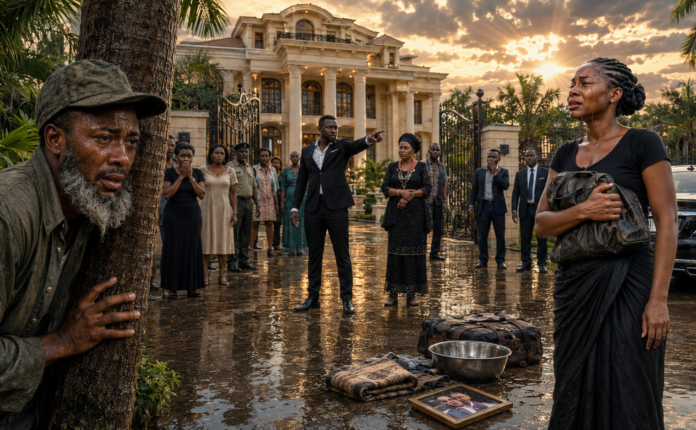


Her sandals were worn.
To the wealthy families, that was enough to decide she did not belong.
“Who invited the beggar girl?” someone mocked.
Even the bride’s relatives laughed as Amara lowered her eyes.
She had come only to deliver baskets she had woven for the ceremony.
But when one basket slipped, a pendant fell onto the ground.
A wealthy elder stared at it.
Then smiled cruelly.
“Thief.”
The word moved through the crowd like fire.
Amara froze.
She had owned the pendant for as long as she could remember.
The old woman who raised her said it was the only thing found beside her when she was discovered as a baby.
Nobody listened.
The village chief demanded that Amara leave.
Then a voice came from beyond the crowd.
“That is not her name.”
Everyone turned.
An old beggar stood near the gate.
His clothes were torn.
His walking stick shook.
But his eyes were fixed on Amara.
The chief frowned.
“What did you say?”
The old man stepped forward.
“I said her name is not Amara.”
He pointed toward the pendant.
“That symbol belonged to the House of Adeyemi.”
The courtyard fell silent.
Twenty years earlier, the chief’s sister disappeared during a storm while carrying her newborn daughter.
The woman was later found.
The baby was never recovered.
Until now.
The beggar revealed he had once served as a palace guard.
He had seen the infant before she vanished.
Hidden beneath Amara’s bracelet was a crescent-shaped birthmark he remembered.
The chief stared at her wrist.
His face changed.
Amara was not an unwanted orphan.
She was the missing child of the royal family.
Then the old beggar revealed something worse.
The baby had not been lost in the storm.
Someone inside the royal household had paid to have her taken away.
Amara looked across the wedding crowd.
The people who had laughed were silent.
The elder who called her a thief stepped backward.
And the old beggar raised his walking stick toward one guest.
“I know who paid me to keep quiet.”
The wedding stopped.
Because the poorest girl in the village had found her true name.
And the person who stole it was standing only feet away.