For most parents, the teenage years are already difficult. There are school events, friendships, first parties, first mistakes, growing independence, and the emotional challenge of watching children slowly become adults. But for Michelle Obama, raising daughters during those years came with a pressure most families will never understand: the whole world was watching.
The former first lady has opened up about the hidden struggle of trying to give her daughters, Malia and Sasha Obama, a normal teenage life while they were living under the spotlight of the White House. Speaking on SiriusXM’s Let’s Talk Off Camera with Kelly Ripa, Michelle described the experience as exhausting, emotional, and at times a “nightmare,” especially when her daughters began doing the ordinary things teenagers do.
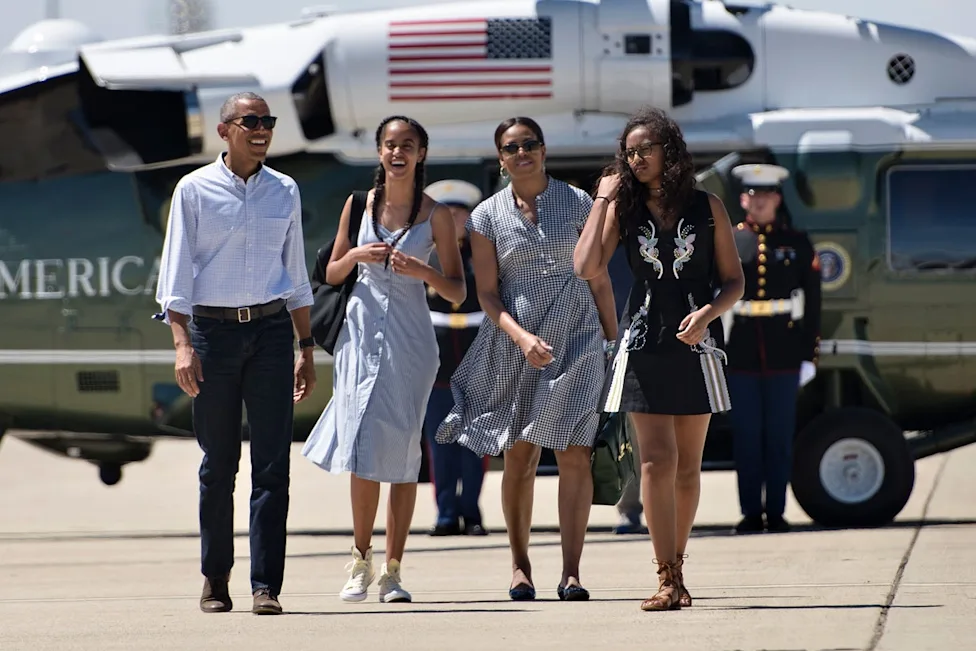
Malia was only 10 years old and Sasha was just 7 when their father, Barack Obama, was elected president in 2008. The world watched them walk into the White House as young girls. But during Barack Obama’s second term, they were no longer little children. They were growing into teenagers, and that meant school dances, sports teams, college searches, friends, parties, and the normal testing of boundaries that comes with adolescence.
Michelle said her daughters had to learn to drive, attend prom, travel to other schools, play on teams, visit colleges, go to parties, and experience the same growing pains as other teenagers. She also acknowledged that they tried things like drinking and smoking, not as a scandalous confession, but as part of a larger point: they were normal teenagers trying to grow up under very abnormal conditions.
That was the painful balance Michelle and Barack Obama had to manage. Their daughters deserved room to make mistakes, learn, and mature. But unlike most teens, one wrong photo or one bad moment could have become national gossip.
Michelle said every weekend felt stressful because the family had to work hard to make sure their daughters’ regular teenage behavior did not end up in the tabloids. For any parent, that fear is relatable. For a former first family, it was magnified by fame, politics, cameras, and public judgment.
The former first lady’s comments offer a rare look behind the polished image of life inside the White House. From the outside, the Obama family appeared calm, controlled, and graceful. But behind that public image was a mother trying to protect her children from a world that often forgets public figures still have private lives.
Michelle explained that raising children under Secret Service protection required “a lot of intentionality.” Simple things that other parents might arrange with a quick phone call became complicated. A playdate was not just a playdate. If Malia or Sasha were invited to another child’s house, security teams had to inspect the home first. Families had to answer sensitive questions. Homes had to be checked. Guns, drugs, and safety risks had to be considered before the girls could do something as ordinary as spend time with a friend.
That reality made childhood harder to keep normal. Michelle said when children are protected by the Secret Service, parents have to work twice as hard to create normal moments. The girls could not simply show up at a friend’s house, attend events freely, or move through life unnoticed. Their childhood was surrounded by protection, but that protection also created barriers.
The story is not just about the Obama family. It speaks to a bigger question about children who grow up in the shadow of fame. How much privacy should they be allowed? How much pressure should the public place on them? And how fair is it to judge teenagers for doing teenage things simply because their parents are famous?
Michelle’s comments also reveal the emotional burden of motherhood in public life. She was not only the first lady of the United States. She was also a mother watching her daughters grow up, knowing they could be criticized, photographed, misunderstood, or mocked for the same mistakes many young people make quietly.
Now that Malia and Sasha are adults, Michelle said her focus has shifted. She spoke about what she calls the “Obama tax,” meaning the lifelong pressure and attention that comes with being the children of a former president. It is a kind of public burden they did not choose, but one they will carry because of their family name.
Michelle acknowledged that the name brings privilege and opportunity, but also pressure. Her goal, she said, is to help her daughters understand that fame is not the center of their identity. They must still live their own lives, build their own character, and not believe that the world revolves around them.
That message appears to be something both daughters have taken seriously.
Malia Obama, now building a career in film, made headlines when she chose to use the name “Malia Ann” for her short film The Heart, which screened at the 2024 Sundance Film Festival. Instead of leaning on the Obama surname, she used her first and middle name, a move many saw as an effort to step into the creative world on her own terms.
Barack Obama later spoke about that decision, saying he was not surprised. He said his daughters are sensitive about using the family name and do not want people to assume their achievements are simply handed to them. According to him, Malia wanted viewers to watch her work without immediately attaching it to the Obama legacy.
That desire to be seen as an individual says a lot about the way Malia and Sasha were raised. Despite growing up with historic privilege, they also grew up with strong reminders that they needed to remain grounded. Their parents wanted them to understand that public attention was connected to their father’s job, not proof that they were more important than anyone else.
For Michelle, the challenge was never only about blocking tabloid stories. It was about protecting her daughters’ humanity. She wanted them to have room to grow, fail, learn, and become themselves without every step becoming a headline.
Her words also show how easily the public can forget that children of famous families are still children. They may live in beautiful homes, travel with security, and appear at major events, but they still face fear, insecurity, peer pressure, confusion, and the ordinary struggles of growing up.
Malia and Sasha’s teenage years were different from most, but Michelle’s concerns were deeply familiar. Every parent worries about who their children spend time with, what choices they make, and whether they are safe. The difference is that the Obamas had to worry not only about safety, but also about public exposure.
A teenager at a party could be a private family issue for most people. For the Obama daughters, it could have become a national story.
That is what made the experience so difficult. Michelle and Barack Obama were trying to raise grounded daughters while also protecting them from a culture that often turns young people’s mistakes into entertainment.
In many ways, Michelle’s reflection is not a scandalous confession. It is a reminder that even inside one of the most powerful homes in the world, parenting is still parenting. Love still means protection. Discipline still matters. Privacy still matters. And children still need space to grow into adults without being defined by their worst or most awkward moments.
Today, Malia and Sasha are carving out their own paths. Malia is pursuing creative work in film, while Sasha has continued building her life away from the constant political spotlight. Both have largely stayed private, appearing in public only occasionally and carefully.
Michelle’s honesty gives the public a more human view of the Obama family. Behind the speeches, historic elections, official portraits, and global attention was a mother trying to keep her daughters safe, normal, humble, and free.
The story also raises a powerful question for society: when children are born into fame, do we allow them the grace to grow up?
For Michelle Obama, the answer was clear. Her daughters did not choose the White House. They did not choose the spotlight. They were children who deserved a childhood, teenagers who deserved privacy, and young women who now deserve the chance to build their own lives.
That may be the strongest message behind her comments. The world saw Malia and Sasha as the daughters of a president. Michelle saw them first as her children.
And for a mother living under one of the brightest spotlights in the world, protecting that truth was one of the hardest jobs of all.