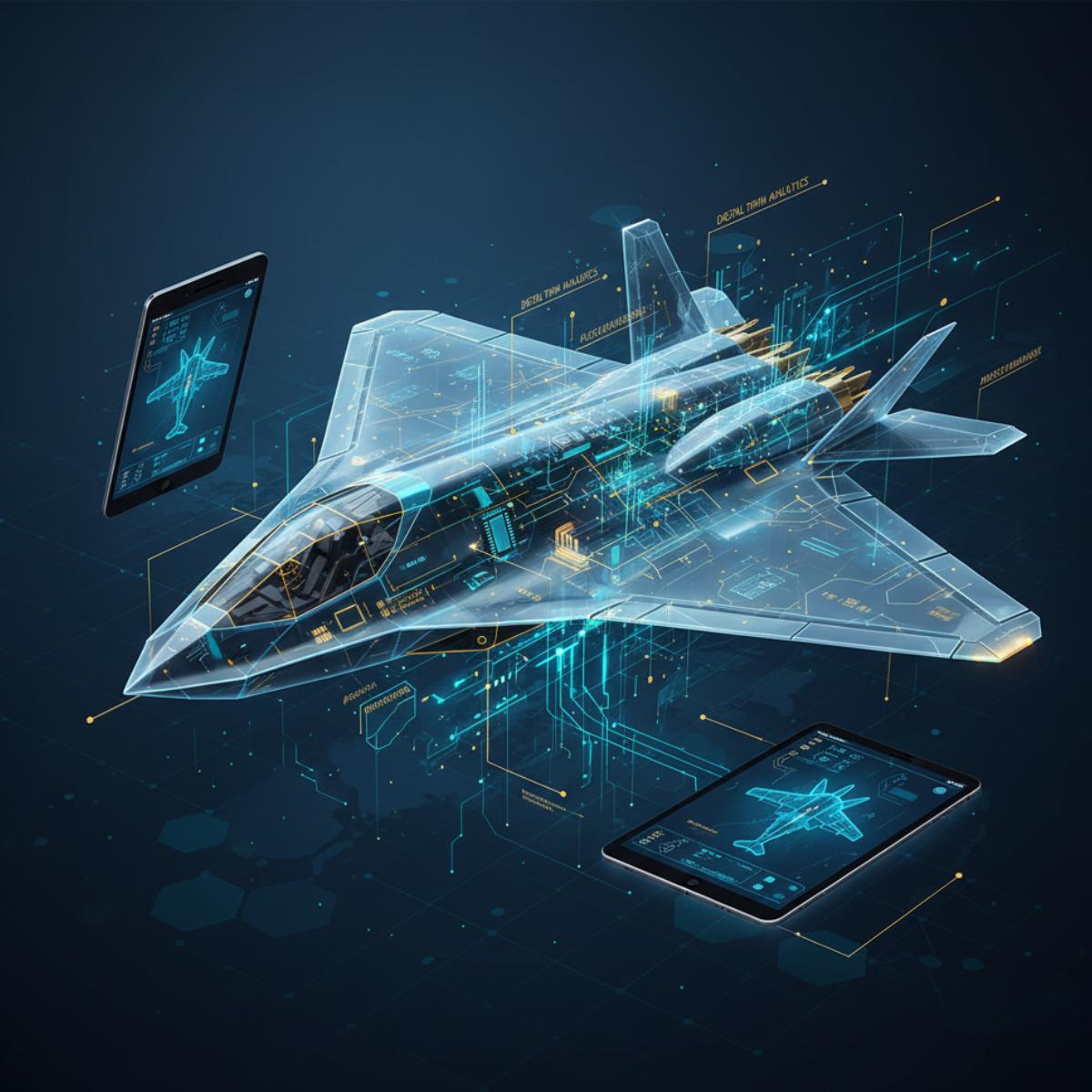
For decades, the United States possessed something no rival could match:
Absolute dominance in stealth air combat.
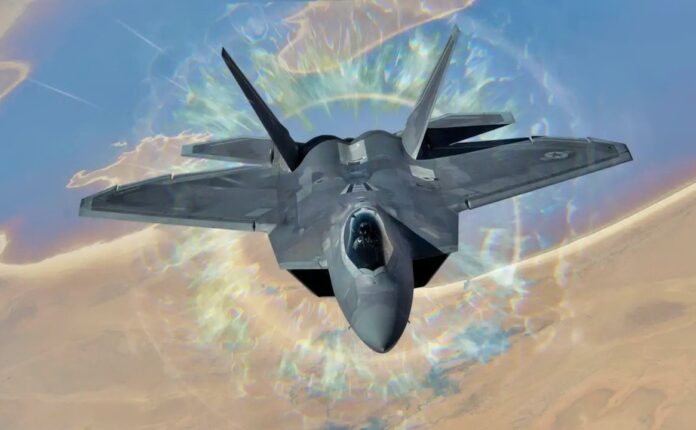
At the center of that dominance stood the Lockheed Martin F-22 Raptor — a fighter jet so advanced that many military experts believed no nation would rival it for generations.
Then China unveiled the Chengdu J-20.
You May Also Like

Long, angular, stealthy, and unmistakably modern, the J-20 shocked military observers around the world. It signaled that China had entered the elite club of fifth-generation fighter powers far faster than many analysts expected.
But according to defense experts, intelligence officials, and years of espionage investigations, China may not have achieved that breakthrough alone.
Many believe Beijing accelerated its rise by systematically stealing Western military technology — particularly from the United States.
Today, the J-20 has become more than just a fighter jet.
It is the symbol of a new technological arms race between two superpowers.

The Fighter That Changed the Balance of Power
When the F-22 Raptor entered service in 2005, it was unlike anything the world had ever seen.
Built by Lockheed Martin, the aircraft combined:
- Stealth technology
- Supercruise capability
- Extreme maneuverability
- Advanced sensors
- High-speed data fusion
The result was an air superiority fighter designed to dominate enemy aircraft before they even knew it was there.
For years, America’s rivals struggled to catch up.
Then, in 2011, China’s J-20 made its first public flight.
Military analysts immediately noticed similarities between the Chinese aircraft and American stealth fighters — especially the F-22 and the Lockheed Martin F-35 Lightning II.
What once seemed impossible had suddenly become reality:
China now possessed a fifth-generation stealth fighter of its own.


How Espionage Accelerated China’s Military Rise
Experts say the issue is not whether China copied American technology.
The real debate is how much it copied.
Former Acting Under Secretary of Defense for Policy James Anderson explained that espionage significantly accelerated China’s military aviation progress.
“What we know is that because of the espionage efforts, China’s J-20 is more advanced than it otherwise would be.”
For decades, China allegedly used a vast network of intelligence operations to gather sensitive Western defense information.
According to investigators and analysts, these methods included:
- Cyber espionage
- Hacking defense contractors
- Recruiting insiders
- Bribery
- Academic infiltration
- Industrial espionage
- “Honey trap” operations
The goal was simple:
Reduce decades of research into years.
Instead of starting from zero, Chinese engineers could study technologies already developed by the United States and adapt them for domestic weapons programs.
That shortcut may have saved Beijing billions of dollars and years of development time.


The Race for Stealth Technology
Stealth aircraft are among the most difficult machines ever created.
Every curve, angle, material, coating, and air intake is designed to reduce radar visibility.
The F-22 was America’s crown jewel because mastering stealth technology requires:
- Advanced computing
- Precision manufacturing
- Radar science
- Specialized materials
- Extremely sophisticated engines
For years, analysts doubted China could independently close that gap quickly.
Yet the J-20 emerged far sooner than expected.
Its design features immediately sparked global debate:
- Similar stealth shaping
- Internal weapons bays
- Radar-defeating geometry
- Advanced sensor integration
While the J-20 is not considered a direct copy of the F-22, many defense experts believe stolen American aerospace data helped China leap forward technologically.
The result was a fighter that dramatically narrowed the airpower gap between Washington and Beijing.


The Engine Problem China Couldn’t Solve
Building a stealth airframe is difficult.
Building a world-class jet engine is even harder.
For decades, China struggled to produce engines powerful and reliable enough for advanced fighters. Many early Chinese combat aircraft relied heavily on Russian engine technology.
Military analysts often joked that China could build modern-looking aircraft but still lacked the engine expertise to match the West.
That weakness became one of Beijing’s biggest strategic priorities.
According to experts, China aggressively pursued Western aerospace engine technology through espionage and recruitment operations.
One of the most significant cases emerged in 2022, when Chinese intelligence operative Yanjun Xu was convicted in the United States for attempting to steal trade secrets from American aerospace companies, including proprietary jet engine technology connected to companies like GE Aerospace.
The case revealed how valuable advanced engine technology had become in the global military competition.
Jet engines are not just machines.
They are the heart of air superiority.


The Dangerous New Reality
For much of the post-Cold War era, the United States operated with overwhelming technological superiority.
That era is changing.
Today, China fields:
- Advanced stealth fighters
- Hypersonic weapons
- Long-range missiles
- Expanding naval power
- Sophisticated cyber warfare capabilities
The J-20 represents one piece of a much larger military modernization effort by the People’s Liberation Army.
And the stakes are enormous.
Tensions surrounding Taiwan have intensified dramatically in recent years, raising fears that future conflicts could involve advanced stealth aircraft from both nations operating in the same battlespace.
Military experts warn that technological gaps once measured in decades are shrinking rapidly.
According to analyst Matt McInnis, China may now trail the United States in some critical aerospace areas by only 10 to 15 years — far closer than the 20- to 30-year gap seen in previous generations.
That shift is transforming global military strategy.


Can the J-20 Defeat the F-22?
The truth is:
Nobody fully knows.
No confirmed combat engagement between the F-22 and J-20 has ever occurred.
On paper, the F-22 still holds major advantages in:
- Combat experience
- Pilot training
- Engine performance
- Stealth refinement
- Air combat maneuverability
The United States also benefits from decades of operational experience integrating stealth aircraft into real-world warfare.
But the J-20 was never meant to be a simple copy.
China designed it for its own strategic environment — particularly long-range operations in the Pacific.
Many analysts believe the J-20’s greatest danger lies not in one-on-one dogfights, but in how it integrates into China’s broader military network of missiles, drones, radar systems, and electronic warfare.
Modern air combat is no longer just aircraft versus aircraft.
It is system versus system.


The Silent War Behind the Headlines
The battle between the United States and China is no longer fought only with tanks, ships, and fighter jets.
It is increasingly fought through:
- Information
- Technology
- Artificial intelligence
- Cyber warfare
- Industrial espionage
In this new era, stealing secrets can be as strategically valuable as winning battles.
That reality has forced governments and defense companies to rethink how they protect military research and sensitive technologies.
Because once knowledge is stolen, it cannot easily be taken back.
And in the race for military dominance, even a few stolen years can change the balance of power.


The New Air War Has Already Begun
The rise of the J-20 marks the beginning of a new chapter in global military history.
For decades, America’s stealth advantage appeared untouchable.
Now, a new rival is closing the distance.
Whether through innovation, espionage, or relentless industrial ambition, China has transformed itself into a true aerospace competitor capable of challenging U.S. air dominance in ways once considered impossible.
And high above the Pacific skies, two stealth giants now symbolize the future of global power:
The American F-22 Raptor.
And China’s rising J-20.
The contest between them may shape the balance of military power for decades to come.