For thirty-five years, I sacrificed everything for my son. I paid his bills, helped raise his children, and gave up my weekends without complaint. But the moment I finally said no, he drove three hours to confront me. What he didn’t know was that I had one final decision to make — and it would change his family’s life forever.
My name is Eleanor Bennett.
I’m sixty-seven years old.
And for most of my adult life, I believed being a good mother meant never saying no.
You May Also Like



No matter how tired I was.
No matter how much money I had already given.
No matter how badly I needed a little peace.
I always answered the phone.
I always opened the door.
I always found a way.
Until that Friday night.
The night my son appeared at my lakeside resort carrying a folder he had no right to possess.
THE FOLDER THAT SHOULD HAVE BEEN LOCKED AWAY
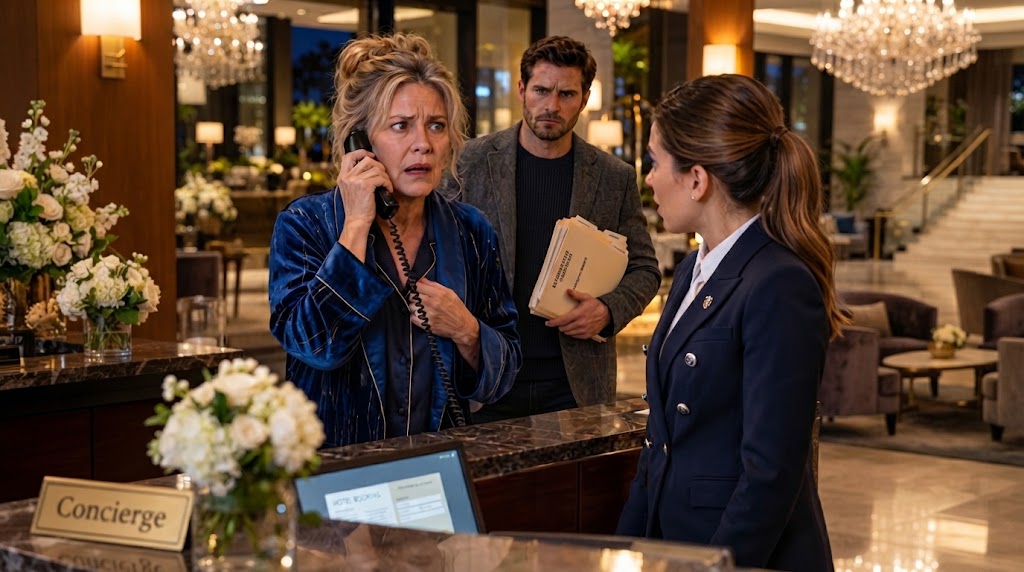
“Ma’am?” the receptionist repeated. “Would you like me to send him up?”
I tightened my grip on the phone.
“No. Please don’t give him my room number. I’ll come downstairs.”
I hung up, quickly changed into a sweater and trousers, and stood in front of the mirror.
For a moment, I barely recognized the woman looking back at me.
For years, my face had carried the constant expression of someone preparing to apologize.
Not tonight.
I walked downstairs.
Jason stood near the fireplace in the lobby.
He was still wearing the same gray polo shirt he’d worn at the barbecue. His hair was disheveled, his face flushed, and under his arm was a thick manila folder.
I recognized it instantly.
JASON.
My handwriting.
My folder.
My private financial records.
My stomach tightened.
“How did you get that?”
He didn’t answer.
Instead, he marched toward me.
“Mom, what the hell is going on?”
Several guests glanced in our direction.
I kept my voice low.
“How did you get into my house?”
Jason rolled his eyes.
“Oh, for God’s sake.”
“Answer me.”
He held up the folder.
“You left all this stuff lying around.”
“No, Jason. It was inside my locked desk.”
He looked away.
That was answer enough.
Then I noticed something else.
A small brass key hanging from his car keys.
My spare office key.
The one I had given him years earlier for emergencies.
“Did you use my emergency key to open my desk?”
He sighed.
“Mom, you’re being ridiculous.”
“Did you?”
“Yes! Fine! I needed to know what you were planning!”
I stared at him.
“You went through my private papers because I refused to babysit?”
He lowered his voice.
“You’ve been acting strangely. Changing locks, ignoring messages, disappearing without telling anyone. Chloe thought you might be having some kind of breakdown.”
I almost laughed.
“A breakdown?”
“You’re sixty-seven, Mom. People worry.”
I looked directly into his eyes.
“Nobody was worried when I was paying your bills.”
He opened his mouth.
Then closed it.
For the first time that evening, he seemed unsure what to say.
WHAT HE FOUND INSIDE THE FOLDER
Jason pulled out several sheets of paper.
“What’s all this?”
I glanced at the first page.
A spreadsheet.
One I’d prepared before leaving.
Every payment I’d made on his behalf during the previous eight years.
The minivan.
The groceries.
School activities.
Medical bills.
Insurance.
Emergency loans.
Utilities.
Even the down payment on their house.
I had never intended to show him those figures at the resort.
But apparently he had decided to read them himself.
“Why are you keeping track of everything you’ve ever done for us?” he demanded.
“Because I finally wanted to know.”
He shook the papers.
“You’re making us look like criminals.”
“No. I’m looking at my finances.”
His voice rose.
“Three hundred thousand dollars? You seriously expect me to believe you’ve given us three hundred thousand dollars?”
I took the papers from his hand.
“Three hundred and eighteen thousand, four hundred and sixty dollars.”
Jason stared at me.
“That’s impossible.”
I slowly turned the pages.
“$28,000 toward your house down payment.”
“That was a gift!”
“Yes. It was.”
I continued.
“$46,000 in minivan payments and related expenses.”
He shifted.
“$37,000 in grocery transfers over eight years.”
“Mom—”
“$24,000 in school and extracurricular expenses.”
“Stop.”
“$19,000 in medical and dental bills.”
He looked toward the fireplace.
“And the rest includes household emergencies, repairs, insurance, and cash transfers.”
I closed the folder.
“Every number is supported by a bank statement or receipt. Some were gifts. Some were loans you promised to repay. I’m not pretending they’re all debts. But I needed to see how much I was spending.”
Jason swallowed.
Then he said the words that made me realize how deeply the problem ran.
“But you could afford it.”
I stared at him.
“Excuse me?”
“You have retirement savings. Dad left you the house. It’s not like you’re struggling.”
I felt something cold settle in my chest.
His father had not left me that house.
I had purchased it myself.
After his father walked away.
After years of working double shifts.
After years of paying a mortgage on one income.
But somehow, in Jason’s mind, everything I had earned was simply an account he was entitled to use.
“Jason,” I said quietly, “having money does not mean I owe it to you.”
He frowned.
“But we’re family.”
I nodded.
“Exactly. And family should care whether I’m happy, too.”
THE QUESTION HE COULDN’T ANSWER
We sat in a quiet corner of the lobby.
Jason placed the folder between us.
I looked at him for a long moment.
Then I asked:
“When was the last time you called me just to see how I was doing?”
He seemed confused.
“What?”
“The last time you called and didn’t ask for money, babysitting, groceries, a ride, or some other favor.”
He leaned back.
“That’s unfair.”
“Then tell me.”
He stared at the carpet.
I waited.
Finally, he muttered, “I don’t know.”
I nodded.
“I do.”
He looked up.
“It was seventeen months ago.”
His face changed.
“It was my birthday,” I continued. “You called to wish me a happy birthday. We talked for eleven minutes.”
He shifted uncomfortably.
“Mom…”
“Then Chloe called thirty minutes later to ask if I could pick up the kids because she had a headache.”
He rubbed his forehead.
“That doesn’t mean we don’t love you.”
“I hope it doesn’t.”
My voice cracked slightly.
“But somewhere along the way, I stopped feeling like your mother and started feeling like your unpaid employee.”
For the first time, Jason didn’t interrupt.
I continued.
“I love your children. All five of them. I would never blame them for any of this. But loving my grandchildren doesn’t mean surrendering every weekend until I die.”
His eyes filled with frustration.
“So what are we supposed to do?”
I looked at him.
“Raise your children, Jason.”
He stared at me.
“That’s your responsibility. Not mine.”
THE PHONE CALL FROM CHLOE
Jason’s phone rang.
Chloe.
He answered immediately.
“Yeah, I’m with her.”
I could hear her voice through the speaker.
“Well? Is she coming back?”
Jason glanced at me.
“No.”
“What do you mean, no?”
“She doesn’t want to.”
Chloe’s voice became shrill.
“Jason, we have dinner reservations tomorrow! My sister’s coming over Sunday! We cannot cancel everything because your mother suddenly wants a vacation!”
I leaned forward.
“Chloe?”
A pause.
Then:
“Eleanor?”
“Yes.”
She sighed dramatically.
“Look, I don’t know what you’re trying to prove, but this is childish.”
I took a breath.
“Chloe, when you announced at the barbecue that I would babysit your five children every weekend, did you ever consider asking me first?”
Silence.
Then she scoffed.
“We thought you’d be happy to spend time with your grandchildren.”
“I am happy to spend time with them.”
“Then what’s the problem?”
“The problem is that you believe my time belongs to you.”
She laughed.
“Oh, please. It’s not like you’re working anymore.”
I closed my eyes.
There it was again.
The belief that retirement meant my life had stopped mattering.
“Chloe, I’m retired. I’m not dead.”
Jason stared at me.
I continued.
“I have friends. I have hobbies. I have places I want to visit. And sometimes, I want to spend a Saturday reading a book without anyone asking me for breakfast.”
Chloe snapped.
“Well, maybe you should have thought about that before becoming a grandmother!”
For several seconds, I said nothing.
Then I replied:
“And perhaps you should have thought about childcare before expecting someone else to provide it for free every weekend.”
Jason lowered the phone.
Chloe was still talking.
I could hear her shouting.
But I was finished.
MY FIRST REAL BOUNDARY
I stood.
“Jason, I’m going back to my room.”
He rose quickly.
“Mom, wait.”
I looked at him.
“You have the weekend to figure out your childcare arrangements.”
“Just this weekend?”
“No.”
His expression changed.
“What?”
“From now on, I will decide when I babysit. You may ask. I may say yes. And sometimes I will say no.”
He stared at me.
“And the minivan?”
I paused.
Of course.
Even now, after everything we’d discussed, he was thinking about the money.
“The automatic payments stop next month.”
His mouth fell open.
“You can’t do that!”
“I can, Jason. The loan is in your name. I’ve been helping you pay it.”
“But we depend on that money!”
“I know.”
“Then how are we supposed to manage?”
I looked at him sadly.
“That’s something you and Chloe will have to work out together.”
He shook his head.
“You’re going to ruin us.”
I felt a familiar stab of guilt.
For a moment, the old Eleanor almost returned.
The woman who would apologize.
Write another check.
Cancel her vacation.
Drive home and prepare breakfast for five children.
Then I remembered something my late mother used to say.
If you keep carrying someone who refuses to walk, eventually you’ll both collapse.
I lifted my chin.
“Jason, I am not ruining your family by refusing to finance it indefinitely.”
He looked at me for a long moment.
Then he said something that broke my heart.
“Dad would never have done this to me.”
I felt the words like a slap.
His father.
The man who disappeared when Jason was nine.
The man who missed graduations, birthdays, and school performances.
The man who never sent a birthday card.
The man whose absence had forced me to become two parents at once.
I looked at my son.
“You’re right,” I said quietly.
“Your father never had to say no to you.”
Jason looked confused.
“Because he was never there when you needed him.”
The words hung between us.
Then I picked up the folder.
“Goodnight, Jason.”
And walked away.
THE WEEKEND THAT CHANGED MY LIFE
The next morning, I woke at seven.
Not because someone needed breakfast.
Not because a grandchild was crying.
Not because Chloe had scheduled another activity.
I woke because sunlight was streaming through the curtains.
For a long time, I simply lay there.
Listening.
No shouting.
No television.
No footsteps pounding down the hallway.
Just birds outside.
And the soft sound of water against the lakeshore.
I ordered breakfast.
Eggs Benedict.
Fresh fruit.
Coffee.
A warm croissant.
I ate every bite slowly.
Then I went for a massage.
Afterward, I sat beside the lake with my book.
I read forty-seven pages without interruption.
Forty-seven.
It sounds ridiculous, doesn’t it?
A grown woman feeling proud because she finished forty-seven pages of a novel.
But after years of living around everyone else’s schedules, it felt like winning the lottery.
That afternoon, I met a woman named Patricia at the resort’s garden café.
She was seventy-one.
Widowed.
Traveling alone.
We began talking about books.
Then retirement.
Then children.
Eventually, I told her why I was there.
She listened quietly.
When I finished, she smiled.
“My dear, do you know what the difference is between helping someone and enabling them?”
I shook my head.
“Helping someone makes their life better without destroying yours.”
She took a sip of tea.
“Enabling them teaches them that your life is available for their convenience.”
I stared at her.
She continued.
“Children need support. But adults also need responsibility.”
That afternoon, Patricia and I walked along the lake.
We laughed.
We talked.
We made plans to meet again.
And I realized something remarkable.
I had spent so many years being needed that I had forgotten what it felt like to be wanted.
Not for money.
Not for babysitting.
Not for favors.
Just for my company.
THE EMERGENCY I WASN’T EXPECTING
Sunday evening, I turned my phone back on.
Forty-three missed calls.
Twenty-seven text messages.
Nine voicemails.
Most were from Jason and Chloe.
Some were from relatives who had apparently been told I had abandoned my grandchildren.
I ignored the accusations.
Then I noticed a voicemail from my oldest granddaughter, Lily.
She was fourteen.
Her message was only seventeen seconds long.
“Grandma, it’s Lily. I hope you’re having a nice vacation. Mom and Dad are upset, but I think you deserve a break. I just wanted to say I love you.”
My eyes filled with tears.
I listened to it three times.
Then I called her.
She answered immediately.
“Grandma!”
“Hello, sweetheart.”
“Are you okay?”
I smiled.
“I’m wonderful.”
“Good.”
She hesitated.
“Mom says you’re mad at us.”
My heart sank.
“Oh, Lily. I’m not angry with you or your brothers and sisters.”
“Really?”
“Of course not. I love you all very much.”
She sounded relieved.
Then she whispered:
“Can I tell you something?”
“Anything.”
“Sometimes I don’t want to babysit them either.”
I sat up.
“What do you mean?”
She paused.
“When you aren’t there, Mom makes me watch the little ones. I don’t mind helping sometimes, but last weekend I missed my friend’s birthday party because I had to stay home.”
I stared at the lake.
A familiar pattern was forming.
When I wasn’t available, Lily became the backup parent.
I gently said:
“Lily, helping your family is kind. But you deserve time to be a teenager, too.”
She became quiet.
Then she asked:
“Grandma, when you come back, can we do something together? Just you and me?”
I smiled through my tears.
“Absolutely.”
“Without the little kids?”
I laughed softly.
“Just you and me.”
THE LETTER I SENT MY SON
When I returned home Monday morning, I didn’t call Jason.
I didn’t argue with Chloe.
Instead, I sat at my kitchen table and wrote a letter.
Not an angry letter.
Not a list of accusations.
A letter explaining how things would change.
I addressed it to both of them.
“Dear Jason and Chloe,
I love you and the children. That has not changed.
But the arrangement we have had for years is no longer healthy for me.
I am sixty-seven years old.
I worked hard for decades to raise my son, build a home, and save enough money to enjoy my retirement.
I want to enjoy the years I have left.
I will not provide automatic childcare every weekend.
I will not accept unannounced drop-offs.
I will not continue paying your recurring household expenses.
I will happily spend time with my grandchildren when we make arrangements that work for everyone.
I am their grandmother.
Not their unpaid nanny.
I am your mother.
Not your personal bank.
And I am a person with a life of my own.
I hope we can build a relationship based on love rather than obligation.
Love,
Mom.”
I placed the letter in an envelope.
Then I made one final phone call.
To my financial adviser.
WHAT MY FINANCIAL ADVISER DISCOVERED
For years, I had treated my retirement savings like an emergency fund for my son’s household.
Whenever Jason called, I transferred money.
Whenever Chloe mentioned an expense, I helped cover it.
I never stopped to calculate the cumulative effect.
Now I wanted to know the truth.
My financial adviser, Daniel, reviewed my accounts.
He called me two days later.
“Eleanor, we need to talk.”
I felt my stomach tighten.
“Is something wrong?”
He hesitated.
“You’re not in immediate financial danger, but you’ve been drawing from your savings much faster than your retirement plan anticipated.”
I sat down.
“How much faster?”
He explained the numbers.
The support I’d provided over the years had reduced my retirement investments by hundreds of thousands of dollars, including investment growth I had missed.
The regular transfers were placing unnecessary pressure on the income I needed for my own future.
Then he asked me something no one in my family had asked in years.
“Eleanor, what do you want retirement to look like?”
I stared at the wall.
No one had ever asked me that.
Not Jason.
Not Chloe.
Not my relatives.
They had all assumed my retirement existed to solve their problems.
I took a deep breath.
“I want to travel.”
Daniel waited.
“I want to see Italy.”
I smiled.
“And Greece.”
“Anything else?”
“I want to take painting lessons.”
He laughed warmly.
“That sounds wonderful.”
“And maybe,” I whispered, “I’d like to stop feeling guilty every time I buy something for myself.”
Daniel became quiet.
Then he said:
“Eleanor, you worked your whole life for this chapter. You’re allowed to live it.”
THE DAY CHLOE CAME TO MY DOOR
Two weeks later, Chloe appeared on my porch.
Alone.
No children.
No minivan full of backpacks.
No demands for bagels.
Just Chloe.
She rang the doorbell.
For perhaps the first time since marrying Jason, she waited for me to open it.
I stood behind the door for a moment.
Then I let her in.
She looked around the living room.
Her eyes fell on the flowers by the window.
The new books on the coffee table.
The painting supplies I’d purchased.
“You redecorated.”
“A little.”
She nodded.
Then she sat down.
For several seconds, neither of us spoke.
Finally, she said:
“Jason and I have been fighting.”
I waited.
“The childcare costs are more than we expected.”
I nodded.
“I’m sorry.”
She looked at me.
“We didn’t realize how much you were doing.”
I almost laughed.
But there was something different in her voice.
Less entitlement.
More exhaustion.
She continued.
“We’re trying to rearrange our work schedules. Jason’s taking the kids on Saturdays now. I’m handling Sunday mornings.”
“That sounds like a start.”
She looked down at her hands.
Then she whispered:
“I was cruel to you at the barbecue.”
I didn’t interrupt.
“What I said about you not having a life anymore…”
Her voice cracked.
“It was horrible.”
I felt tears gathering.
She looked up.
“I’m sorry, Eleanor.”
For years, Chloe had treated me as if my only role was to make her life easier.
Now, for the first time, she seemed to see me as a person.
I nodded slowly.
“Thank you.”
She wiped her cheek.
“I don’t expect everything to go back to normal.”
“Good,” I said gently.
“Because normal wasn’t working for me.”
She gave a small, embarrassed smile.
Then she asked:
“Would you like to have dinner with us next Sunday? No babysitting. No requests. Just dinner.”
I thought for a moment.
“Yes.”
Her face brightened.
“But I’ll bring dessert because I want to,” I added. “Not because someone sends me instructions.”
Chloe laughed through her tears.
“Fair enough.”
MY SON’S APOLOGY
Jason came over the following evening.
He stood on my porch with his hands in his pockets.
For a moment, he looked like the little boy who used to come home after getting in trouble at school.
“Hi, Mom.”
“Hello, sweetheart.”
He stepped inside.
We sat in the kitchen.
He stared at the table for a long time.
Then he said:
“I’ve been thinking about what you said at the resort.”
I waited.
“About Dad.”
My chest tightened.
Jason took a breath.
“I said something cruel. I knew it would hurt you.”
I nodded.
“It did.”
His eyes filled with tears.
“I’m sorry.”
I looked at my son.
The little boy I had raised alone.
The man I had helped so much that I had unintentionally made it easier for him to avoid difficult responsibilities.
I loved him.
I always would.
But this time, I didn’t rush to remove his discomfort.
He needed to sit with what he’d done.
Finally, he spoke again.
“Chloe and I looked at our finances.”
I raised an eyebrow.
“And?”
“We’ve been spending money we don’t actually have.”
I nodded.
“We thought because you always helped, we were doing okay.”
He swallowed.
“But we weren’t.”
He looked at me.
“We were depending on you to keep everything together.”
My eyes filled.
Then he said the words I had waited years to hear.
“Mom, you already raised your child. You shouldn’t have to raise my family, too.”
I reached across the table and took his hand.
“Thank you, Jason.”
He squeezed my fingers.
Then he gave me a small smile.
“And for the record, I hope you enjoy Italy.”
I blinked.
“How did you know?”
“Chloe told me you bought a travel guide.”
I laughed.
He smiled.
“Send pictures.”
“I will.”
Then he added:
“Maybe one day, when we can afford it ourselves, we can take a family vacation together.”
I looked at him.
“That would be lovely.”
SIX MONTHS LATER
My life was almost unrecognizable.
I had joined a watercolor painting class.
I volunteered at the local botanical garden twice a month.
Patricia, the woman I’d met at the spa, had become one of my closest friends.
We took weekend trips together.
We visited museums.
We attended concerts.
Sometimes we did nothing more exciting than drink tea and laugh about our grandchildren.
And I discovered something astonishing.
There was still so much life left to live.
I still saw my grandchildren regularly.
But the visits were different.
Sometimes Lily and I went shopping.
Sometimes I took the younger children to the park for a few hours.
Sometimes they came over for Sunday lunch.
And sometimes I said no.
The first few times, Jason and Chloe seemed surprised.
Then they got used to it.
Life went on.
Nobody fell apart.
The world didn’t end because Grandma had plans.
And that was perhaps the greatest surprise of all.
THE TRIP I ALMOST NEVER TOOK
On my sixty-eighth birthday, I boarded a plane to Rome.
Patricia sat beside me.
We had planned three weeks in Italy.
Rome.
Florence.
Venice.
The Amalfi Coast.
Places I had dreamed of visiting since I was a young woman.
As the plane prepared for takeoff, I opened my phone.
There was a message from Jason.
“Happy birthday, Mom. Have an amazing trip. We love you.”
Then a photograph appeared.
All five grandchildren were standing in the kitchen, holding a homemade sign.
HAPPY BIRTHDAY, GRANDMA! ENJOY ITALY!
I smiled so widely my cheeks hurt.
Then I noticed one more message.
From Chloe.
“No babysitting requests for three weeks. Promise. Enjoy every minute.”
I burst out laughing.
Patricia looked at me.
“Good news?”
I showed her the photo.
She smiled.
“See? Sometimes people can learn.”
I nodded.
Then I looked out the window as the plane began moving down the runway.
For years, I had believed my family would fall apart if I stopped holding everything together.
But the truth was different.
When I finally stepped back, they learned to stand on their own.
And I learned how to live again.
THE MOMENT I KNEW EVERYTHING HAD CHANGED
One afternoon in Florence, Patricia and I sat at a small outdoor café overlooking a sunlit square.
Church bells rang in the distance.
Tourists wandered between centuries-old buildings.
A waiter placed two cappuccinos on our table.
I looked at the cobblestone street and felt tears gathering.
Patricia noticed.
“What’s wrong?”
I shook my head.
“Nothing.”
“Then why are you crying?”
I smiled.
“Because I’m happy.”
She reached across the table and squeezed my hand.
For the first time in decades, I wasn’t thinking about who needed me.
I wasn’t worrying about a minivan payment.
I wasn’t checking my phone for childcare instructions.
I wasn’t calculating how much money I could spare before the next family emergency.
I was sitting in Florence.
Drinking coffee.
Living a life I had almost given away.
And then I remembered Chloe’s words at the barbecue.
“It’s not like Grandma has a life anymore.”
I looked around the beautiful Italian square.
At the sunshine.
The music.
The laughter.
The extraordinary world stretching out before me.
And I whispered to myself:
“Oh, Chloe.”
I smiled.
“Grandma has a wonderful life.”
THE LESSON MY FAMILY FINALLY LEARNED
Today, I am sixty-nine years old.
My relationship with Jason and Chloe is better than it has been in years.
Not because I started giving them more.
But because I finally stopped giving them everything.
They learned to manage their finances.
They learned to organize childcare.
They learned that a grandmother is a blessing, not a permanent substitute for parental responsibility.
And I learned something equally important.
You can love your family deeply without sacrificing every piece of yourself.
A mother’s love does not expire when her children become adults.
But neither does her right to happiness.
I am still Jason’s mother.
I am still the grandmother of five wonderful children.
I still bake birthday cakes.
I still remember school performances.
I still offer help when I can.
But I also travel.
I paint.
I read.
I meet friends.
I make plans.
And sometimes, on a beautiful Saturday morning, I do absolutely nothing.
Without guilt.
Without explanation.
Without asking permission.
The old Eleanor would have called that selfish.
The new Eleanor calls it peace.
Last Sunday, Lily came over for lunch.
She’s sixteen now.
We sat in the garden drinking lemonade.
She looked at me and smiled.
“Grandma, can I ask you something?”
“Of course.”
“Are you happier now?”
I thought about the question.
Then I nodded.
“Yes, sweetheart. I really am.”
She smiled.
“Good. Because I want to be like you when I’m older.”
I laughed.
“An old lady with too many books and an expensive tea habit?”
She shook her head.
“No.”
She reached across the table and took my hand.
“A woman who knows she matters.”
My eyes filled with tears.
I squeezed her hand.
And in that moment, I realized that the greatest lesson I had taught my family wasn’t about money.
It wasn’t about babysitting.
It wasn’t even about boundaries.
It was about dignity.
Because when I finally began respecting my own life, I showed my grandchildren that theirs deserved respect, too.
And that lesson was worth more than every check I had ever written.
THE END.
❤️ THE LESSON OF THIS STORY
Never mistake someone’s kindness for an unlimited obligation.
Just because a mother spent her life raising her children doesn’t mean she must spend the rest of her life sacrificing her happiness for them.
Grandparents deserve love, respect, companionship, and the freedom to enjoy their own lives.
They are not free childcare services.
They are not emergency bank accounts.
They are not people whose dreams stopped mattering the moment their grandchildren were born.
A grandmother’s love should be appreciated, never exploited.
And sometimes, the most loving thing a parent can do for an adult child is to step back and let them take responsibility for their own life.
Because saying no to someone else’s demands can finally mean saying yes to the life you worked so hard to build.
If this story touched your heart, share it with someone who needs a reminder that growing older doesn’t mean giving up your dreams. Sometimes, the best chapters of life begin when you finally choose yourself.