
President Donald Trump Diagnosed with Chronic Venous Insufficiency – What Does It Mean?
Meta Description: President Donald Trump has been diagnosed with chronic venous insufficiency after reports of leg swelling. Here is what the condition means, how serious it is, and how it is usually treated.
President Trump’s Health Update Explained
President Donald Trump’s health became a major public topic after the White House confirmed that he had been diagnosed with chronic venous insufficiency, a common vein condition that can cause swelling in the lower legs and ankles.
The diagnosis came after reports that the president had experienced mild swelling in his legs. According to public reporting, doctors performed a medical evaluation, including vascular testing, and found signs of chronic venous insufficiency. The White House also said that more serious conditions, including deep vein thrombosis, arterial disease, heart failure, kidney problems, and systemic illness, were not found.
For many people, the phrase “chronic venous insufficiency” may sound alarming. But medical experts generally describe it as a common condition, especially among older adults. It does not automatically mean a person is seriously ill. However, it is still a condition that should be monitored and managed properly.
You May Also Like



So what exactly is chronic venous insufficiency? Why does it happen? What are the symptoms? And what does this diagnosis mean for President Trump?

: President Donald Trump speaking at the White House during a press conference.
What Is Chronic Venous Insufficiency?
Chronic venous insufficiency, often shortened to CVI, is a condition that affects the veins in the legs.
Normally, veins carry blood from the legs back up to the heart. Because blood has to move upward against gravity, the veins contain tiny one-way valves. These valves help keep blood moving in the right direction.
When those valves become weak, damaged, or unable to close properly, blood can flow backward and pool in the lower legs. Over time, this increases pressure inside the leg veins. That pressure can lead to swelling, discomfort, visible veins, skin changes, and in more serious cases, wounds or ulcers.
In simple words, chronic venous insufficiency means:
The veins in the legs are not moving blood back to the heart as efficiently as they should.
It is called “chronic” because it usually develops slowly over time and can last for years. It is not usually a sudden emergency, but it can become uncomfortable or more serious if ignored.
“Trump, 79, Sets Alarming Medical Record as Health Concerns Mount”
Why Does CVI Cause Leg Swelling?
Leg swelling is one of the most common signs of chronic venous insufficiency.
When blood pools in the lower legs, pressure builds inside the veins. This pressure can force fluid out of the blood vessels and into the surrounding tissues. That extra fluid causes the ankles, feet, or lower legs to look swollen.
This swelling may be more noticeable:
After standing for a long time
After sitting for a long time
At the end of the day
During hot weather
After long travel or reduced movement
Some people may also feel heaviness, aching, tightness, or tiredness in the legs.
For older adults, swelling in the legs can have many possible causes, including vein problems, heart problems, kidney problems, medications, blood clots, or reduced activity. That is why doctors usually check for more serious causes before confirming chronic venous insufficiency.
In President Trump’s case, public reporting said doctors performed additional checks and found no evidence of several more serious conditions.
Is Chronic Venous Insufficiency Dangerous?
In many cases, chronic venous insufficiency is not immediately dangerous. It is often described as a common and manageable condition, especially in people over 50 or 70.
However, “not immediately dangerous” does not mean it should be ignored.
If CVI becomes worse over time, it can lead to:
Persistent leg swelling
Varicose veins
Skin discoloration around the ankles
Dry, itchy, or irritated skin
A heavy or aching feeling in the legs
Open sores or venous ulcers in severe cases
The biggest concern is long-term progression. When pressure remains high inside the leg veins, the skin and tissue around the ankles can become damaged. This can make healing slower and increase the risk of wounds.
That is why doctors usually recommend lifestyle changes, compression therapy, and regular monitoring.
“Donald Trump’s broken families”
Medical awareness image showing lower-leg swelling related to poor vein circulation.
What Causes Chronic Venous Insufficiency?
CVI can develop for several reasons. In many people, it happens because the vein valves weaken with age. But age is not the only factor.
Common risk factors include:
Older age
Long periods of standing or sitting
Obesity or extra body weight
History of blood clots
Varicose veins
Family history of vein problems
Previous leg injury
Reduced physical activity
Smoking
Pregnancy, in some women
People who sit or stand for long hours may be more likely to experience symptoms because the calf muscles are not helping push blood upward as effectively.
The calf muscles act almost like a pump. When a person walks, the calf muscles squeeze the veins and help blood return to the heart. When a person sits for too long or stands still for too long, blood can collect in the lower legs more easily.
Why Older Adults Are More Likely to Develop CVI
Chronic venous insufficiency becomes more common with age because veins and valves can weaken over time.
As people grow older, blood vessels may lose some elasticity, and the valves inside the veins may not close as tightly as before. This allows blood to move backward and pool in the legs.
This is one reason doctors often describe CVI as common among older adults. President Trump is in an age group where this condition is more likely to appear.
Still, every case is different. A diagnosis does not tell the full story of someone’s overall health. Doctors look at symptoms, test results, physical exams, and other medical conditions before deciding how serious the situation is.
What About the Bruising on Trump’s Hand?
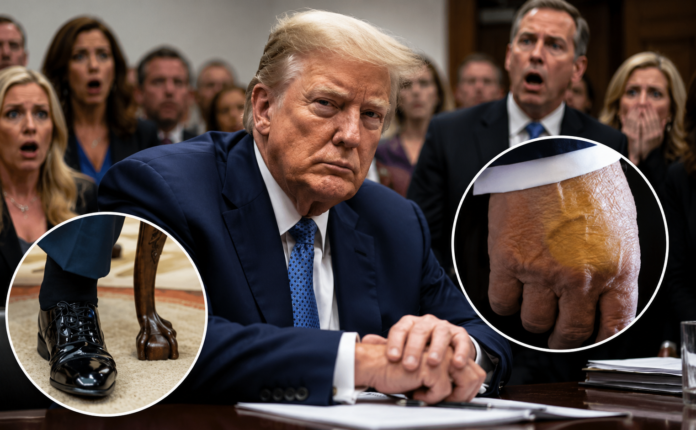
Public discussion around President Trump’s health also included visible bruising on his hand. According to reports, the White House said the bruising was related to minor soft-tissue irritation from frequent handshaking and aspirin use.
Aspirin can make some people bruise more easily because it affects blood clotting. That does not automatically mean something dangerous is happening, but it can make bruises more visible and slower to fade.
It is important not to confuse hand bruising with chronic venous insufficiency. CVI mainly affects the veins in the legs and lower body. The hand bruising was described separately from the leg swelling.
How Is Chronic Venous Insufficiency Diagnosed?
Doctors usually diagnose CVI with a combination of physical examination and imaging tests.
One of the most common tests is a venous Doppler ultrasound. This test uses sound waves to show how blood is moving through the veins. It can help doctors see whether blood is flowing backward, whether vein valves are working properly, and whether there are signs of a blood clot.
Doctors may also check for other causes of swelling, including:
Heart disease
Kidney problems
Liver problems
Blood clots
Medication side effects
Inflammation
Infection
Arterial circulation problems
This matters because swollen legs can be caused by many different health issues. A proper diagnosis helps separate a common vein condition from something more serious.
“Trump’s 5 biggest mistakes of his first 100 days”
Treatment: How Is CVI Usually Managed?
Treatment for chronic venous insufficiency depends on the severity of the symptoms.
For mild cases, doctors often recommend simple lifestyle steps.
1. Compression Stockings
Compression stockings are one of the most common treatments. They gently squeeze the legs, helping blood move upward and reducing swelling.
They come in different strengths, so people should use the type recommended by a healthcare provider.
2. Leg Elevation
Raising the legs above heart level for short periods can help reduce swelling. This allows gravity to help move blood and fluid away from the lower legs.
3. Walking and Exercise
Walking helps activate the calf muscles, which support blood flow back to the heart. Regular movement is one of the simplest ways to improve circulation.
4. Weight Management
For people who are overweight, losing weight may reduce pressure on the veins and improve symptoms.
5. Avoid Sitting or Standing Too Long
Changing position, stretching, and taking short walking breaks can help reduce pooling of blood in the legs.
6. Medical Procedures
In more advanced cases, doctors may recommend vein procedures to close or remove damaged veins. These treatments are usually considered when symptoms are severe or when conservative treatment does not help.
What Symptoms Should People Watch For?
Anyone with possible vein problems should pay attention to symptoms such as:
Swelling in the ankles or legs
Heavy or tired legs
Aching or throbbing pain
Varicose veins
Itching or dry skin near the ankles
Brownish or reddish skin discoloration
Leg cramps
Skin wounds that heal slowly
Open sores around the ankles
Some symptoms require urgent medical attention, especially if there is sudden swelling in one leg, severe pain, redness, warmth, chest pain, or shortness of breath. These can be signs of a blood clot or another serious condition.
Does This Diagnosis Affect Trump’s Ability to Serve?
Based on the public information available, the White House described President Trump’s condition as common and manageable. Reports also said doctors did not find evidence of several more serious medical problems.
Chronic venous insufficiency by itself does not necessarily prevent someone from working, traveling, speaking publicly, or carrying out daily responsibilities. Many people live active lives with CVI, especially when it is managed properly.
However, because President Trump is a public figure and currently serving in one of the most demanding positions in the world, any health update naturally receives intense public attention.
For voters, observers, and the media, the key question is not only the diagnosis but also how it is being monitored, whether symptoms progress, and whether doctors continue to provide clear information.
Why This Story Matters
This story matters for two reasons.
First, it gives the public more information about the health of a sitting president. Any medical condition involving a national leader becomes news because the role requires intense stamina, travel, decision-making, and public responsibility.
Second, it brings attention to a common health condition that many older adults experience. Chronic venous insufficiency affects millions of people, but many do not understand what it is until they notice swelling, pain, or visible veins.
Trump’s diagnosis may lead more people to ask important health questions:
Why are my ankles swelling?
Are my veins working properly?
Should I wear compression socks?
Is my leg swelling normal, or should I see a doctor?
Those are useful questions, especially for older adults or anyone who sits or stands for long periods.
“MELANIA TRUMP SHARES EMOTIONAL HEALTH UPDATE ABOUT DONALD TRUMP AFTER DIFFICULT WEEKS AWAY FROM THE PUBLIC EYE”
Final Thoughts
President Donald Trump’s diagnosis of chronic venous insufficiency sounds serious at first, but medical experts generally describe CVI as a common, manageable vein condition, especially among older adults.
The condition happens when leg veins struggle to return blood to the heart, causing blood to pool in the lower legs. This can lead to swelling, heaviness, aching, skin changes, and sometimes more serious complications if left untreated.
Public reporting said doctors ruled out more serious conditions, including blood clots, arterial disease, heart failure, kidney problems, and systemic illness. That is an important part of the story.
For most people, the lesson is simple: leg swelling should not be ignored. It may be caused by something manageable like chronic venous insufficiency, but it should still be checked by a medical professional to rule out more serious causes.
President Trump’s diagnosis is not just a political headline. It is also a reminder that circulation, vein health, and aging are important health issues that affect many people every day.




One Comment on “President Donald Trump Diagnosed with Chronic Venous Insufficiency – What Does it Mean?”