I arrived at Fort Calder before sunrise, when the world still felt undecided between darkness and morning. Cold air cut through the base carrying the smell of wet concrete and diesel fuel while soldiers moved like shadows beneath dim security lights. I carried one duffel bag, a sealed transfer file, and enough silence to make people uncomfortable. They noticed that silence immediately.
Most new arrivals try too hard. They smile too much, talk too fast, ask questions they think will help them fit in faster. I did none of that. I signed paperwork quietly, memorized the layout of the base, and listened more than I spoke. By lunchtime, they had already given me a name—“New Girl.”
The nickname spread quickly across Fort Calder because people liked easy labels. Some soldiers said it jokingly while others used it like a warning whispered behind my back. I ignored all of them because names only matter when you answer to them. Corporal Mason Reed noticed me faster than most.
Men like Mason always notice unfamiliar people because they treat every room like territory they own. Loud, charismatic, constantly surrounded by people laughing half a second too hard at his jokes. The kind of man who mistakes attention for authority. The first thing I heard him say about me was outside the mess hall. “She looks like she’d apologize if somebody robbed her.”
The group around him laughed immediately while I kept walking without reacting. That was my first mistake in his eyes. Men like Mason don’t hate weakness nearly as much as they hate being ignored. By late afternoon, dark clouds pressed low over the base while most personnel disappeared into routines and assignments.
I was carrying transfer paperwork through one of the older administrative corridors when I heard footsteps behind me. Three sets. Slow. Deliberate. I already knew who it was before they spoke. “Hey, New Girl.”
I turned calmly while Mason stood in the middle of the hallway with Boone Carter and Hollis Dean behind him. The corridor lights buzzed softly overhead while rain tapped against distant windows deeper inside the building. It was the kind of hallway people avoided because cameras rarely worked there anymore. “What do you want, Corporal?” I asked evenly.
The title irritated him instantly. I saw it in his jaw. “I think you need to learn how things work around here,” he said while stepping closer. I held his gaze calmly. “Then say what you came to say.” Something dangerous shifted inside his expression right then.
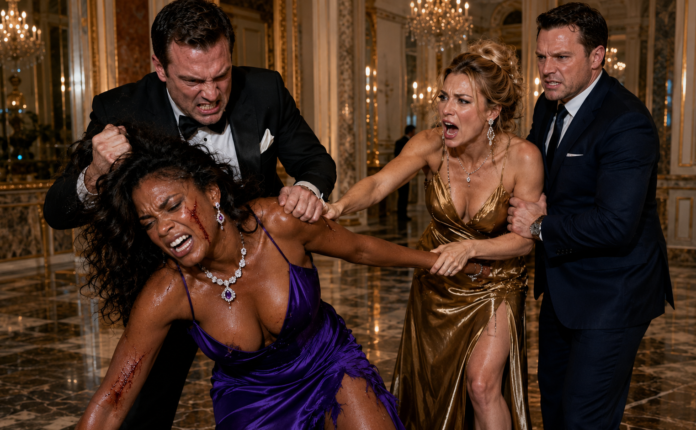
His hand slapped the folders from my arms. Paper scattered across the concrete floor while Boone laughed first and Hollis followed half a second later. The sound echoed sharply through the empty corridor while reports and forms slid across the ground around my boots. I crouched slowly to gather them—not because I was afraid, but because I was watching.
People reveal everything about themselves during moments they think don’t matter. Then Mason shoved me hard enough to slam my shoulder violently into the wall. Before I fully recovered, his boot drove sharply into my ribs. Pain exploded through my side while my lip split against my teeth and blood filled my mouth with the taste of metal and memory.
For one brief second, the hallway disappeared completely. Another room. Another man. Another version of myself who stayed on the floor because she thought surviving quietly was safer than fighting back. That version of me no longer existed anymore. I looked slowly at the blood beside the scattered paperwork.
Boone had stopped laughing now. Even Hollis looked uncertain suddenly. But Mason still believed he was in control. “Stay down,” he said confidently. I didn’t answer him. I stood up slowly instead. Very slowly.
That was the moment everything changed. Not because I threatened him. Not because I fought back. Because I didn’t react the way he expected me to. I picked up the final sheet of paper calmly and aligned the stack carefully in my hands while blood traced slowly from my mouth onto the floor.
Then I looked directly at him. And for the first time since this started, he stepped backward first. What he saw in my face wasn’t fear. It wasn’t anger either. It was judgment—cold, controlled, final.
I wiped the blood from my lip with my thumb and spoke quietly. “You just made a career-ending mistake.” They laughed again after that, but weaker this time. Forced. Uneasy. “You gonna report me?” Mason asked. “No,” I replied softly. “I’m going to remember you.”
Then I walked straight through them. And none of them moved. That night, Fort Calder told itself a different version of the story. In Mason’s version, I cried, begged, and broke down in the hallway while he “put me in my place.” People believed him because lies become easier when they match expectations.
Weak girl. Quiet transfer. Easy target. But lies depend on time, and time was the one thing I controlled now. Back in my quarters, I sat alone with ice pressed against my ribs while bruises darkened beneath my skin. Every breath hurt slightly. Blood stained the sink where I cleaned my face.
Pain sharpens memory. That’s why some people never truly heal from it. The sealed transfer file sat unopened beside me on the desk. I finally broke the seal and looked inside slowly. Not transfer orders. Not reassignment documents. A schedule. Monday — 0800. Combat Evaluation Cycle. Lead Instructor Assignment.
I read the roster carefully. Mason Reed. Boone Carter. Hollis Dean. I leaned back slowly in my chair and let silence settle around the room again—the same silence everyone on base mistook for weakness. They thought the hallway was the story. It wasn’t. It was the beginning.
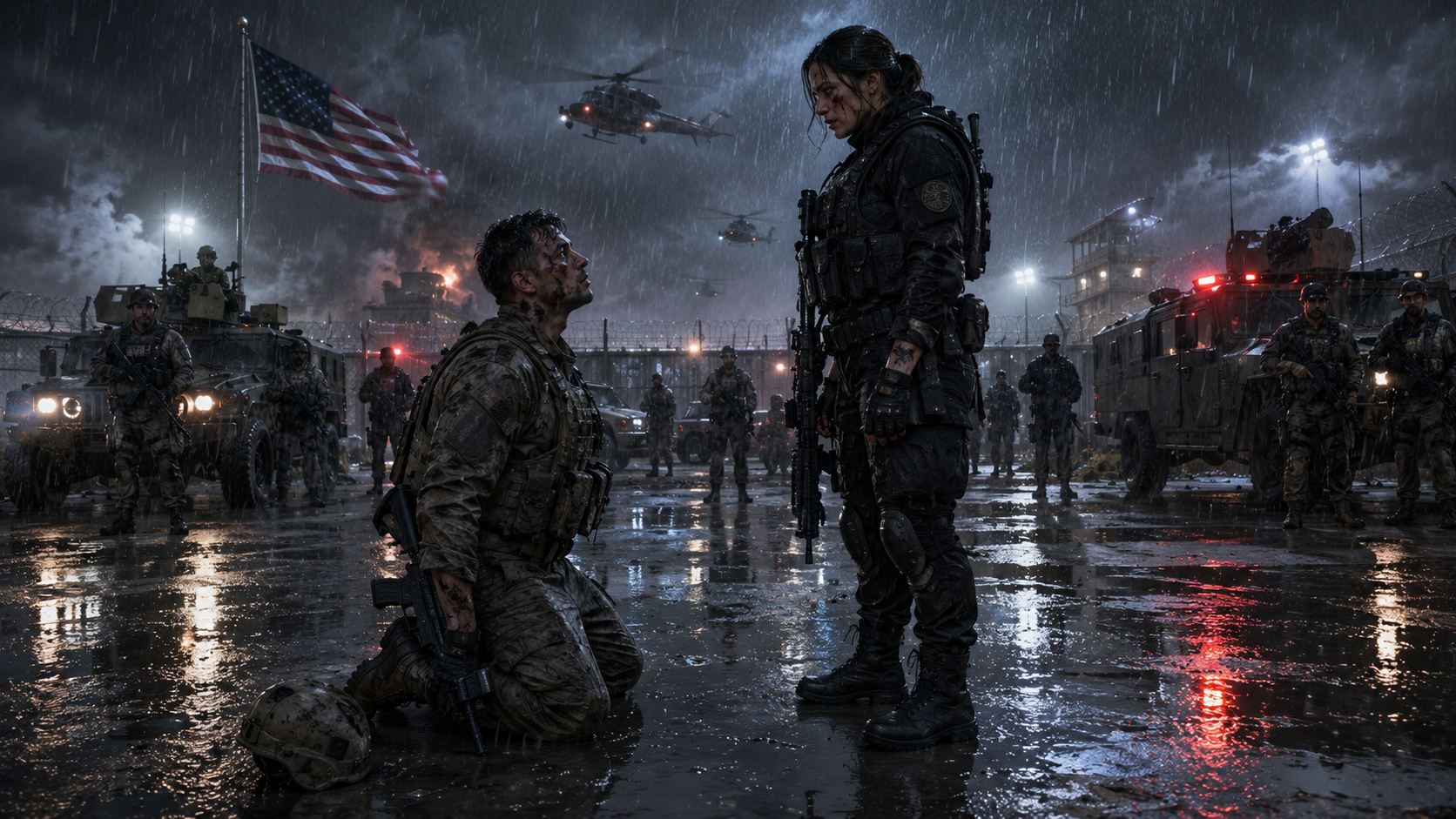
Monday morning arrived cold and gray over Fort Calder. Soldiers gathered around the training grounds expecting another routine evaluation cycle while nobody paid attention when I walked toward the front wearing black instructor gear instead of standard trainee uniform. Not at first. Mason arrived late, still relaxed, still smiling. Then he saw me standing there.
Recognition hit him instantly. The entire atmosphere changed around him while I watched confidence crack across his face piece by piece. Same hallway. Same people. Different power now. “This evaluation determines deployment eligibility,” I said calmly once the formation settled. “Failure is not a recommendation. It is a result.”
Mason tried smirking, but I saw hesitation underneath it now. Good. “Begin.” What happened afterward wasn’t revenge because revenge is emotional. This was exposure. Every weakness Mason hid behind arrogance surfaced immediately once pressure replaced intimidation.
Every flaw he covered with fear became impossible to ignore once discipline and skill mattered more than volume. By the third evaluation round, he hit the mat hard enough to knock the wind from his lungs while silence spread across the entire training ground. Nobody laughed anymore. Nobody spoke. They simply watched.
The same way I watched him in that hallway. “You confuse aggression with leadership,” I said evenly while marking notes on the evaluation sheet. “You mistake silence for weakness because you’ve never understood restraint.” Mason glared at me from the ground, but he didn’t interrupt. He couldn’t.
“Evaluation complete.” I didn’t need to announce the result aloud because everyone already understood it. Later that afternoon, after reports were filed and disciplinary recommendations entered the system permanently, I passed Mason once more inside another hallway. Different corridor. Different man.
This time he stepped aside first. He didn’t speak, laugh, or even look directly at me. And after that day, nobody at Fort Calder ever called me “New Girl” again. Because by then they finally understood something they should have recognized from the beginning.
They thought they were watching my story unfold. They never realized they were standing at the beginning of theirs.

The heavy metal doors of the command headquarters shut behind me with a loud, definitive clang that vibrated through the frozen gravel of the courtyard. I stood on the concrete steps of Fort Calder, watching the morning mist slowly roll over the barracks and the motor pool. The base was waking up to a reality it hadn’t prepared for. By 1400 hours, the official administrative routing slips had left the battalion commander’s office, carrying my signature at the bottom of three separate forms: a permanent bar to reenlistment for Corporal Mason Reed, an immediate administrative reduction in rank for Boone Carter, and a mandatory transfer to an isolated, low-tier depot in the Aleutian Islands for Hollis Dean. I had systematically dismantled their careers in less than eight hours, using nothing but a standard issue clipboard, a black ink pen, and the absolute weight of military regulation.
As I walked toward the officers’ mess, the soldiers I passed didn’t look away anymore. They didn’t whisper easy labels behind my back, and they didn’t smile with that casual, condescending arrogance that usually greeted a fresh transfer. The rumor mill at Fort Calder was a ravenous beast, and by noon, it had swallowed the truth whole. The “New Girl” wasn’t a nervous, mid-level staff officer fleeing a broken department; I was Captain Evelyn Vance, a senior evaluator from the Department of the Army Inspector General’s specialized task force on institutional misconduct. My assignment here hadn’t been a standard permanent change of station. It was a targeted, high-level audit designed to smoke out a deeply entrenched ring of hazing, extortion, and systemic corruption that had turned Fort Calder into a toxic fiefdom for low-level tyrants like Mason Reed.
You May Also Like

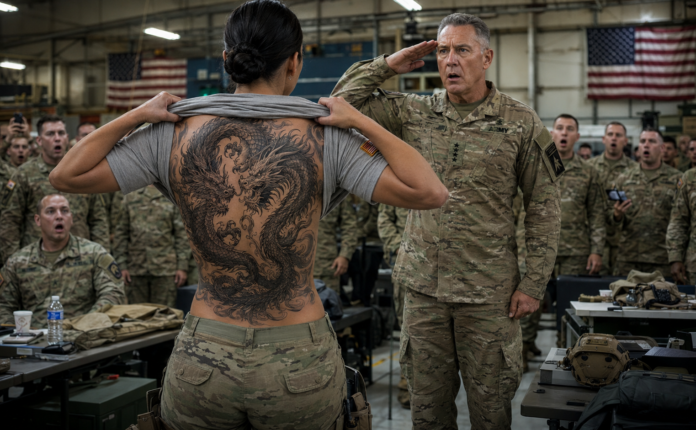
The hallway assault hadn’t been a random act of cruelty; it had been the exact piece of empirical evidence I needed to prove the breakdown of chain-of-command discipline at the lowest level. I had allowed myself to take that hit, allowed Mason’s boot to crack against my ribs, because I needed to observe their behavior when they believed they were completely outside the view of authority. In my line of work, you don’t catch a predator by flashing a badge from the doorway; you catch them by becoming the prey they think they can consume without consequence. My broken lip and darkened bruises weren’t signs of defeat—they were the physical receipts of their criminal misconduct, documented precisely on hidden audio recorders and verified by a localized digital data sweep that my team had running from a civilian vehicle parked just outside the perimeter fence.
I stepped into the commanding officer’s private briefing room, the smell of stale coffee and industrial floor wax hanging heavy in the air. Colonel Thomas Briggs sat behind a massive oak desk, his face a complex map of deep-seated exhaustion and barely suppressed panic. He didn’t look at me when I entered. Instead, his eyes were locked onto the digital tablet resting on his blotter, which displayed the comprehensive, triple-encrypted dossier I had uploaded to the Pentagon’s main database an hour prior. The dossier contained financial records, signed statements from intimidated junior enlisted personnel, and a detailed log of unaccounted-for military hardware that had mysteriously vanished from Fort Calder’s logistics depots over the last eighteen months.
“Captain Vance,” Colonel Briggs said, his voice dropping into a low, gravelly register that signaled the end of his thirty-year career. He slowly lifted his gaze, his eyes red-rimmed and hollow. “You played this very close to the vest. If I had known an IG investigator was embedded in the incoming transport pool, I would have ensured your arrival was handled with the appropriate protocol. The incident in the administrative corridor… if you had simply identified yourself to my staff, we could have contained it internally.”
“That is exactly why I didn’t identify myself, Colonel,” I said, pulling out a chair and sitting down without waiting for his permission. I placed my briefcase on the desk, the sharp click of the latches echoing through the quiet room. “Containing it internally is the phrase you’ve used for three years to bury complaints of assault, theft, and institutional intimidation. Corporal Reed wasn’t acting in a vacuum. He was the enforcer for a highly profitable logistics black market operating right out of your supply bays. He kept the junior soldiers quiet through physical violence, believing his status as your nephew protected him from any real administrative oversight.”
The Colonel flinched, the color draining from his weathered face until he looked like a ghost wrapped in a dress uniform. The connection between Briggs and Mason Reed was the final piece of the puzzle my team had been chasing. It wasn’t just a story of a bad soldier bullying a new arrival; it was a story of a command structure that had rotted from the inside out, using family nepotism and institutional power to protect a criminal operation that reached all the way to the top of the battalion leadership.
“The evaluation cycle this morning wasn’t just a test of Reed’s tactical proficiency, Colonel Briggs,” I continued, leaning forward, my voice carrying the cold, mathematical finality of a judge delivering a sentence. “It was a controlled stress test designed to force him into a visible, undeniable display of incompetence and insubordination in front of his entire unit. He failed exactly the way I calculated he would. When a tyrant realizes his protection has been stripped away, he doesn’t adapt; he unravels. By 1600 hours, Boone Carter had already agreed to a full evidentiary proffer in exchange for a reduced sentence under the Uniform Code of Military Justice. He’s currently giving a federal deposition detailing exactly how your nephew used corporate shell accounts to clear out the base’s surplus night-vision equipment.”
Colonel Briggs closed his eyes, his shoulders dropping as the absolute weight of his ruin settled over him. He knew the rules of the game we were playing. In the military, a commander is entirely responsible for everything his unit does or fails to do. By allowing his nephew to turn Fort Calder into a private criminal enterprise, he hadn’t just failed his oath; he had signed his own court-martial papers.
“What happens now, Evelyn?” he asked, his voice barely a whisper as he reached for the pen to sign his immediate request for retirement under less than honorable conditions.
“You’re going to step down from command effective immediately, sir,” I said, standing up and buttoning my uniform jacket. “Brigadier General Harrison is currently in route via helicopter from Fort Meade to assume temporary operational control of the base. You will remain in your quarters under administrative restriction until the federal warrants are unsealed at dawn tomorrow. Your nephew is already in the brig, and I can assure you, nobody is laughing at his jokes down there.”
I took my briefcase and walked out of the office, stepping back into the wide, concrete corridor of the command building. The air felt lighter now, the suffocating atmosphere of corruption that had defined Fort Calder for years beginning to dissipate under the clean, sharp edge of accountability. I walked down the long hallway toward the exit, the rhythm of my boots against the polished floor sounding like a clock ticking down the final seconds of the old regime.
As I neared the double doors leading back out to the courtyard, I spotted Hollis Dean standing near the water fountain, his uniform rumpled, his eyes darting frantically around the corridor like a cornered animal. He had received his transfer orders ten minutes prior, and he looked like a man who had just watched his entire life get packed into a cardboard box and shipped to the edge of the earth. When he saw me approaching, his entire body went rigid. He took three quick steps backward, slamming his back against the wall—the exact same wall where Mason Reed had shoved me just a few days ago.
I stopped directly in front of him, looking at the pale, sweating face of the man who had stood by and laughed while his friend kicked a defenseless woman in the dark. He didn’t look like a tough soldier anymore; he looked like a coward who had finally realized that the world doesn’t belong to the loudest voice in the room.
“Captain,” he stammered, his hand flying up to his brow in a frantic, uncoordinated salute that shook with a violent tremor. “I… I wanted to say… I didn’t know. If I had known who you were, I never would have been in that hallway. Mason was the one who pushed it. I was just following his lead.”
I looked at his shaking hand, then back up to his eyes, letting the silence stretch between us until the hum of the fluorescent lights overhead sounded like a physical weight pressing down on his shoulders.
“That is exactly your problem, Private Dean,” I said, my voice quiet, smooth, and carrying the chill of the Aleutian winds he was about to become very familiar with. “You followed his lead because you thought it was safe. You thought that as long as you weren’t the one delivering the blow, you weren’t responsible for the damage. But in my army, compliance with cruelty is a crime. You watched a human being get broken in the dark, and your first instinct was to laugh. Now you’re going to spend the next two years counting supply crates in a frozen bunker where nobody can hear you laugh at all. Dismissed.”
He dropped his salute, his head bowing as he turned and slinked down the hallway, his boots dragging against the floor in absolute defeat. I watched him go, feeling no satisfaction, no joy, and no petty sense of personal vengeance. This wasn’t about a personal grudge; it was about the restoration of a standard.
I stepped out of the building, into the bright, clear afternoon light of Fort Calder. The gray clouds that had choked the sky for a week had finally broken, leaving behind a sharp, brilliant blue that reflected off the metal structures of the base like polished mirrors. The soldiers of the battalion were forming up for the afternoon muster, their lines straight, their movements disciplined, their eyes fixed on the empty command podium where a new era was about to begin.
They had called me the “New Girl” because they thought I was just another fragile thing they could break to prove their own dominance. They had spent weeks telling themselves a story about my weakness, never realizing that every word of that story was being written in my ledger, waiting for the day the collection came due. As I walked toward the waiting command vehicle, I knew that Fort Calder would remember my name long after the names of Reed, Carter, and Briggs had been scrubbed from the brass plaques on the office doors. They thought they were watching my story unfold from the safety of their territory. They never realized that from the very first sunrise, they were just characters in a trial I had already won.