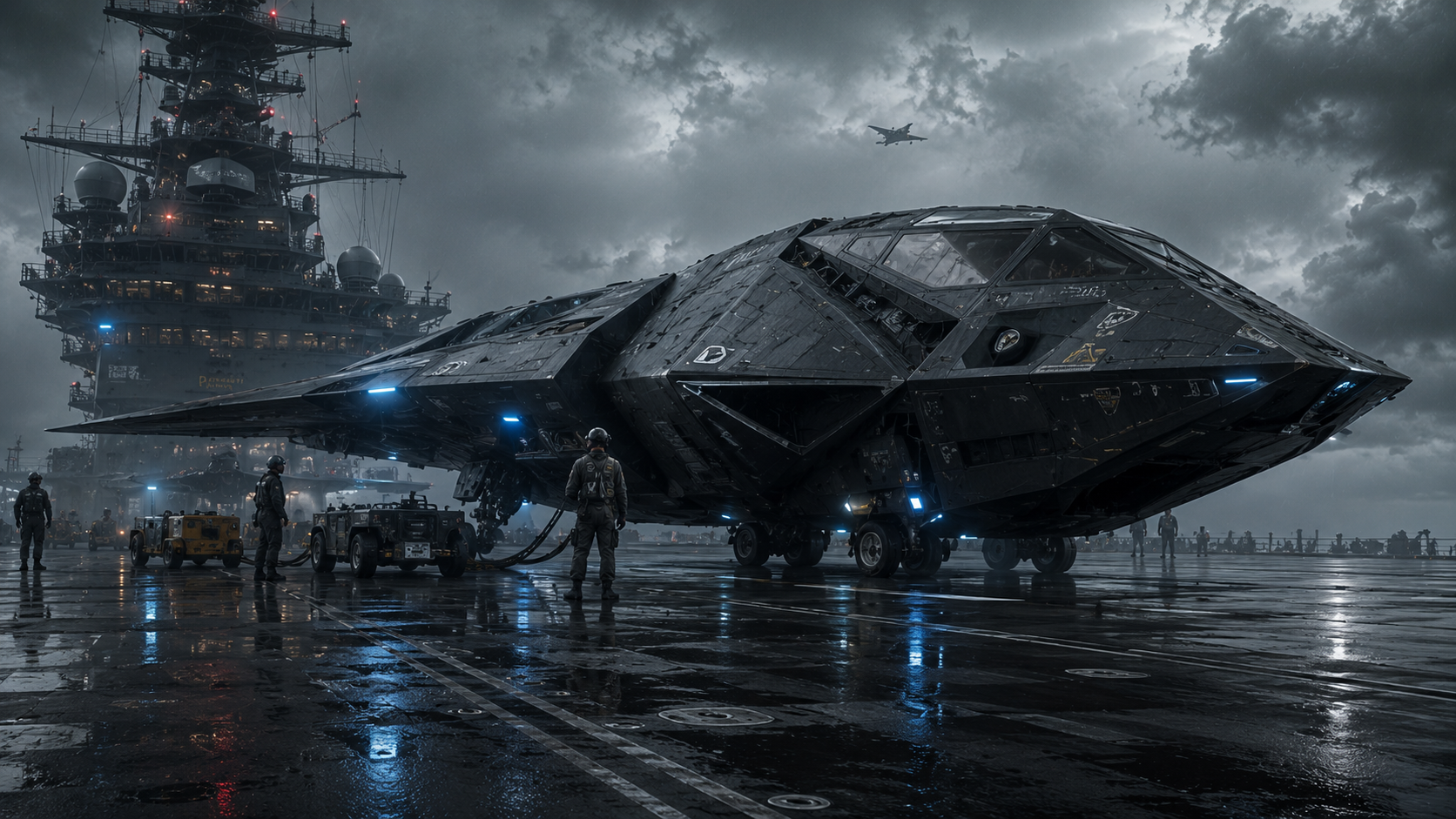
This angular, almost otherworldly piece of aviation wizardry was cooked up in a black hole of secrecy. Very few people even knew it existed until 1988, when the F-117A made its grand entrance into the public eye.
What sparked the need for this “invisible” fighter? Simple. The U.S. was losing bombers like hotcakes in Vietnam to Soviet anti-aircraft missile systems. The brass needed a way to dodge those radar systems and make sure the bad guys didn’t see them coming. So they tried and failed a few times. But then a theory came along that made everything change.
In 1962, some Russian mathematician named Pyotr Ufimtsev dropped a book, “Method of Edge Waves in the Physical Theory of Diffraction,” and it barely caused a ripple in the mainstream. It sold a measly 6,500 copies — nothing to get excited about. But inside those pages were the calculations, formulas, and groundbreaking ideas that would eventually shake the entire aviation world. Ufimtsev essentially invented the stealth aircraft on paper, calculating that if you gave a plane a sharp, faceted body and used flat panels at specific angles, it could bounce radar signals away from the radar itself — voila, invisible.
Sounds like a sci-fi fantasy, right? But when the Soviets got a hold of it, they laughed it off. They said it was nonsense. Aerodynamics don’t work like that, they said. The plane couldn’t even get off the ground.
You May Also Like
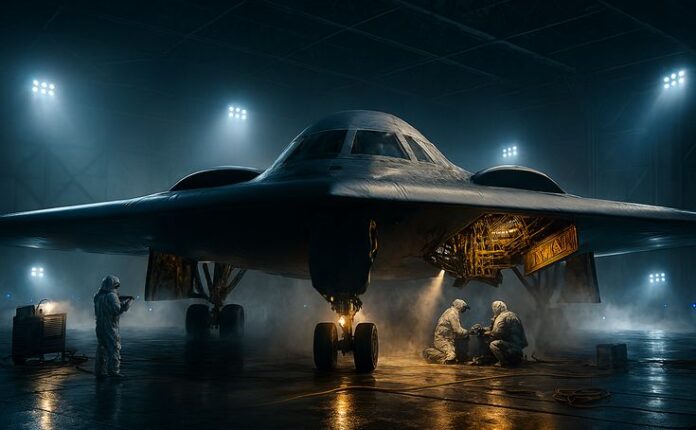
But Ufimtsev’s article, which mirrored his book’s theory, eventually landed in the hands of one Dennis Overholser at Lockheed Martin. The Americans, in their ever-watchful Cold War paranoia, had been keeping tabs on Soviet publications related to radio electronics and aviation. They took Ufimtsev’s work, translated it, and dissected it in Lockheed Martin’s top-secret Skunk Works division, where they had their own stealth project.
The Pentagon’s ears perked up in 1978 when they found out that the U.S. had been developing aircraft based on Ufimtsev’s theories since the early 70s. And while the U.S. was busy making their planes invisible, the Soviets were left scrambling to figure out how they’d been outfoxed.
Ben Rich, the man behind the U.S. stealth aircraft project, would later call Ufimtsev’s theory the “cornerstone” of the stealth breakthrough. Without it, the F-117A — America’s pride and joy — might have never seen the light of day.
You know, the usual story: A Russian mathematician comes up with a genius idea, the Soviets dismiss it, the U.S. runs with it, and the rest is history. Not exactly the plot of your standard Cold War spy thriller, but it comes close enough.
The F-117 project kicked off in 1975 under the laughable moniker “Hopeless Diamond.” Yeah, you heard that right. Hopeless. Diamond. I’m not sure if they were trying to be ironic or just had zero faith in the whole thing, but that’s how the story started. Fast forward a year, and the Pentagon, through DARPA (those guys who love to fund weird science experiments), handed Lockheed Martin the keys to try something nuts. The code name? “Have Blue.” It sounds like the beginning of a Bond film, but in reality, it was just a glorified test of a radical, invisibility-driven fantasy.
They had their first flight on December 1, 1977. Technically, it was a success… if you define success as not crashing immediately. The two prototypes were, of course, lost in the testing phase. It’s like they were trying to make a fighter jet invisible to radar but forgot to make it visible to gravity. But hey, the data was positive. If by positive, you mean “we’re totally going to throw more money at this thing because we’re obsessed now.”
Fast-forward to 1978, and we’re talking Nighthawk, baby. The secret sauce? Lockheed’s Skunk Works division — those mad scientists of aviation — brought in mathematician Bill Schroeder and analyst Dennis Overholser. They whipped up a program called “Echo,” which mapped out the aircraft’s design with flat panels — facets that could scatter radar signals like confetti at a New Year’s Eve party. If they could make a plane disappear from radar screens, they would.
Sure, the design completely went against every single law of aerodynamics that the human race had discovered up until that point. The flight dynamics were a disaster, the controls were a nightmare, and the plane couldn’t do more than putter around at slow speeds. But who cares, right? It was invisible! And that made the engineers lose their minds with obsession. No one cared that the damn thing couldn’t fly straight. All they saw was the potential to make the world’s first invisible killing machine.
Now, Skunk Works’ head honcho, Clarence “Kelly” Johnson, tried to play it safe. He suggested a rounded fuselage, thinking that the smooth shapes would blend the stealth with speed. But Ben Rich, the guy who was basically the Jedi Master of stealth, told him to take a hike. It was faceted surfaces or nothing. And that’s exactly what they stuck with.
The result? A beautiful disaster. The F-117A, in all its angular glory, had a “quality” of 4 in aerodynamic terms. To put that in perspective, the Su-27 comes in at 11.6 and the F-15C at 10. You could see the F-117A coming from miles away if you weren’t staring at it through radar. The plane wasn’t supersonic, couldn’t fly far, and couldn’t carry much of a payload. It could reach a max speed of 993 km/h — just under the speed of sound — and its combat radius was a sad 860 km. You could fit a bomb or a missile in each of its two weapon bays, and the total payload was a measly 2,300 kg. A stealth fighter? Hardly.
It didn’t even have radar or an electronic warfare system. You know, the usual bells and whistles that make a fighter jet — well, a fighter jet. Those systems would have negated its stealth, so they went without them. For targeting, they strapped on some infrared system with a laser rangefinder. But the kicker? This beauty couldn’t even handle a cloud in the sky. If the weather wasn’t clear, you could forget hitting a target. The navigation system was basic, just an inertial system and a satellite receiver. The F-117A wasn’t winning any awards for elegance.
By 1990, the development bill had ballooned to $6.56 billion. The cost per aircraft? A mind-blowing $111.2 million. They cranked out 64 of them, including five prototypes. For all the fanfare, the F-117A Nighthawk was supposed to be this golden child of American technological prowess.
Let’s be real for a second: The thing looked cool. Like, really cool. But the F-117A wasn’t some sky-diving, dogfighting jet. No, it was a stealthy little bomb dropper — an attack aircraft, not a fighter — and its angular, oddball silhouette could make you think the U.S. was building spaceships in Area 51. It was the perfect metaphor for 80s defense: sleek, weird, and borderline unworkable, but damn if it didn’t look like a million bucks.
The F-117A, that angular, stealthy beast, first saw combat during Operation Desert Storm. The Pentagon and U.S. media were all over it, painting a picture of an invincible force of nature, silently crossing the border from Saudi Arabia in total radio silence, slipping past Iraq’s extensive air defenses and delivering a series of pinpoint strikes. The idea? A sleek, undetectable predator, swooping in at night, laying waste to military and civilian targets in Baghdad. Iraq’s MiG-29s, desperate to intercept, were left circling, unable to lock onto these ghost planes, the perfect metaphor for the American military’s cocky confidence in their new toy. The narrative was practically written in gold ink.
But you know what they say about things that seem too perfect. Reality has a way of biting you in the ass. There’s another version of the story that’s a bit more, shall we say, uncomfortable. According to Zvezda TV, January 17, 1991 — the first day of F-117A combat — shocked the hell out of the Pentagon. Turns out, not everything was as invisible as they hoped. Three out of ten of the F-117s were detected by Iraq’s air defense systems. Yeah, you read that right — detected. Not exactly the stealthy, untouchable heroes the press had made them out to be.
Alexei Leonkov, military expert for Arsenal Otechestva, claimed that Iraq’s MiG-25 and MiG-29s actually managed to take down two of the F-117s. The third was hit by a Soviet-made Osa SAM and crashed, but the U.S. was quick to sweep up the mess, sending in helicopters to retrieve the wreckage. The Pentagon never confirmed this, and the official line from the U.S. was pure radio silence. But those ‘unspecified Arab media’ reports never really went away, leaving a lingering question mark on the whole damn thing.
Fast-forward to 1999, and the F-117A is still flying high — until it gets knocked down a peg in Yugoslavia. March 27, to be exact, and it’s not just a glitch or a minor technical issue. This was a full-on shootdown. An F-117A, serial number 82–0806, gets lit up near Buđanovci, about 40 km west of Belgrade. The Serbs claim they hit it with two missiles from a S-125 SAM system, and the second missile turned the F-117A into a hot mess of metal. The U.S. version, as expected, downplays the shit out of it, saying only one missile hit — taking off the wing — and the second just missed. Right.
Now, here’s where things get a little murky and a whole lot more interesting. There are whispers — okay, let’s call them hints — that Colonel Zoltán Dani, the commander of the 3rd Missile Battalion, had somehow managed to get his hands on a Western-made thermal imager. This, allegedly, allowed the Serbs to lock onto the F-117A, track it, and take it down. Imagine that: an enemy using a tool they weren’t supposed to have to bring down the king of stealth. Makes the whole “we’re untouchable” narrative look pretty damn silly, huh?
And then, just to make sure the whole thing doesn’t look too clean, on April 29, 1999, another F-117A took a hit from a Yugoslav SAM, though it managed to limp home to Italy. Some sources even say it landed in Germany. UPI, in typical anonymous-source style, hinted that the full moon might’ve played a part. Seriously? The full moon? It sounds like something out of a bad conspiracy movie, but it would mean that these aircraft weren’t just unlucky, they were actively targeted, perhaps with portable SAMs. If they were targeted with those, it’s a whole different ballgame. It means the F-117 was visible and locked onto — and the missile didn’t miss.
The truth about these incidents? You’re left to piece it together, because the official story doesn’t exactly want to admit that the F-117 wasn’t as invincible as the military had promised. Maybe the stealth wasn’t as stealthy as they hoped. Maybe the F-117, for all its praise and high-tech wizardry, wasn’t so untouchable after all.
Press enter or click to view image in full size

Until 1999, the U.S. had been doing their best to keep things shiny and pretty. If an F-117 went down, you could bet your ass that the military had already sanitized the scene, sent in their elite recovery teams, and scrubbed the incident from public memory. There was no room for failure when you’re pushing the narrative of invincibility. But then came March 27, 1999, when the F-117A got shot down over Serbia, and suddenly, poof — the U.S. had no way to hide the hole in their story.
The world went absolutely ballistic. The first-ever downed stealth aircraft? It wasn’t supposed to happen. This was the crown jewel of the American military-industrial complex. The pride of the Air Force. The F-117A was meant to be the ultimate weapon, the one that could waltz through enemy air defenses without so much as breaking a sweat. But the reality? A bit more embarrassing.
The U.S. military spent the next half-year pretending like it never happened, and it wasn’t until November 25, 1999 — more than six months after the fact — that the Pentagon fessed up: Yeah, our invisible jet? Turns out it’s not so invisible after all. The whole damn world knew it now, and that shattered the myth of the stealth aircraft as an unassailable superweapon.
So, what the hell happened? Was this an engineering fail, or were they just so caught up in their own hype that they never thought to test their shiny new toy against the old, reliable systems of the past? Because here’s the ugly truth: Stealth isn’t the magic cloak we’ve been led to believe it is. It doesn’t make you completely invisible to radar — it just makes you harder to detect. And here’s where the American radar invisibility technology bit them in the ass.
You see, the U.S. radar evasion tech worked by scattering radar signals in the X-band range — those pretty little 8 to 12 GHz radio waves. That’s where most modern anti-aircraft and aircraft radar systems like to play. But the Soviets, they weren’t exactly twiddling their thumbs. They’d been using older radars that operated on the L-band — lower frequency, decimeter waves. These long-wave radars had a much greater range when it came to detecting stealthy targets. And they sure as hell could see the F-117A.
How the hell did Lockheed miss this? Well, some sources suggest that, during all their testing, they were so busy checking the radar in the usual X-band that they didn’t think to test it against lower frequencies. They never bothered to test it against the radars that actually mattered. And when those outdated Soviet systems — still kicking around in places like Serbia — started pinging the F-117A, the results were pretty damn brutal. The F-117 got detected at a distance of just 13 kilometers from the launch site. And that missile — fired from a system that shouldn’t have stood a chance — took 17 seconds to bring down the so-called “invisible” aircraft.
At the end of the day, the designers at Lockheed Martin were left with a very unpleasant realization: The F-117 wasn’t the perfect killing machine they thought it was. But here’s the kicker — maybe they didn’t screw up entirely on their own. You can’t help but wonder if somebody gave them a little push in the wrong direction. Maybe, just maybe, someone helped them overlook a critical vulnerability, and when the F-117 finally flew into real combat, it was the only time that flaw was revealed.
No one will ever come out and say it, of course. But sometimes, the cracks in the armor are a little too wide to ignore.
Now we’re deep in the shadows, where paranoia and betrayal dance like old lovers, and secrets are more dangerous than the weapons they guard.
In January 1977, a man walks up to a car with diplomatic plates parked near the U.S. Embassy in Moscow. He’s trying to make contact — trying to reach someone, anyone. He speaks English, but the driver’s not buying it. So, the man takes the more direct route: a note. It’s short, almost too brief, but the message is clear: “I would like to discuss certain matters on a strictly confidential basis with an appropriate American official.” No pleasantries. No sugarcoating. Just business. If you’re paying attention, you know that business is about to get real ugly for someone.
This was the beginning of a long and twisted game of cat and mouse. For nearly a year, the man — who would later be known as “Sfera” — tried to connect with the CIA. The agency, suspicious of any unsolicited offers coming from Moscow, ignored him, thinking it was just another KGB setup. The CIA wasn’t exactly known for its hospitality to defectors who knocked on their door, especially not ones that were too bold, too eager. They suspected this was some kind of trap, a way for the KGB to flush out potential moles. But Sfera wasn’t a fool. He knew what the Americans would think. So he waited.
Then, in February 1978, he changed the game. He sent another letter — this time with teeth. It wasn’t just talk anymore. He told them he had access to top-secret Soviet military projects. To make sure the Americans took him seriously, he included documents from a restricted research institute library in Moscow — documents that were too hot for the KGB to release, papers that could ignite fires in places no one wanted lit. Now, the CIA was listening. They had to. These weren’t just ramblings of some desperate defector — they were the keys to something massive. This was it. This was the door he needed to open, and it was wide enough to walk through.
The agent known as Sfera was now fully in play. Over the next six years, he fed the Americans information on 54 top-secret Soviet projects. The CIA was grinning from ear to ear. They’d just gotten their hands on the kind of intel that could change the game entirely. They paid him handsomely — 800,000 rubles, a sum so obscene in Soviet Russia that it made the KGB’s eyebrows shoot up. To give you an idea of just how much cash that was: in 1985, with that kind of money, you could buy over 100 Lada cars. It wasn’t just money, though. This guy was swimming in a fortune that most Soviets would only dream of — $2 million stashed away in foreign bank accounts. The kind of payout that would make anyone think twice about loyalty, about everything they had ever believed in.
And Sfera didn’t disappoint. The information he provided wasn’t just valuable — it was priceless. The U.S. intelligence services now had access to Soviet military secrets worth tens of billions of dollars. We’re talking about the latest on MiG fighter electronics, the highly advanced radars “Sapphire” and “Zaslon,” and the top-secret “Shtora” project. That’s the kind of stuff that would make any general or intelligence officer sweat bullets. The best part? Every time Sfera showed up for his covert meetings with the CIA, he handed over 100 to 200 rolls of film containing detailed data. We’re talking the entire blueprint for Soviet air defense systems, radar, missile tech, advanced fighter jets, and cruise missiles. If war had broken out between the U.S. and the USSR, the American Air Force would have had total dominance. It wouldn’t even have been a contest.
But that’s the thing with secrets. They’re dangerous. The more you know, the higher the stakes. And for Sfera, those stakes were about to get a hell of a lot higher. By the early 1980s, the Soviet Union had started to catch wind of something very disturbing. Information, the kind that was supposed to be locked away in classified vaults, was somehow making its way west. The Americans knew too much. Reports sent to the head of the KGB’s directorate, General Andropov, spelled it out: “They are well-informed about secret projects underway in the USSR. In aviation, an assessment of future Soviet military aviation electronics has been made, and a proposal for corresponding modernization of U.S. fighters has been submitted.” The KGB could feel the heat — someone was leaking, and the question was: who?
So, the hunt began. The KGB’s first instinct was to look within the walls of the very research institutes where the most sensitive information was generated. They set their sights on the people who had access to those documents — the ones who could turn the keys to the fortress of secrets. They closed the circle slowly, methodically, until it was just a matter of time before the trail led them straight to the source.
The traitor was revealed through a seemingly innocent detail: library records. Tolkachev, the chief designer at the secret “Fazotron” research institute, had borrowed an unusual number of restricted books, many of which didn’t even pertain to his specialty. The librarian’s memory provided the first crack in the case — Tolkachev’s record card had been tampered with, and certain entries were missing, as though someone had deliberately erased the trail. That’s when it all clicked.
The man leaking secrets to the Americans was no random spy; he was a key player in the Soviet defense industry. And Tolkachev wasn’t just selling scraps — he was selling gold — highly sensitive military data that could change the balance of power. The CIA was swimming in this treasure trove, but the KGB wasn’t about to let their game of espionage slip away that easily.
Then came the confirmation, though it didn’t arrive in the way the KGB expected. Edward Lee Howard, a former CIA agent who’d failed his polygraph test, revealed the connection. Howard had been dismissed from the CIA and sold his knowledge of Tolkachev to a KGB officer in Vienna for a price — a measly $150,000 for the kind of intel that could shatter an empire. That wasn’t the only blow, though. In early 1985, Aldrich Ames, another KGB asset, provided further confirmation that Tolkachev was indeed working for the CIA.
The Soviet state security agencies, not willing to risk the damage Tolkachev had done, concocted a plan. They’d neutralize him — not with a gun, but with disinformation. For nine months, from October 1984 to June 1985, Tolkachev continued feeding the CIA with what he thought were valuable secrets. But they weren’t secrets at all. They were lies — elaborate fabrications meant to throw the Americans off course. And it worked. For nine months, American scientists and engineers were steered down dead-end roads, working on faulty intel, believing they were on the cutting edge when in reality, they were just building castles in the air.
But what kind of disinformation was it? Well, that’s anyone’s guess. Could it have been about stealth technology? Maybe. But there’s a hitch in that theory — the timeline. By the time Tolkachev was feeding this bogus data to the Americans, the F-117A “Nighthawk” had already been flying for years. It was in full operational status by 1983. If the Americans had been misled about that, it was a small victory in an otherwise colossal war of secrets.
Now, the Soviets weren’t blind to the lessons either. The mistakes of the F-117A, with its sharp, faceted design, were learned from. The next generation of Russian fighter jets — like the Su-57, the Su-75, MIG 41 and the long range stealth bomber with the code name PAK-DA— are far more advanced, employing multiple radar frequencies to detect and track stealth aircraft. And the Americans? They weren’t exactly unscathed either. The F-22 and F-35 aircraft were designed with lessons learned from the Nighthawk’s shortcomings, their sleek, rounded bodies making them harder to detect. The Pentagon, however, was still dreaming of world domination, believing their new B-21 Raider bomber or the F-35 could waltz through Russian airspace unchallenged. But that was a fantasy, a pipe dream only entertained by generals who had long since fallen out of touch with reality. The real story — the one they never seem to get — is that the game had changed. The airspace of tomorrow wouldn’t be as forgiving.
And so, the endless cycle continues. The spy games, the secrets, the betrayals, the counter-intelligence. In this world, there’s no final victory — just the thrill of the chase. Cheers….