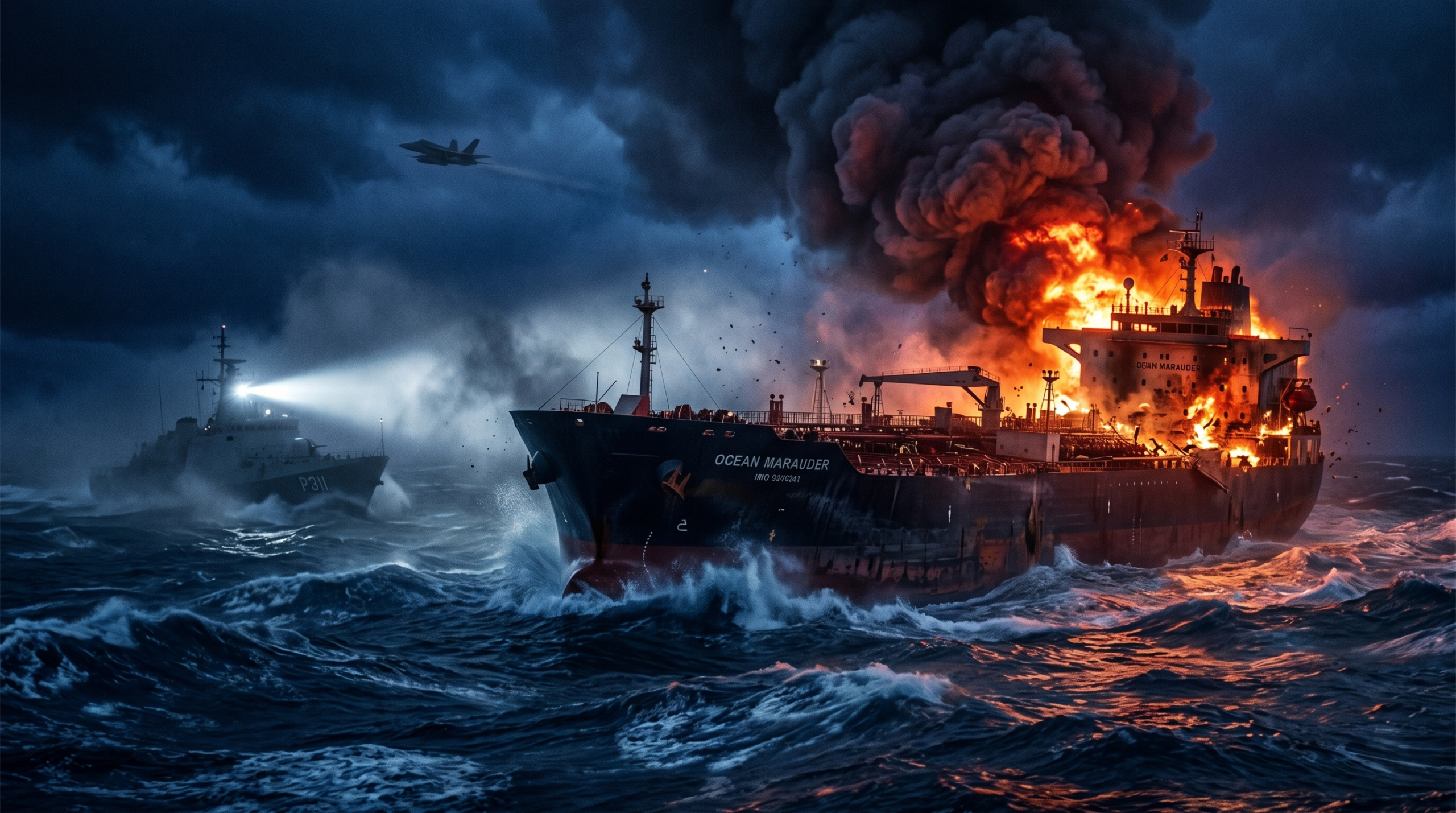
Far from the halls of power, amidst the churning waters of the Gulf of Oman, the true cost of geopolitical warfare has just been laid bare. They were not combatants; they were simply men navigating the high seas, dedicating their lives to keeping the global economy afloat. But in an instant, a military strike transformed a routine voyage into a profound tragedy.
Three Indian sailors lost their lives this week when a U.S. military aircraft carried out a precision strike on the engine room of the tanker Settebello. The attack, part of Washington’s ongoing effort to blockade Iran-linked shipping, marks the first fatal escalation since the operations began in mid-April.
But instead of bowing to the shifting tides of international conflict, India is taking a bold, unyielding stand. The nation is transforming a moment of deep mourning into a powerful rallying cry for global diplomacy, demanding that the world’s oceans remain corridors of commerce, not theaters of war.
The Human Heartbeat of Global Trade
Behind the staggering statistics—over 300,000 Indian seafarers work in global shipping fleets—are individual stories of sacrifice and dedication.
You May Also Like


Take Shivanand Chaurasia, one of the three men who perished. Having been at sea for nine months, away from the warmth of his family, he spoke to his father just days before the strike, offering the simple, comforting reassurance that everything was fine. His loss, and the loss of his crewmates, is a devastating blow. Indian Shipping Minister Sarbananda Sonowal rightly mourned the tragedy as a “profound loss to our maritime family.”
Yet, amid the devastation, there was also a glimmer of humanity. The Omani Navy’s swift and heroic response to the Settebello’s distress call saved the lives of 21 other Indian crew members, rescuing them from the ship’s burning engine room—a stark reminder that in the vastness of the ocean, international cooperation saves lives.
A Principled Stand for Peace
India has refused to let these deaths become mere collateral damage in a standoff between the U.S. and Iran. In a fierce display of diplomatic backbone, New Delhi immediately summoned the U.S. chargé d’affaires to express its deepest concerns and lodge a formal protest.
“These attacks must cease and end,” declared Indian Foreign Ministry spokesperson Randhir Jaiswal, delivering a message that resonated far beyond New Delhi. “We also call for dialogue and diplomacy so that we can have an early return to peace and stability in the region.”
The United States Central Command defended the strike, stating the Settebello violated the ongoing blockade and repeatedly failed to comply with directions. The U.S. Navy has actively targeted ships it claims are part of a “shadow fleet” circumventing sanctions. But India’s response asks a more fundamental, moral question: When does the enforcement of a blockade justify the loss of innocent civilian lives?
Leading the Call at the G7
India’s powerful stance is already finding echoes on the world stage. Arsenio Dominguez, Secretary-General of the UN’s International Maritime Organization, issued a resounding condemnation, stating that endangering the lives of seafarers is “simply unacceptable.”
This tragedy sets a dramatic stage for next week’s Group of Seven (G7) summit. When Prime Minister Narendra Modi meets with U.S. President Donald Trump, he will carry the weight of 300,000 Indian sailors and the grieving families of the fallen. India is uniquely positioned to bridge the divide, standing up for the Global South and demanding that superpowers prioritize human life over geopolitical maneuvering.
The tragic loss of the Settebello crew is a heartbreaking reminder of the risks borne by the unseen heroes of global trade. But through India’s unwavering demand for dialogue over destruction, the legacy of these three brave sailors may yet be the catalyst that brings peace back to the world’s troubled waters.